Creating Virtual Virtual Reality
Launched initially on Daydream in early 2017, and now available on Gear VR, Oculus Go, and Oculus Rift, Virtual Virtual Reality’s smart interaction design gives players freedom and control which—combined with a narrative tying it all together—makes Virtual Virtual Reality one of the most immersive mobile VR games to date. This guest article by Mitch Mastroni, Interaction Designer at Tender Claws, the studio behind the game, explores how the game achieved significant immersion even on more restrictive mobile VR headsets.
Our game Virtual Virtual Reality is a comedic adventure that is both love letter to VR and playful commentary on the tech industry. Players are welcomed by their manager Chaz to Activitude, a virtual service where humans are tasked with assisting AI clients. These AI, which appear in various forms ranging from a tempermental artichoke to a demanding stick of butter, have increasingly bizarre requests for the player to perform. The story unfolds as the player travels between virtual realities, diving deeper and deeper into the machinations of Activitude.
When players pick up objects in Virtual Virtual Reality, they see a curved line connecting their VR controller to the object in question. This ‘leash’ is the only tool that players have at their disposal for the full duration of the game. All other object interactions in the game (plugging a plug into a socket, watering flowers with a watering can, etc.) are performed with the leash. Even simple interactions—like tossing a ball in the air or dragging your manager by his robotic legs—are very satisfying to perform with the leash.
The leash helps the player understand the relationship between the controller’s movement and the object’s movement. It also enhances game feel by giving virtual objects weight.

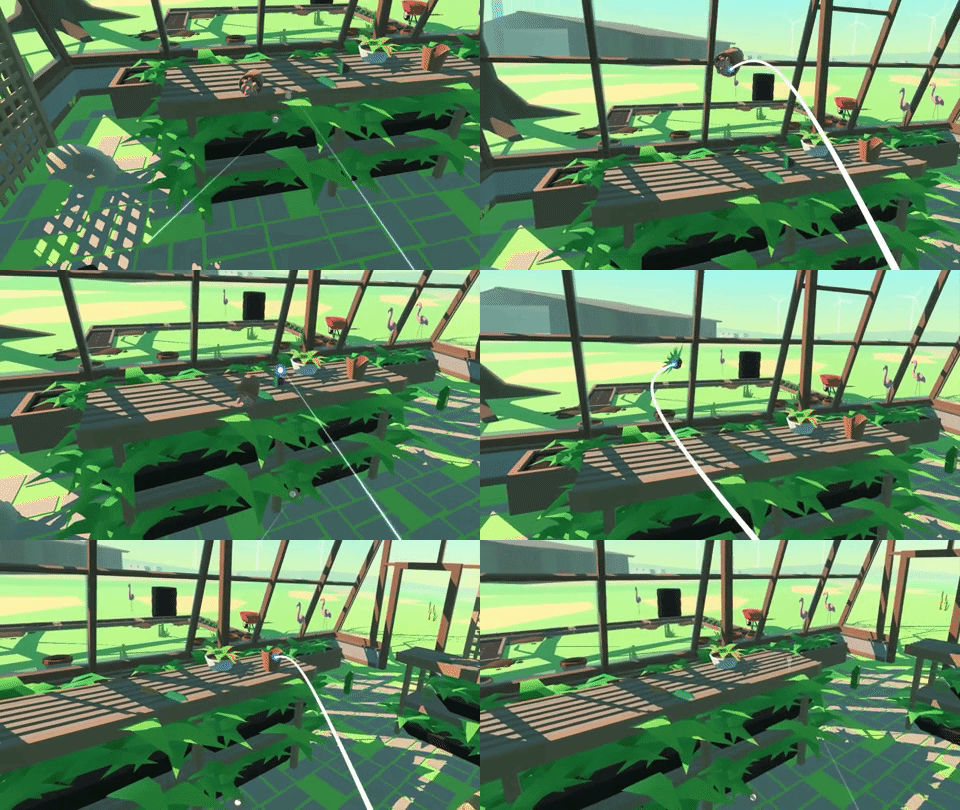 The choice of the leash was also informed by the distance between players and the objects that they interact with. Early VR experiments at Tender Claws resulted in us constraining object interactions to the “mid-range.”
We began the process of localizing Virtual Virtual Reality into eight languages after the game launched on Daydream.
The decision to use subtitles instead of recording dialogue in new languages was a matter of resources and quality control.
Early into our development of the headset transition mechanic at a 2015 hackathon, we realized that the experience of taking off and putting on headsets had potential beyond a narrative framing device. We wanted players to interact with headsets as often as possible.
See the full story here: https://www.roadtovr.com/designing-virtual-virtual-reality-mitch-mastroni-tender-claws/
What it’s like to watch an IBM AI successfully debate humans
 Project Debater will argue with you and make jokes
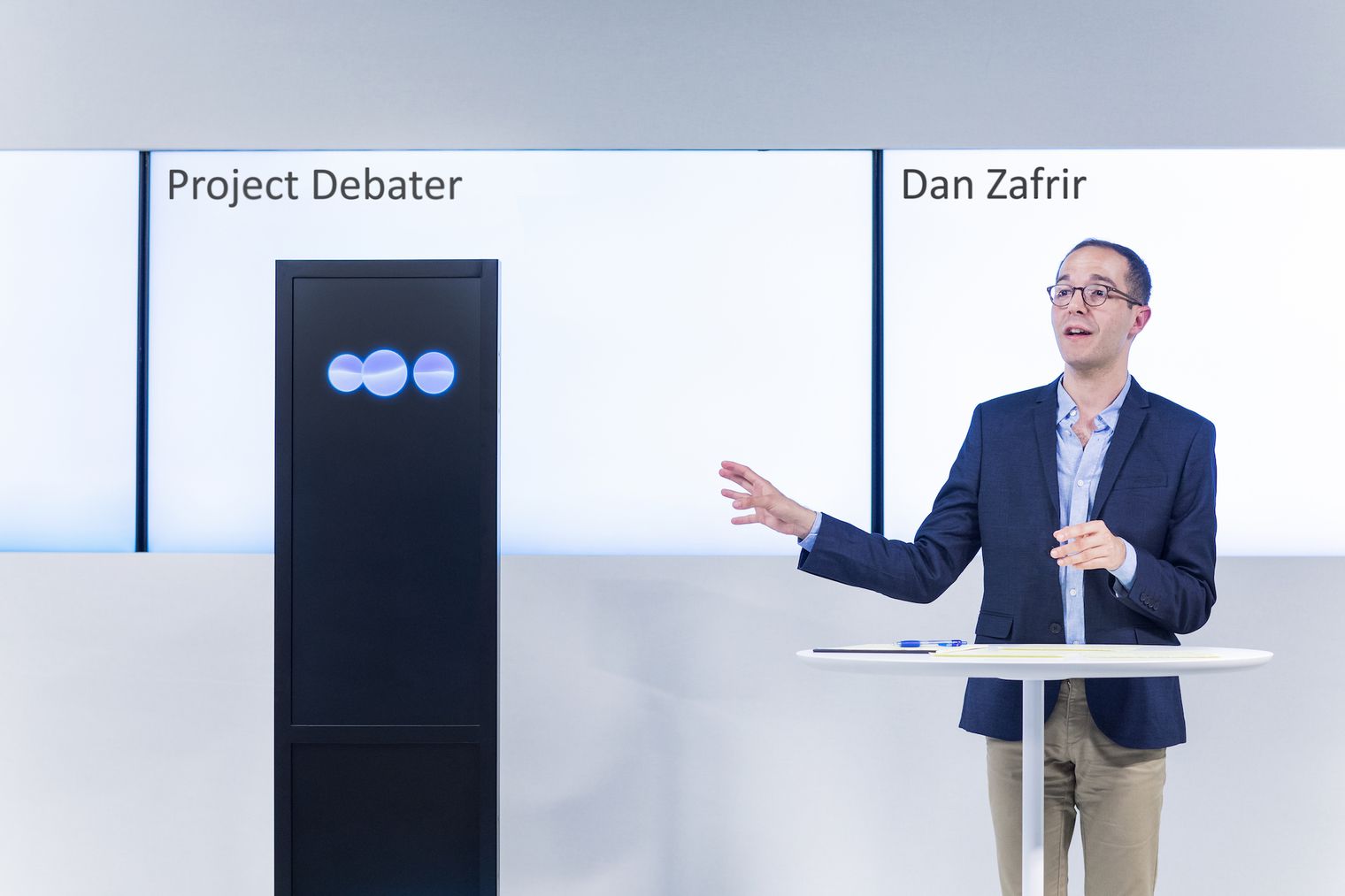
At a small event in San Francisco last night, IBM hosted two debate club-style discussions between two humans and an AI called “Project Debater.” The goal was for the AI to engage in a series of reasoned arguments according to some pretty standard rules of debate: no awareness of the debate topic ahead of time, no pre-canned responses. Each side gave a four-minute introductory speech, a four-minute rebuttal to the other’s arguments, and a two-minute closing statement.
Project Debater held its own.
It looks like a huge leap beyond that other splashy demonstration we all remember from IBM when Watson mopped the floor with its competition at Jeopardy. IBM’s AI demonstration today was built on that foundation. It had many corpora of data it could draw from, just like Watson did back in the day. And like Watson, it was able to analyze the contents of all that data to come up with the relevant answer. But this time, the “answer” was cogent points related to subsidizing space and telemedicine laid out in a four-minute speech defending each.
Project Debater cited sources, pandered to the audience’s affinity for children and veterans, and did a passable job of cracking a relevant joke or two in the process.
That’s pretty impressive. It essentially created a freshman-level term paper kind of argument in just a couple of minutes when presented with a debating topic it had no specific preparation for.
...it was able to move from the “present information” mode we usually think of when we hear AI to a “make an argument” mode. But what impressed me more was that it attempted to directly argue with points that its human opponents made, in nearly real time. (The system needed a couple minutes to analyze the human’s four-minute speech before it could respond.)
It frankly made me feel a little unsettled, but not because of the usual worries like “robots are going to become self-aware and take over” or “AI is coming for our jobs.” It was something subtler and harder to put my finger on. For maybe the first time, I felt like an AI was trying to dissemble. I didn’t see it lie, nor do I think it tried to trick us, but it did engage in a debating tactic that, if you saw a human try it, would make you trust that human a little bit less.
What Project Debater didn’t do was directly engage the criteria set forth by its human opponent. And here’s the thing: if I were in that debate, I wouldn’t have done so either. It’s a strong debating tactic to set the framework of debate, and accepting that framework is often a recipe for losing.
Another IBM researcher suggested that this technology could help judge fake news.
How close is this to being something IBM turns into a product? “This is still a research-level project,” Welser says, though “the technologies underneath it right now” are already beginning to be used in IBM projects.
See the full story here: https://www.theverge.com/2018/6/18/17477686/ibm-project-debater-ai
Why Hackers Aren’t Afraid of Us
 So what is to be done?
First, the United States must significantly improve its cyberdefenses. The wide-open vulnerabilities in America’s networks have essentially deterred the United States from credibly threatening retaliation against the Russians, the Chinese, the North Koreans and the Iranians. One way to start is to make sure no new equipment goes on the market unless it meets basic security requirements. We won’t let cars on the road without airbags, so why do we do less with the systems that connect them to the internet?
Second, we must decide what networks we care most about defending — and make those priorities clear. Mr. Mattis’s threat to turn to nuclear weapons hardly seems credible — unless the cyberattack would create an existential threat to America. That requires an intensive public review of what is critical to our nation’s survival. President Trump forfeited the perfect opportunity when he decided against a commission to learn the larger lessons from the 2016 election. Our politics have gotten in the way of our safety.
Finally, the United States needs to end the reflexive secrecy surrounding its cyberoperations. We need to explain to the world why we have cyberweapons, what they are capable of and, most important, what we will not use them for. Clearly, it is in the nation’s interests to develop global norms clarifying that some targets are off limits: election systems, hospitals and emergency communications systems, and maybe even electric power grids and other civilian targets.
See the full story here: https://www.nytimes.com/2018/06/16/sunday-review/why-hackers-arent-afraid-of-us.html
Inaugural European Immersive Computing Summit Puts Italy On The Map For VR & AR
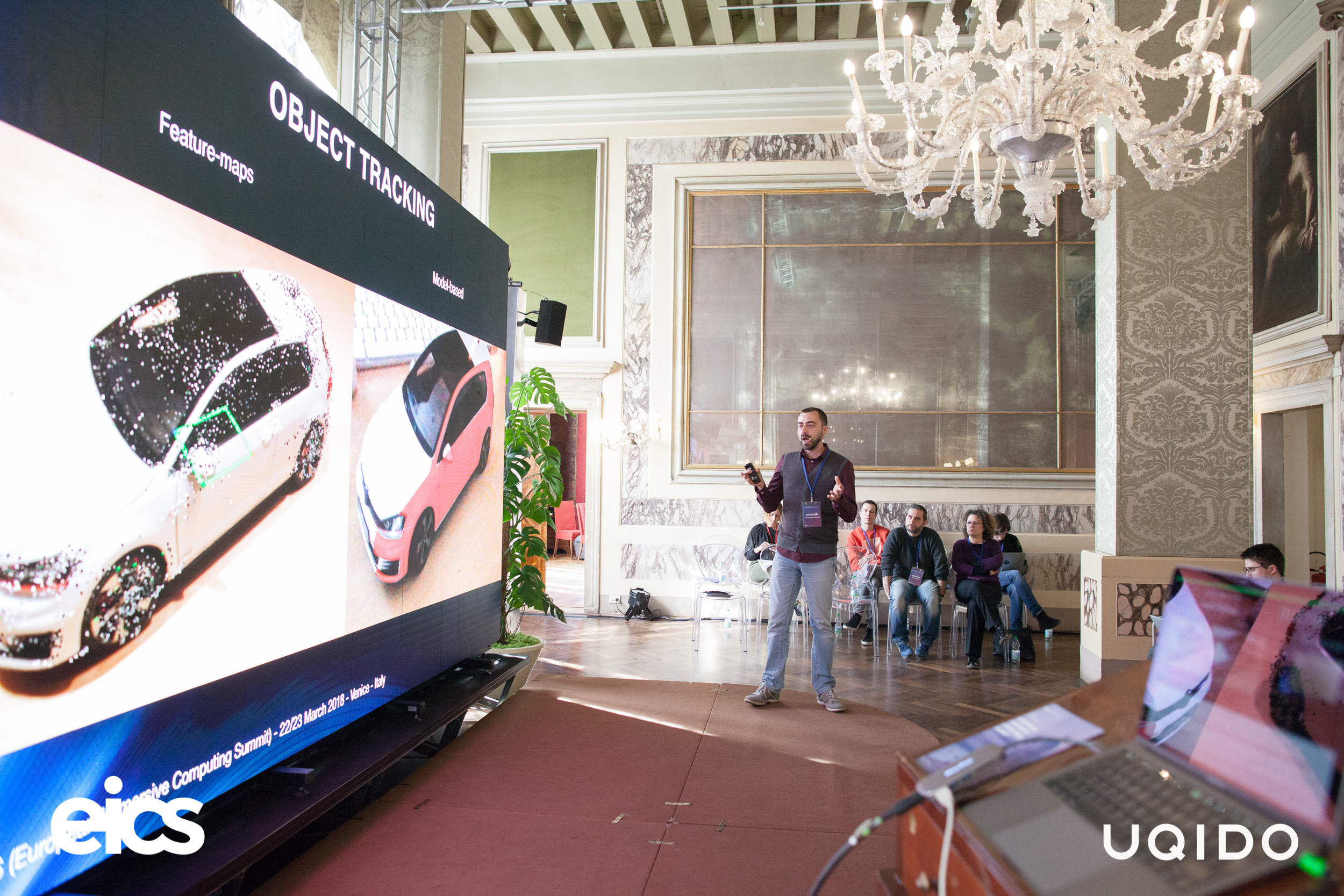 One of the presenters, Luca Prasso, shared his vision of the potential future of VR/AR. Prasso has has 30 years of experience in tech and digital media, including as a supervisor at Dreamworks during the production of Shrek. Now he works as UI/UX Prototype Engineer/Designer at Google Daydream Labs, a small rapid prototyping team tasked with looking 1-to-3 years into the future and finding aligned, innovative use cases for VR and AR. He described a process in which someone from their team would pitch a concept on a Monday, and by the following Friday a usable prototype would be in existence.
The event also spotlit more niche-focus presentations, such as Marco Mortillaro’s discussion around directorial techniques in VR gaming. In particular, Mortillaro, lead game designer of Milan-based Forge-Reply, presented his company’s approach to creating a seamless 3rd-person player experience in their Playstation VR game Theseus–sharing insights around camera placement, avoiding motion sickness, and the “consistency of gaze” method for transitioning between scenes in VR games.
The diverse range of speakers continued after a lunch of delicious Italian cuisine and a perhaps-too-early-for-this glass of wine because…“when in Venice…” A representative from MSI spoke about the future of their hardware, and a startup developer showed off his AR app to not only help people learn how to draw, but to aid muralists and street-artists with scaling up their images in real time.
And this was the beauty of EICS. Yes, it’s an event that singlehandedly put Italy on the VR/AR map.
Netflix’s Kiss Me First Is a YA Thriller Set In a Virtual Reality
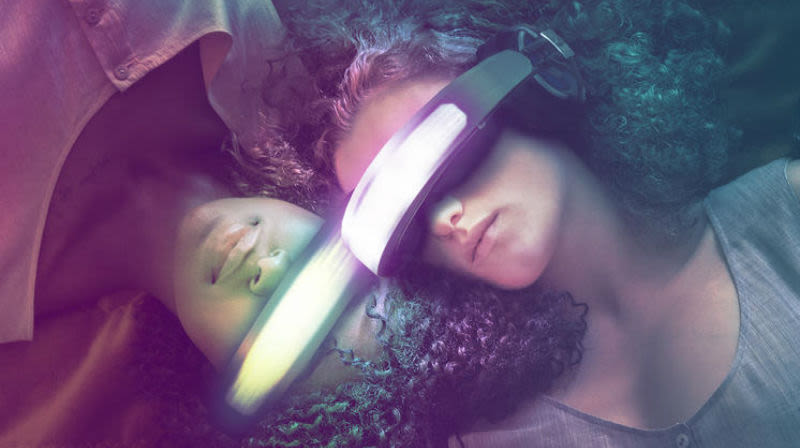 Movies like Ready Player One and The Matrix have done it, but what about TV? Well, Netflix is about to launch a new series called Kiss Me First, and it’s also partially set in a fully functional virtual world.
Created by Skins co-creator Bryan Elsey, Kiss Me First is based on the YA novel of the same name by Lottie Moggach. It’s about a young girl (Tallulah Haddon) who, after the death of her mother, becomes increasingly involved and dependent on virtual reality. However, the deeper she gets, the more she realizes the dangers of her make-believe world. Here’s the trailer.
See the full story here: https://io9.gizmodo.com/netflixs-kiss-me-first-is-a-ya-thriller-set-in-a-virtua-1826873999
8 of the Wildest Augmented Reality Glasses You Haven’t Seen Yet
ANTVR Mix
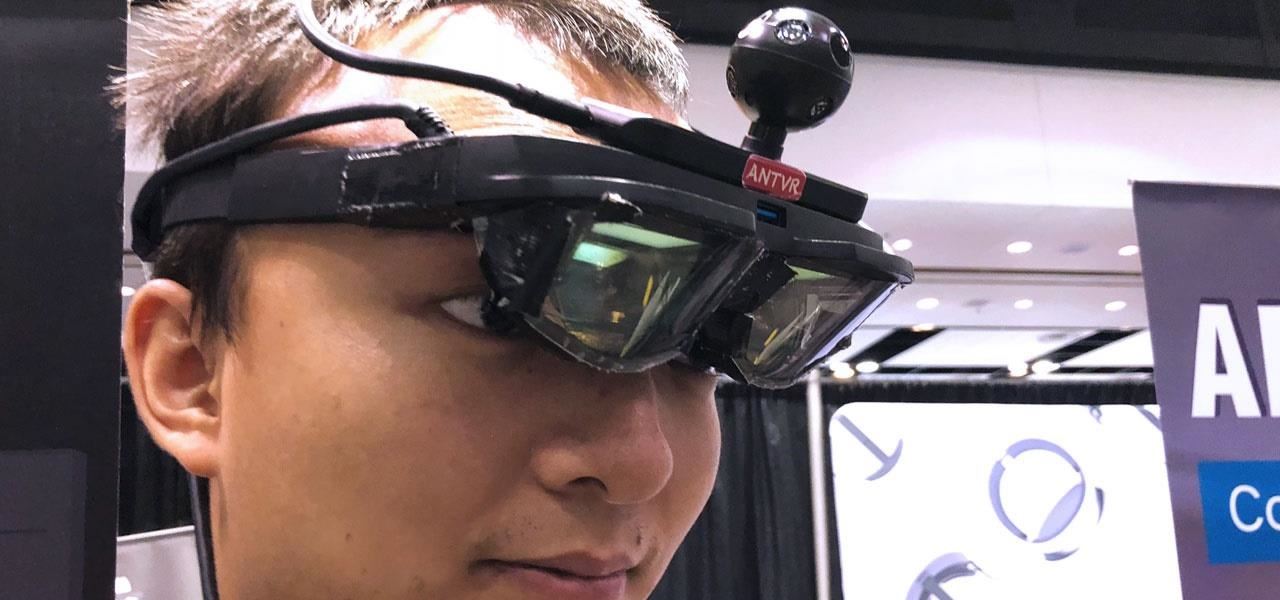
We told you about ANTVR and its Mix headset last month, just as it was launching its Kickstarter campaign to fund the device. Well, it turns out that the campaign was a success. The China-based company blew past its goal of $50,000 and has raised nearly $200,000 as of this writing.
The company plans to sell the device for $649 and intends to ship it to early backers this December.
ThirdEye X1 Smart Glasses
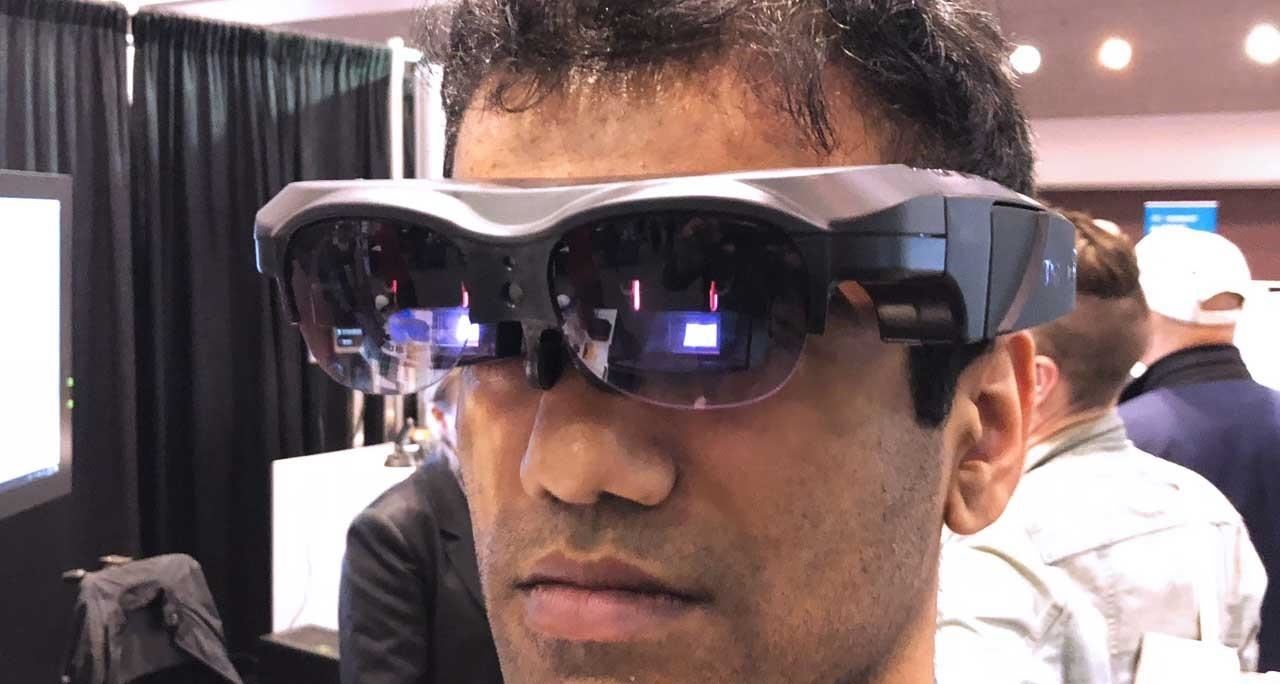
Produced by New Jersey-based ThirdEye Gen, the X1 is aimed at a wide array of customers, from enterprise to educational, to general consumers. Offering a 40-degree field of view at 1280 x 720 resolution, the device features a 13-megapixel camera that can shoot footage at up to 4K resolution. The device doesn't require a tether to a PC, offers a Wi-Fi connection for remote assistance communication, and allows the user to control the interface using head movements that are detected by the device's accelerometer.
The company claims that the X1, which can be outfitted with prescription lenses, gets about eight hours of battery life. We haven't tested it yet, but for $999, it looks like a pretty strong contender versus some of the better-known AR names.
See the full story here: https://next.reality.news/news/8-wildest-augmented-reality-glasses-you-havent-seen-yet-0185268/
Memory aid: Virtual Reality may soon help you cram for a test
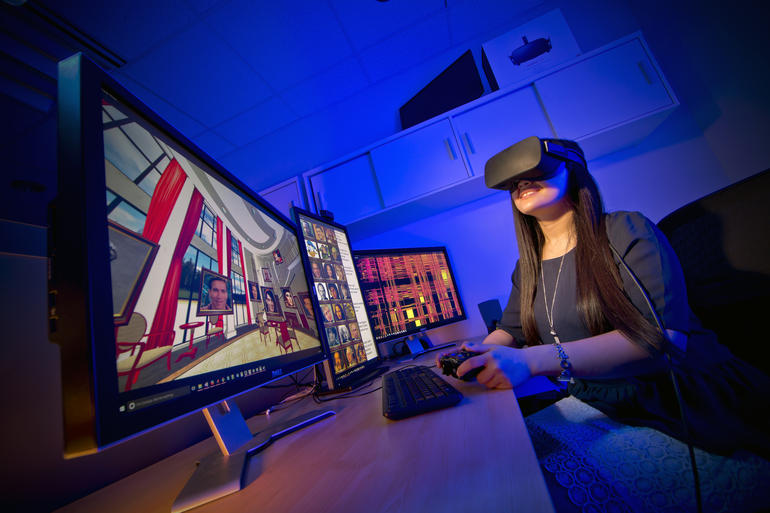 Published in the journal Virtual Reality, the results show that "immersion aids," which permit better spatial awareness than desktop screens, draw on the power of spatial mnemonics to aid memory.
"This data is exciting in that it suggests that immersive environments could offer new pathways for improved outcomes in education and high-proficiency training," Amitabh Varshney, professor of computer science at UMD, said in a university blog.
The researchers administered memory tests to study participants using a classical memory technique called a memory palace, which will be familiar to readers of Moonwalking with Einstein.
As Catherine Plaisant, a senior research scientist and coauthor on the paper, points out, many cognitive psychologists believe we have an embodied mind that fundamentally relies on our perceptions of and interactions with the physical world to form mental structures and process information.
"This leads to the possibility that a spatial virtual memory palace -- experienced in an immersive virtual environment -- could enhance learning and recall by leveraging a person's overall sense of body position, movement, and acceleration," Plaisant explains.
See the full story here: https://www.zdnet.com/article/memory-aid-virtual-reality-may-soon-help-you-cram-for-a-test/