Group Behind JPEG Unveils New ‘visually lossless’ Compression Standard for VR/AR and More
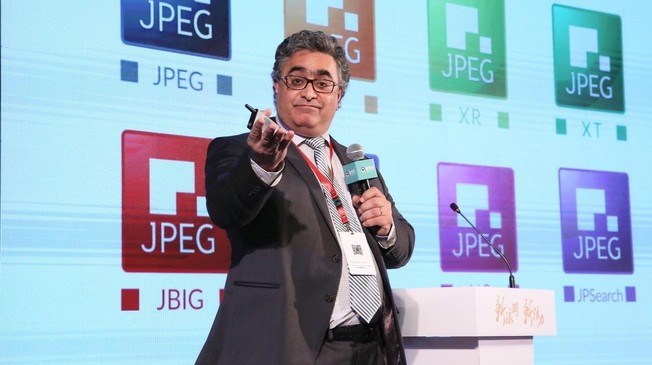 This week at NAB Show in Las Vegas, the Joint Photographic Experts Group (JPEG), the international committee behind the titular image compression standard, unveiled JPEG XS, a new format that is touted as a lower energy compression solution that provides higher quality images at low latency over broadband networks such as 5G.
Considering the current state of livestreaming VR video, including 360 & 180-degree video and the burgeoning field of light field-based captures, a new compression standard could mean higher resolutions and frame rates, making better quality streaming VR video a real possibility. 5G networks, which in recent tests have provided users 442 Mbps download speeds, are poised to address some of the underlying issues of streaming VR video quality, but compression, the JPEG XS creators say, is key.
Fraunhofer IIS, one of the co-developers behind JPEX XS, says the new ISO mezzanine codec standard offers “visually lossless quality.” The new standard supports to 8K and features a frame rate from 24 to 120fps. Compression ratios range up to 6:1.
“For the first time in the history of image coding, we are compressing less in order to better preserve quality, and we are making the process faster while using less energy,” says working group head Professor Touradj Ebrahimi in a prepared statement. “We want to be smarter in how we do things. The idea is to use less resources, and use them more wisely. This is a real paradigm shift.”
While JPEX XS looks to supplant JPEG, it isn’t going to do so overnight...
MIT’s newest headset – Intelligence Augmentation
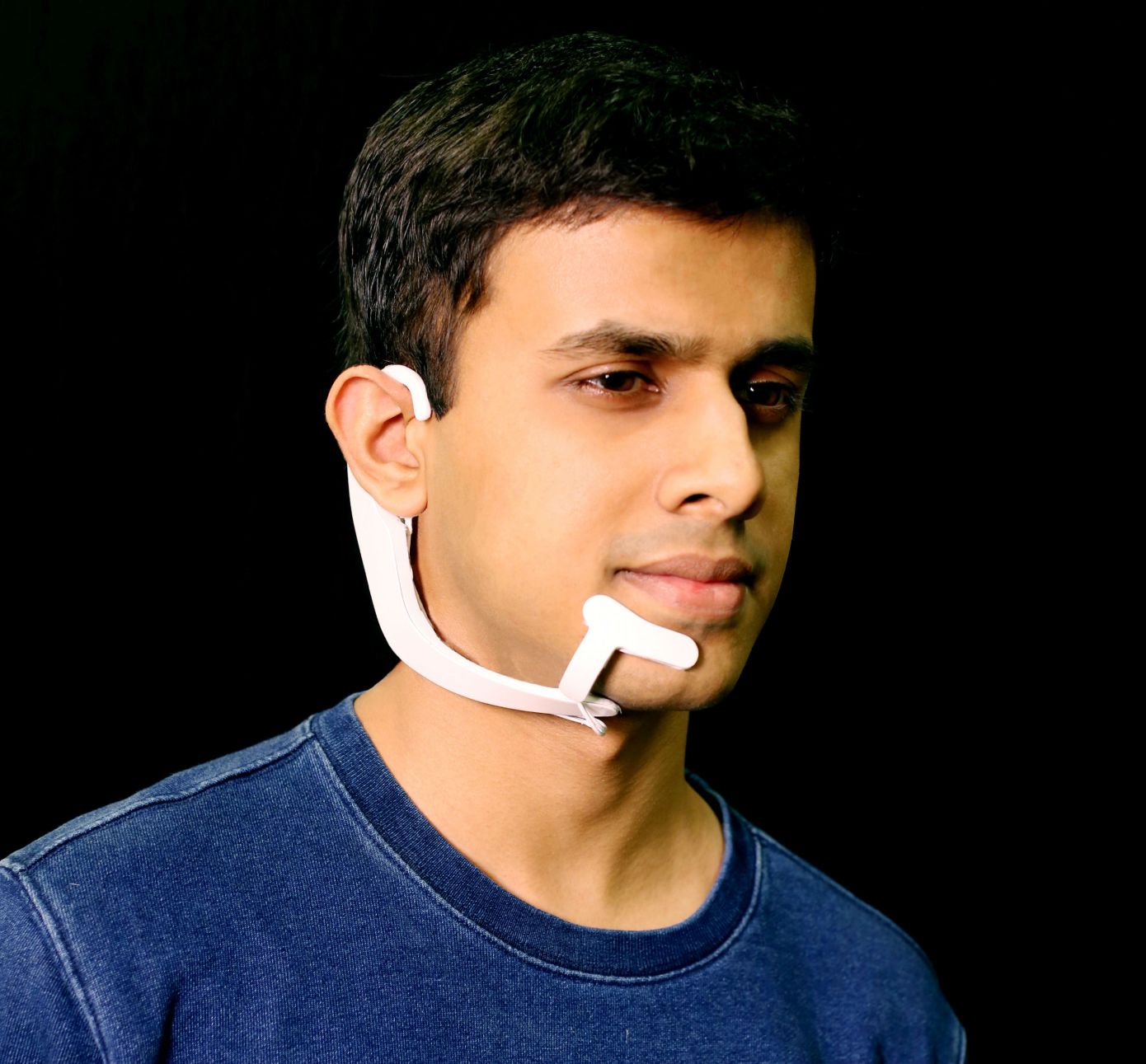 AlterEgo is a headmounted — or, more properly, jaw-mounted — device that’s capable of reading neuromuscular signals through built-in electrodes. The hardware, as MIT puts it, is capable of reading “words in your head.”
“The motivation for this was to build an IA device — an intelligence-augmentation device,” grad student Arnav Kapur said in a release tied to the news. “Our idea was: Could we have a computing platform that’s more internal, that melds human and machine in some ways and that feels like an internal extension of our own cognition?”
The school tested the device on 10 subjects, who essentially trained the product to read their own neurophysiology. Once calibrated, the research team says it was able to get around 92 percent accuracy for commands — which, honestly, doesn’t seem too far off from the accuracy of voice commands for the assistants I’ve used.
NBCUniversal’s VR strategy focuses on attractions, not headsets
“It isn’t a business yet,” said Heatherly. “There’s a lot of negativity around VR. I happen to be bullish about the platform, but I think the technology was far from prime time for most users. So the hype bubble got out of control.”
While home VR isn’t a business yet, Heatherly noted that one aspect of virtual reality has the attention of NBCUniversal, and that’s location-based VR. He pointed to The Void, ...
“We’re really focused on location-based VR right now,” said Heatherly. “If you look at how The Void has done with Star Wars or what Dreamscape has done with Alien Zoon — all of the location VR things that have opened have completely sold out.”
FoxNext Games studio president Aaron Loeb added to that during the GamesBeat panel.
See the full story here: https://venturebeat.com/2018/04/09/nbcuniversals-vr-strategy-focuses-on-attractions-not-headsets/
NAB 2018: Potential Impact of AI on Storytelling, Moviemaking
 “There’s an enormous amount of complexity in the stories we should be telling,” he said. “And a lot of these stories don’t get out because there’s a misunderstanding of what audiences want. You need to be able to better understand the risk.”
Chang asked if AI-powered machines will take over storytelling. “Not in the short term for two reasons,” said Bergquist. “First, it’s extremely hard to do. Second, you won’t be able to build machine brands that resonate with humans. It has to be human in nature. Long term? You’ll see lots of mass-produced level content that’s extremely automated; higher level content will be less automated.”
Kulczar notes that, for now at least, “AI is a tool like any other tool and is only good as the people who wield it.”
See the full story here: http://www.etcentric.org/nab-2018-potential-impact-of-ai-on-storytelling-moviemaking/
NAB 2018: Immersive Media & Location-Based Entertainment
 Location-based entertainment (LBE) is at the forefront of virtual reality and mixed reality content, and an NAB panel took a look at the role that LBE plays in distributing and popularizing this form of entertainment. Phil Lelyveld, ETC@USC’s lead of the Immersive Media Initiative program, noted that LBE represents the high-end of VR/MR storytelling, in contrast to home-based solutions. Technicolor Experience Center lead VR/AR experience producer Brian Frager said the industry adoption of standards will change that.
“That’s one of the friction points right now,” Frager said. “So much content is created specifically for the platform it’s being deployed on. With standards, you’ll be able to see content played across platforms. I think a rising tide will lift all boats.”
ILMxLAB mixed reality supervisor Michael Koperwas noted that haptics can play an important role in introducing someone to this new form of media. “We’ve learned from some of our experiences that if the audience can touch something, it can break down the barrier of trying VR for the first time,” he said.
Popper reported on “five different things are all growing exponentially”: the technology, great content, the number of LBE sites, social interaction, and the marketing of the experiences. “We need a combination of education and marketing to show that it’s not a gimmick,” she added.
See the full story here: http://www.etcentric.org/nab-2018-immersive-media-location-based-entertainment/
Pixvana creates in-house virtual reality production studio WunderVu
 Pixvana has created its own in-house virtual reality production studio.
The Seattle startup today announced WunderVu, a new independent consultancy for clients needing help with virtual and augmented reality storytelling projects.
WunderVu is led by Scott Squires, who co-founded Pixvana and is a Sci-Tech Academy Award winner known for his visual effects work and also a veteran of Lucasfilm.
Pixvana now employs 25 people in total. The company raised a $14 million round this past November led by Paul Allen’s Vulcan Capital, with participation from investors like Raine Ventures, Microsoft Ventures, Cisco Investments, Hearst Ventures, and Madrona Venture Group.
See the full story here: https://www.geekwire.com/2018/pixvana-creates-house-virtual-reality-production-studio-wundervu/
Leap Motion designed a $100 augmented reality headset with super-powerful hand tracking
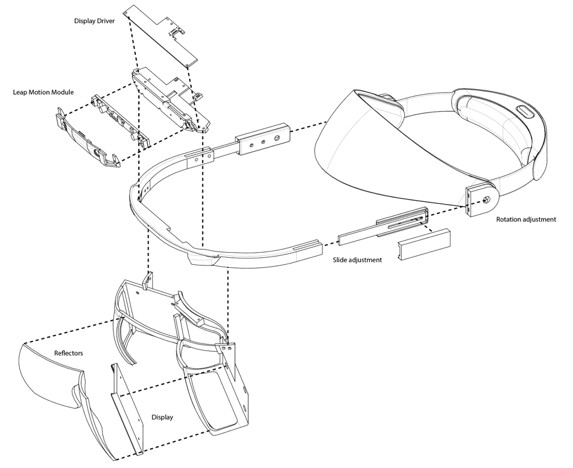 Gesture interface company Leap Motion is announcing an ambitious, but still very early, plan for an augmented reality platform based on its hand tracking system. The system is called Project North Star, and it includes a design for a headset that Leap Motion claims costs less than $100 at large-scale production. The headset would be equipped with a Leap Motion sensor, so users could precisely manipulate objects with their hands — something the company has previously offered for desktop and VR displays.
Instead, the company is releasing the necessary hardware specifications and software under an open source license next week.
The headset design uses two fast-refreshing 3.5-inch LCD displays with a resolution of 1600x1440 per eye. The displays reflect their light onto a visor that the user perceives as a transparent overlay. Leap Motion says this offers a field of view that’s 95 degrees high and 70 degrees wide, larger than most AR systems that exist today. The Leap Motion sensor fits above the eyes and tracks hand motion across a far wider field of view, around 180 degrees horizontal and vertical.
Leap Motion emphasized to The Verge that it’s not a headset company, and it’s said before that it’s primarily interested in getting software running on as many systems as possible....
See the full story here: https://www.theverge.com/2018/4/9/17208192/leap-motion-project-north-star-augmented-reality-headset-open-source-concept