Even if Magic Leap’s goggles suck, it can probably still make money off them
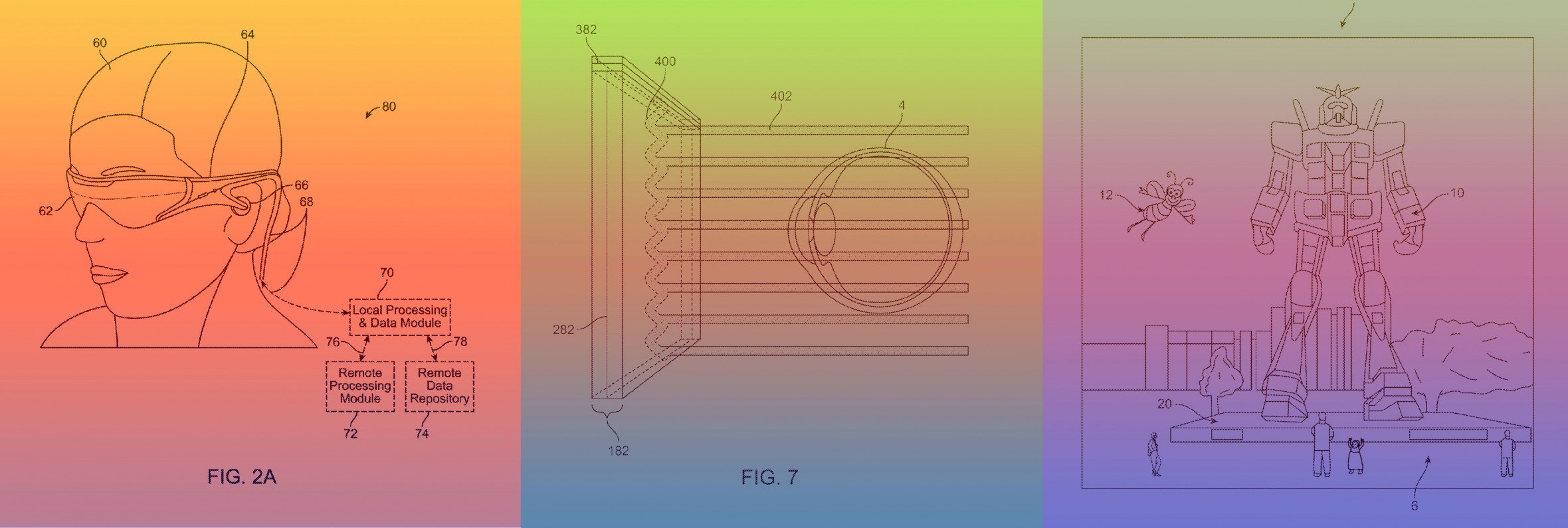 Ozi Amanat, founder of VC firm K2 Global, which invested in Magic Leap’s $542 million series B funding round in 2014 along with Kleiner Perkins, Google, and others, said he saw the intellectual property as a buffer to his investment.
“It definitely gave me a lot of comfort looking at the company,” said Amanat, who is based in Singapore.
Carl Bernstein speaks on ‘Fake News! The Media, The Truth, and our Democracy’
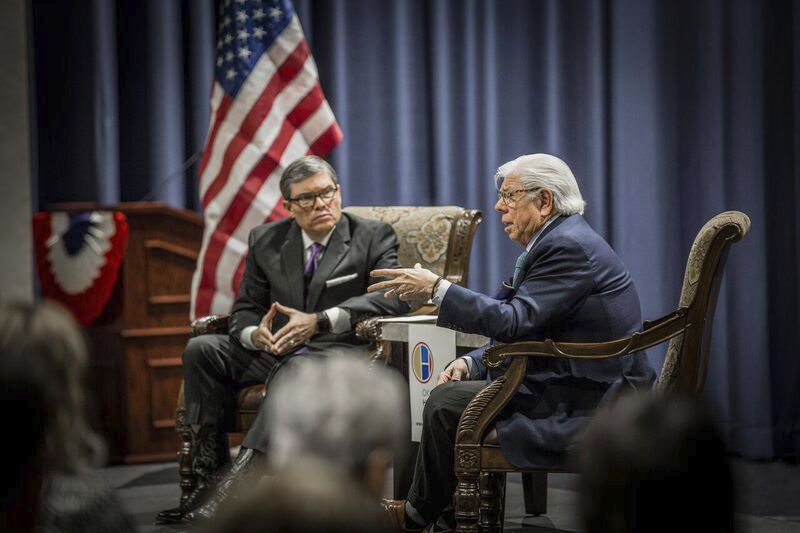 “The truth is often complex,” Bernstein said. “It doesn’t always limit itself to a string of facts.”
A common failing is to leave out context. which brings deeper meaning and understanding to the facts, he said. Reporters should have a healthy skepticism but should not be cynics.
While those terms are often used interchangeably, the line Bernstein drew was between asking questions versus always expecting the worst of people.
Donald Trump might not record every word he utters during private meetings with staff, but he does one thing that gives us a clue as to who he is and what he’s thinking: He tweets.
“Tweets are readings of Donald Trump’s mind,” Bernstein said. “The lie is basic to how he conducts himself.”
Bernstein said it’s important for journalists to follow the lies and follow the money.
“For all our failures as journalists, there is also a failing of the citizenry,” Bernstein said.
People are no longer looking for information, he said, they are looking for affirmation of what they already believe.
See the full story here: http://www.normantranscript.com/news/government/separating-truth-from-virtual-reality-no-easy-task/article_cf24aa85-f306-53ec-9eed-947ab5c3951d.html
Jay and Silent Bob are coming to virtual reality, whether you’re ready or not
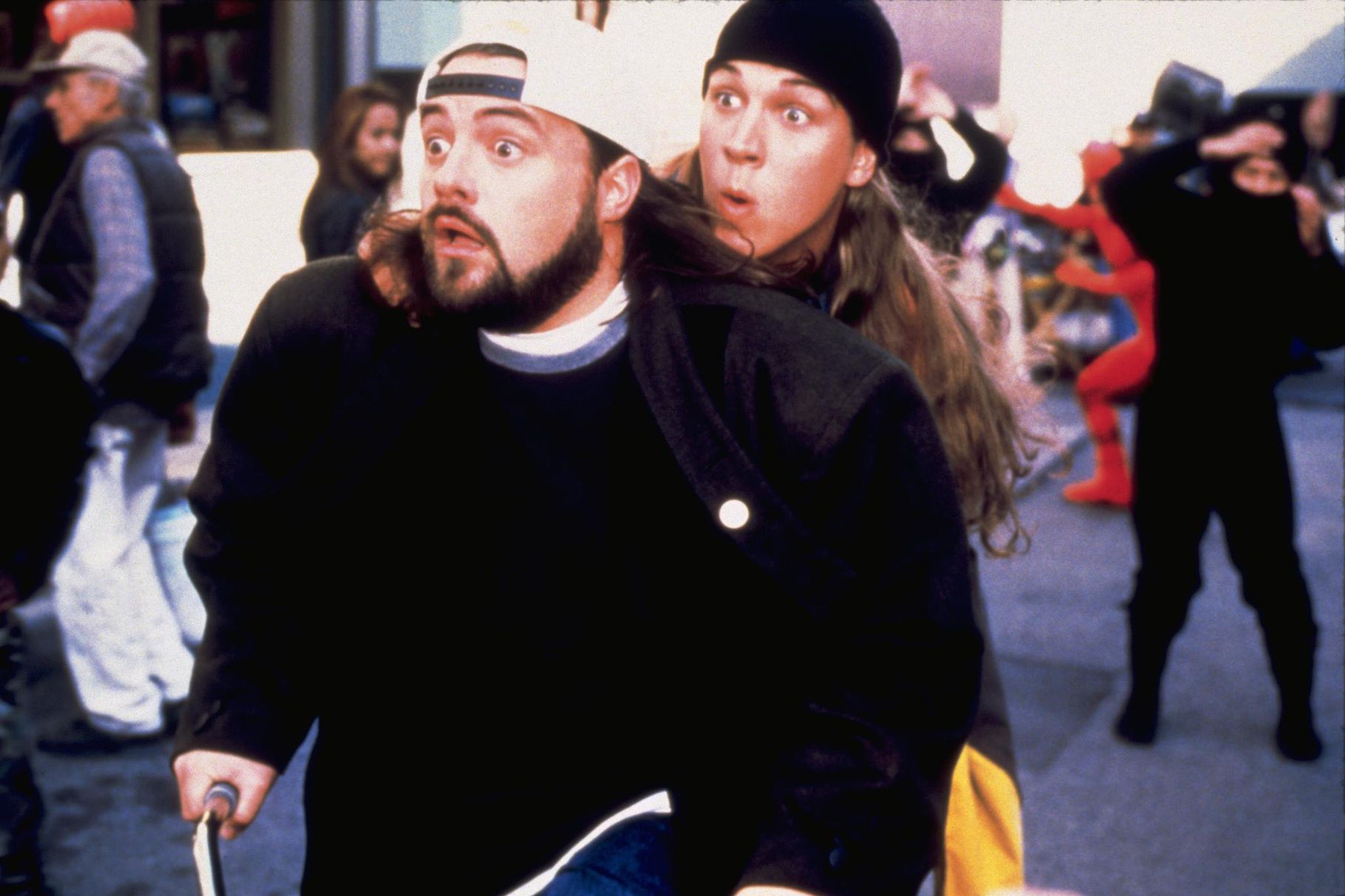 Filmmaker Kevin Smith first broke into the film industry thanks to his no-budget, 1994 indie comedy Clerks, and now, that movie’s two most memorable characters will be coming to virtual reality. Jay and Silent Bob VR will be a live-action comedy series that will be written and directed by Smith, shot from the point of view of his Silent Bob character as Jason Mewes’ Jay “leads the way through a string of idiotic adventures.”
It’s just one of several VR projects in development that were announced today by STX Entertainment’s Surreal division, which handles VR and immersive entertainment production for the company. Among the other announcements is an untitled live-action series from John Wick writer Derek Kolstad about a government agent sent to investigate a mysterious aircraft crash in 1947, and an action-comedy from Guardians of the Galaxy star Dave Bautista. The Kiev Exchange will be a spinoff of director Peter Berg’s upcoming action film Mile 22, while the comedy New Tricks — to be directed and produced by The Hangover’s Ed Helms — will follow a slacker who discovers he is fated to become an all-powerful wizard.
See the full story here: https://www.theverge.com/2018/4/4/17200358/kevin-smith-jay-and-silent-bob-vr-stx-entertainment
VR Use Should be Minutes, Not Hours. New Study on Kids and Virtual Reality Advises Parents, Educators.
 It’s an interesting time for parents and researchers alike. “When it comes to VR, we just don’t know all that much,” writes Jeremy Bailenson, a co-author of the study “Virtual Reality 101: What You Need to Know About Kids and VR,” in a preface to the results.
Founder of the Virtual Human Interaction Lab at Stanford University, Bailenson admits to uncertainty about what’s appropriate for his own children, ages three and six, in terms of media use. He struggles with how close is too close to sit by the TV. Add VR, “and we find ourselves in a foreign landscape,” concludes Bailenson.
MINUTES, NOT HOURS
While further research is needed, the report from Common Sense, a nonprofit focused on kids’ media and tech use, offers guidance on VR use based on what we know thus far.
Given the intensity of the experience and the particular effectiveness of the illusion of VR on children, moderation is recommended. “Instead of hours of use, think in terms of minutes,” counsels Bailenson. “VR is meant to be done on the five- to 10-minute scale.”
See the full story here: https://www.slj.com/2018/04/industry-news/vr-use-minutes-not-hours-new-study-kids-virtual-reality-advises-parents-educators/
Virtual reality could encourage pro-social behaviour and empathy in children
The report found that while parents remained cautious around the technology, with 60 per cent at least "somewhat concerned" that their children will experience negative health effects, it also extolled the benefits of VR for fostering empathy and pro-social behaviour.
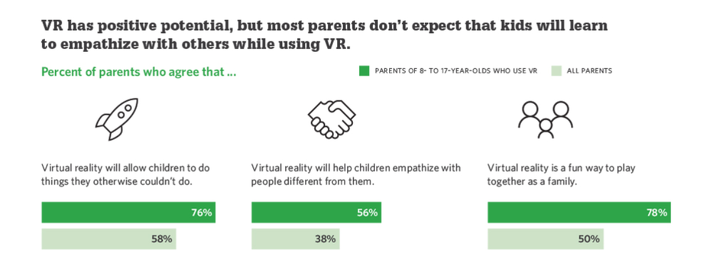 However, just 38 per cent of all parents think VR will help children empathise with different people. This number jumps up slightly to 53 per cent among parents of eight to 17-year-olds who are already using VR.
See the full story with a link to the report here: https://www.gamesindustry.biz/articles/2018-04-04-virtual-reality-could-encourage-pro-social-behaviour-and-empathy-in-children-report-finds
Augmented Reality will change everything – this Finnish startup is building the ‘Photoshop of AR’
- Emmi Jouslehto is all about Augmented Reality (AR), a technology that's soon expected to have it's big breakthrough.
- She heads Arilyn, a startup that enables advertisers and entertainment groups to use AR in storytelling.
- We caught up with Emmi Jouslehto to hear what's next for Arilyn and why she thinks AR will be a game-changer.
- ----
BI Nordic: What does your company do?
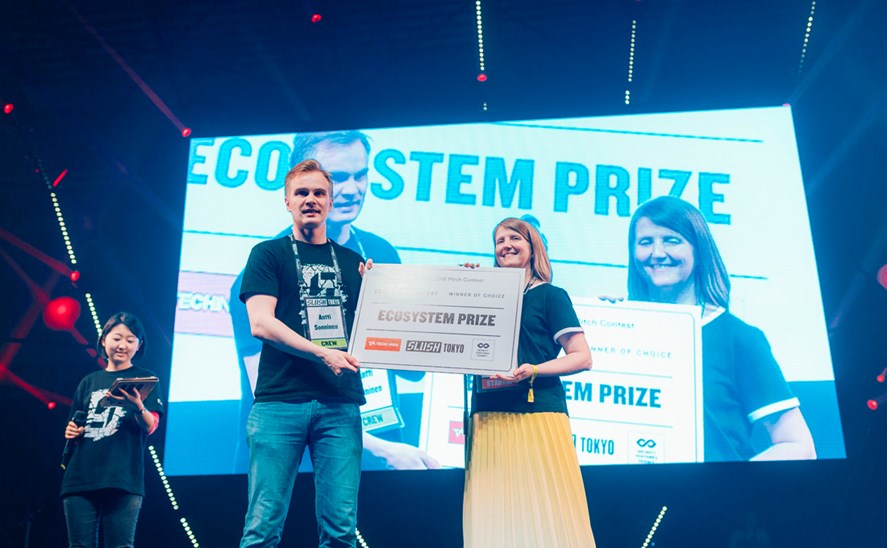 Emmi Jouslehto: We are the leading Nordic AR service platform provider. For B2B customers, we provide an online service where they can easily manage their AR experiences for their own customers.
We focus on virtual storytelling, and we believe this will scale up massively in the coming few years. Arilyn’s service is specifically designed for virtual storytelling for professionals in marketing, media and entertainment.
Our customers include a lot of big names such as Nokia, Huawei, All Nippon Airways and several marketing and advertising agencies in over 15 different countries. They can launch AR-tools through Appstore and Google Play.
What is a competitor doing that you are inspired by?
There is so much happening in AR right now that I´m inspired about new things almost daily. For instance, Venturebeat recently wrote about an AR app called TendAR that reacts on peoples feelings.
Peter Thie'ls classic interview question: What do you think is true, that almost nobody else thinks is true?
That focusing on something very niche and being the best in that very specific field is not always the best path for a startup; although it's a common piece of advice from investors.
At Arilyn, we have always kept our minds open for new various ways to use AR. We would not be where we are today, in the very center of AR evolution, if we would have focused on some very narrow field early on.
Talk about a tech trend that inspires you right now?
I'm a geographer by education and it really inspires me to see how AR and other disruptive technologies are changing the way people use the space around us.
In the coming years, our surroundings will be filled with virtual content and it will inevitably change the way we behave and move in urban environments. It gets even more interesting when we combine AR with Artificial Intelligence and Internet of Things.
See the full story here: http://nordic.businessinsider.com/charles-barkley-says-doug-jones-win-is-wake-up-call-for-democrats-2017-12/
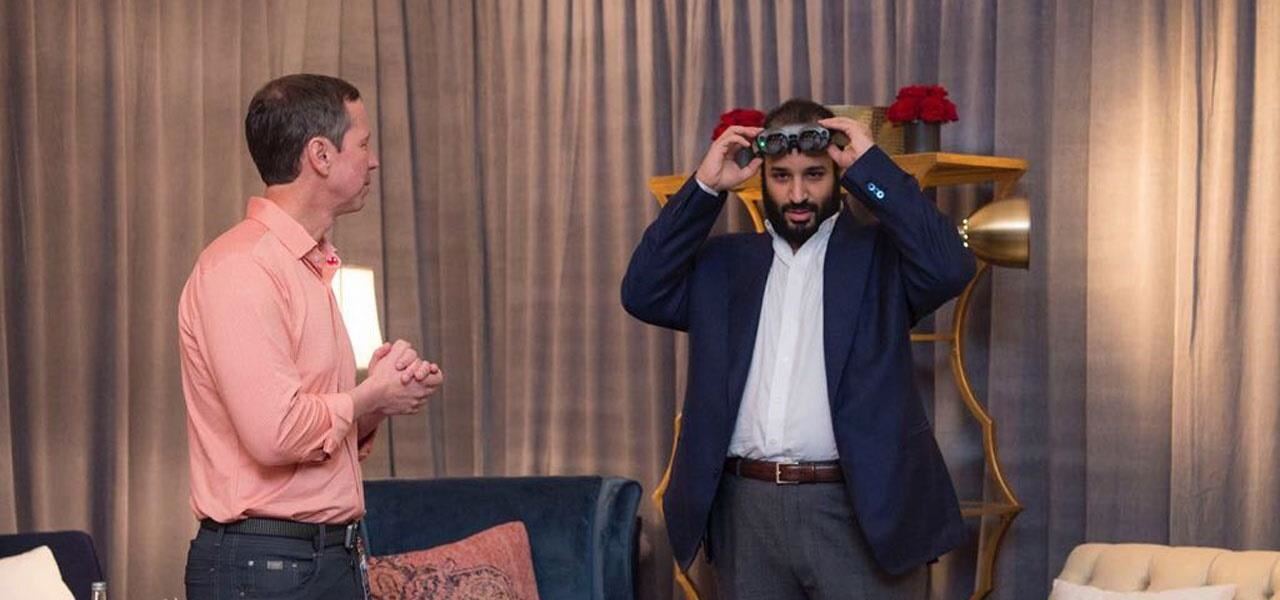
Saudi Royal Demos Magic Leap One During Tech Tour
 See the full story here: https://next.reality.news/news/market-reality-vuzix-defends-blade-magic-leap-shows-off-ml1-snapchat-reintroduces-consumers-its-ar-camera-0183976/
Virtual Reality Headset History 2012 To 2018
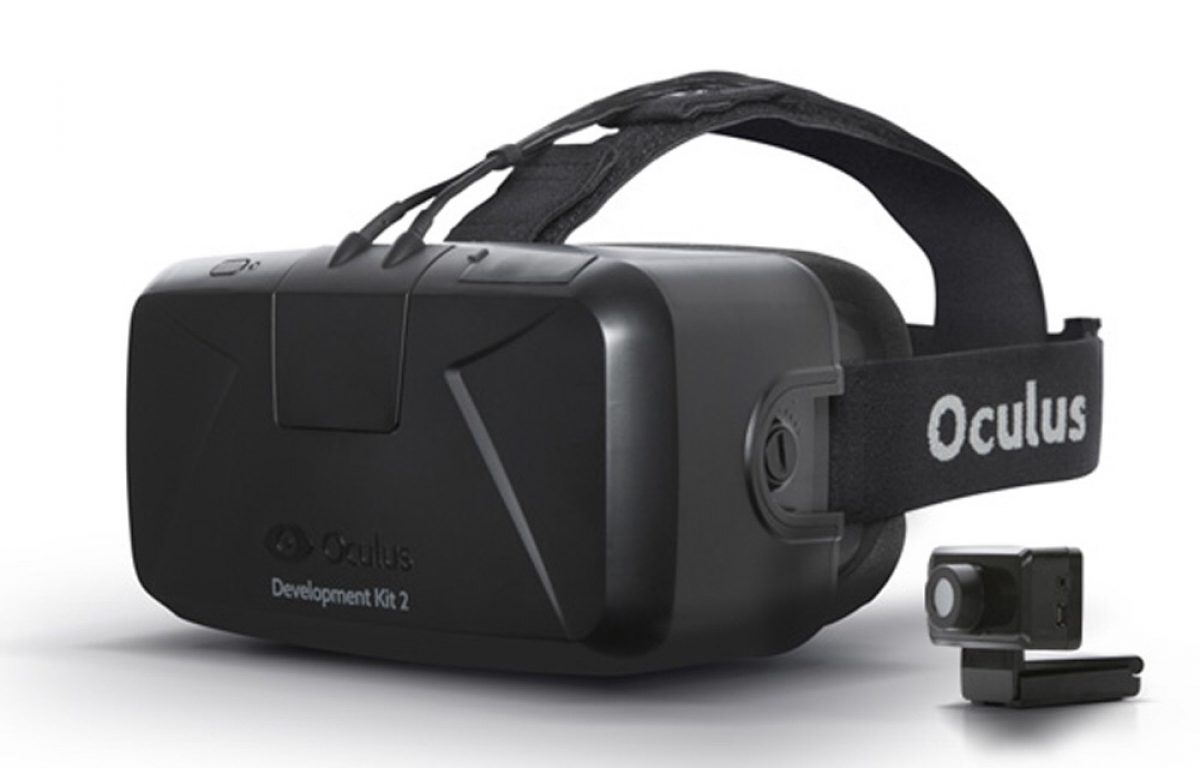 The below list is a drastic oversimplification of the path toward consumer availability of VR, and it was all arguably set in motion by the FOV2GO project at USC’s mixed reality lab. The project, outlined in the 2012 video below, offered simple instructions to build a cardboard holder for your phone that would produce a simple VR experience — an idea that would become integral to Google’s VR efforts a few years later.
Many of the researchers working at this USC lab would ultimately disperse to found companies like Oculus and Survios, and as VR gained momentum its leaders like Mark Bolas and Paul Debevecwent off to join the the efforts underway at Microsoft and Google. They were hired as part of a wave that saw experts in VR and AR around the world snatched up by the world’s biggest tech companies.
See the full story here: https://uploadvr.com/vr-headset-history-2012/