AUGMENTED REALITY IS TRANSFORMING MUSEUMS
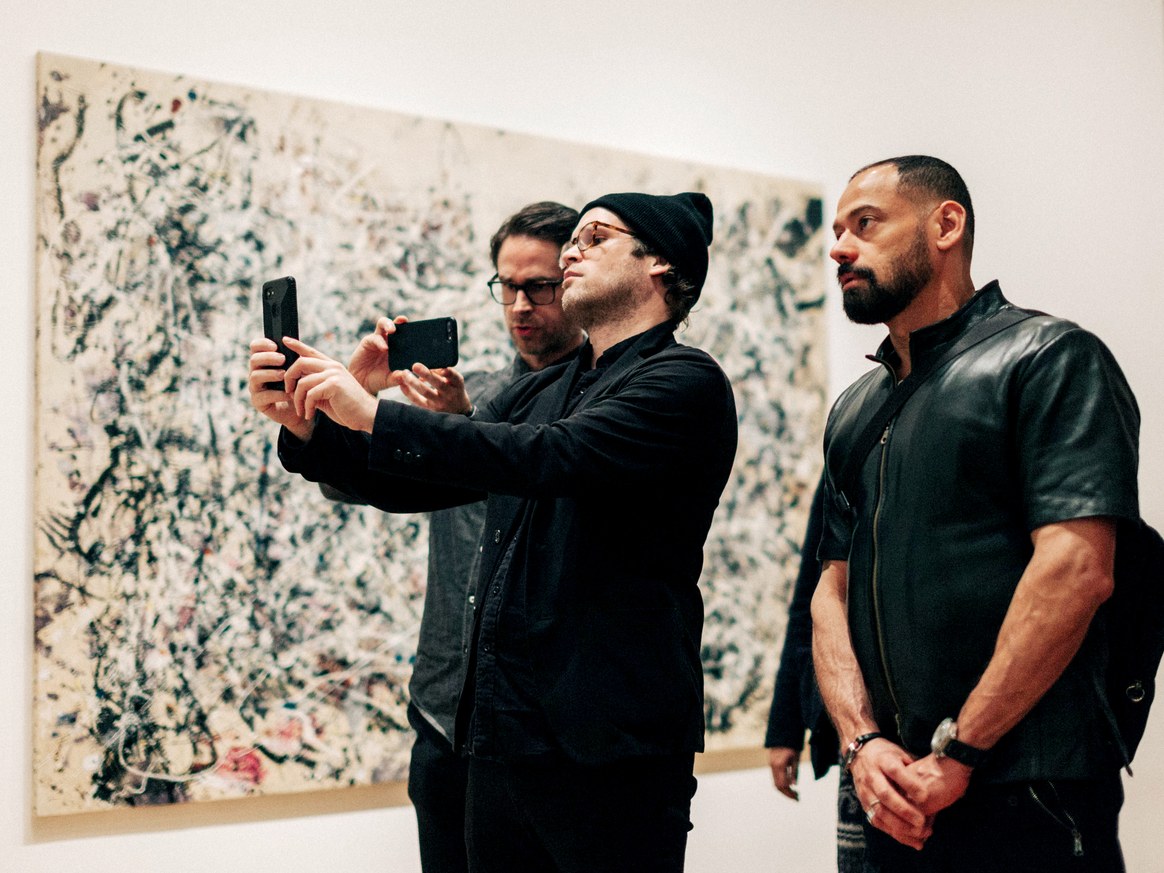 NEW YORK’S MUSEUM of Modern Art is under siege. Well, a virtual siege, at least. A group of renegade artists has co-opted the brightly-lit Jackson Pollock gallery on the museum’s fifth floor, turning it into their personal augmented reality playground.
To the uninitiated, the gallery remains unchanged; Pollock’s distinctive drip paintings are as prominent and pristine as ever. But to those that have downloaded the MoMAR Gallery app on their smartphones, the impressionist's iconic paintings are merely markers—points of reference telling the app where to display the guerilla artists’ works. Viewed through the app, Pollock’s paintings are either remixed beyond recognition or entirely replaced. One artist has framed a Pollock painting in an interactive illustration of a smartphone running Instagram, allowing viewers to “heart” the work over and over again. Another has overwritten Pollack’s imagery with an artistic interpretation of the many conspiracy theories peddled by Q, a mainstay of the far-right on 4chan. Together, the eight works form a virtual exhibition dubbed “Hello, we’re from the internet,” which uses AR to challenge MoMA’s gatekeepers and museum curators at large.
...Despite the current lack of of clear laws around what can and cannot be done to virtually augment art, museums aren’t entirely powerless. When visitors enter a museum, they agree to whatever rules that institution has set out—no photography, for instance, or no touching the paintings. Museums could begin to add “no AR apps” to their rules, or ban the use of phones outright—though doing so might seem like a step backwards, considering that many museums only recently began embracing smartphones as a way to engage their visitors. Artists, too, could begin negotiating more complex contracts with museums, spelling out what can and cannot be done to augment their works. The latter may become more common as museums follow in the Pérez Art Museum Miami’s footsteps, experimenting with their own AR exhibitions. “There are a lot of interesting IP questions we have to navigate,” says Christina Boomer Vazquez, deputy director of marketing and public engagement at PAMM. “There’s also the issue of respecting the artists that are on view and the impact that [augmentation] would have on that artist and that work. [Augmentation] can alter the whole context and conversation of that artist’s work.”
See the full story here: https://www.wired.com/story/augmented-reality-art-museums/