We’re a long way from virtual reality’s Citizen Kane
 VR film is failing to give audiences a reason to put on their headsets

Discussions about the role of perspective, embodiment and camera movements are all well and good, but these can be forgiven in the face of well-written and well-acted performances. Ctrl and Lucid are ambitious but their biggest fault is that they are ultimately middling. The dialogue is uneven. The characters are rough sketches. The emotional climaxes aren’t properly earned.
It’s telling that VR documentary is succeeding where scripted VR is failing. Transporting someone to the frontline of an actual warzone is a concept that, as fetishistic as it is, is easy to understand as something that can’t be got through a TV screen.
You either need a very good reason for your story to be told with a viewer-controlled perspective, or you need a shit-hot script.
See the full story here: http://www.alphr.com/virtual-reality/1008470/virtual-reality-film-vr-storytelling
7 of the best augmented reality apps for iPhone you should download right now
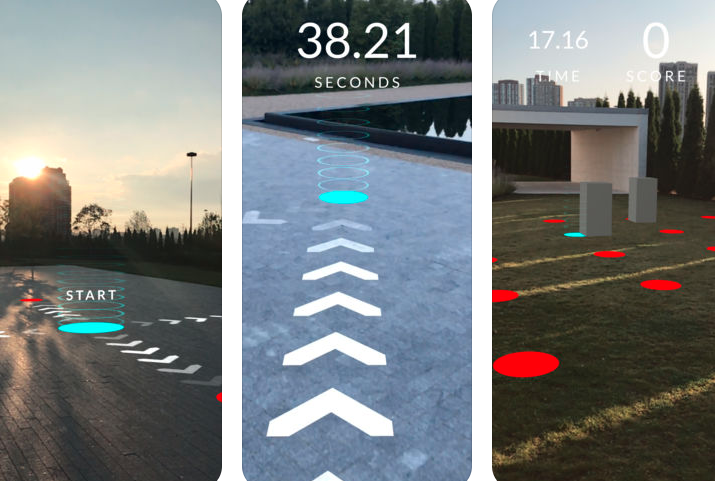
Running with a $1,000 glass smartphone in your hand might not be for everyone, but AR Runner is a fun use of AR nonetheless —and it gets you to go outside.
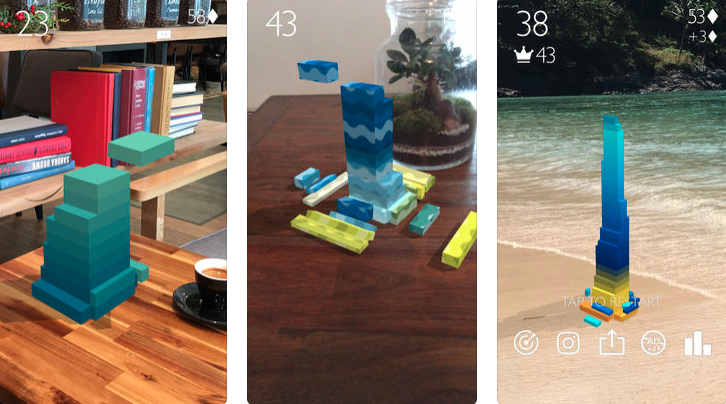
Stack already exists as a simple but attractive and addictive tower-building game. Now, the new AR version lets you build towers in the augmented world around you.
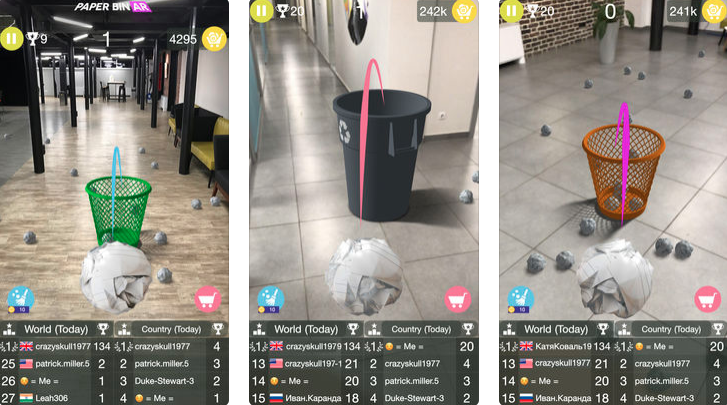
On a very similar theme, Paper Bin AR is a game where you throw scrunched up balls of paper into an office trash can. Place the bin further away to increase the difficulty level and pick from either a set of virtual settings, or use AR to place the basket on your desk, floor, or on a table across the room.

Another fun but practical use of AR is with tattoo app InkHunter, which lets you try on tattoos virtually before committing to the real thing. The app requires you to draw a straight-lined face on your skin with a pen; this helps the app work out where to put the tattoos.
See the full story here: https://www.gearbrain.com/best-ios-augmented-reality-apps-2534028587.html
Virtual reality training could create risk-averse behavior
 The use of virtual reality safety training can help create artificial memories of accidents, which could encourage users to avoid such risks in the future. It may encourage risk-averse behavior, potentially helping workers to avoid risky situations that lead to falls.
See the full story here: https://www.smartbrief.com/s/2018/02/virtual-reality-training-could-create-risk-averse-behavior
Speed skater Ted-Jan Bloemen gets paid in cryptocurrency
 Canadian speed skater Ted-Jan Bloemen recently became the first athlete to be paid in virtual money when he struck a one-year sponsorship deal with ONG Social, a social network and crypto community, and CEEK VR, a developer of virtual reality experiences.
The double world record-holder plans to share his Olympic journey on the ONG Social network and star in a 360° virtual reality experience on CEEK VR. In return, he will earn cryptocurrency rewards.
See the full story here: https://edition.cnn.com/2018/02/10/sport/crypto-speedskater-ted-jan-bloemen-winter-olympics-intl/index.html
Trimble and Microsoft Hololens; This Is What A Mixed Reality Hard Hat Looks Like
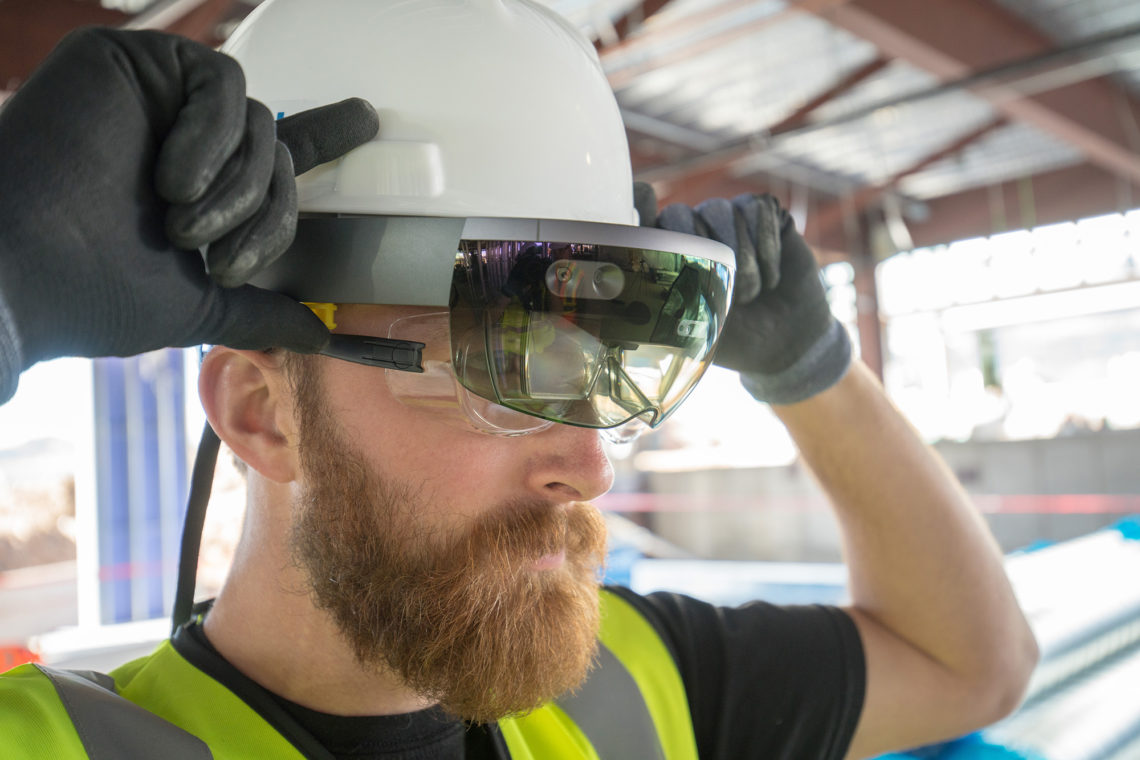 Which is how Microsoft finds itself in the somewhat unlikely position of endorsing a hard hat. They have been working with Trimble to come up with a design complete with MSA V-Gard hard hat, suspension system, and quick-release accessory clips. All of which allow workers to wear the HoloLens comfortably without voiding the warranty of the $3,000 device.
It also meets basic impact protection requirements of ANSI Z87.1, CSA Z94.3 and EN 166 (the most common protective glass certification standards) and IP50 rated testing, meaning the device will be able to perform protected from dust. And while that might not sound like the sexiest list of features, it seems to have got this construction crew excited enough in the demo video below.
The application they are using is called Trimble Connect. It turns data into 3D holograms, which are then mapped out to scale onto the real-world environment. This gives workers an instant sense of where and how various elements will fit and exposes mistakes early on in the process.
The Hard Hat Solution, which is expected to be released later in the first quarter of 2018, will build upon what has been Microsoft’s HoloLens strategy from the very start, focusing on enabling Industry 4.0 efficiencies and capturing the lion’s share of the enterprise market.
NextVR’s Latest Tech is Bringing New Levels of Fidelity to VR Video
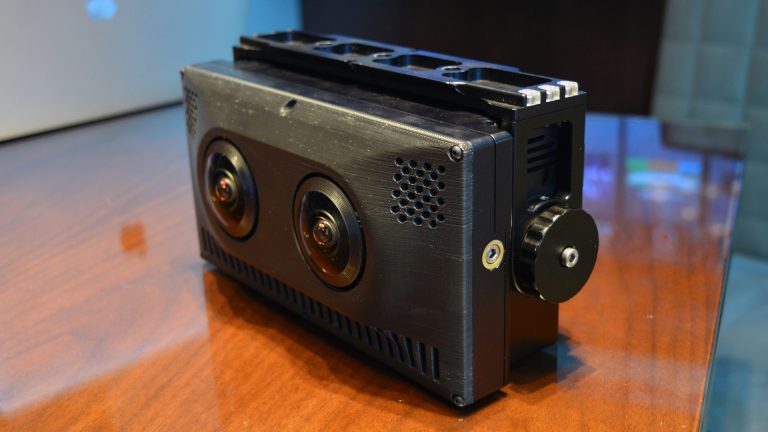 NextVR, on the other hand, is one of only a handful of companies pushing the limits of production and playback quality, now approaching a level of quality and features that could properly be called ‘VR video’ rather than plain old ‘360 video’.
Cole says that, in the best case scenario with 8 Mbps bandwidth, the company can now stream 20 pixels per degree, up from 8.5 pixels per degree previously. Keep in mind, that’s also in stereo and at 60 FPS. The company plans to roll out this higher-res playback to supported devices (we understand Windows VR headsets only, to start) early this year, but I got to see a preview running on Samsung’s Odyssey VR headset which offers a solid step up in pixel count over headsets like the Rift and Vive (1,440 × 1,600 vs 1,080 × 1,200).
In addition to improved quality, NextVR is also adapting their pipeline for volumetric capture and playback, allowing the viewer’s perspective to move positionally within the video (rather than just rotationally). Adding that extra dimension is huge for immersion, since it means the scene reacts to your movements in a way that appears much more natural.
Since the company is using stereo orthogonal projection, Cole explained, wherein the scene’s pixels are projected on a 3D mesh and transmitted to the host device, new frames needed for positional tracking are generated locally and displayed at the headset’s own refresh rate (meaning, just like rotational tracking, even though the footage is 60 FPS, you’ll see 90Hz tracking on a 90Hz headset).
Apple Patents Optical System for Use in Both VR and AR Headsets
- The patent application goes into detail describing an optical system for use in a head-mounted display. This head-mounted device could be used for either virtual or augmented reality purposes — both are mentioned, but the emphasis, interestingly, is being placed on virtual reality.
- Additionally, Apple notes that long-term use of a head-mounted device can be uncomfortable. The patent also describes its methods for mitigating this issue — namely the use of more efficient lenses that aren’t bulky or heavy.
- Basically, Apple has invented a system that can display images or other content on a head-mounted device that incorporates more efficient and comfortable-to-wear technology.
 Of course, since it is just a patent application, there’s no guarantee if we’ll ever see the tech described hit the market. So take these rumors with a grain of salt.
See the full story here: https://www.idropnews.com/news/apple-patents-optical-system-use-vr-ar-headset/62706/