RESEARCH ARTICLEAPPLIED SCIENCES AND ENGINEERING
Magnetosensitive e-skins with directional perception for augmented reality
 Another example is digital twins and the potential they demonstrate for haptic technology. Using this concept, researchers can already see inside a running turbine that’s color-coded based on working condition, heat, and other factors. Imagine being able to feel a loose bolt or wear and tear around the engine as it runs in real time. This allows individuals in industries such as manufacturing and engineering to truly simulate their work environment in a virtual setting, providing a hazard-free space for training.
In fact, kinesthetic learning — learning by touching and doing — is one of the three major learning styles, the other two being visual and auditory.
... one report on assembly planning demonstrates how haptic-enabled VR allowed users to instantly modify features such as virtual objects’ weight, letting them test a number of use cases they would experience at work efficiently and without risk.
K.R. Sanjiv is the chief technology officer for Wipro Limited, a global information technology, consulting, and business process services company, where he’s overseen the development of Wipro HOLMESTM, the company’s proprietary AI system.
See the full story here: http://observer.com/2018/01/haptics-users-feeling-virtual-world-teslasuit-playstation-vr/
 A hotel room automatically adjusting to the tastes of each guest, virtual reality headsets as brochures: the tourism sector is starting to embrace new technologies, hoping to benefit from lucrative personal data.
In a prototype of the hotel of the future on display at Madrid's Fitur tourism fair, receptionists have disappeared and customers are checked-in via a mirror equipped with facial recognition.
Once the client is identified, the room adapts itself automatically to all demands made at reservation: temperature, lighting, Picasso or Van Gogh in the digital frames hanging on the walls.
"Technology will allow us to know what the client needs before he even knows he wants it," says Alvaro Carrillo de Albornoz, head of Spain's Hotel Technology Institute, which promotes innovation in the sector.
The mattress is equipped with sensors and records the movements of those sleeping, which could prompt hotel staff to offer them a coffee when they wake up.
Restricted in some countries, the latter involves placing a beacon in the hotel that will detect customers' smartphones, meaning they will know how much time they spend in their rooms, for instance, or at what time they go to the pool.
"We're in a completely pioneering phase," says Marcial Correal, head of the Spanish association for virtual travel agencies, who is promoting this tool to tourism professionals as the brochure of the future, without too much success so far.
See the full story here: http://www.thejakartapost.com/travel/2018/01/21/ai-virtual-reality-make-inroads-in-tourism-sector.html
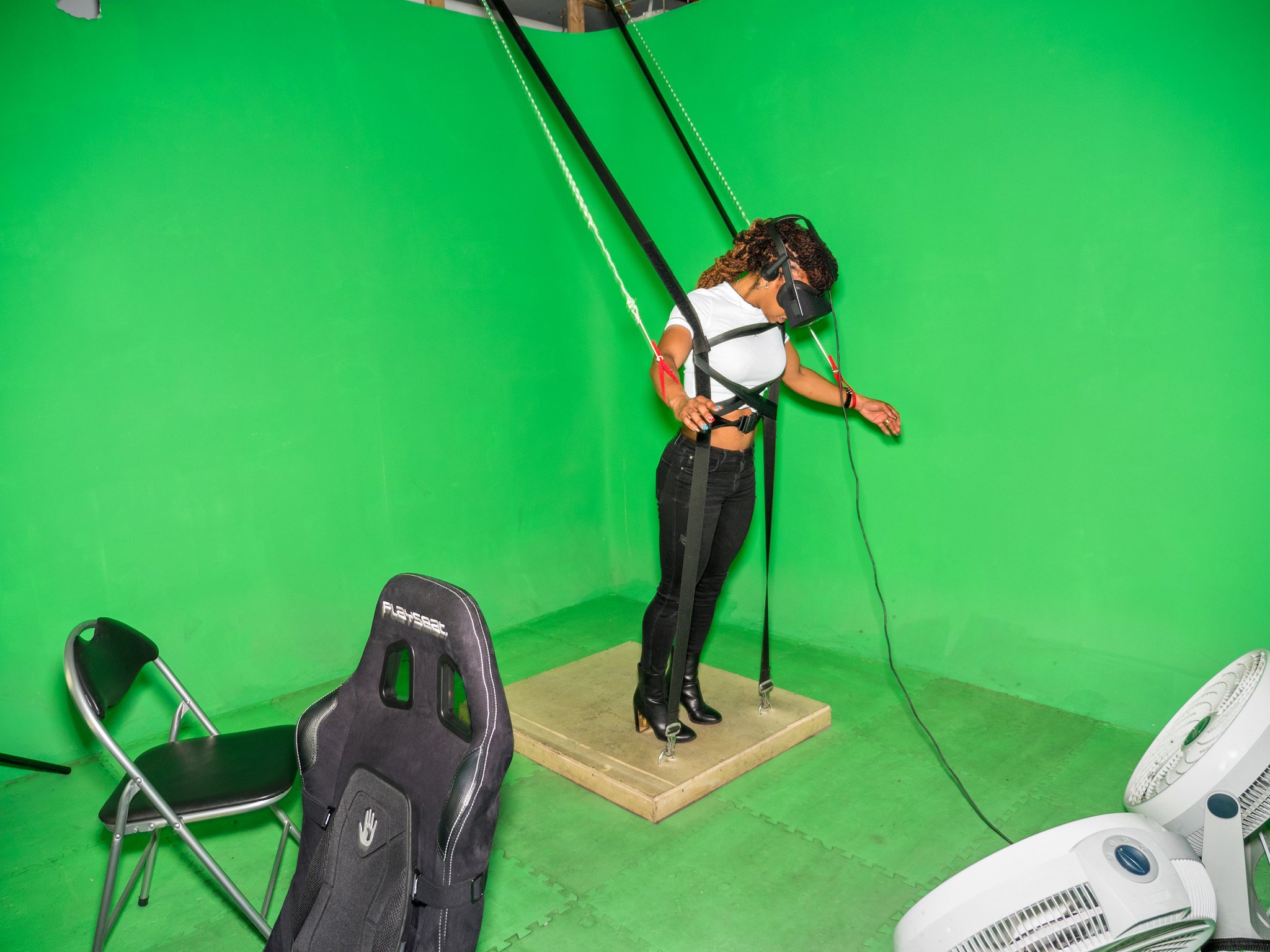 Nassima points to the challenges of a VR experience his company recently created for the Museum of Sex. “You don’t know what you’re getting into; you have to have a certain amount of trust to go into this experience,” he said. He also noted that VR is “not very good for social settings,” and that the user is “completely isolated.”
That’s why VR World, where a two-hour pass costs $39, and its ilk create “a livelier atmosphere” that allow users waiting for their time to don a headset to imbibe alcohol and dance to 90s tunes in a space enhanced by “trippy lighting.”
Another such space, Hubneo VR Lab, on Suffolk Street on the Lower East Side, “cultivates a more underground vibe.” There, users can enjoy speeding on a European racetrack, and “the steering wheel feels heavy with the friction of the tires on the asphalt, and the machines are sensitive to what’s happening on the track.”
Each virtual racing machine costs about $15,000 and the VR experience costs $25 or $80 for four. Hubneo chief executive/founder Ilya Polokhin reports that its guests come from “the community of gamers” rather than “random foot traffic.”
Multiplayer VR experiences are brand new, but may also play a role in future VR experience centers.
See the full story here: https://www.nytimes.com/2018/01/17/nyregion/virtual-reality-arcades-in-new-york-city.html
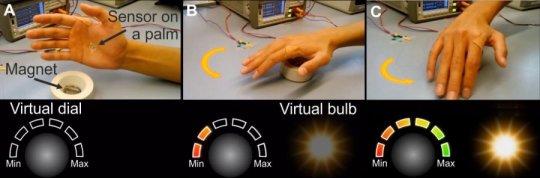 Physicists have now developed an ultrathin electronic magnetic sensor that can be worn on skin. Just by interacting with magnetic fields, the device enables a touchless manipulation of virtual and physical objects.
At first glance, the shiny little gold elements look like a modern tattoo. But on this extremely thin, almost invisible foil that sticks to the palm of the hand like a second skin, there are sensors which provide people with a "sixth sense" for magnetic fields.
See the full story here: http://advances.sciencemag.org/content/4/1/eaao2623
and the technical source story here: http://advances.sciencemag.org/content/4/1/eaao2623
 Director Pete Billington says Lucy’s character builds on work that Oculus Story Studio did on the Emmy-winning Henry, which invited viewers to connect with an anthropomorphic hedgehog.
“In the middle of Henry we did this thing, we had the character make eye contact with the audience,” said Billington. “It gave us all the chills. ‘Wow a character just acknowledged our presence.’ It was powerful.”
At the same time, Billington said, the team knew Oculus was developing touch controllers that would give viewers the ability to use their hands in a virtual environment.
“We walked out of that thing saying ‘OK, this is exactly what we want to do. How do we do it?’ ” said Billington. “A live actor can improvise. We have a virtual actor.”
There’s a moment in the early minutes of the first chapter where Lucy begins to sketch out a chalk drawing on the floor, and the viewer feels compelled to squat down next to her, to watch. In another scene, Lucy hands the viewer a Polaroid — which the viewer can hardly resist the urge to accept.
“All those interactions are completely intentional,” said Billington.
“A camera can only do so much,” said Puran. “But taking that information and computationally creating new worlds and places that are only imagined in our heads, to become a fourth dimension of reality, that’s mind-blowing and exciting.”
See the full story here: http://deadline.com/2018/01/virtual-reality-pixar-neil-gaimans-wolves-in-the-walls-facebook-1202248101/
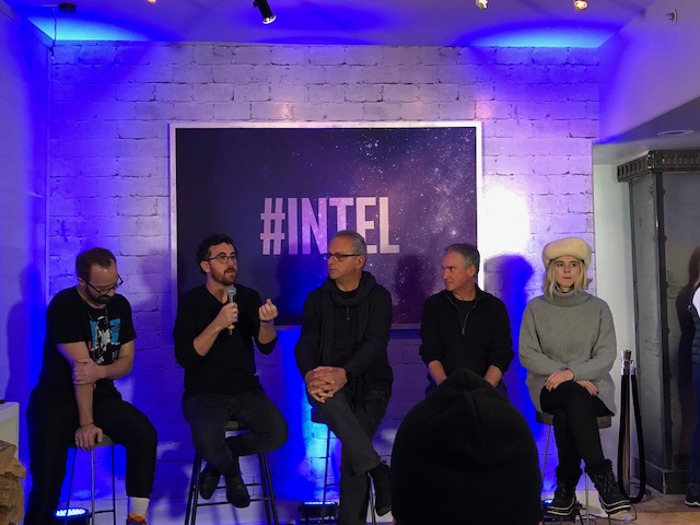
 Award-winning filmmaker Eliza McNitt premiered her new VR series, “SPHERES: Songs of Spacetime” on Friday at the festival. The 13-minute film is an entirely VR, immersive experience of two black holes colliding in space. Narrated by Jessica Chastain, the film makes the viewer feel like they are floating in space, completely surrounded by exploding stars and bending light.
However, one issue with making movies a VR experience is not only the lack of proper equipment in theaters, but because we are also “bumping up against the limits of what computing can do,” Schilowitz said.
“How do you break beyond the flat screen to include temperature, wind and smells?” said Diego Prilusky, head of Intel’s new studio division.
When asked what Adobe is currently working on to help further the tech for VR and immersive content, Bobotis said he couldn’t say, but that there would likely be two big releases later this year — with one announcement expected at the National Association of Broadcasters Show in April and another at the Adobe MAX Creativity Conference in October.
See the full story here: https://www.ksl.com/?nid=1205&sid=46242160
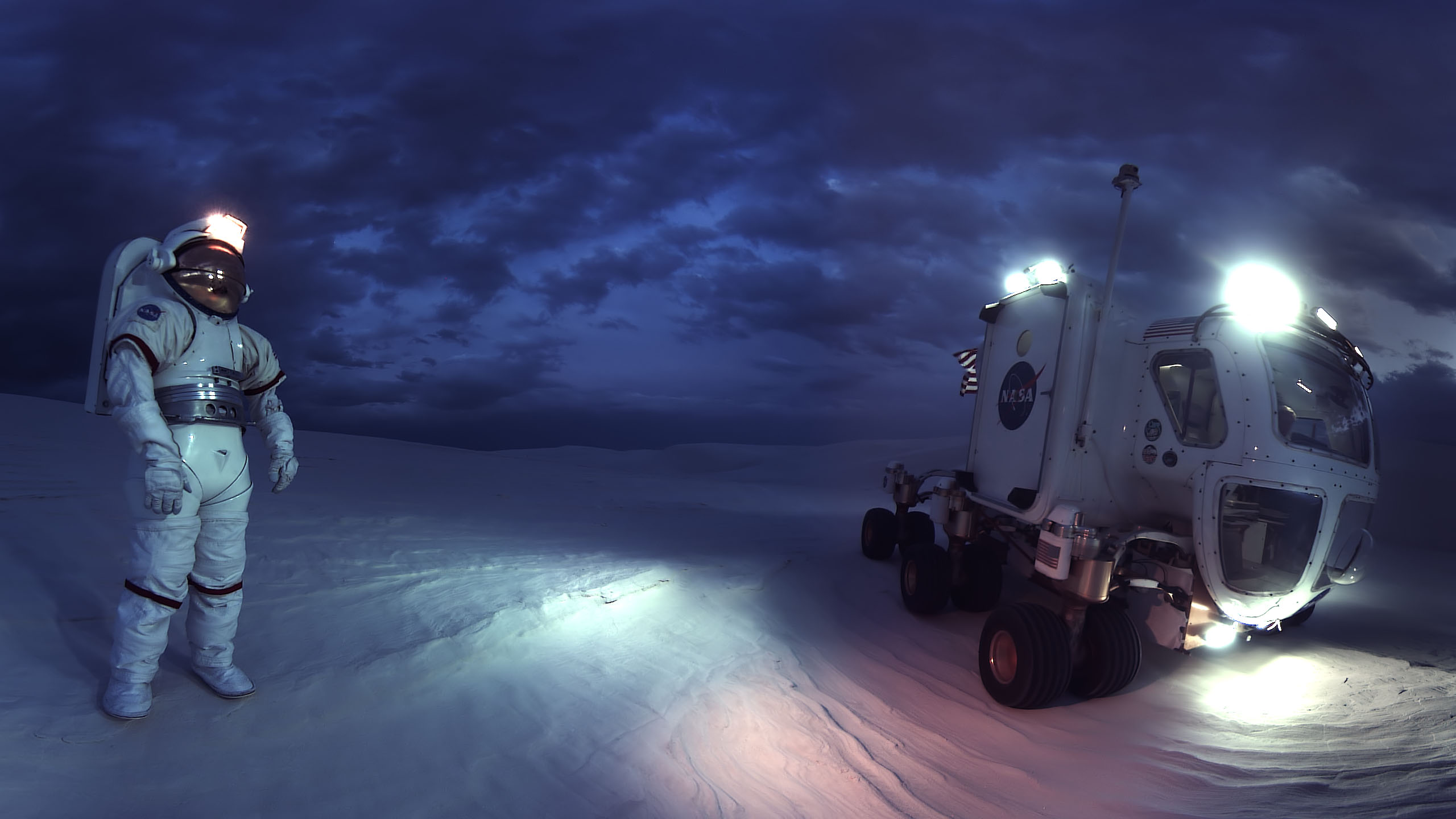 Felix & Paul’s newest experience, Space Explorers: A New Dawn, premieres at the Sundance Film Festival New Frontier Exhibition this week. After the premiere, it will be available for free alongside its second chapter, Space Explorers: Taking Flight, with the launch of Oculus Go this year.
NASA’s Principal Virtual Reality Engineer and several astronauts shared with me how they are using VR to prepare for future explorations throughout our solar system.
Space Explorers: A New Dawn introduces visitors to NASA’s new generation of astronauts, Jessica Meir, Jeanette Epps and Victor Glover, the depths of what space exploration entails for them now, and the ambitious plans for the near future.
Lajeunesse shares that the second chapter, Space Explorers: Taking Flight, takes visitors on an exploration of “…the collaboration between NASA and private space companies such as Space X and Boeing, as well as the spirit of collaboration between the world’s national space programs.” Viewers visit Cape Canaveral, Russia and Kazakhstan, and also experience two up-close rocket launches.
Storytelling in VR not only takes you to new places, or allows you to be someone or something else, but it has the ability to give you experiences that enhance your life in a way that other mediums cannot do. The drivers of why we seek out immersive experiences hint at how essential great educational content is in driving VR adoption.
See the full story here: https://uploadvr.com/space-felix-vr-nasa/
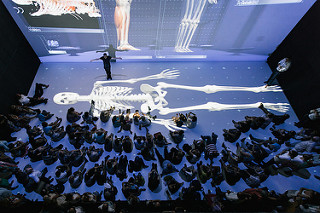 Immersify, a European R&D consortium made up of the following partners: PSNC – Poznan Supercomputing and Networking Center (Poland), Spin Digital Video Technologies GmbH (Germany), Ars Electronica Futurelab (Austria), Marché du Film – Festival de Cannes (France) and Visualization Center C (Sweden). Immersify was set up in October 2017 and runs until March 2020. This project has received funding from the European Union’s Horizon 2020 research and innovation programme under grant agreement No 7620799.
Immersify Focuses on Four Points
Immersify is concentrating on four challenges. First of all, what’s needed is a new technology for the video compression of data, which is virtually exploding due to higher resolutions, frame rates and constantly improving image formats. Second, media players and formats should be able to support as many different technical environments and devices as possible. Third, creative individuals working with high-quality videos, CGI in 2D and 3D, as well as interactive elements ought to have the option of combining them with each other so that users are in a position to enjoy totally customized experiences. Fourth, Immersify is definitely not to be developed behind closed doors; rather, the intention is to present the ongoing progress of R&D in the form of demos at the Ars Electronica Festival and the Marché du Film in Cannes, where specially developed content and innovative market-oriented products will showcase Immersify’s creative and technical capabilities.
See the full story here: https://www.aec.at/press/en/2018/01/18/immersify/
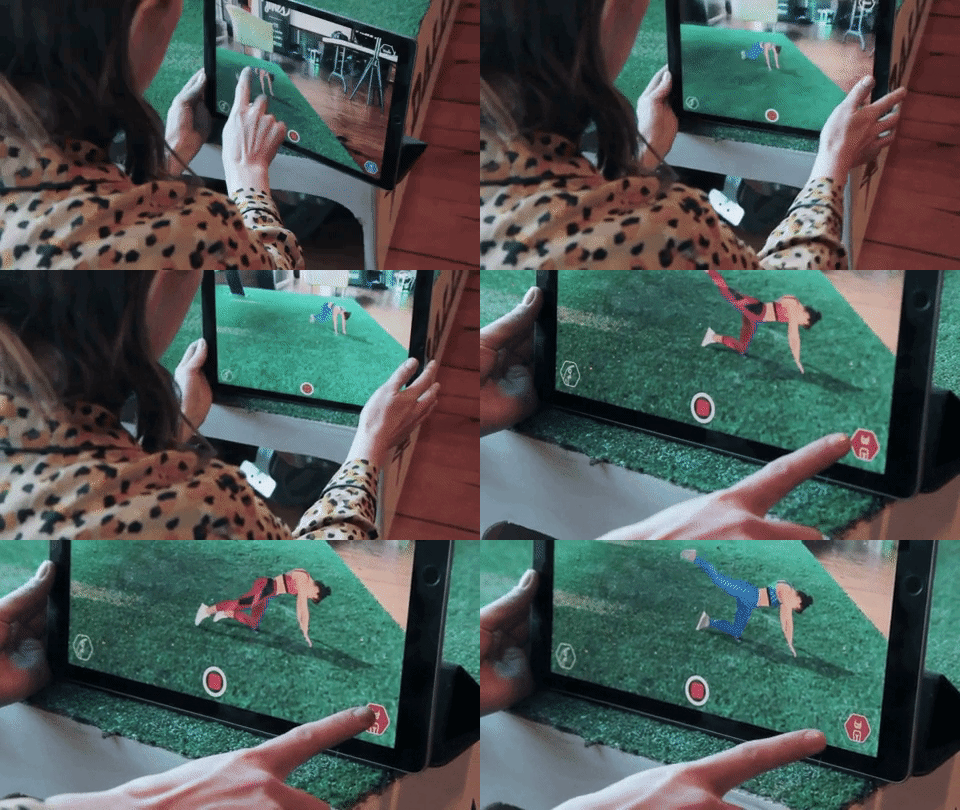 The retailer took a fairly unique approach with this new AR experience. Mission clothing was displayed on virtual animated fitness models, which users could place in their physical space. While the models performed their exercise routines, users were able to rotate through various Mission apparel styles and colors.
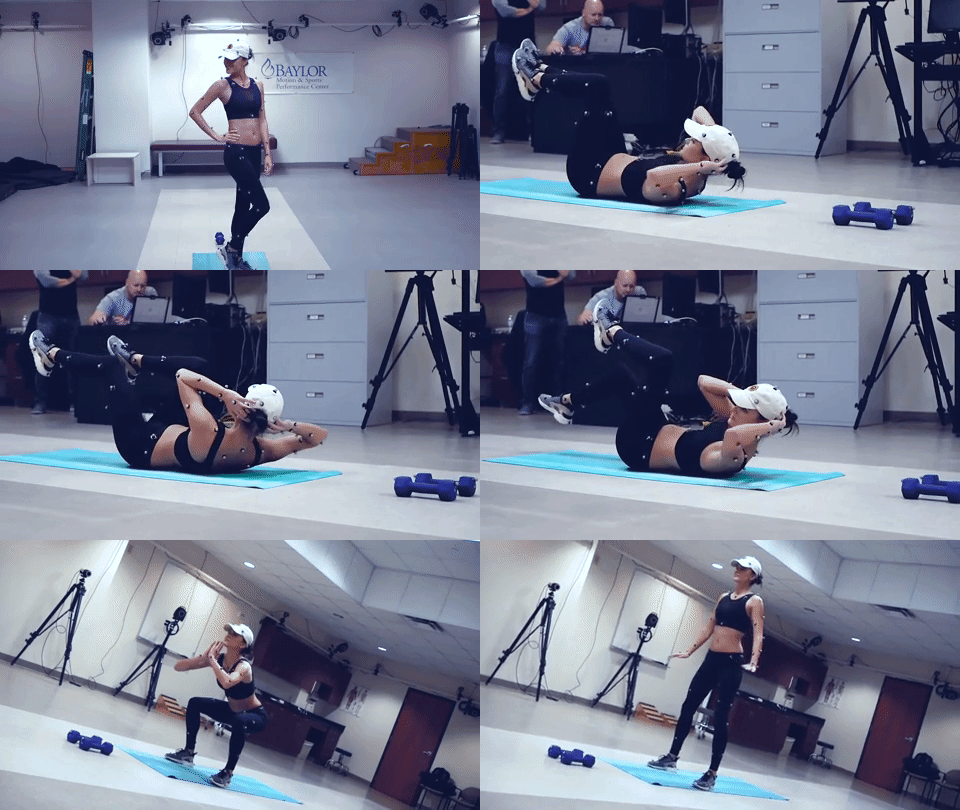
The AR content took shape via Groove Jones, a studio specializing in 360-degree video capture for virtual reality content. To create the experience, Groove Jones filmed fitness models with motion capture technology (see below) in order to construct the animated 3D models.
See the full story here: https://next.reality.news/news/amazon-pushes-athletic-wear-augmented-reality-with-mo-capped-fitness-models-0182227/