Upskill Is the Coolest AR Startup You Haven’t Heard of Yet
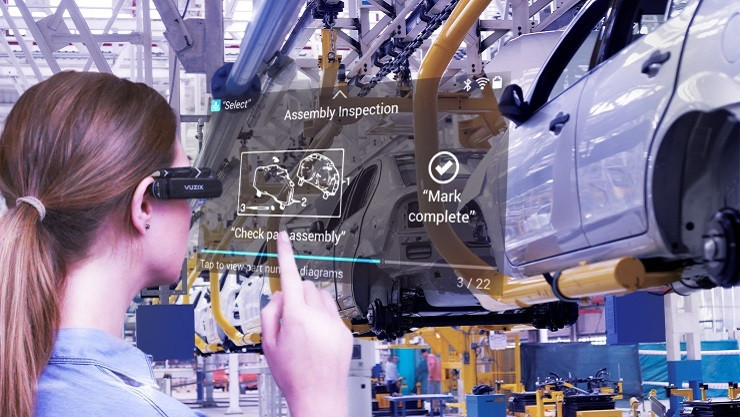 Inside the GE- and Boeing-backed augmented reality startup powering headsets from Vuzix and ODG to Google Glass Enterprise.
In mid-2010, the US military was looking to develop new head-up display technology for soldiers in the field. A company called Battlefield Telecommunications Systems (BTS) was tasked as the government's software provider for biometric force predictions, meaning real-time data displayed to a soldier's headset to indicate whether the person in front of them is a friend or foe.
The startup now creates software for companies like Boeing, Coca Cola, and GE, boasting more than $28 million in venture capital (VC) funding. That includes money from Boeing and GE Ventures, which have now bought into Upskill's future.
Skylight, Upskill's industrial AR platform, is deployed in production across an array of fieldwork, heavy manufacturing, and warehousing environments. The technology augments workers' experiences with custom voice and gesture-driven apps, and provides HD audio and video feeds for a first-person view into everything from field service training to constructing jet engines.
See the full story here: https://www.pcmag.com/news/358437/upskill-is-the-coolest-ar-startup-you-havent-heard-of-yet
‘VRChat’ Blasts Past 1 Million Installs Amidst a Skyrocketing Meme Economy
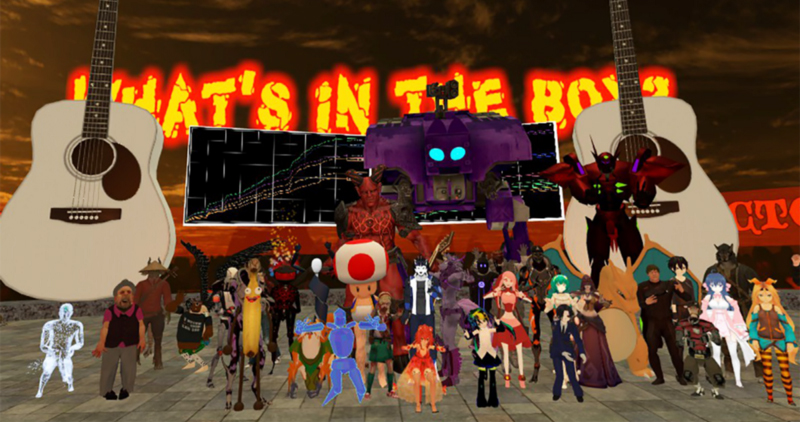 VRChat, the social chatroom for VR and non-VR users, is doing booming business. According to SteamSpy, the app has seen a mind-boggling 1.2 million fresh installs since Christmas – putting it currently at 1.5 million users globally.
According to Valve’s Steam report, VRChat garnered 20,000 peak concurrent users on Sunday, putting it in the top 30 games with highest concurrent user rates. Today, a Monday morning, over 13,000 people are playing VRChat concurrently.
VRChat owes much of its recent viral success thanks to coverage by YouTubers like PewDiePie, videogamedunkey, and Jameskii, not to mention a host of Twitch streamers. The app’s ‘anything goes’ user-generated content system, which lets you import your own self-made avatar replete with animation macros, has also produced plenty of meme magic since its launch on Steam – no doubt drawing more curious would-be users to the social VR platform.
CES 2018, Fox Innovation Lab Highlights Movies Anywhere
 Engadget reports that, “according to general manager Karin Gilford, people have already moved around 80 million movies onto the new platform, which unlocks titles across iTunes, Amazon Video, Vudu and Google Play.” These users have also streamed more than three million hours.
The service debuted “with backing from 20th Century Fox, Disney, Sony Pictures, Universal Pictures, and Warner Bros. and a catalog of 7500 titles.” Disney’s previously offered Disney Movies Anywhere will be replaced by Movies Anywhere. Sony’s Ultraviolet also tried to do something similar, “but didn’t have its own apps — or a buy-in from Disney, for that matter.”
Movies Anywhere also plans to add exclusive content, “a recipe that is working, according to 20th Century Fox Home Entertainment president Keith Feldman.” He reports that the studio has over 1,250 movies, almost 1,000 hours of “additional content,” including an extra action sequence for “Kingsman 2,” exclusively on Movies Anywhere, and plans to add future releases to the service.
See the full story here: http://www.etcentric.org/at-ces-2018-fox-innovation-lab-highlights-movies-anywhere/
Montreal firms find practical and fanciful applications for augmented reality
 He’s the CEO of Sensopia, a Montreal and Munich, Germany-based company that makes Magic Plan, an augmented reality application for making blueprints.
“With Magic Plan, you can sketch out a floor plan and, suddenly, you know what is the surface area of your walls. And when you know the surface area of you walls, you know how much paint you need. And when you know how much paint you need, you know how long it’s going to take,” he said.
“But, when in June, Apple announced ARKit,” he said, “not only did it make putting augmented reality tech into your apps very, very easy, it also removed that need for an external item to anchor to.”
Rather than building a stand-alone AR application, Budge added an AR mode to an app it was already working on, Thomas & Friends Minis, a virtual train set.
“You have a button, and the trains that you’ve made get projected on any surface that you want, so it could be on your desk, on the floor of your room, or it could even be outside in a park,” he said.
He said kids using the AR mode tend to be more active.
See the full story here: http://montrealgazette.com/business/local-business/montreal-firms-find-practical-and-fanciful-applications-for-augmented-reality
Blockchain Technology Readies Live Entertainment for Virtual Reality
 The emergence of virtual reality (VR) has created a new channel for artists to connect with their audiences. Live performances can now be streamed directly to virtual headsets. Companies like NextVR , CEEK and Enosis have all been working on platforms and projects to produce interactive and multimedia experiences. A growing number of production outfits and artists are already trying out the technology.
CEEK has turned to blockchain technology for answers. Aside from its own VR platform, the company is working on a blockchain-driven coin minting platform that allows artists to create their own crypto tokens to facilitate transactions. The feature, dubbed "Celebrity Coin Cast Minting," leverages blockchain technology to create an immutable record of the existence and trade of these virtual items. Artists could even cryptographically sign items to give them additional value as unique memorabilia.
See the full story here: http://www.nasdaq.com/article/blockchain-technology-readies-live-entertainment-for-virtual-reality-cm904619

 CEEK virtual reality environments are governed by Ethereum Smart Contracts, allowing token holders ability for flexible, tokenized ‘in-world’ interactions, rewards, voting, contests, virtual goods and more ‘in-world’ transactions utilizing ERC20 compliant Tokens called CEEK.
Each CEEK Token holder will be able to participate in virtual reality space for real world celebrity concerts, charity fundraisers, sporting events, VR commerce, classroom learning and much, much more as the exciting world of virtual reality meets real world opportunity through Smart Contract governance.
By utilizing the blockchain, CEEKERS will be able to access, manage and exchange digital assets at a fraction of the cost. Using the ERC232 standard for multi-token transfer will reduce gas cost down to approximately 1/10th of a cent. Open Standards allow CEEKERS the ability for true ownership of digital items that will traverse multiple digital reality environments.
See more here: https://www.ceek.io
Heathrow’s new augmented reality app exceeds family use target
 The free app allows children and parents to pose and take pictures with the characters, by scanning markers that are placed in each terminal, on their smartphones.
So far, the campaign revealed impressive engagement results, which superseded initial targets. More than 3,600 travellers downloaded the app across Android and IOS devices and spend almost 800 hours engaging with the app in its first month.
Heathrow is the second major UK airport to dabble in apps. Previously, Gatwick has launched a passenger-facing app, one of the several digital innovations that e-retailers can use to their advantage to target the airport’s travellers.
Gatwick’s free app is aimed more at practicality than fun, offering personalised flight alerts, real-time queue updates for check-in and security, intuitive navigation using beacon technology and shopping, restaurant and airport offers instantly redeemable just with a touch of a button.
See the full story here: http://internetretailing.net/2018/01/heathrow/