Mindshow now offers VR sharing for its improv app
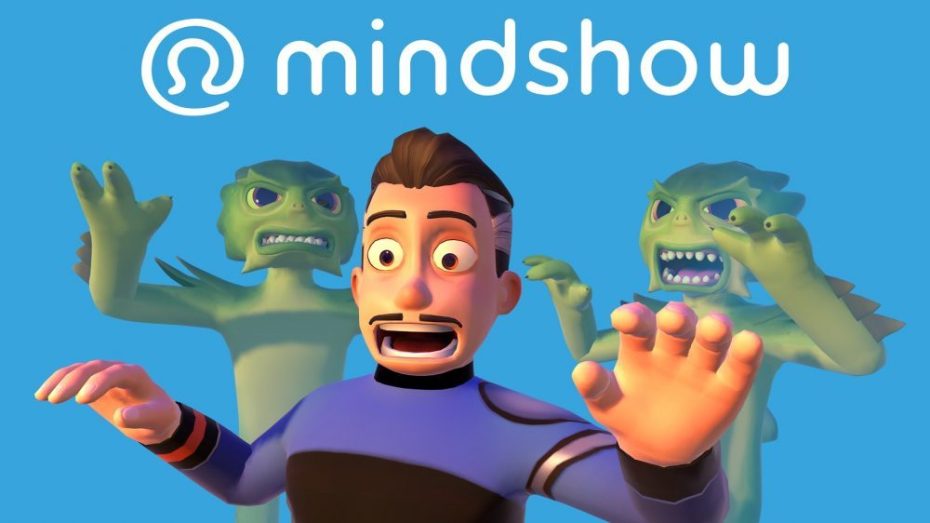 Free VR improvisation software Mindshow is adding a major feature — sharing. So performances in Mindshow can be added to or remixed by others.
See the full story here: https://venturebeat.com/2017/12/17/mindshow-now-offers-vr-sharing-for-its-improv-app/
IEEE Transmitter features ways the technologies can be used to explore outer space and to treat medical conditions
 The project is being led by IEEE Member Todd Richmond, director of the ICT’s advanced prototype development. ICT VR-exposure therapy is now offered at more than 60 locations including U.S. Veterans Health Administration hospitals, military bases, and university centers. According to the ICT website, younger military personnel might be more comfortable with a VR treatment approach than with traditional talk therapy.
See the full story here: http://theinstitute.ieee.org/ieee-roundup/blogs/blog/immerse-yourself-in-new-worlds-with-augmented-and-virtual-reality
The very real health dangers of virtual reality
 "I see more falling than anything else," said Marientina Gotsis, an associate professor of research at the Interactive Media and Games Division of the University of Southern California. "You can trip and hit your head or break a limb and get seriously hurt, so someone needs to watch over you when you are using VR. That's mandatory."
Augmented Reality Menorah Transports Chanukah Into a New Dimension
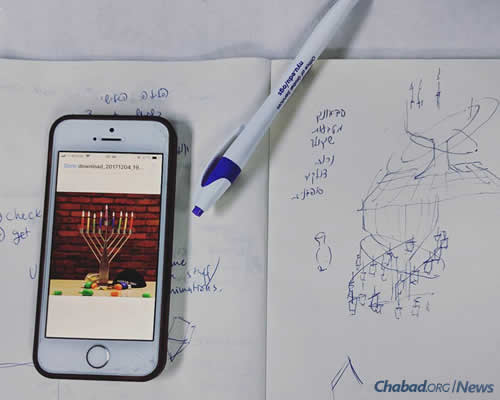 The augmented reality menorah will include sufganiyot (doughnuts), chocolate gelt, dreidels and a jar of oil.
This very different kind of menorah is the latest effort from Tech Tribe, a Chabad-affiliated organization dedicated to enhancing and creating Jewish experiences for those working in tech and digital media.
See the full story here: http://www.chabad.org/news/article_cdo/aid/3877642/jewish/Augmented-Reality-Menorah-Transports-Chanukah-Into-a-New-Dimension.htm
New In-Game Cryptocurrency Systems Let You Buy Assets in the Virtual Reality World
 High Fidelity is announcing the launch of Avatar Island, a VR domain where High Fidelity users can purchase items for their avatars, all contributed by digital artists from around the world.
High Fidelity is a next-generation platform for Virtual Reality (VR) worlds developed by Philip Rosedale, the creator of the once very popular Second Life. In September 2017, the company announced that it was developing a blockchain for intellectual property protection and an in-game cryptocurrency .
High Fidelity allows developers to host VR worlds independently. In November 2017, High Fidelity released an update that allows developers to rapidly deploy High Fidelity VR domains to the cloud, in collaboration with DigitalOcean. The distributed nature of the upcoming High Fidelity VR network calls for full interoperability between different servers, including network-wide recognition of ownership rights.
High Fidelity’s Digital Asset Registry (DAR), is a decentralized, publicly auditable ledger that serves as a record of transactions made by High Fidelity users. Each item is uniquely identified with a digital fingerprint (a hash algorithm) and can be purchased using High Fidelity’s blockchain-based cryptocurrency, the High Fidelity Coin (HFC). The DAR includes tamper-proof PoP services for any asset’s chain of ownership, its characteristics and its entire history, from certification onward.
Rosedale’s team opted for a new, public but “permissioned” blockchain.
Considering high price volatility as a roadblock, High Fidelity will try and stabilize the value of HFC at 100 HFC = $1 USD.
See the full story here: https://bitcoinmagazine.com/articles/new-game-cryptocurrency-systems-let-you-buy-assets-virtual-world/
Legally blind Stockton dad uses augmented reality app to help him ‘see’
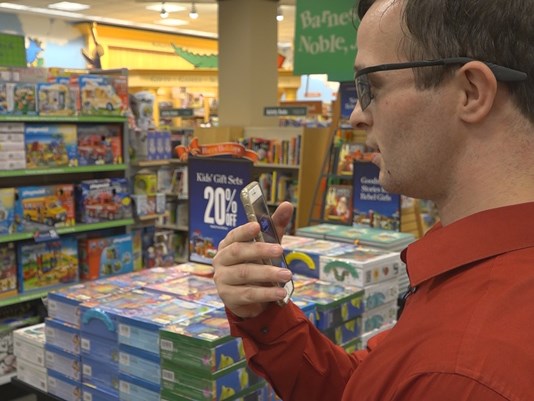 The app allows him to call a trained agent who then in real-time is able to tell him what he's seeing either through the camera on his phone or through specially made glasses.
"For the things that we can't see, their job is to describe it," Hy, 40, explained. "They don’t give us an opinion or anything, their job is to describe things and tell us what it looks like."
Aira agents are on-call and available from 4 a.m. to 10 p.m. (PDT). They can help with anything from reading papers to navigating a new street to shopping.
See the full story here: http://www.abc10.com/news/local/legally-blind-stockton-dad-uses-augmented-reality-app-to-help-him-see/498766281
How virtual reality is opening up some of the world’s most inaccessible archaeological sites
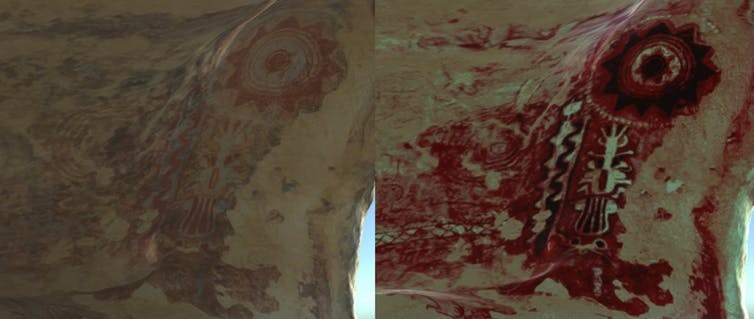 Just over an hour’s drive north from Los Angeles is the Wind Wolves Preserve. At nearly 100,000 acres, the preserve protects a wide range of endangered and threatened species in the heart of the most populous state in the US.
It also hosts two remote archaeological sites situated in the San Emigdio Hills. Pleito, one of the most elaborately painted rock-art sites in the world, and Cache Cave, with one of the most significant in-situ collections of perishable objects, including baskets, ever discovered in the American West. The oldest of the rock paintings and baskets appear to be over 2,000-years-old. However, exploring it is problematic. The paintings at Pleito, found on exfoliating sandstone, are extremely fragile. Meanwhile, the Cache Cave is a complex, narrow cave system.
Now our team of researchers from the University of Central Lancashire in the UK has created a VR model of the sites.
See the full story here: http://theconversation.com/how-virtual-reality-is-opening-up-some-of-the-worlds-most-inaccessible-archaeological-sites-88286
Snapchat Users Can Now Create World Lenses with AR Tool
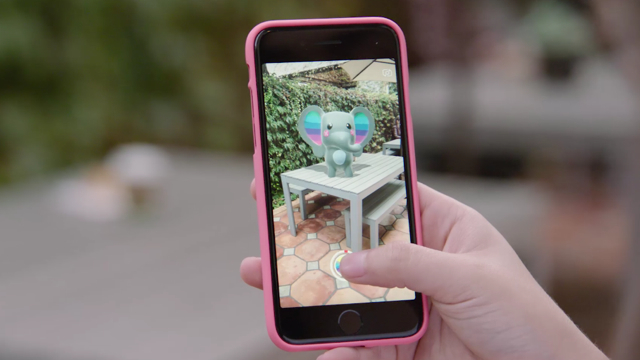 The new Lens Studio tool could help Snapchat compete with the recently launched Camera Effects AR platform from Facebook.
To start, Snapchat’s platform only lets users create World Lenses and not selfie masks, but “more AR toys will give Snapchat a much-needed boost to sharing and viewing at a time when user growth has slowed to a trickle in the face of Instagram’s competition,” suggests TechCrunch.
See the full story here: http://www.etcentric.org/snapchat-users-can-now-create-world-lenses-with-ar-tool/
kea Is Stepping Into Virtual Reality by Creating a Game for New Store Openings
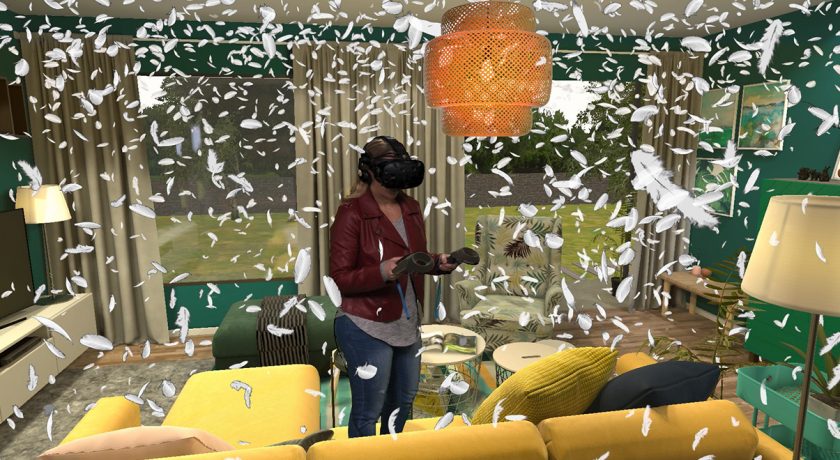 Working with the recently merged MEC-Maxus agency Wavemaker, Ikea worked with incorporated a virtual reality experience for one of its store openings in a Dallas suburb, immersing visitors in an Ikea world where they could play a “pillow toss” game with a coffee table or hang out with a panda inside a bamboo lamp. Nearly 300 people tried out the popular Swedish brand’s VR for the first time, spending between three and five minutes playing games, examining furniture or learning about sustainability and design.
Just a few months ago, the company releasing an AR app, which lets shoppers see how hypothetical purchases would look by holding up their iPhone camera in their home. While the AR app only requires a smartphone, Ikea used the HTC Vive headset for visitors to try inside the Dallas store.
However, Ikea’s VR game is something it can potentially reuse. Now that Ikea has set up the framework, it’s now replicable and portable for future store openings, according to Noah Mallin, Wavemaker’s head of experience, content and sponsorship.
See the full story here: http://www.adweek.com/digital/ikea-is-stepping-into-virtual-reality-by-creating-a-game-for-new-store-openings/