Microsoft’s Virtual Reality Attempt Fails to Impress
Windows Mixed Reality was inferior to Vive and Rift on day one.
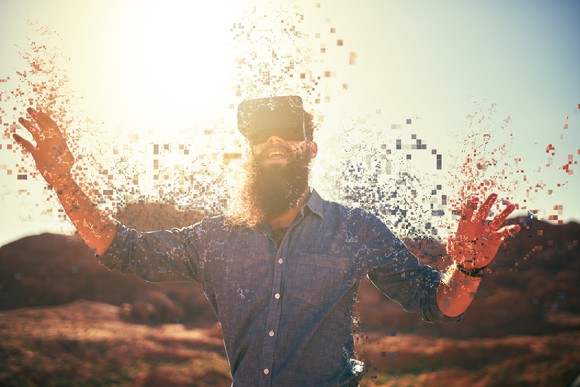
Rather than building a VR product that works like Rift or Vive, which use outside sensors to track a user's movement in a headset, Microsoft uses sensors on the headset to track movement. It's not exactly the untethered inside-out technology VR users are hoping for, but it's a unique way to track VR.
The problem is, the two sensors that track head motion and controllers leave a lot of blind spots. Hold a controller close to your chest, and the system glitches. In gameplay, that's a huge weakness; it makes Windows Mixed Reality clearly inferior to Rift and Vive, despite being released a year and a half later. Even the headset display and latency seem inferior to those of competitors.
See the full story here: https://www.fool.com/investing/2017/12/20/microsofts-virtual-reality-attempt-is-a-dud.aspx
2018 Sundance Film Festival: Latest Additions Announced, Including Eight Features, Virtual Reality Work, Hosted Retrospectives
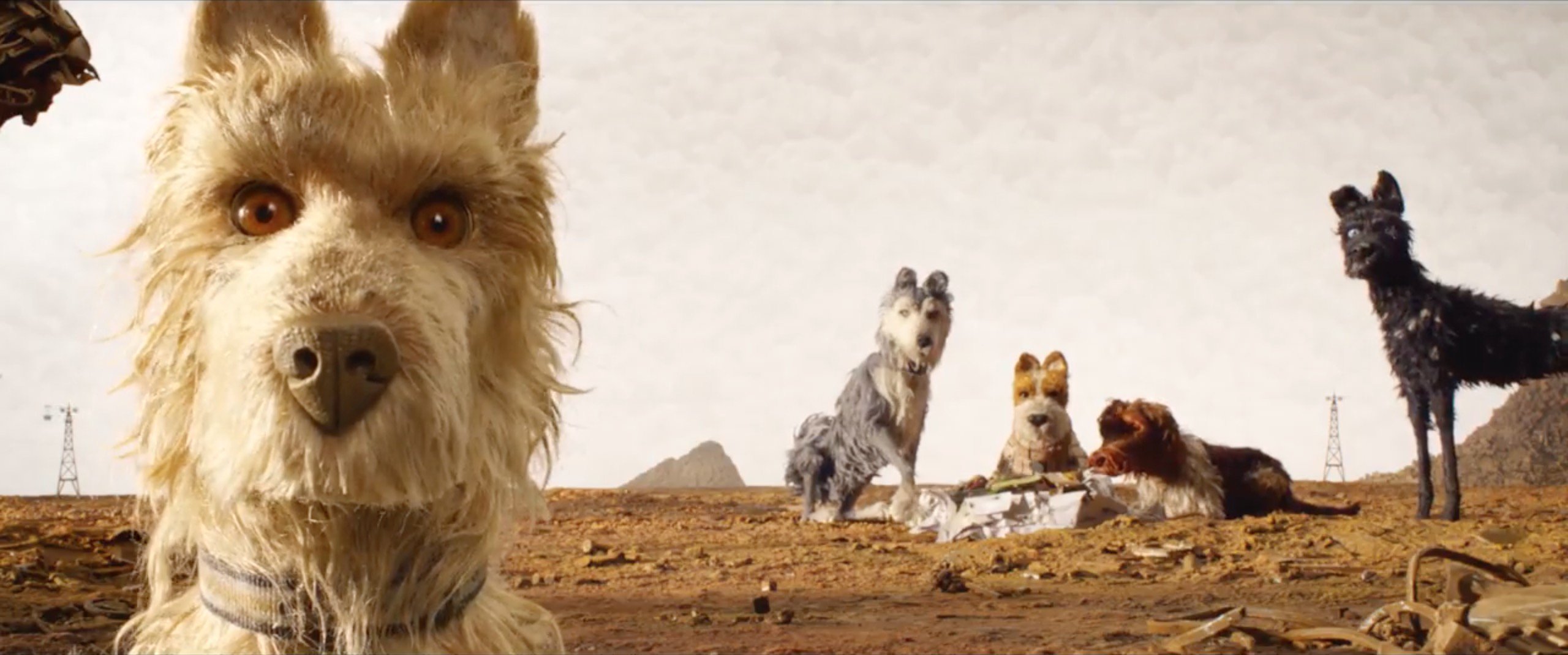 Isle of Dogs Behind the Scenes (in Virtual Reality) / (Lead Artists: A collaboration between Felix Lajeunesse & Paul Raphael and the Isle of Dogs production team) — This virtual reality experience places the viewer inside the miniature world of Wes Anderson's upcoming stop-motion animated film, face to face with the cast of dogs as they are interviewed on set, while the crew of the film works around you to create the animation you are seeing. Cast: A selection of actors from the cast of Isle of Dogs.
See the full story here: https://www.sundance.org/blogs/news/2018-festival-late-additions
Augmented reality’s surprising push into music memorabilia
 Augmented reality (AR) has the power to transform a concert poster into an immersive, interactive experience, adding dynamic digital overlays that range from games to animations and beyond.
With the resurgence of vinyl records, bands and labels have a renewed opportunity to breathe new life into an exclusive fan experience with immersive media technology
I’ve been a long-time fan of Umphrey’s McGee, so when I had the opportunity to work with them to bring in an AR component to their fan experience, I signed on immediately. We created an “Augmelted Reality” poster that reflects the band’s artful aesthetic with AR technology digitally bringing vibrant colors and kaleidoscopic artwork to life through a mobile app, sparking psychedelic-induced level visuals atop the poster. Not only did fans get excited about this, but it quickly sparked a merch frenzy, with posters selling out and landing on eBay for inflated figures.
As a huge fan myself, my dream project would be a Pink Floyd rerelease of “Dark Side of the Moon” on vinyl with a VR component that allows fans to experience the album in a 360-degree animated world. With these kinds of immersive experiences, fans can tap into all of their senses to fully take in the music.
See the full story here: https://venturebeat.com/2017/12/20/augmented-realitys-surprising-push-into-music-memoribilia/
PTC Augmented Reality Use Cases
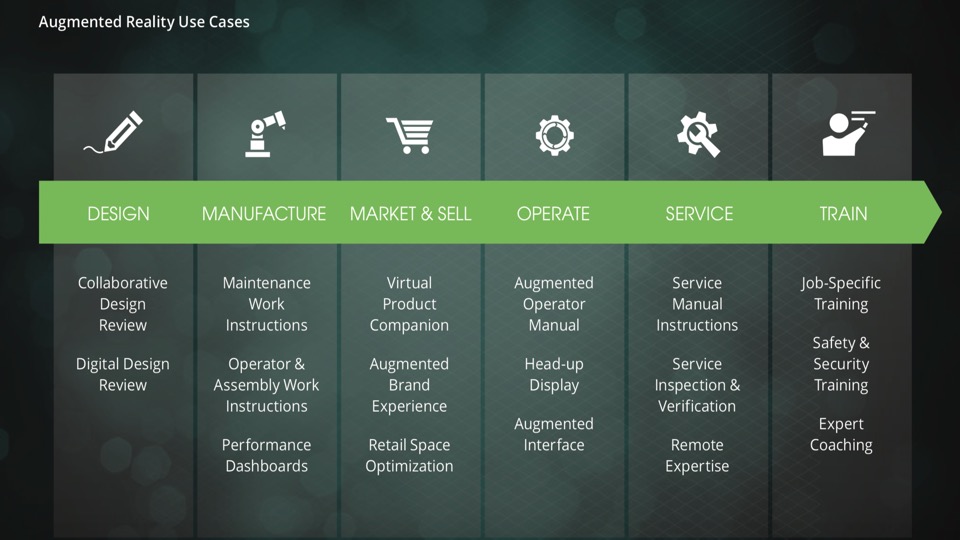 See the full whitepaper here: https://www.ptc.com/-/media/Files/PDFs/IoT/J10118_PTC_AR_Use_Cases_ebk_EN_V4.pdf
Burj Khalifa launches virtual reality experience
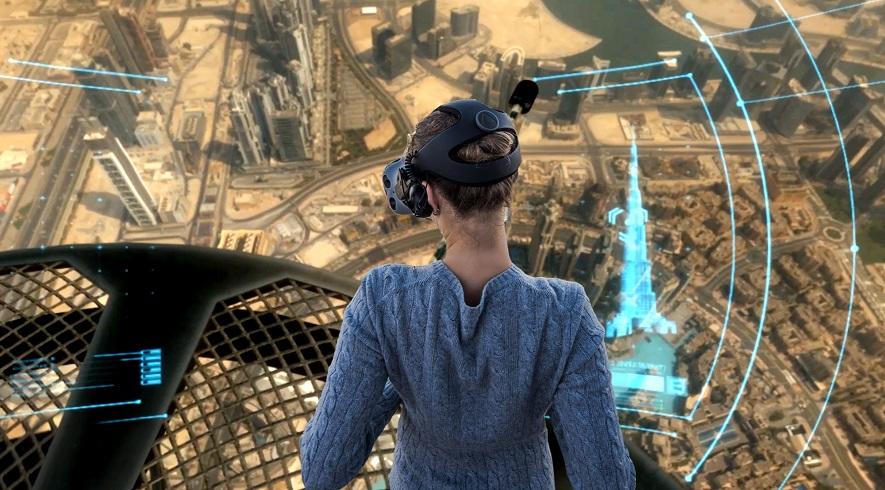 At the Top, Burj Khalifa, has launched a new virtual reality (VR) experience that stimulates the real-feel of scaling 160 habitable floors of the world’s tallest tower, as well as the climb to its highest point, the spire.
Called ‘Mission 828,’ the new attraction also gives visitors the opportunity to experience a stimulated, four minute parachute-jump down to The Dubai Fountain, to give them a feel of what it is like to ascend and descend the tower in an adventurous fashion.
It can be experienced through six VR pods located on Level 125 and Level 124. A ‘mission commander’ will reach out to users during their elevator ride on VR mode to the 160th level of the tower. They then collect suction gloves to ascent the spire, pinnacling at 828 metres. Next, they grab the parachute for the free-fall VR ride into the dancing fountains.
The experience uses ‘room scale’ tracking technology that allows users to move in three-dimensional space and interact with the environment with motion-tracked handheld controllers. The pods also have wind-effect to make the as ‘real’ as possible.
The ticket charge for Mission 828 is an additional AED35 per person (~$9.50US) to the regular At the Top entry cost, currently at an average of AED125 (~$33US).
See the full story here: http://www.arabianbusiness.com/culture-society/386029-burj-khalifa-launches-virtual-reality-experience
WorksiteVR Quest: A leap forward in personnel induction at Oyu Tolgoi
 [Philip Lelyveld note: mining operations and safety training results]
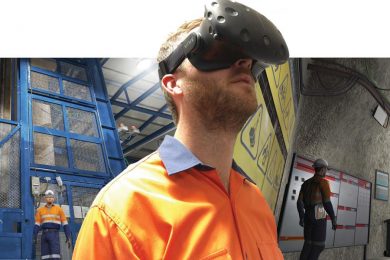
Rio Tinto’s Oyu Tolgoi mine in Mongolia, operates ten WorksiteVR Quest Systems with more than 1,100 people having completed the induction program. As a new mine in development a large number of contractors and permanent staff are on site. At its peak, there will be 5,800 people on site that require induction and safety training which:
- Conveys critical mining and safety information
- Caters for vastly different levels of experience
- Accommodates multiple languages
- Addresses retention and application of knowledge and skills
- Transitions seamlessly from theory to competence on the job
- Demonstrates commitment to ZERO harm.
The scenarios were developed in both Mongolian and English and covered topics ranging from identification of correct PPE to refuge chamber access and procedures.
An analysis of survey data was conducted where monthly results of the training before WorksiteVR Quest was introduced were compared with the results after. This was conducted over a 10-month period and included both expats and Mongolian nationals. The results demonstrated broad improvements including:
- 22% increase in understanding of tagging procedures
- 12% increase in confidence in personnel being able to apply their learning
- 10% increase in knowledge retention and recall
- 16% increase in confidence of successfully initiating an emergency response.
See the full story here: https://im-mining.com/2017/12/19/virtual-reality-training-worksitevr-quest-leap-forward-personnel-induction-oyu-tolgoi/
Virtual reality allows multiple scientists to ‘walk’ through cancer cells
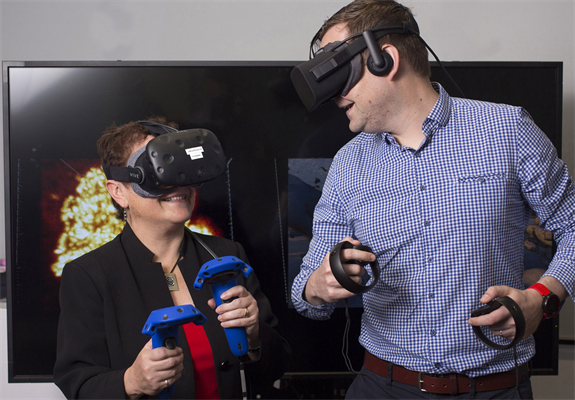 UNSW Art & Design’s Associate Professor John McGhee is working with Professor Maria Kavallaris, from UNSW Medicine and Children’s Cancer Institute, in the second phase of the Journey to the Centre of the Cell project, a major initiative that combines scientific data, microscopy images and animation to create a virtual reality (VR) world of cells and blood vessels that can be seen through headsets.
“We can have multiple scientists logging in at once with users able to view the same data,” he says. “This could help researchers ask questions they’ve never thought of.”
“Our goal is to be able to see a drug enter into the tumour, so we can highlight the target for chemotherapy or radiotherapy and deploy a drug more accurately,” says McGhee.
Kavallaris, a leading cancer biology researcher and nanomedicine expert, says tracking 3D cells in tumours can show scientists what happens when cells move in real time – information that can be used when looking at the spread of cancer.
The technology is already being trialled on Monash University pharmaceutical science students learning about cancer drug delivery to see if it improves their understanding.
"We've now got data that shows by putting a headset on and walking in virtual reality, we have seen a significant improvement in their exam results, compared to others who were using traditional media," McGhee said.
See the full story here: http://www.medianet.com.au/releases/151209/
Virtual Reality Moves from the Pocket to the PC and Console While Augmented Reality Prepares for Long-Term Growth, According to IDC ( Market Research )
To date, the entire market has been propped up by low-cost VR screenless viewers such as the Samsung Gear VR. However, IDC anticipates this category will lose share as previous champions of the category scale back on their smartphone plus headset bundles and shift focus toward tethered and standalone solutions. VR screenless viewers will account for 14.8% of the entire market in 2021, down from 58.8% in 2017. Over the course of the next few years, tethered headsets from the likes of Sony or Meta will account for the majority of shipments and in 2021 standalone headsets like the Oculus Go or Hololens will take center stage and account for almost half of the AR/VR headset market.
Traction for VR tethered and standalone VR headsets will not be limited to the consumer market as commercial shipments for these headsets will climb from 1 million in 2017 to 12.6 million by the end of 2021. Meanwhile, augmented reality headsets are on track to have a significantly larger impact in the commerical segment as shipments grow to 15.6 million in the same time period.
See the full story here: https://www.idc.com/getdoc.jsp?containerId=prUS43388417