10 virtual reality experiences that stood out in 2017
 Philip Lelyveld comment: While I’d swap out one or two of these for others, Screen Daily has developed is a pretty good list.
1 Carne Y Arena
2 Unrest VR
3 Blindfold
4 Munduruku: The Fight To Defend The Heart Of The Amazon
5 Trafficked
6 The Protectors: Walk in the Ranger’s Shoes
7 Alien Covenant: In Utero
8 Rick And Morty: Virtual Rick-Ality
9 Doom Room
10 Ghost In The Shell VR
Pokemon Go’s Niantic taps ‘Harry Potter’ magic for new augmented reality game
 “Harry Potter: Wizards Unite” will bring author J.K. Rowling’s Wizarding World to mobile phones and use augmented reality (AR) to create a real-world scavenger hunt, allow players to cast spells, find artifacts, team up and encounter magical beasts and characters from the popular book series.
The game’s use of real locations is similar to Niantic and Nintendo Co Ltd’s Pokemon Go, which became the first mass market adoption of AR in July 2016 and allows players to “catch” animated characters that appeared in their real surroundings.
No release date was given for the “Harry Potter” game, but Niantic and Time Warner Inc’s Warner Bros said more details would be available next year.
See the full story here: http://www.reuters.com/article/us-videogames-harrypotter/pokemon-gos-niantic-taps-harry-potter-magic-for-new-augmented-reality-game-idUSKBN1D9023
TPCast for Vive is Now Available for Pre-order in North America at $300
[Philip Lelyveld comment: It essentially broadcasts from the PC to the receiver connected to the headset. You still need to be near the PC.]
 The TPCAST Wireless Adapter for Vive has been available in China since December 2016, with pre-orders only opening up in Europe two months ago. Now the wireless transmitter, a battery-powered device that lets you go cable free, is available for pre-oder in the US and Canada starting today. Shipping is slated as early as November 24th.
TPCast for Vive is priced at US$300, and is sold on TPCast’s website and online retail sites including Amazon and NewEgg.
TPCast is also gearing up for the release of its Oculus Rift-compatible trasmitter,...
See the full post here: https://www.roadtovr.com/tpcast-vive-now-available-pre-order-north-america-300-delivery-starting-late-november/
Mythbuster seeks cash for roller skates to wear in virtual reality
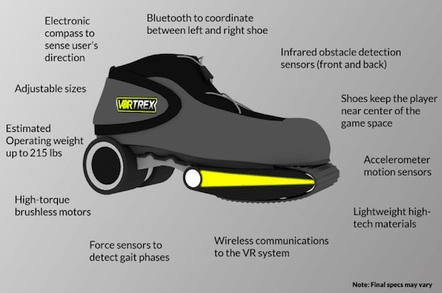 Former Mythbuster Jamie Hyneman is seeking US$50,000 to build a prototype pair of roller skates to wear in virtual reality.
Hyneman's pitch video points out that when one straps on goggles and gloves to enter virtual reality, your eyes are occupied and you therefore run the risk of bumping into stuff if you try to walk in meatspace while simulating walking in a virtual world.
The electrified footwear will have wheels under the heel and a track under the ball of the foot. The track will move backwards, so that as you step out in VR you experience the sensation of walking without actually going anywhere as the shoes propel you backwards.
Daqri ships augmented reality smart glasses for professionals
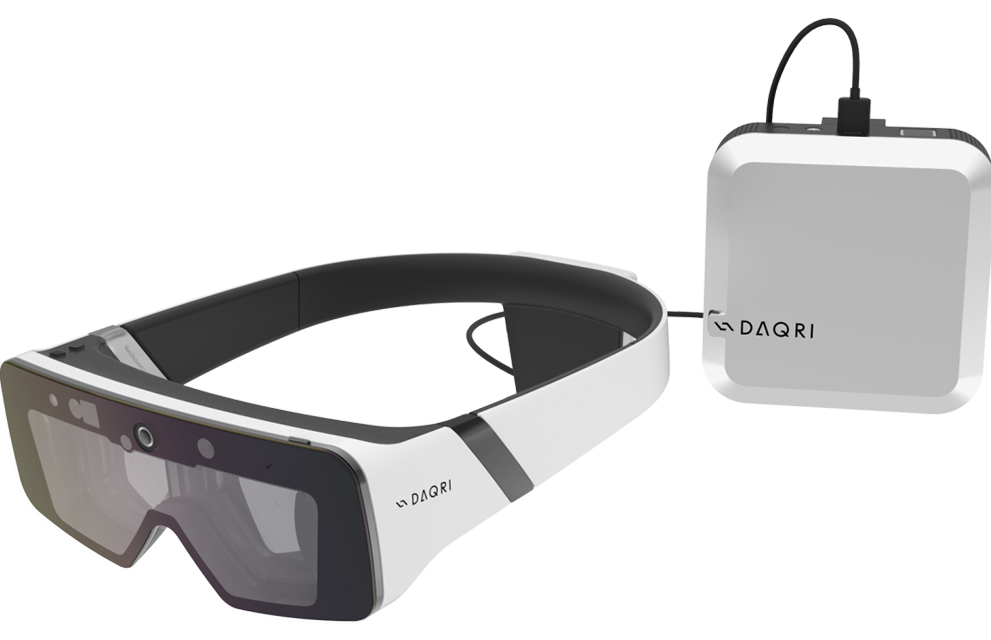
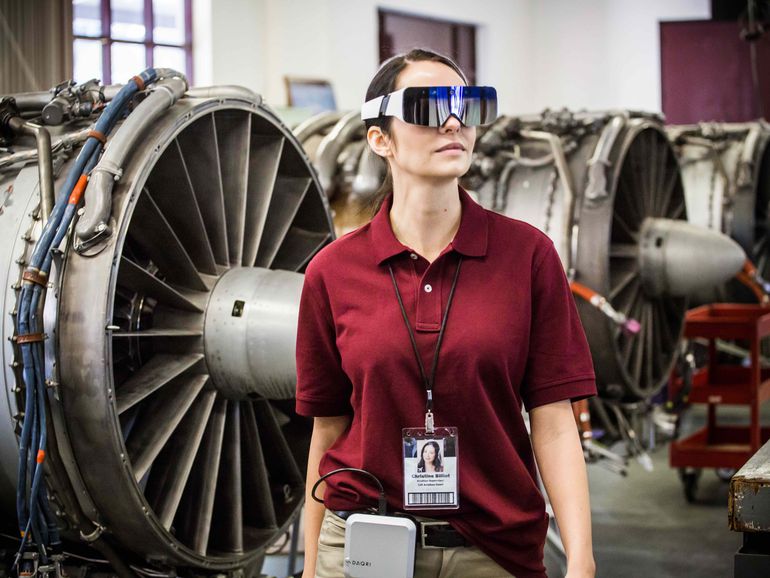 Los Angeles-based Daqri is betting that AR — a technology that overlays digital animations on top of the real world — will take off first in the enterprise, where customers are willing to pay a higher price in order to solve complex problems. The idea is to help people solve real-world problems, like fixing a jet engine or piecing together an assembly. Daqri argues that the gains in productivity and efficiency make up for the initial cost.
At $4,995, the system is not cheap, but it is optimized to present complex workloads and process a lot of data right on the glasses themselves.
Roy Ashok recently replaced company founder Brian Mullins as CEO.
See the full story here: https://venturebeat.com/2017/11/07/daqri-ships-augmented-reality-smart-glasses-for-professionals/
Augmented Reality: a new legal frontier for marketing?
 One important question to ask is: how will advertising regulations apply to these virtual or altered environments?
With brands eager to engage with consumers in authentic, non-intrusive and natural ways, increased focus has been given in recent years to the need to distinguish between editorial content and advertising.
Rule 2 of the CAP code requires that marketing communications (i.e. advertisements) are ‘obviously identifiable as such’. It also states that advertisements must make clear their commercial content, if that is not obvious from the context. The basic rationale for these rules is that consumers should know when they’re being advertised to.
There is no hard-and-fast rule about how paid-for content should be identified, and the ASA has referred to the ‘technical quirks of each platform’ being relevant to the point at which a brand should identify an advertisement, and how they should do so.
The ASA has previously recommended that social influencers signify their commercial relationship with a particular brand by including ‘#ad’ to posts on Twitter, or an ‘ad’ identifier placed directly on top of an image on Instagram.
Until specific guidance and rulings are given on the use of these technologies for advertising purposes, brands should assume that the ASA will apply the same rules and standards that it has applied to any other form of advertising.
See the full story here: https://www.marketingtechnews.net/news/2017/nov/07/augmented-reality-new-frontier-marketing/
Writers Guild Warns Members on Non-Union Virtual Reality Projects
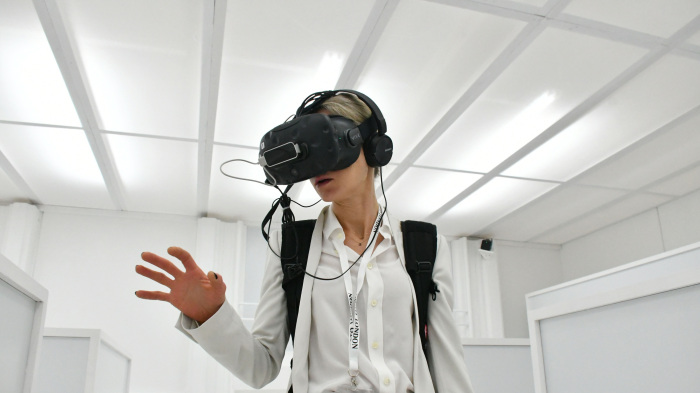
Mandatory Credit: Photo by Nils Jorgensen/REX/Shutterstock (8823238aw)
Mat Collishaw. Thresholds, at Photo London
Photo London press preview, London, UK - 17 May 2017
Photo London third edition press preview, which showcases 88 galleries from 17 countries, at Somerset House, London
“As Virtual Reality technology and platforms continue to develop, so do potential writing opportunities for WGA members,” the WGA West said. “It is important for you to remember, and to remind your representatives, that literary material written for virtual reality programs (VR) is covered by the new media side letter in the MBA. If you are hired to write VR content, whether original or derivative (including any promotional virtual reality project you work on while staffed on a show), you must confirm that the company employing you is a WGA signatory and that your work is covered by a WGA agreement or you will be in violation of Working Rule 8.”
See the full story here: http://variety.com/2017/digital/news/writers-guild-warns-members-on-virtual-reality-projects-1202608557/
Soderbergh works with coders to create an interactive multi-path story experience
PODOP AND HBO LAUNCH INTERACTIVE STORYTELLING APP MOSAIC, FROM EMMY®-WINNING DIRECTOR STEVEN SODERBERGH
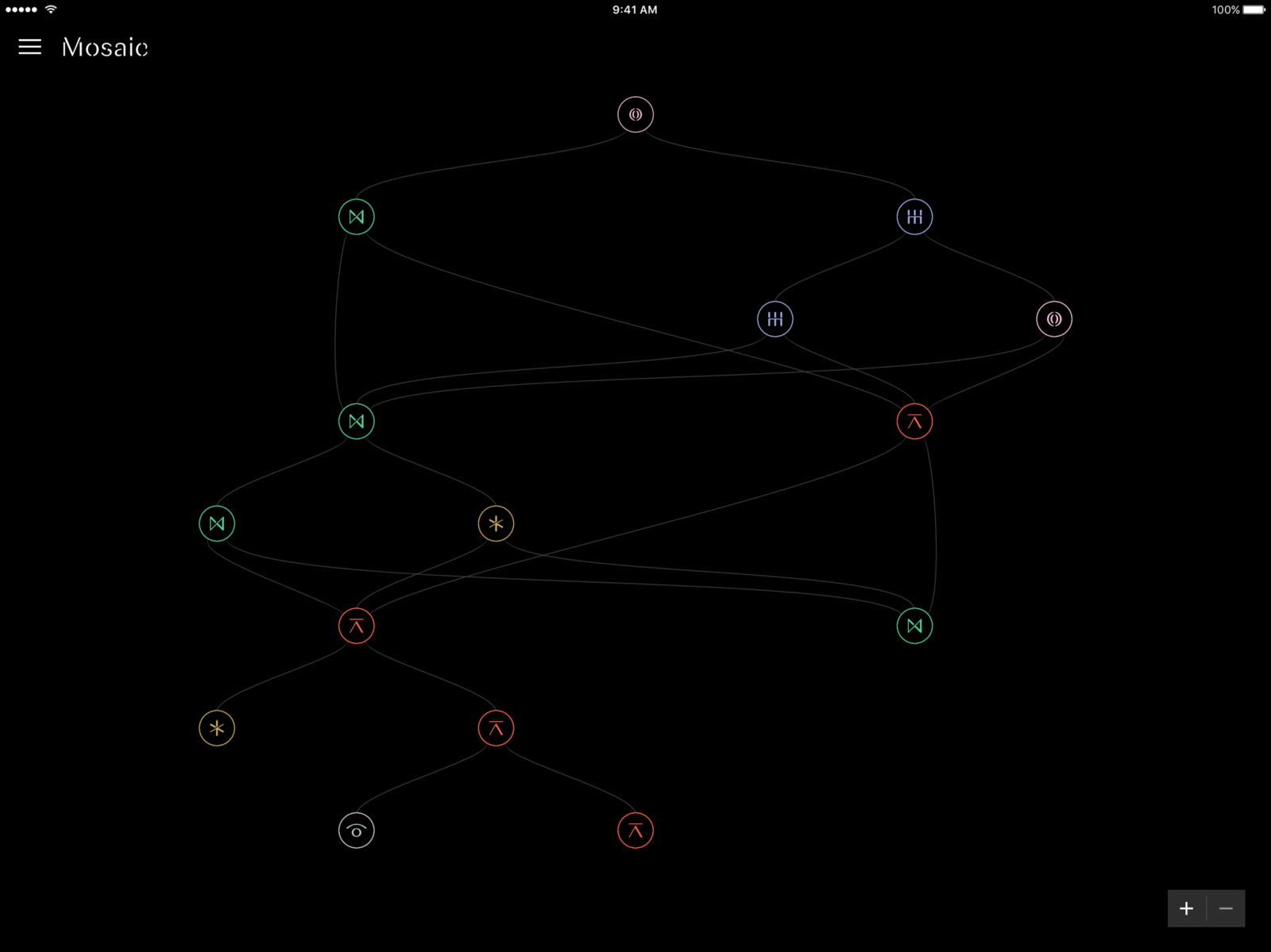
What is the future of storytelling? Oscar®- and Emmy®-winning filmmaker Steven Soderbergh’s answer is unveiled today when the MOSAIC mobile app launches as a free download for iPhone®, iPad® and Apple TV®, with the free Android app coming soon. Presented by PodOp, a media technology company changing the way stories are crafted and experienced, and developed for HBO by Soderbergh and Casey Silver, in conjunction with writer Ed Solomon, the MOSAIC app is an interactive experience that could be the next step in storytelling.
Soderbergh and his partners at PodOp, a media technology company that, unlike other ventures of this type, is driven by narrative rather than technology, explored what happens when filmmakers ask engineers to serve the story, rather than the other way around. Three years in the making, this first full-length production, developed in association with HBO, leverages new technology that enables viewers to choose from which point of view to follow the story and, in effect, to build their own experience from the material created and curated by Soderbergh and Solomon.
 Soderbergh explains, “While branching narratives have been around forever, technology now allows, I hope, for a more elegant form of engagement than used to be possible. At no point were we reverse-engineering the story to fit an existing piece of technology; the story was being created in lockstep with the technical team. The fluidity of that relationship made me feel comfortable because I wanted it to be a simple, intuitive experience.”
Challenged to come up with compelling storylines and character connections without being able to anticipate what paths a viewer might choose to take, Solomon’s resulting script read like none other before it, and required Soderbergh to shoot scenes from multiple perspectives throughout filming. The technology developed to support this product resulted in PodOp filing 14 new patents, including script management tools for user selection-driven narratives and new forms of data mining to inform content experiences.
In the MOSAIC app, as in life, the path you pick affects your perception of reality.
Viewers will be able to see how their versions of the story on the app ultimately compare to Soderbergh’s when HBO Films presents MOSAIC as a six-part limited series debuting Monday, Jan. 22 on the main HBO channel.
See the full story here: https://medium.com/hbo-cinemax-pr/podop-and-hbo-launch-interactive-storytelling-app-mosaic-7bb67da0452a
This story also gets into it a bit: https://www.wired.com/story/steven-soderbergh-q-and-a/