Threat of AR Hacking Fixable With Machine Learning
 Along with co-writers Tadayoshi Kohno, and David Molnar, Roesner penned a paper in 2012 on the “Security and Privacy for Augmented Reality Systems”.
The paper asks practical questions about the integration of AR into daily life.
Because you are actively following directions given by the tech with physical actions like driving your car, the implications of hacked AR include physical harm. But that’s not the only negative that could come of it.
At some point, as we navigate a new reality where everyone around us uses AR to find their way and record their experiences, our likeness and actions will be recorded by others. Others’ actions will be recorded by our devices. In a world where a digital signature can unlock everything we own, at what point are we taking in too much information?
AR devices have access to your location, surroundings, and everything on your phone or tablet. Roesner also raises the point that other people’s devices are also recording you.
What happens to this data?
As suggested in the Digital Journal op-ed, if we can teach AI to recognize malware and potentially harmful code, we can address security concerns more readily.
See the full story here: https://edgylabs.com/could-machine-learning-reduce-ar-tech-user-safety-concerns/
Google Releases ‘Resonance Audio’, a New Multi-Platform Spatial Audio SDK
 Google today released a new spatial audio software development kit called ‘Resonance Audio’, a cross-platform tool based on technology from their existing VR Audio SDK. Resonance Audio aims to make VR and AR development easier across mobile and desktop platforms.
In February, a post on Google’s official blog recognised the “confusing and time-consuming” battle of working with various audio tools, and described the development of streamlined FMOD and Wwise plugins for multiple platforms on both Unity and Unreal Engine.
The new Resonance Audio SDK consolidates these efforts, working ‘at scale’ across mobile and desktop platforms, which should simplify development workflows for spatial audio in any VR/AR game or experience. According to the press release provided to Road to VR, the new SDK supports “the most popular game engines, audio engines, and digital audio workstations” running on Android, iOS, Windows, MacOS, and Linux. Google are providing integrations for “Unity, Unreal Engine, FMOD, Wwise, and DAWs,” along with “native APIs for C/C++, Java, Objective-C, and the web.”
Much like the existing VR Audio SDK, Resonance Audio is able to model complex sound environments, allowing control over the direction of acoustic wave propagation from individual sound sources. The width of each source can be specified, from a single point to a wall of sound. The SDK will also automatically render near-field effects for sound sources within arm’s reach of the user. Near-field audio rendering takes acoustic diffraction into account, as sound waves travel across the head. By using precise HRTFs, the accuracy of close sound source positioning can be increased. The team have also released an ‘Ambisonic recording tool’ to spatially capture sound design directly within Unity, which can be saved to a file for use elsewhere, such as game engines or YouTube videos.
See the full story here: https://www.roadtovr.com/resonance-audio-googles-new-multi-platform-spatial-audio-sdk/
Pressure Mounts for Xbox’s Missing VR Strategy as PSVR Rakes in Half a Billion in Hardware Alone
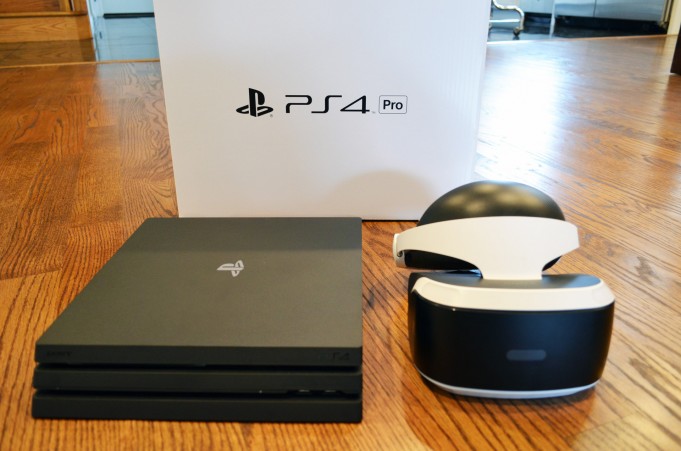 Gamespot reports Sony’s latest PS4 sales figures (including both PS4 and PS4 Pro) at a whopping 67.5 million units. Microsoft meanwhile hasn’t publicly revealed their Xbox One sales figures for some time, though estimates earlier this year put it somewhere between 30 and 40 million units. Competitively, that’s a massive gap. And it isn’t helping Microsoft that, for gamers on the fence between the two consoles, PlayStation has a big fat check mark in the VR column while Xbox doesn’t.
VR and AR intelligence firm Greenlight Insights estimates that Sony has sold 1.5 million PlayStation VR headsets through October 2017. The headset is sold in several different bundle configurations ranging, in the US at least, from the $500 Launch Bundle to the now discounted standalone headset at $290. Roughing out a $350 average selling price (which is conservative given the generally higher prices in Europe), we can estimate that Sony has pulled in some $525 million in hardware revenue. Software revenue on top of that stands to add considerably more.
Microsoft Joins OpenXR, Becoming a Decisive Backer in the Open, Royalty-free VR/AR Standard
 Khronos Group, the consortium behind the OpenXR project which aims to standardize the way applications communicate with AR and VR headsets, just added Microsoft to its ranks.
Although guessing at a company’s motives is a bit like reading tea leaves sometimes, Microsoft taking part in building OpenXR makes a strong case for its ultimate interest in growing the open, royalty-free standard, and not trying to create its own internally developed “DirectXR” that would essentially dictate how headsets will talk to their OS. Up until now, it wasn’t clear which way Microsoft was headed.
Khronos says work on the actual OpenXR project has already begun and that it stands to eliminate market fragmentation by forcing VR applications and engines to be ported and customized to run on multiple VR runtimes, and requiring VR sensors and displays to be integrated with multiple driver interfaces.
THE SURREAL COMEDY BOT THAT’S TURNING AI INTO LOL
 The best Botnik creations, like this PBS-derived set of otter facts, retain the structure and wordplay of their source material, while adding a goofy, appropriately robotic sense of stiltedness. They all represent a new form of comedy, a human-computer collaboration, one that “gathers all these evocative phrases from a genre, and then builds them together in an absurd collage," says Botnik cofounder Jamie Brew.
The two paired up, and with support from Techstars' Alexa Accelerator program, the Botnik team spent this past year building and fine-tuning several corpuses—essentially large language databases, each one culling from a specific pop-cultural genre or entity, like beauty ads, or *Savage Love* columns. Those terms populate the site's individual keyboards, which allow you to craft sentences—each word dictating your options for the next—and ultimately your own weirdo missives.
It's technology as well-informed collaborator, as opposed to a coldly automated content-creator.
As of now, there are Botnik keyboards dedicated to Tennyson, pancake recipes, and animal facts—all genres with their own familiar structures. Much of the strange, spun-out prose these devices generate is then overseen by an editorial community of about 150 volunteer writers, including staffers from Saturday Night Live and The Onion. Using Slack, they upvote and cobble together the best entries, resulting in works like this Seinfeld script...
See the full story here: https://www.wired.com/story/botnik-ai-comedy-app/
AI-based upsampling tech creates high-res versions of low-res images
 [Philip Lelyveld summary: the AI identifies each object, searches the web for related higher-resolution images, then adds realistic textures to the up-res'd pixelated image.]
The team has developed a tool called EnhanceNet-PAT, which is capable of creating high-definition versions of low-resolution images, using artificial intelligence.
We take a different approach by instead asking the neural network to produce realistic textures. To do this, the neural network takes a look at the whole image, detects regions, and uses this semantic information to produce realistic textures and sharper images.”
To train the technology, large image libraries were fed into the AI-based system to accumulate knowledge of textures. The neural network is then given the task of upsampling previously downsized images. Finally, the research team compares the results to the original high-resolution image and modifies the algorithm to correct for errors or inconsistencies—this way, the algorithm keeps improving and after some time can work without any human help.
To learn more about this technology, check out the full research paper here.
See the full article here: https://www.dpreview.com/news/2842585992/researchers-teach-algorithm-about-textures-to-create-high-res-versions-of-low-res-images
Netflix open to Stranger Things season three in virtual reality Read more at http://www.trustedreviews.com/news/stranger-things-season-3-3321059#2GgQMvVBoQE1mtSP.99
 [Philip Lelyveld comment: this is an interesting non-story.]
“It’s one of the things that, along with a myriad of other ideas, we will begin to test and see if there’s consumer uptake, and uptake in the creative industries. We go back to the fundamental culture within Netflix, around testing and learning. What do we think will work? We’ve got great ideas, and then we’ll test them and the data will decide whether that’s something we lean into or not.”
“If the Duffer brothers came to us and said ‘you know, Stranger Things season three has gotta be in VR’ then that would be a really interesting conversation. And somebody else in Netflix would be having that conversation on the product side and content side, and around commissioning and so on.”
See the full story here: http://www.trustedreviews.com/news/stranger-things-season-3-3321059
Virtual Reality in the Classroom – Part 1 (Bar Harbor, Maine)
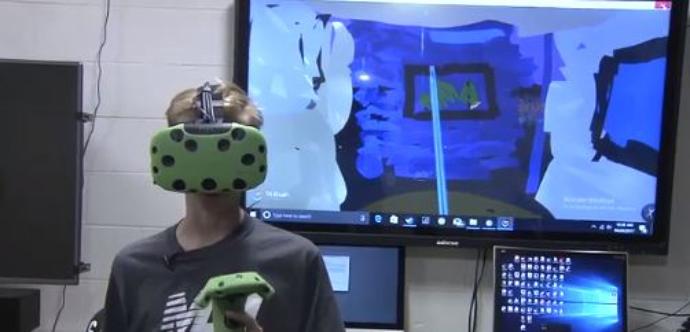 A handful of public schools in Maine, though, are now bringing the virtual world into the classroom.
"When I started this class, he said we could use it to prototype and I was like I'm using VR to prototype.
Earlier this year, the school bought an HTC Vive for about $2,500 with money from a local grant.
He says the value of VR here is not necessarily helping kids use or master the technology.
It's the ability to create, erase and create, again.
"It's not a failure, it's a learning process," says Zaman. "Getting them comfortable with getting that feedback to make a better product is one of the biggest things I see that's great going forward."
See the full story here: http://www.wabi.tv/content/news/Virtual-Reality-in-the-Classroom---Part-1-454489623.html
Virtual reality’s next big leap is real-world Pong and Pac-Man
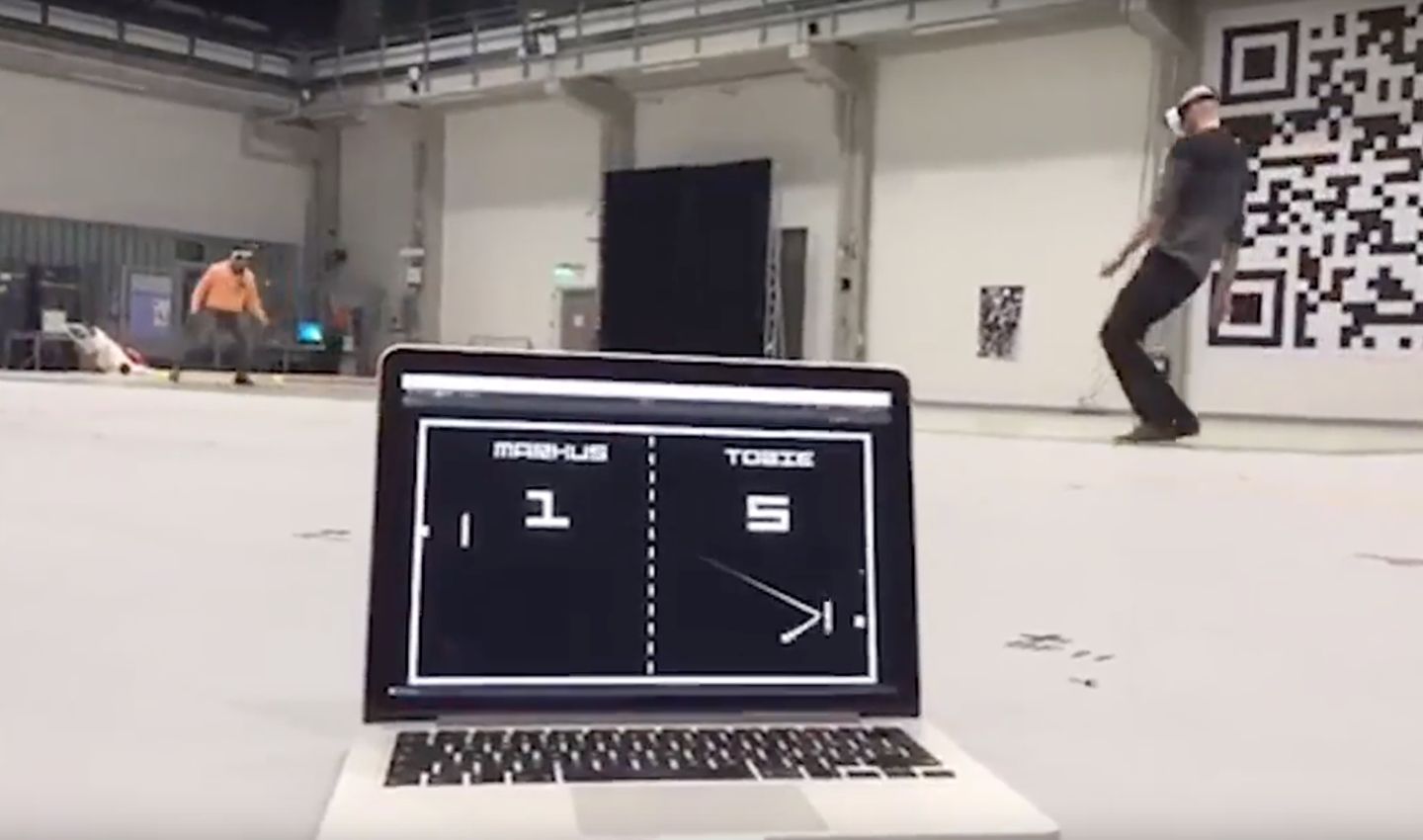 Munich-based HolodeckVR is using optical and radio tracking to create giant VR gaming arenas.
Jonathan Nowak Delgado is turning empty public spaces into virtual reality playgrounds by strapping headsets on people to let them roam freely.
"You're not playing Pac-Man, you are Pac-Man," says the co-founder of Munich-based HolodeckVR. Once a player puts on a headset they're surrounded by virtual walls and can see collectible items and monsters.
Delgado explains the company is creating two different arenas for people to play within: 20 x 20 metres and an "extra large" 200 x 200 metres. "There can be up to 20 other people in the large Holodeck and up to 100 in the extra large size," he says.
The company is currently using Samsung Gear mobile VR headsets and a combination of tracking technology it has developed in-house.
See the full story here: http://www.wired.co.uk/article/holodeckvr-virtual-gaming-virtual-reality