Indoor Bike Powered By App Lets You Ride In Virtual Reality
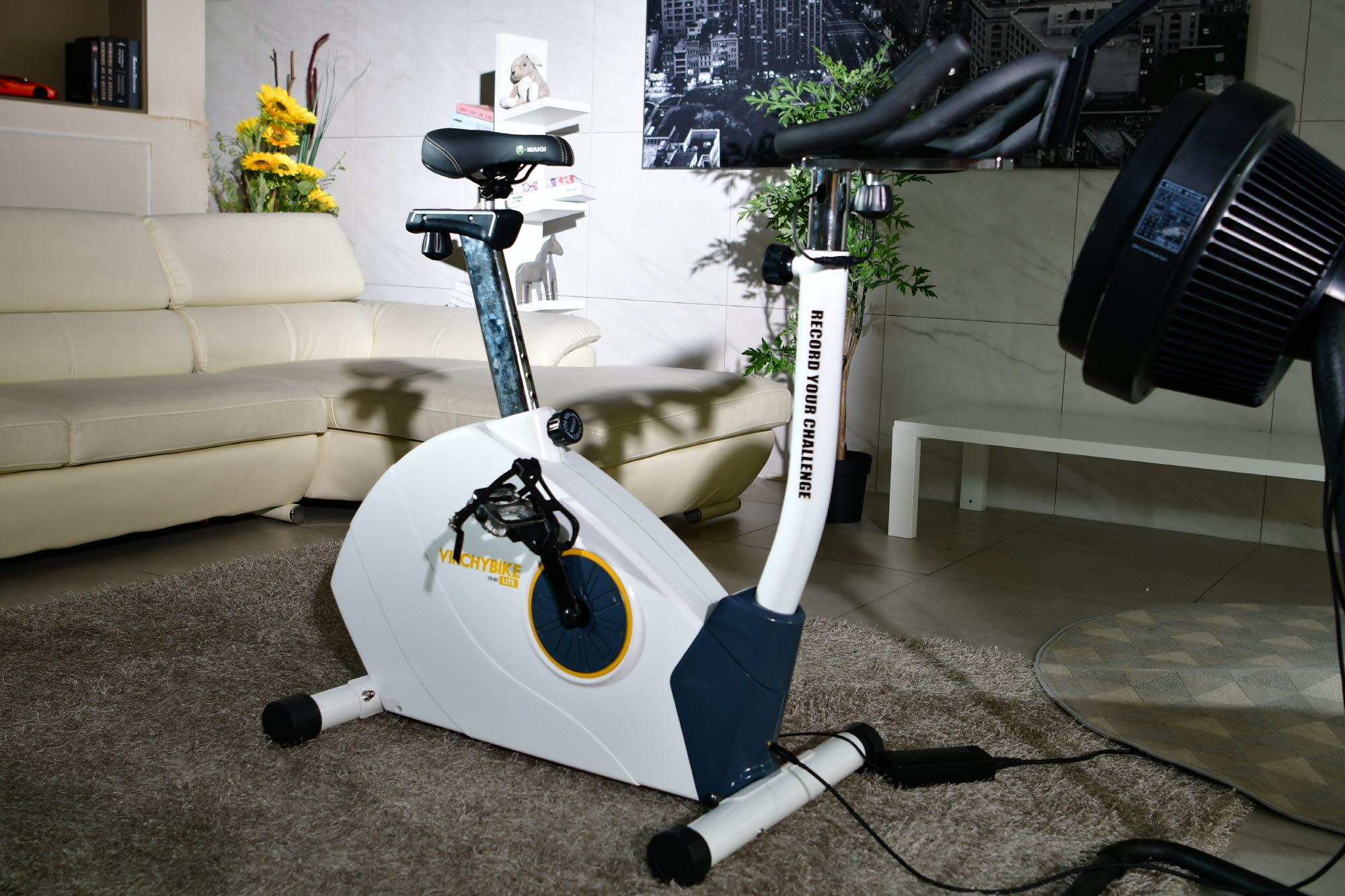 Imagine working out on a stationary bike, winding your way through courses based on real roads while your bike adjusts to your speed, gear, and resistance. Then imagine racing against fellow riders in virtual reality.
VirchyBike LITE, available on Kickstarter, promises to deliver those experiences and more.
The Virchy Studio platform offers a number of live, virtual classes similar to those offered by Peloton. If your instructor says to increase the bike’s resistance, the bike can do that automatically. If you want a measure of your performance, you can compare yourself against your instructor. A fan that can be purchased separately also creates a wind effect.
VirchyBike LITE can be pre-ordered on Kickstarter for $399, a mere fraction of the price of other, similar indoor bikes.
See the full story here: https://www.sporttechie.com/indoor-bike-powered-artificial-intelligence-lets-ride-virtual-reality/
VR Mark Zuckerberg discusses how Facebook is using AI to aid the Red Cross in Puerto Rico
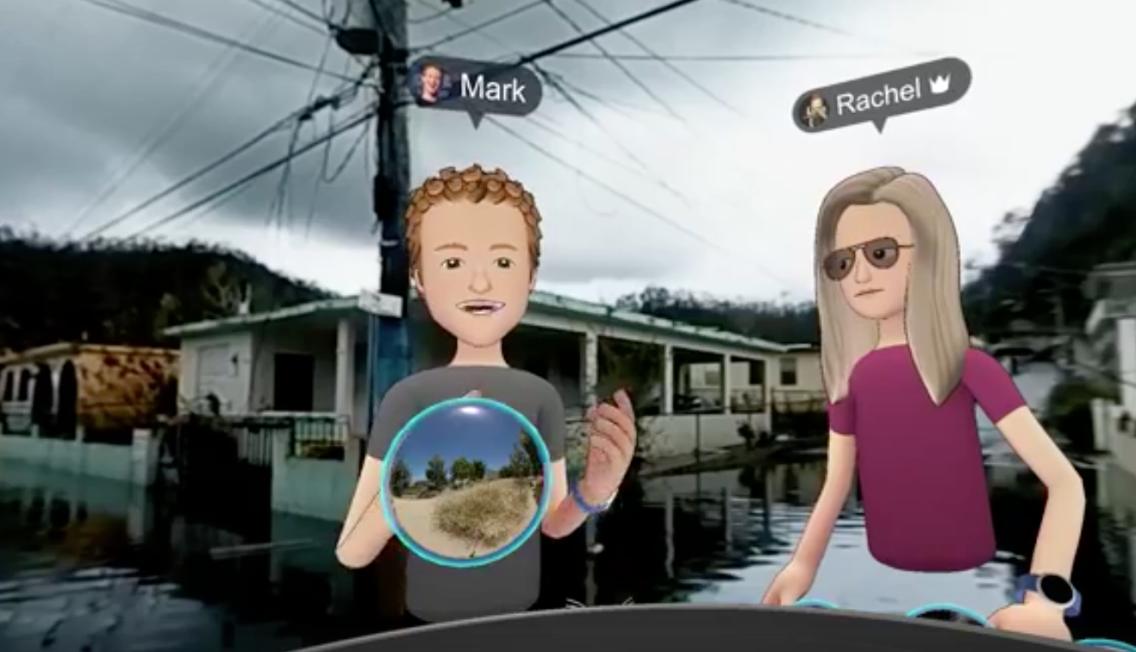 “We use artificial intelligence to build what we call ‘population maps’ so you can look at satellite imagery of an area and get a sense of where it is that people actually live and the density of different places and where’s there’s infrastructure going to in those places,” Zuckerberg said. “That’s going to help the Red Cross figure out where people are who need help.”
See the full story here: https://techcrunch.com/2017/10/09/vr-zuckerberg-shares-details-on-some-of-facebooks-ai-aid-to-the-red-cross-in-puerto-rico/?utm_medium=TCnewsletter
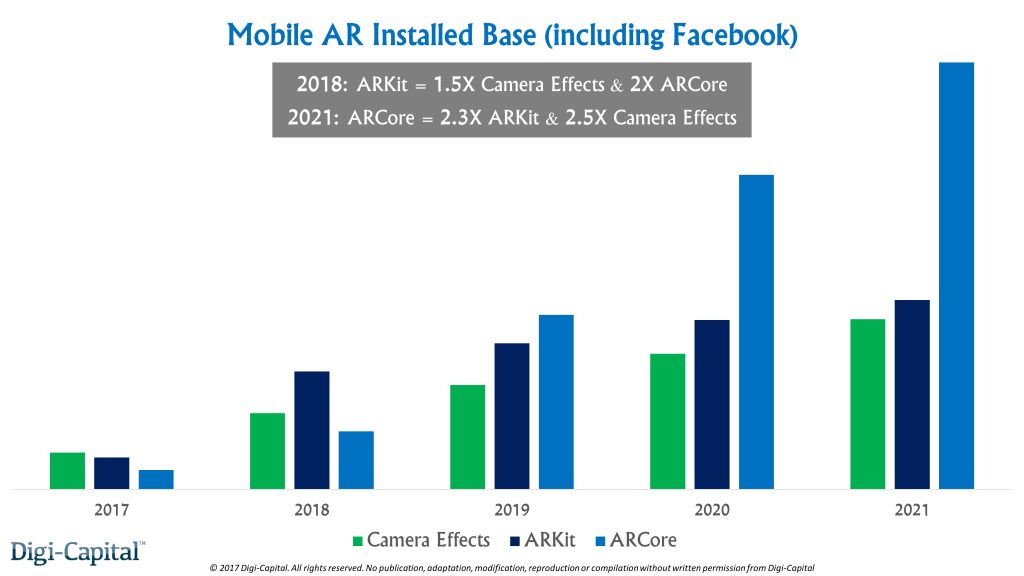
How ARKit will make more money than ARCore and Camera Effects (for now)
 See the full story here: https://www.digi-capital.com/news/2017/10/how-arkit-will-make-more-money-than-arcore-and-camera-effects-for-now/#.WdwCaEyZNPM
Disney’s Big Bet on Streaming Relies on Little-Known Tech Company
 Cord cutting was accelerating much faster than expected. Live viewing for some children’s programming was in free fall. At the same time, streaming services like Netflix were experiencing explosive growth.
With Disney’s board exhorting speedy action, Robert A. Iger, Disney’s chief executive and chairman, proposed a legacy-defining move. It was time for Disney to double down on streaming.
In August, Disney announced that it would introduce two subscription streaming services, both built by BamTech. One, focused on sports programming and made available through the ESPN app, would arrive in the spring. The other, centered on movies and television shows from Disney, Pixar, Marvel and Lucasfilm, would debut in late 2019.
“We’re going to launch big, and we’re going to launch hot,” Mr. Iger promised at a subsequent investor conference.
But Mr. Iger was impressed with BamTech. Based in Manhattan’s Chelsea Market, a former factory for the National Biscuit Company, the 850-employee company has a strong track record — no serious glitches, even when delivering tens of millions of live streams at a time. BamTech also has impressive advertising technology (inserting ads in video based on viewer location) and a strong reputation for attracting and keeping viewers, not to mention billing them.
Mr. Paull, a Harvard M.B.A. with experience at Sony Music, will report to Mr. Mayer, who joined Disney in 1993 before leaving in 2000 to run Playboy.com. He soon returned to Disney to work on Go.com, a web portal that eventually failed, and other Disney websites, including ESPN.com, before moving to strategic planning.
Though BamTech has proved its streaming bona fides, it still lacks the algorithms and the personalization skills that have helped propel Netflix to success. To fill that gap, Mr. Paull recently hired the former chief technology officer of the F.B.I. to be the head of analytics.
The level of engineering required for that enormous volume of content is no small matter. Each bit of streamable content has to be made to fit a dizzying number of requirements. Start with web browsers, ranging from Safari to Chrome or Explorer, all of which have slightly different demands. It also has to fit every iPhone and Android phone. And then there are connected living room devices like Apple TV.
See the full story here: https://www.nytimes.com/2017/10/08/business/media/bamtech-disney-streaming.html
The Seven Deadly Sins of AI Predictions
 Mistaken extrapolations, limited imagination, and other common mistakes that distract us from thinking more productively about the future.

See the full story here: https://www.technologyreview.com/s/609048/the-seven-deadly-sins-of-ai-predictions
This AR headset bakes eye-tracking right into its OLED displays
 Fraunhofer FEP has cooked up a new headset building on its latest bidirectional OLED microdisplays which, in addition to OLED pixels, have photodiodes sandwiched in-between. With those, the tiny screens can not only show data to the wearer, but watch where that person is looking too.
The bidirectional micro displays each run at 800 x 600 resolution, in fact, though Fraunhofer says that it’s really a starting point for commercial brainstorming.
However, potentially more important is foveated rendering. That effectively prioritizing graphics potency for the areas that the wearer is looking at directly, whereas the periphery is allowed to run at a less system-intensive resolution.
John Hopkins Adds VR & AR To University Curriculum

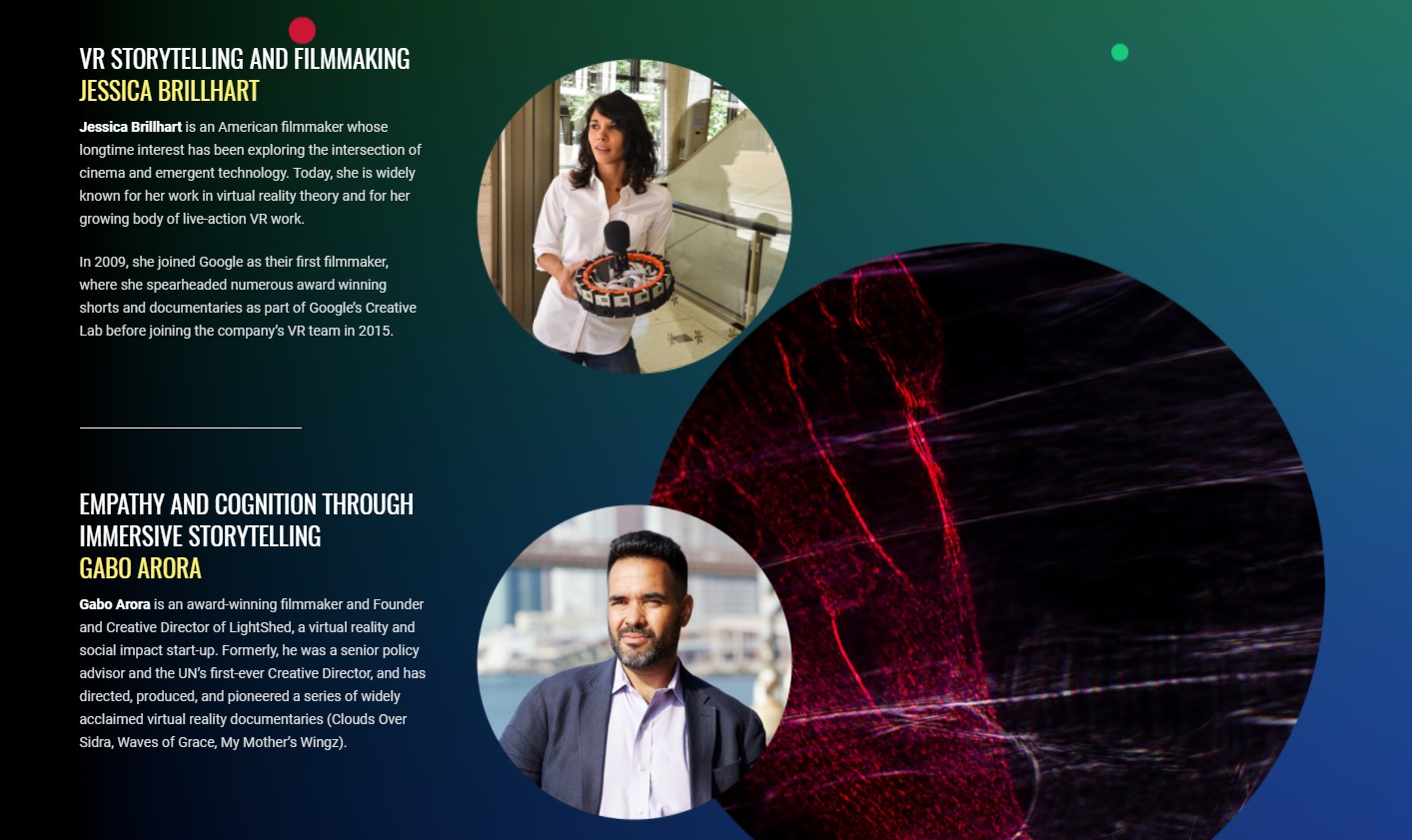 It’s this incredibly diverse group of talented students that will serve as the starting point for the university’s latest concentration, Immersive Storytelling & Emerging Technologies. Designed and organized by veteran VR/AR filmmaker Gabo Arora, ISET will focus entirely on creative cinematic storytelling in the digital medium including virtual reality, augmented reality and even artificial intelligence. Students will gain access to a wide variety of expensive tools normally out of reach to the average consumer in intimate classroom environments directed by instructors dedicated strictly to VR and AR technology. The new ISET concentration will also feature a tuition priced at a third of what’s currently being offered in similar programs at universities such as NYU and SoCal.
See the full story here: https://vrscout.com/news/john-hopkins-vr-ar-university-curriculum/
See program here: http://jhufilm.com/immersive-media-conference/
TOKiMONSTA and TheWaveVR To Release First Full-Length Interactive Album in Virtual Reality on October 8th
 LA producer TOKiMONSTA and social VR music platform TheWaveVR have announced a special interactive version of TOKi’s new album, Lune Rouge, which drops October 6th via her label Young Art Records. The VR portion of the album titled the Lune Rouge Experience will launch Sunday, October 8th at 6:00pm Pacific Time and will be available to any HTC Vive or Oculus Rift VR headset owners through TheWaveVR’s free app on Steam in the US. Programmed specifically for VR with art direction from Strangeloop, the experience will let fans explore a planet inspired by the album artwork, dance in an interstellar rave under an exploding sun, and remix a 3D world built out of TOKiMONSTA's music.
See a video preview here: http://www.catsandvr.com/blog/wavetoki