The next Pokémon Go? ‘Star Wars’ unveils a massive ‘Last Jedi’ augmented-reality game
 The campaign's basics, by the numbers: As the first wave of "Last Jedi" merchandise lands Sept. 1 (aka "Force Friday II"), the "Find the Force" AR game - involving about 20,000 stores in 30 countries - will let participants hunt down 15 "Star Wars" characters, two are which are new. (Is that the Admiral Ackbar you're looking for?)
To play, fans will download the "Star Wars" smartphone app, head to one of a fleet of participating stores and uncover potentially talking virtual characters by pointing the phone at the "Find the Force" placard. The app encourages social-media sharing of your character experiences, with the big carrot urging that you share being a sweepstakes contest that closes Sept. 3.
See the full story here: http://www.chicagotribune.com/entertainment/movies/ct-star-wars-unveils-a-massive-last-jedi-augmented-reality-game-20170824-story.html
Mini-antennas could power brain-computer interfaces, medical devices
 The new mini-antennas play off the difference between electromagnetic (EM) waves, such as light and radio waves, and acoustic waves, such as sound and inaudible vibrations. ...at any given frequency, an EM wave has a much longer wavelength than an acoustic wave.
The trick is, of course, to quickly turn the incoming EM waves into acoustic waves. To do that, the two-part antenna employs a thin sheet of a so-called piezomagnetic material, which expands and contracts when exposed to a magnetic field. If it's the right size and shape, the sheet efficiently converts the incoming EM wave to acoustic vibrations.
The team created two kinds of acoustic antennas. One has a circular membrane, which works for frequencies in the gigahertz range, including those for WiFi. The other has a rectangular membrane, suitable for megahertz frequencies used for TV and radio. Each is less than a millimeter across, and both can be manufactured together on a single chip. When researchers tested one of the antennas in a specially insulated room, they found that compared to a conventional ring antenna of the same size, it sent and received 2.5 gigahertz signals about 100,000 times more efficiently, they report today in Nature Communications.
Tiny antennas could reduce the size of cellphones, shrink satellites, connect tiny objects to the so-called internet of things, or be swallowed or implanted for medical monitoring or personal identification. ... With a neurosurgeon at Massachusetts General Hospital, he’s also creating brain implants for reading or controlling neural activity—helpful for diagnosing and treating people with epilepsy, or eventually for building those sci-fi brain-computer interfaces.
See the full story here: http://www.sciencemag.org/news/2017/08/mini-antennas-could-power-brain-computer-interfaces-medical-devices
Zero Latency’s ‘Warehouse Scale’ VR Arena Comes to MGM Grand in Vegas
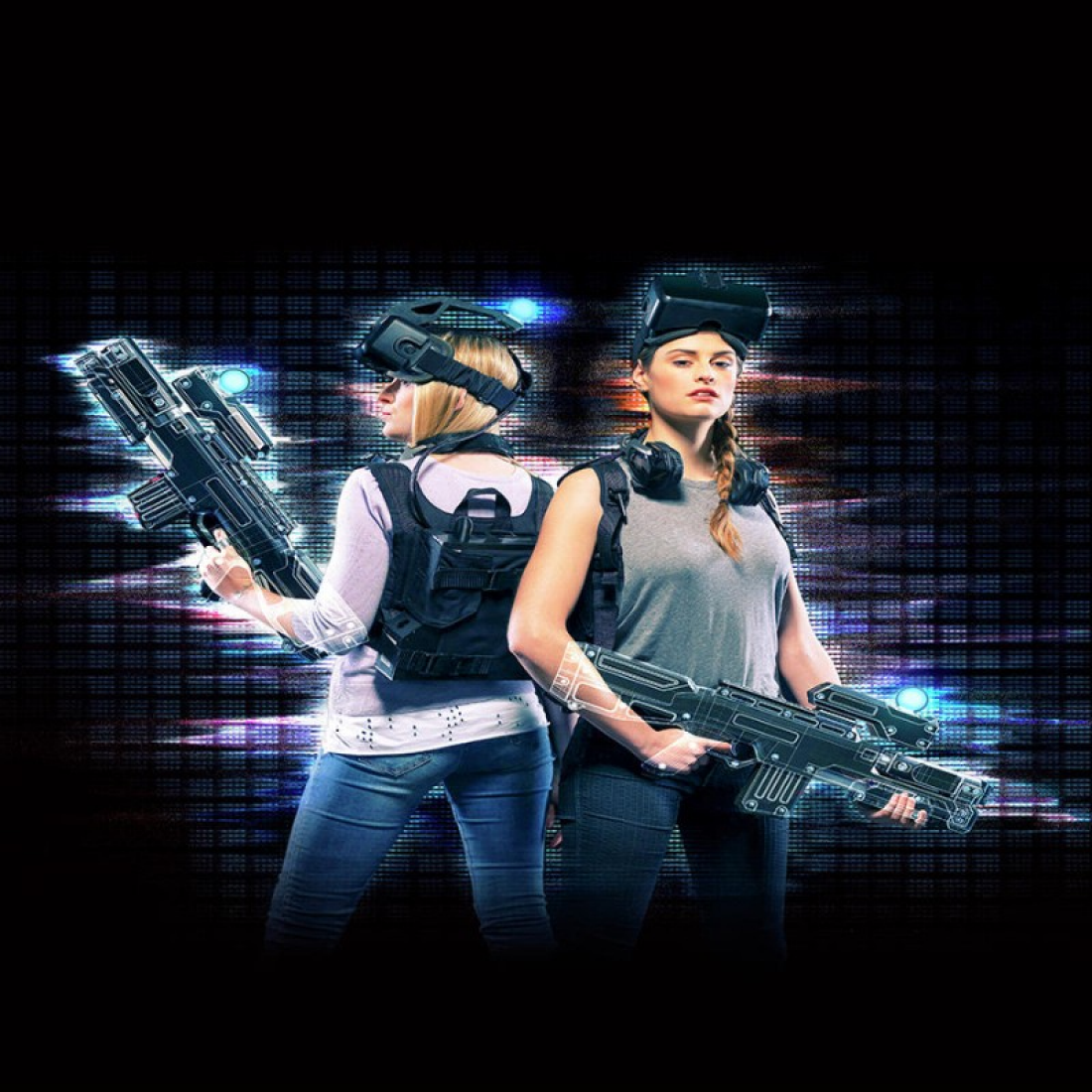 Launching Sept. 8, 2017
Zero Latency’s new installation at the MGM Grand’s massive Level Up gaming lounge marks another positive milestone for the Melbourne-based company and out-of-home VR technology. The Las Vegas facility opens on September 8th, offering untethered, eight-player VR entertainment across a 2,000 square-foot arena.
As explained on the new VR page of the hotel’s website, guests can choose from three games, Zombie Survival, Singularity and Engineerium for a 30-minute experience. Players can move around tether-free thanks to the Alienware backpack PCs powering OSVR HDK2 headsets fitted with a custom ‘warehouse-scale’ tracking solution.
See the full story here: https://www.roadtovr.com/zero-latency-warehouse-scale-vr-comes-to-mgm-grand-in-vegas/
4 myths are blocking real, needed VR standards
 Summary By Phil Lelyveld
Neil Trevett, the president of The Khronos Group, and Yuval Boger, CEO of Sensics, list four “myths” that stand in the way of VR standards and more rapid market growth. Their rebuttal to #1 ‘It is too early for standards’ is to point to the number of companies that have signed up to work on The Khronos Group’s Open XR Working Group’s standards effort. They counter #2 ‘standards stifle innovation’ by noting that many innovative companies can only afford to develop for a few non-interoperable platforms, so the lack of standards is also stifling innovation. Myth #3, ‘consumers won’t be impacted,’ they argue is not true because the lack of standards makes consumers hesitant to buy a product that may not work universally with all VR experiences. Finally, they discount the argument that there are too many groups developing VR standards by point to two group’s, The Khronos Ground and the IEEE, as the two organizations leading the effort. The ETC’s VR/AR Initiative program lead, Phil Lelyveld, says that despite outreach efforts to the creative community by those organizations, their active contributors are predominantly hardware and tool developers and technologists. Members of the Hollywood creative community often make the argument that they want to shape the future of entertainment experiences rather than have their creative options bounded by the product development choices of hardware and software developers. It may be too early to codify standards, says Phil, but it is not too early for creatives to get involved in the discussions.
Phil added that he’s never heard anyone make the argument that consumers won’t be impacted (#3) before, he believes that innovation is redirected rather than stifled (#2), and there are other standardization efforts involving significant players (#4).
See the original story here: https://venturebeat.com/2017/08/25/4-myths-getting-in-the-way-of-necessary-vr-standardization/
High Fidelity’s content protection plan has high costs (Vendor articulates problems)
 Specifically, if you care about content ownership then focus on helping build the ecosystem of open-source virtual reality platforms such as High Fidelity. Even if you’re planning on using a walled garden solution — such as a “closed grid” — make sure that it will be based on a platform that is open source and has more than one vendor offering services for it.
...the very nature of the public ledgers that blockchains utilize makes anonymity very hard to protect over time, especially if transactions can be correlated with data gathered from third parties.
See for example this article which explains how various techniques used to anonymize Bitcoin transactions can be overcome using data from online marketplaces to find the real identities of the buyers.
Given that all information stored in public blockchains is permanently accessible to everyone, no data stored in a public blockchain can be considered permanently anonymous.
This is a problem for a system that defines content ownership, especially if the people designing it assume that they can promise anonymity to the people using it, which the High Fidelity article does.
... As the proportion of content that isn’t registered in the blockchain increases compared to that which is included in it, the inventory blockchain’s value will decrease for determining who should be allowed to rez particular content.
A third problem is that even if all the transaction speed problems that currently exist with various blockchain implementations were to be resolved and the global inventory blockchain was able to handle hundreds of thousands of transactions per second, storage and bandwidth costs would make it very expensive to host a copy of the blockchain.
Augmented reality’s future isn’t glasses. It’s the car
 New transportation paradigm
Sooner or later, the global automotive industry will be dominated by MaaS(mobility-as-a-service) companies. Uber, Lyft, Didi, and others are already making money on transportation rather than car sales. With driverless solutions on the way, we predict car manufacturers will continue to lose ground as they are able to offer nothing more than commodity.
How AR can benefit automobiles
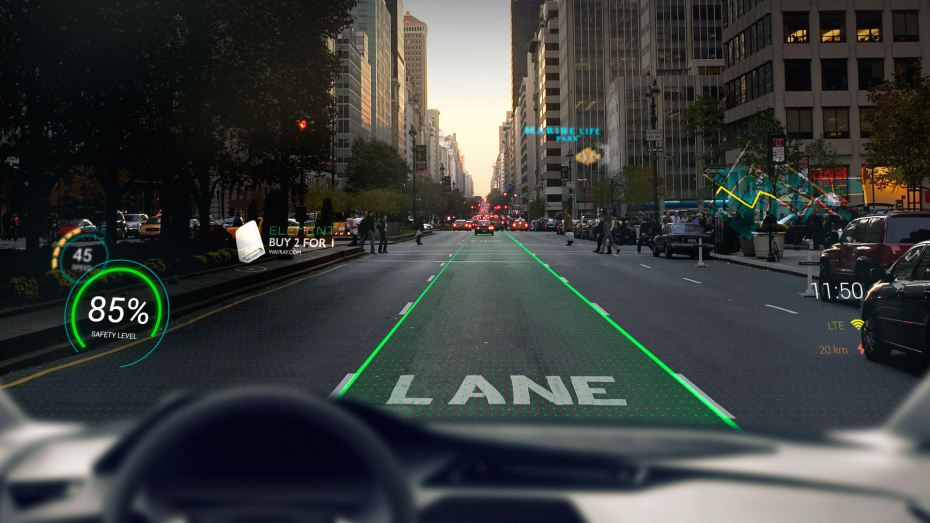
In the automotive industry, AR can open unlimited opportunities for location-based content serving specific business purposes, such as:
- New navigation and geolocation features which adjust the experience to the real time environmental conditions
- New types of relevant and time-conscious ads
- Gamification of transportation processes and in-car entertainment
- New types of social networks — the functionality that Waze is already exploring
See the full story here: https://venturebeat.com/2017/08/23/ar-will-drive-the-evolution-of-automated-cars/
Meet Eugene Chung, Penrose Studio, The D.W. Griffith Of Virtual Reality

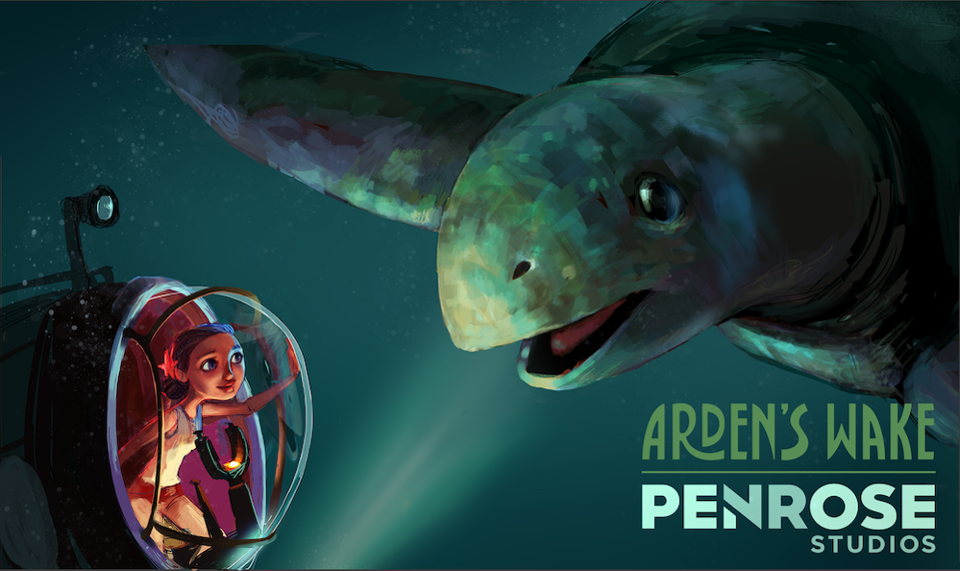 I was blown away by his sixteen-minute narrative VR masterpiece Arden's Wake at the Tribeca Film Festival's Immersive Arcade in April so I jumped at the chance to meet Chung at Penrose's San Francisco office, and to experience Arden's Wake again.
Arden's Wake was even better the second time I saw it. It's a completely new, original approach to immersive storytelling that mades me think differently about how third person narratives will work in this new medium.
Arden's Wake takes us inside a Waterworld-like post apocalyptic world, where a teenage girl lives in a Nemo-like lighthouse built atop a decaying underwater skyscraper. When her inventor father is lost while diving, she takes his underwater vehicle into the ruins to find him. The 3D animation is simply amazing. We follow the tiny characters and their narrative as if we are giants looking into a dollhouse.
It has main characters, though they are stylized like the stop motion maquettes featured in the movies Nightmare Before Christmas and James and the Giant Peach. Certainly, like all VR, we experience it, though experience doesn't quite capture it, either. Escape Rooms are experiences, too. "Sleep No More", the smash hit New York show now entering its sixth blockbuster year, is called immersive theater, which Chung says strongly influenced him, along with the operas in which his father performed. He says he is also inspired by video and strategy games, whose miniature style suggested the god-like perspective of his narrative VR experiences.
Chung's eclectic background uniquely suits him to this unique moment in time. He grew up in suburban Washington, DC. His mother was a CPA and his father a professional opera singer.
For Chung and Penrose, 2018 will bring the next installment of "Arden's Wake", which ends with a cliff hanger as our heroine is swallowed by a sea monster the size of a skyscraper. "No one knows the ideal length of the VR experiences of the future," the director said. "What we're doing is not glamorous. It's just the hard work needed to move the medium forward."
Allumette is available on Playstation VR, Oculus Rift, Steam VR, and Viveport. A release date and platforms for Arden's Wake have not yet been announced.
See the full story here: https://www.forbes.com/sites/charliefink/2017/08/24/meet-the-d-w-griffith-of-virtual-reality/#429340d727a7