sansar is coming this summer… (with video)
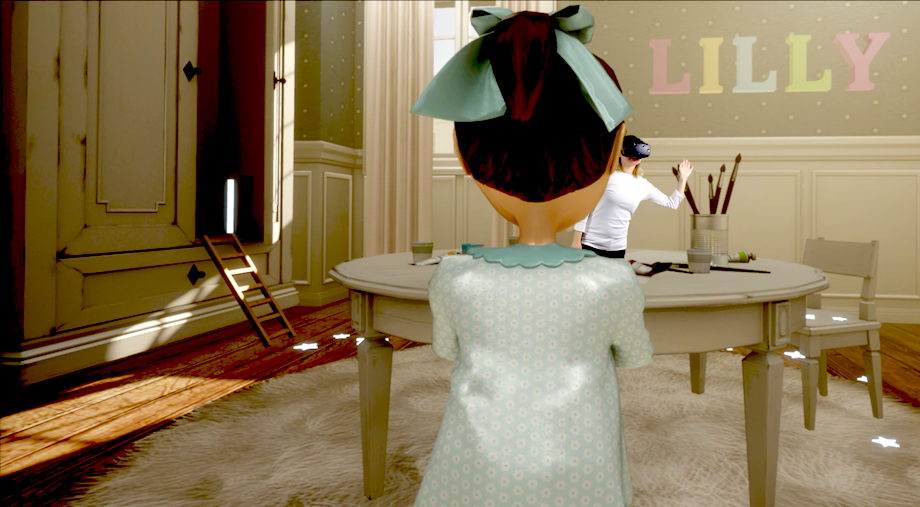 let us not kid ourselves: at the moment the vr business is a bit of an elitist's game. yes, the hardware is pricey too but frankly that is not what the core issue is, at least in my mind: in order to produce a visually and narratively compelling vr experience today you need to have acquired a lot of different digital skills.
yes, you can learn unity but you need time and many people don't have that luxury.
sansar already in closed beta has a functioning marketplace where transactions are are super simple. the concurrency of avatars, the realism in visual and aural rendering is crazy good. the editing ui is solid and plug and play. the performance is spectacular.
no: i am not getting paid to say all this [as is alleged by a certain sl centric tabloid blog out there...]
and just like second life i am convinced that over time linden lab with sansar has the potential to level the playing field in the arena of world building like they did 14 years ago already. ultimately though it will depend on the people making those worlds and those people are out there waiting to be told "yes, you can!" ...
See the full story here: http://www.draxtor.com/blog/2017/7/6/sansar-is-coming-this-summer
The BBC is shelling out $44 million to turn kids away from YouTube and Netflix
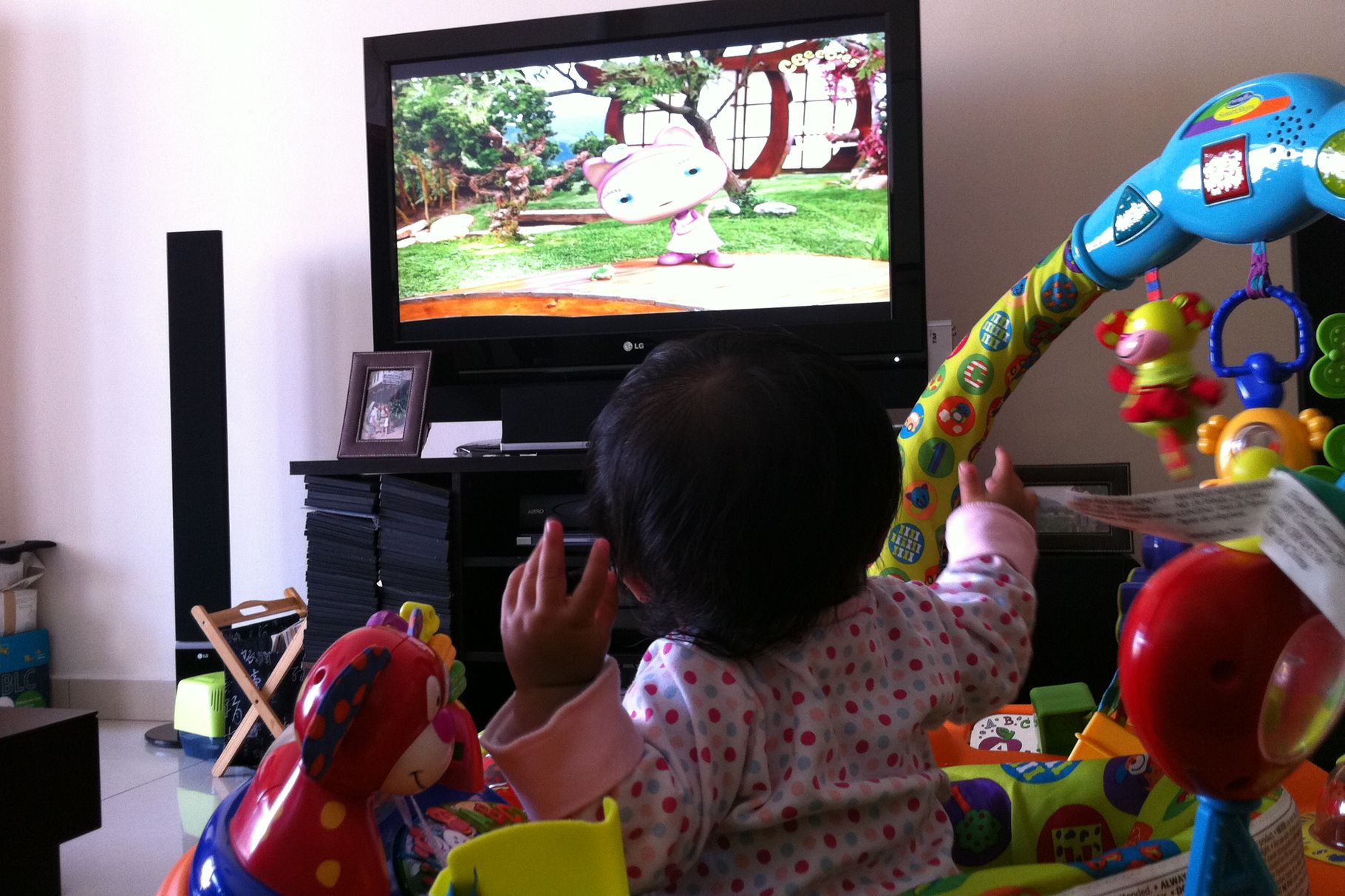 The BBC announced today that it plans to spend about $44 million (£34 million) in online children’s content across the next three years, responding to the rise of Netflix, YouTube, and Amazon. The plan goes into effect immediately.
The funding will go into making personalized online programs for kids, including video, live online program clips, vlogs, podcasts, quizzes, games and apps. According to the network, the programs will be made out of “bespoke commissioned content, re-purposed BBC Archive and third-party content from education/cultural bodies.” These features will go alongside traditional BBC kids television channels like BBC Bitesize, for education, and the hilariously named CBeebies, for ages six and under.
This new shift in company policy comes about as YouTube has become the favorite brand of 70% of kids aged 6-12, according to the BBC annual report, and as the BBC fights to remain relevant in an increasingly digital landscape.
See the full story here: https://www.theverge.com/2017/7/4/15918912/bbc-spends-34-million-44-youtube-netflix
The South Park Commons Fills a Hole in the Tech Landscape
 Ruchi Sanghvi was the first female engineer at Facebook, where she helped create the news feed that now serves as the primary window into the world’s largest social network.
At 32, she wanted a better way of deciding where her career would go.
Her next project became an effort to help people find their next project.
The result is South Park Commons. Housed in an old townhouse on the oval park at the heart of the San Francisco tech scene, the Commons is a selected community of entrepreneurs, engineers, researchers and others. Ms. Sanghvi describes it as tech’s answer to the Bloomsbury Set or Benjamin Franklin’s Junto club, a means of shaping new ideas through conversation and shared experience.
It’s also a way of preparing for the future.
“You get a couple of shots in life to do something meaningful and impactful. Why not take the time to identify that?”
Silicon Valley is a place in transition, thanks to a shifting economic landscape, the rise of artificial intelligence and other technologies, and new pressure to embrace a more diverse range of people.
But she also sets limits. Anyone who builds a company that grows to more than five people graduates. She does not want the Commons to become just another accelerator.
The trick lies in keeping the current vibe going and, better yet, mimicking its approach across the Valley. For the Commons, that means more independence from Ms. Sanghvi, a way for the group to attract members and raise funds on its own.
See the full story here: https://www.nytimes.com/2017/07/02/business/tech-scene-south-park-commons-san-francisco.html
New Asus phone highlights augmented reality
 ...the ZenFone AR’s capabilities, which include support for both Google Tango and Daydream.
Tango is an AR technology while Daydream offers immersive virtual reality or VR.
The ZenFone AR has a TriCam system that lets the phone track a user’s location as he/she moves through space.
It also has depth-sensing, as Santos demonstrated through an augmented reality tour of a BMW vehicle.
Using the phone, Santos showed to reporters and bloggers the car’s features — from the engine to its interior — and made it look as if they were checking the actual vehicle.
See the full story here: http://cebudailynews.inquirer.net/138457/new-asus-phone-highlights-augmented-reality
The cofounders who sold augmented reality app Layar to Blippar want to buy it back
 Layar was an important buy for Blippar, which had been relying on AR technology built by Qualcomm called Vuforia. Layar gave Blippar its own in-house AR tech, and user numbers.
There are several reasons that Mitra likely rejected Layar's cofounders. One is that it may be technically impossible to uncouple the two firms. A second is that, according to multiple sources, Layar has historically provided the bulk of Blippar's active users. Another is that Mitra remains convinced that Blippar can establish itself as a platform business.
The competition is growing, however. Google Lens, like Blippar's visual browser, identifies what it can see through a phone's camera. Apple's ARKit lets developers build amazing augmented reality on iOS. And Samsung's Bixby Vision similarly has augmented reality functionality baked directly into the camera of its latest smartphone, the Galaxy S8.
See the full story here; http://www.businessinsider.com/layar-founders-want-to-buy-their-company-back-from-blippar-2017-7?r=UK&IR=T
5 Best Augmented Reality SDKs and Frameworks
 [Philip Lelyveld note: the article describes the features and strengths of each one.]
Number one - Kudan. AR SDK.
Number Two - Simple CV.
Number Three - Vuforia, Augmented Reality SDK.
Number 4 - Wikitude SDK.
Number 5 - ARToolKit
See the full story here: https://themindstudios.com/blog/5-best-augmented-reality-sdks-and-frameworks/
Xiaomi And Nokia To Work Together On Virtual Reality, Artificial Intelligence And The Internet Of Things
 The Chinese smartphone manufacturer today signed an agreement with Nokia, allowing the two to exchange cellular patents, while also setting up for new future projects. It seems Xiaomi will now be working together with Nokia on various smartphone add-on technologies like the Internet of Things, virtual reality, and even artificial intelligence. Nokia, for its part, will supply network infrastructure equipment.
How Does Lytro Capture Light Fields for Virtual Reality?
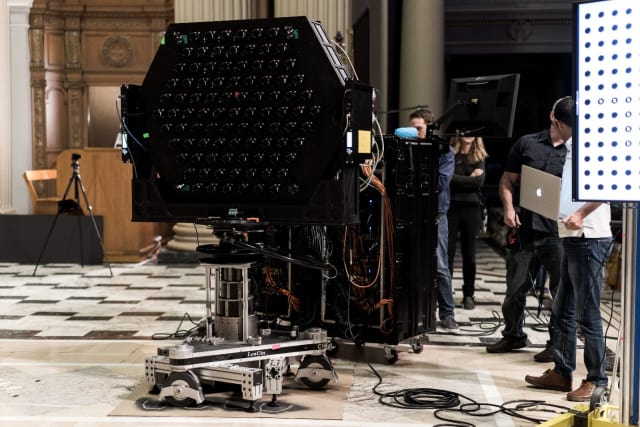 Using an array of cameras set up in a predesigned capture matrix, each can be programmed to “see” different perspectives—exposure, shutter timing, focal length and position all carefully measured and quantized sequentially.
This array-based system of light-field technologies allows Lytro to capture a light field, calculate ray angles and then manifest a virtual representation for interactive immersion.
Light rays pass through the lens and aperture of the each Lytro camera, along with their color characteristics, angular directions and intensity. An array of microlenses gathers captured rays into image discs. Each image disc covers its own part of the sensor, and bundles of light rays are gathered up. The bundles are then processed by a computational engine within the hardware, using a geometric model to create accurate light behavior in virtual reality.
See the full story here: http://www.engineering.com/ARVR/ArticleID/15165/How-Does-Lytro-Capture-Light-Fields-for-Virtual-Reality.aspx
Inside Peter Jackson’s New Augmented Reality Studio
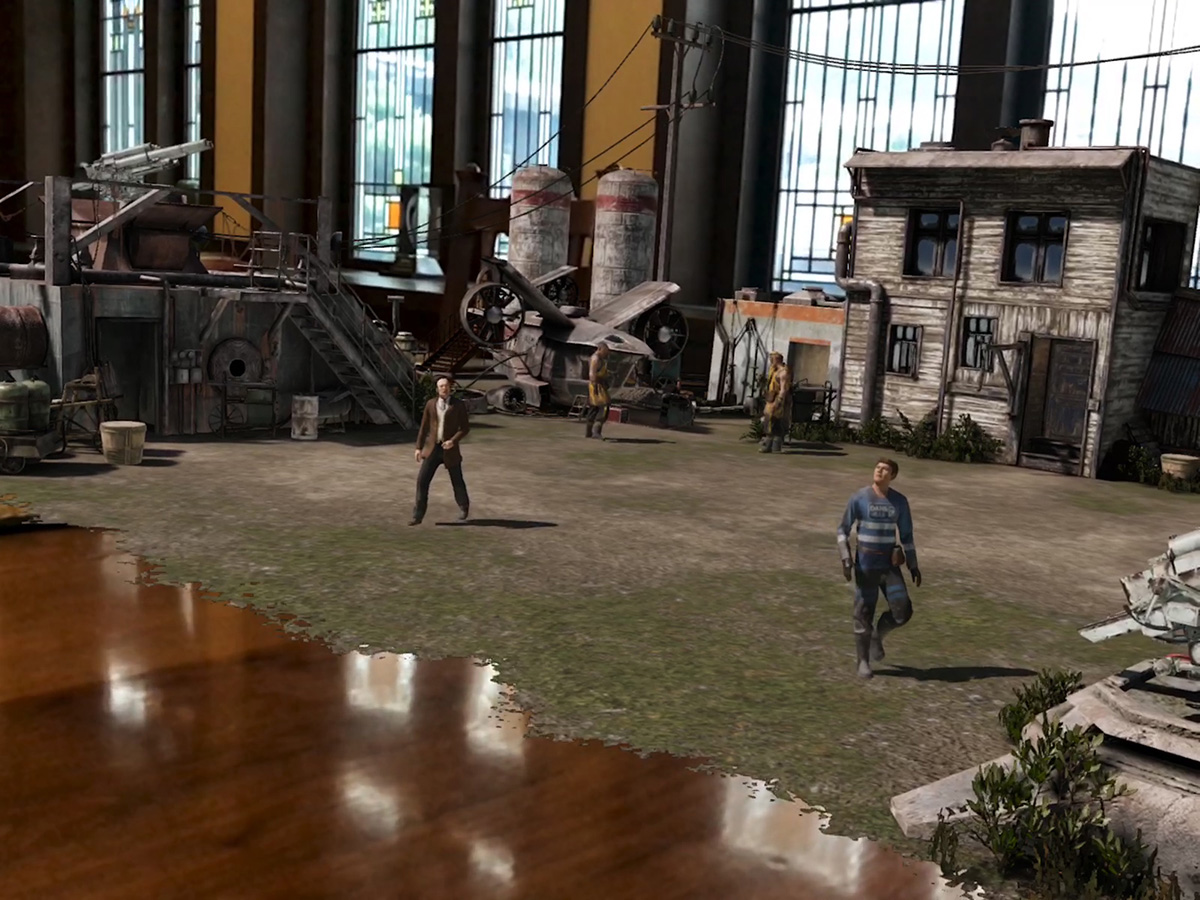 “As ar is such a new field, demos are often reasonably simple in their scope and we really wanted to make something more cinematic,” said Coull. “We created this world to tell a short little story whilst also really pushing the hardware and software to see what it could do.”
The idea behind ARKit is essentially a framework for building ar experiences. It lets creators lock their digital content onto some kind of object such as a tabletop, and then track the iPad or iPhone camera as someone moves the device around. On the device screen, it appears as if the action is taking place on the table or other object even during movement.
“He just made something super cool with little restrictions,” said Coull. “We then figured out the technology we needed to create to take that awesome explosion and make it run at 60 fps on an iPad.”
And immediately following the WWDC, many wondered whether the Wingnut AR demo might end up becoming some kind of playable game. But Coull says that’s currently not on the agenda.
See the full story here: http://www.cartoonbrew.com/vr/inside-peter-jacksons-new-augmented-reality-studio-151959.html
GunnAR Live Fire Test Shows How AR Can Revolutionize Decades-old Combat Procedures
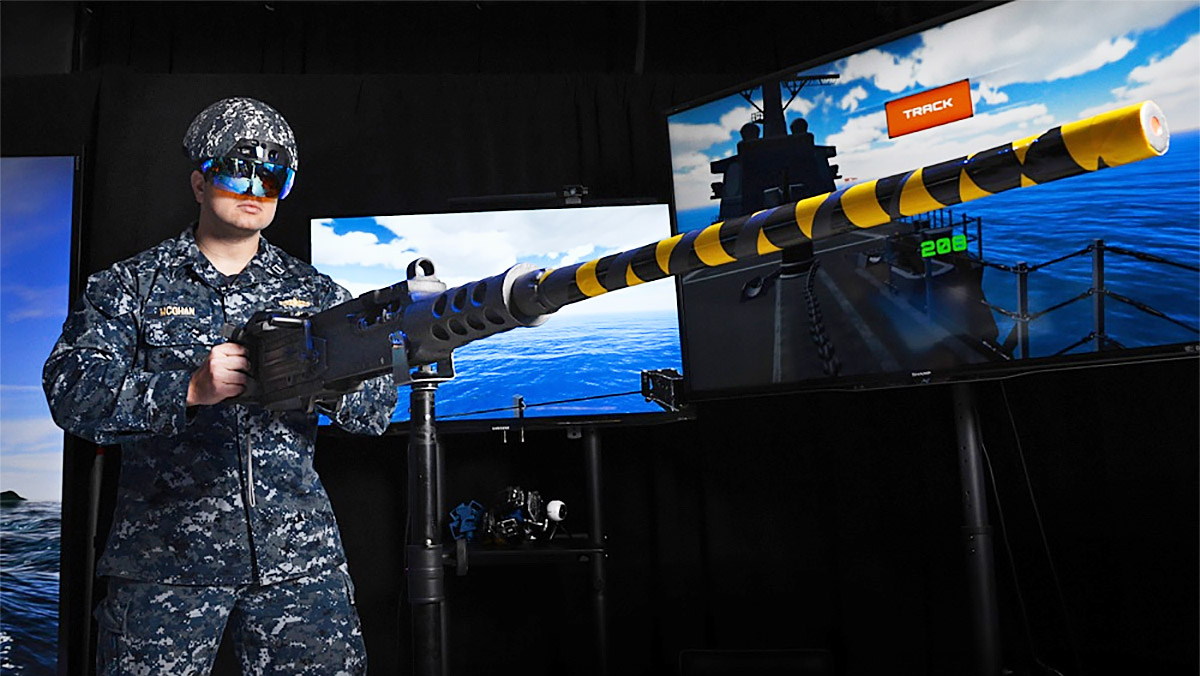 The GunnAR system uses augmented reality helmets to visually relay targeting and firing commands to gunners aboard Navy vessels, replacing decades-old methods of giving audible commands by radio which can be hard to hear over the sounds of firing machine guns and through required ear protection.
Developed by the Space and Naval Warfare Systems Center Pacific’s(SSC Pacific) Battlespace Exploitation of Mixed Reality Lab (BEMR), the system employs the Daqri smart helmet which is a self-contained AR headset powered by an Intel processor. Combined with a tablet-controlled app, a ship’s gunnery liaison officer can issue precise commands that are shown visually to the gunner, avoiding any ambiguity that could be introduced due to the difficulty of hearing audible commands in a combat scenario.
See the full story here: https://www.roadtovr.com/gunnar-live-fire-test-shows-ar-can-revolutionize-decades-old-combat-procedures/