Digital Privacy to Come Under Supreme Court’s Scrutiny
 Devices connected to the internet, from cellphones to watches to personal training trackers that facilitate our personal habits and communications, are a fact of daily life, and the Supreme Court will have to start drawing clear lines around what types of electronic information are — and are not — protected by the Fourth Amendment. Simply asserting that there is a right to privacy does not provide much help in determining how far that protection should extend in a digital world.
See the full story here: https://www.nytimes.com/2017/07/10/business/dealbook/digital-privacy-supreme-court.html
W3C Approves the EME Standard for DRM-Protected Video
 “Web creator Tim Berners-Lee and W3C project manager Philippe Le Hégaret write that they believe EME is better for accessibility, because it complies with other web accessibility standards, and that having DRM support built into the web, instead of requiring plugins, makes life easier for browser developers,” notes The Verge. They also state that, with regard to protections for security researchers, they “didn’t want to hold up the standard just because all parties couldn’t come to agreement on this issue.”
The Verge notes that the disagreement boils down to a difference in philosophy. Whereas the EFF doesn’t like DRM and “would like to see a much more open solution … W3C seems to have decided that since DRM is going to get used anyway, the web may as well standardize and avoid security horrors like Flash.”
See the full story here: http://www.etcentric.org/w3c-approves-the-eme-standard-for-drm-protected-video/
‘Sharknado’ Augmented Reality Mobile Game Debuts
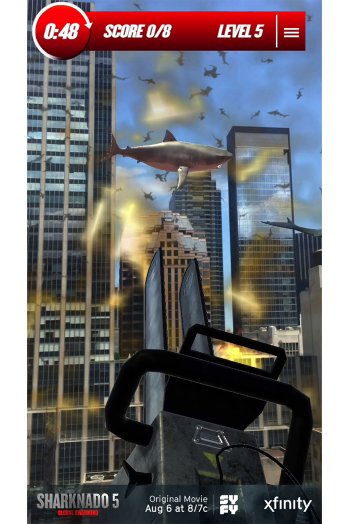 In advance of Sharknado 5: Global Swarming, which debuts Aug. 6 on Syfy, fans can experience a Sharknado of their own with a new augmented reality mobile game.
Sharknado: ShARkmented Reality puts the player in the shoes of Fin (played by Ian Ziering in the TV franchise) and April (played by Tara Reid). Users will be able to impose a virtual Sharknado on their surroundings, armed with various virtual weapons — such as a chain saw — to defeat the sharks. Each level up will unlock new weapons and new sharks to battle.
See the full story here: http://www.hollywoodreporter.com/behind-screen/sharknado-augmented-reality-mobile-game-debuts-1019024
Mapping Ararat: An Augmented Reality Walking Tour for an Imaginary Jewish Homeland
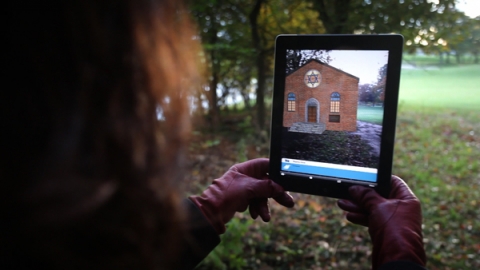 This article reviews Mapping Ararat: An Imaginary Jewish Homelands Project that utilizes augmented reality (AR) to create a walking tour that envisions what would have happened if Mordecai Noah’s 1825 plan to transform Grand Island, New York into a city of refuge had succeeded. Using mobile devices, tourists interact with Ararat artifacts and monuments created using 3D modeling software and inserted into the Grand Island landscape. The article reviews Mapping Ararat as a new form of mediated and virtual Jewish tourism and its implications for such fields as sensory ethnography, counterfactual history, and Jewish cultural studies. It also contextualizes the project in terms of augmented reality art and its extension of site-specific installation using locative media. The final section highlights four electronic monuments on the AR walking tour (flag, cornerstone, gravestones, and synagogue) with documentary video clips.
See the full story here: http://anthrovision.revues.org/2339
Another Price Slash Suggests the Oculus Rift Is Dead in the Water
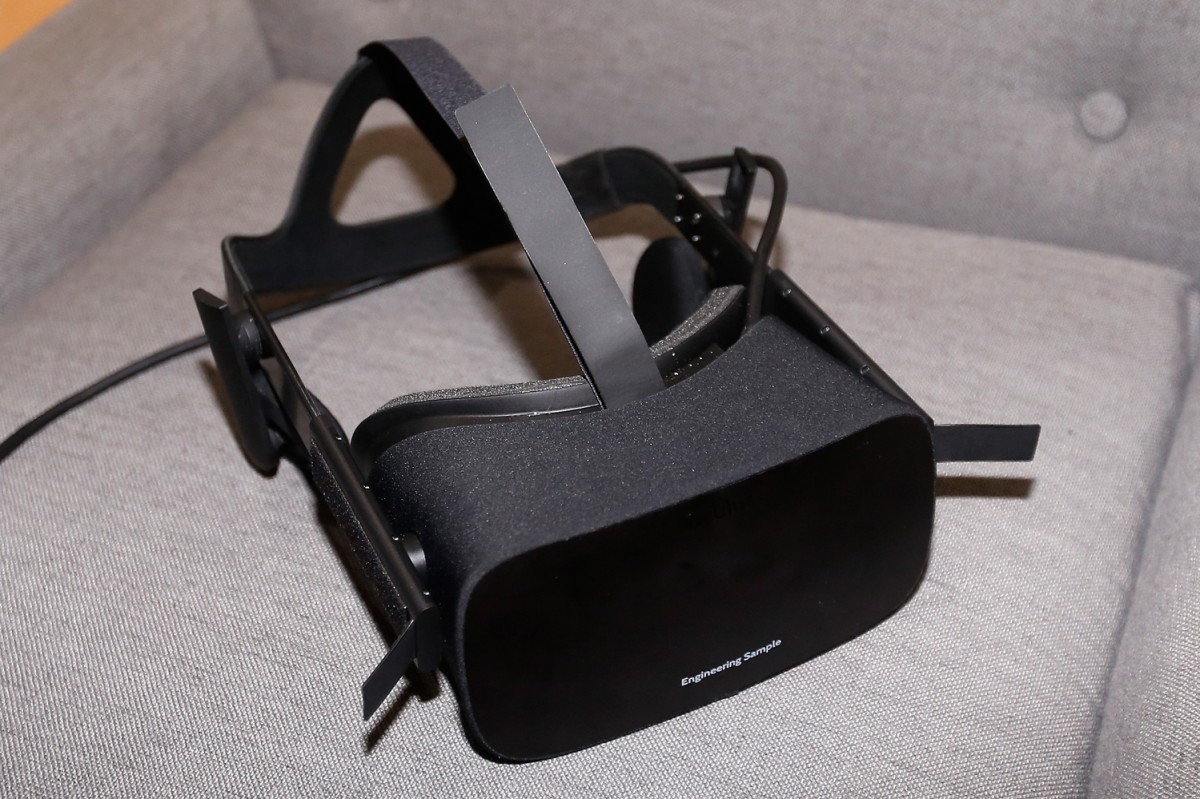 Now, in yet another sign that VR is failing to capture the imagination of the public, the company has just cut the price of its Oculus Rift hardware for the second time this year.
For the next six weeks, the Oculus Rift headset and its matching controllers will cost just $399. That’s $400 less than when it first hit the market, and $200 less than when its price was first slashed in March. It means that the Rift now costs less than the package offered by its cheapest rival, Sony, whose PlayStation VR currently totals $460 including headset and controllers.
See the full story here: https://www.technologyreview.com/s/608257/another-price-slash-suggests-the-oculus-rift-is-dead-in-the-water/
Inside Station F, the startup megacampus that just opened in Paris

STATION F.
Halle Freyssinet, 55 boulevard Vincent Auriol Paris 13eme
STATION F est le plus grand campusde start-up au monde.
Le projet est une initiative de Xavier Niel.
29/06/2017
WILMOTTE & ASSOCIES ARCHITECTES
©Patrick TOURNEBOEUF/TENDANCE FLOUE
La halle Freyssinet est un batiment ferroviaire mise en service en 1929 qui a abrite jusqu'en 2006 les messageries de la gare d'Austerlitz. Elle tient son nom dÕEugene Freyssinet, lÕingenieur qui lÕa conue. Des sa realisation, le batiment a ete le sujet d'articles dans la presse specialisee montrant sa grande qualite technique et architecturale dans sa reponse au programme de la Compagnie. Le 23 fevrier 2012, la halle Freyssinet a ete inscrite au titre des monuments historiques dans son integralite, l'exclusion des batiments de bureaux situes au nord-ouest. Xavier Niel, le fondateur de Free, devient l' acqueur de la halle pour realiser un mega incubateur destine a accueillir 1000 start-ups.
Son entree est situee au 55 boulevard Vincent-Auriol, dans le 13e arrondissement de Paris.
Station F is the world’s biggest startup campus. Thousands of entrepreneurs are currently moving into the new building here in Paris.
Station F is a massive building that has been completely renovated and now features thousands of desks, dozens of conference rooms, VC firms, a stage and more. It’s the size of the Eiffel Tower laying down, and it’s quite impressive in person.
The various open office areas are divided into many different pieces. Some chunks of the building are managed by Station F’s partners, such as Facebook, Zendesk, Vente-Privée, HEC, Microsoft, etc. Those big tech companies pick young startups to come and work at Station F and collaborate with them.
See the full story here: https://techcrunch.com/2017/07/08/inside-station-f-the-startup-megacampus-that-just-opened-in-paris/?ncid=tcdaily&utm_medium=TCnewsletter
‘Lone Echo’s’ Virtual Hands Are an Unexpected VR Innovation
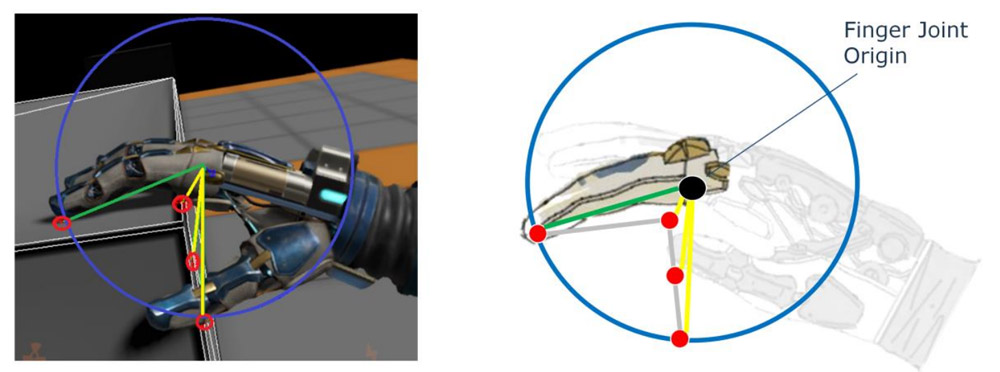 When it comes to arms in VR, the rule-of-thumb is to not show the player’s arms because it’s difficult to estimate their position when only the locations of the hands and head are known in a system of many joints. If the estimation of the arm is far off from the player’s actual arm position, it can be an immersion breaker. That’s why you see so many armless avatars in VR games.
Lone Echo turns that rule-of-thumb on its head with some of the best arm inverse kinematics (IK) that we’ve seen to date. Together with the procedural hand gripping, these systems drive added immersion in VR because it makes it easier to feel as if the arms and hands in front of you are really your own. Lone Echo & Echo Arena double down on this achievement by making many of the game’s interfaces and interactions touch-based, with functional virtual touchscreens rather than the all too often seen laser-pointer interface.
See the full story here: https://www.roadtovr.com/lone-echos-virtual-hands-unassuming-vr-innovation/?platform=hootsuite
Artificially intelligent painters invent new styles of art
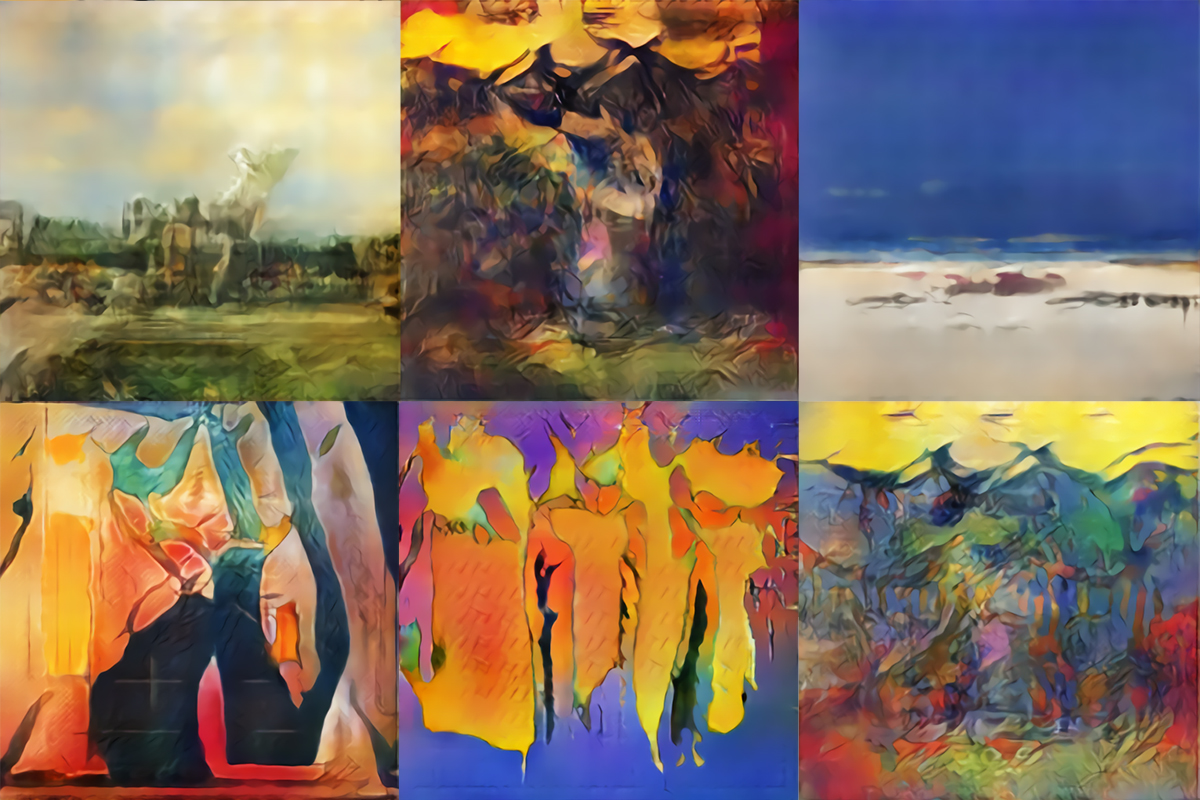 An artificial intelligence has been developed that produces images in unconventional styles – and much of its output has already been given the thumbs up by members of the public.
The idea is to make art that is “novel, but not too novel”, says Marian Mazzone, an art historian at the College of Charleston in South Carolina who worked on the system.
The team – which also included researchers at Rutgers University in New Jersey and Facebook’s AI lab in California – modified a type of algorithm known as a generative adversarial network (GAN), in which two neural nets play off against each other to get better and better results. One creates a solution, the other judges it – and the algorithm loops back and forth until the desired result is reached.
In the art AI, one of these roles is played by a generator network, which creates images. The other is played by a discriminator network, which was trained on 81,500 paintings to tell the difference between images we would class as artworks and those we wouldn’t – such as a photo or diagram, say.
The clever twist is that the generator is primed to produce an image that the discriminator recognises as art, but which does not fall into any of the existing styles.
See the full story here: https://www.newscientist.com/article/2139184-artificially-intelligent-painters-invent-new-styles-of-art/