YouTube knows exactly what 360-degree VR viewers care about
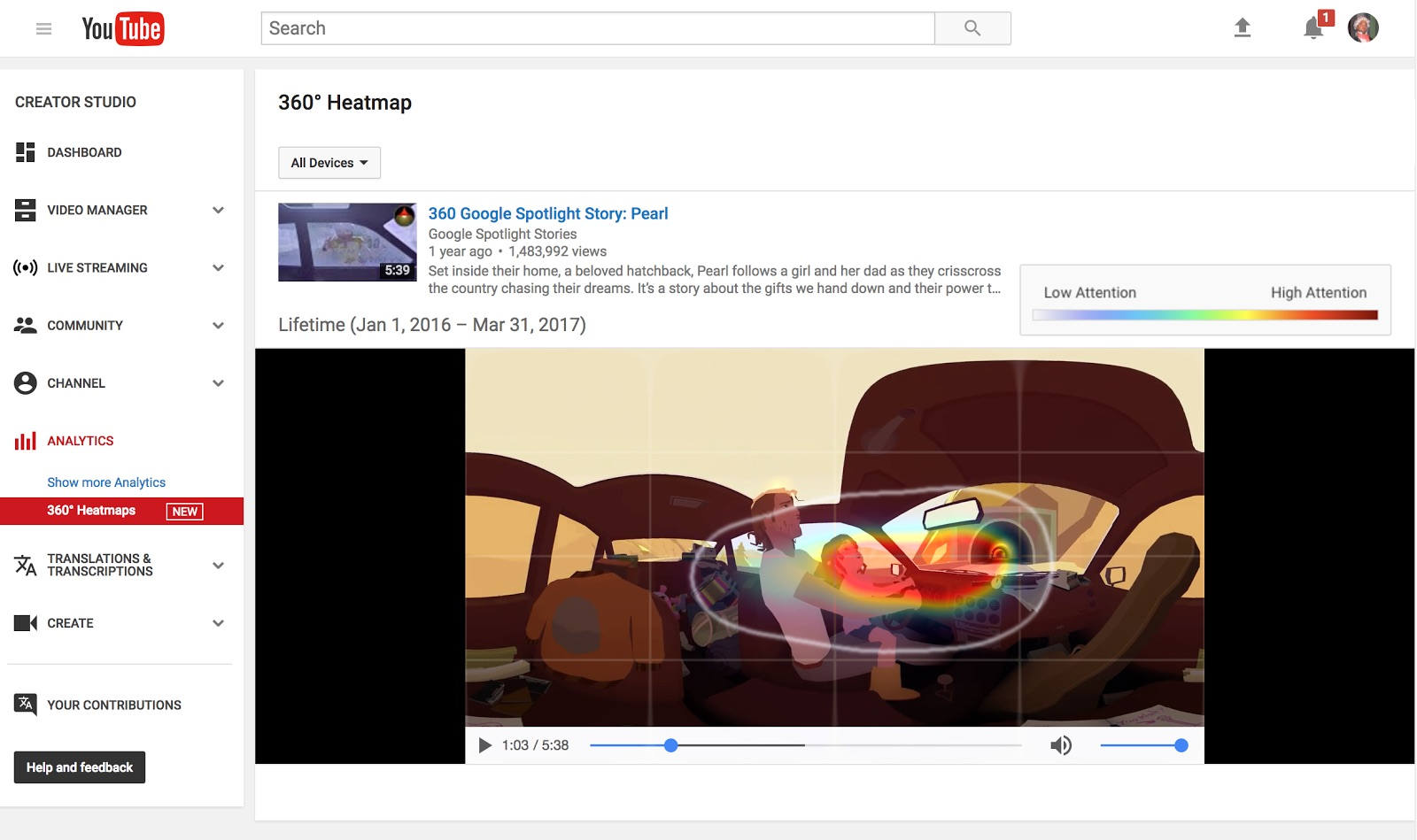 YouTube has launched a new 360-degree heatmaps system to spell it all out. That uses color-coded overlays to show exactly where people are looking in the frame, spanning from blue for low attention, up to red for high attention.
Already, there are a few insights: some of which don’t really come as a great surprise. Biggest, probably, is that viewers spent 75-percent of their time within the front 90-degrees of a video; in other words, they either didn’t move their head if they were watching in a VR headset, or they didn’t drag the YouTube viewer around if they’re watching on the desktop. “So don’t forget to spend significant time on what’s in front of the viewer,” YouTube recommends.
The other big insight is that it can take signposting for people to appreciate what’s around them in the scene. For the most popular VR videos, YouTube says, people were more likely to look around: indeed, almost 20-percent of the views on the hottest clips were at what was going on directly behind them. “Try using markers and animations to draw attention to different parts of the scene,” YouTube suggests.
360-degree heatmaps are rolling out in the analytics tab in your YouTube account. The video itself will need to have 1,000 views or more before it’s activated, too. While it may suggest that even with the growth of VR, many people aren’t bothering to get the best out the experience, it should also help content creators to figure out how to maximize 360’s value.
See the full story here: http://www.virtualrealitypulse.com/edition/daily-samsung-microsoft-2017-06-17
How L’Oreal uses virtual reality to make internal decisions at its New York HQ
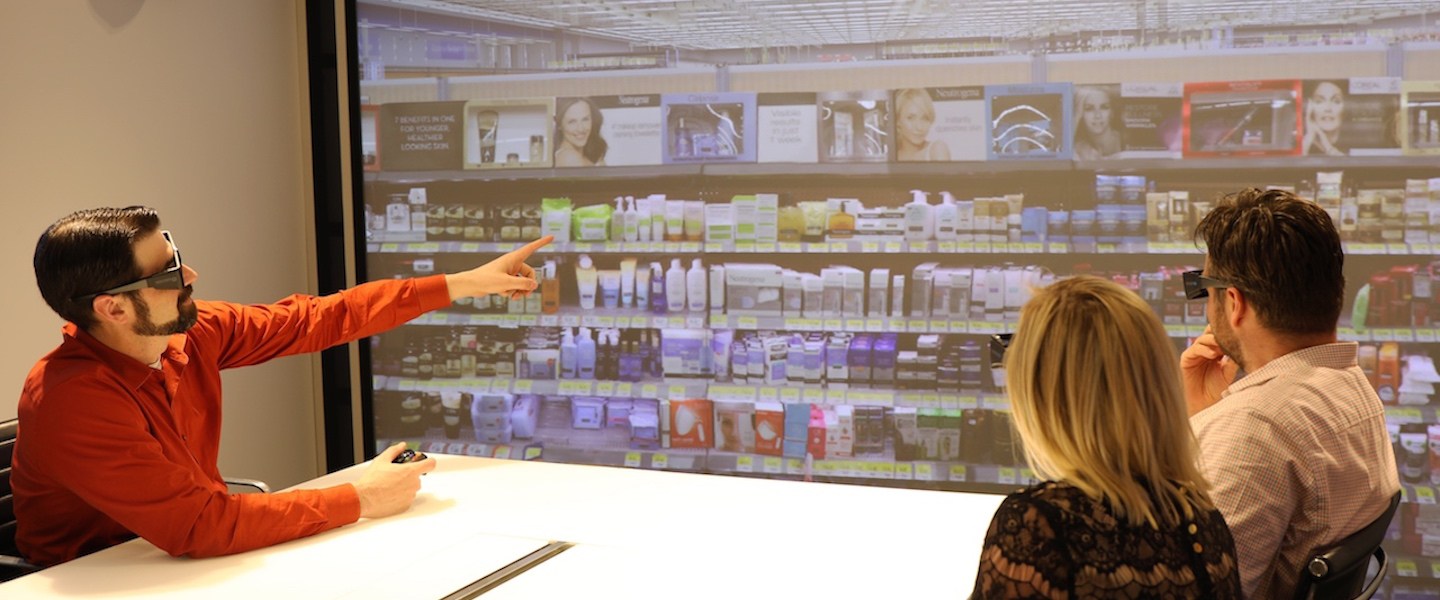 It looks like a typical conference room. But the L’Oréal Beauty Lab, as it’s referred to internally, is stacked with virtual reality glasses and installed with a VR screen that occupies a full floor-to-ceiling space on the wall. Two other screens in the room are used to display 3D modeling demonstrations.
In order to drive real use from its in-house VR Beauty Lab, L’Oréal is turning the technology away from consumers, and focusing it instead on internal teams.
The company’s 42 cosmetics, hair-care and skin-care brands are encouraged to use the virtual reality room in order to drive efficiency and productivity when making decisions around product merchandising, packaging and overall branding. These processes — which can take months, from brainstorm to launch — can be turned around in a matter of weeks in the Beauty Lab. Thanks to the visuals of the virtual reality and 3D renderings, brands can save money and time on creating prototypes and recreating in-store demos.
See the full story here: https://digiday.com/marketing/loreal-uses-virtual-reality-make-internal-decisions-new-york-hq/
Membrane AR: Varifocal, Wide-Field-of-View Augmented Reality Display from Deformable Membranes
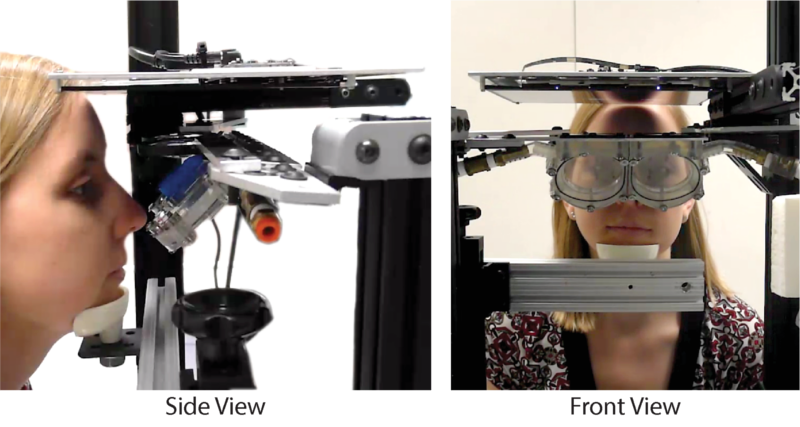 It is a new new hybrid hardware design created by combining hyperbolic half-silvered mirrors and deformable membrane mirrors (DMMs). The key components are two see-through DMMs controlled by airtight cavities to change the effective focal power and present a virtual image at a target depth plane. The benefits of the membranes include a wide field of view (100 diagonal) and fast depth switching (from 20 cm to infinity within 20 ms). The display promises to address vergence-accommodation conflict caused by lack of accommodative cues and offers wide-field-of-view capabilities.
See the full story here: http://research.nvidia.com/publication/2017-07_Membrane-AR%3A-Varifocal%2C
Virtualitics raises $4.4 million to power its ‘Excel for VR’
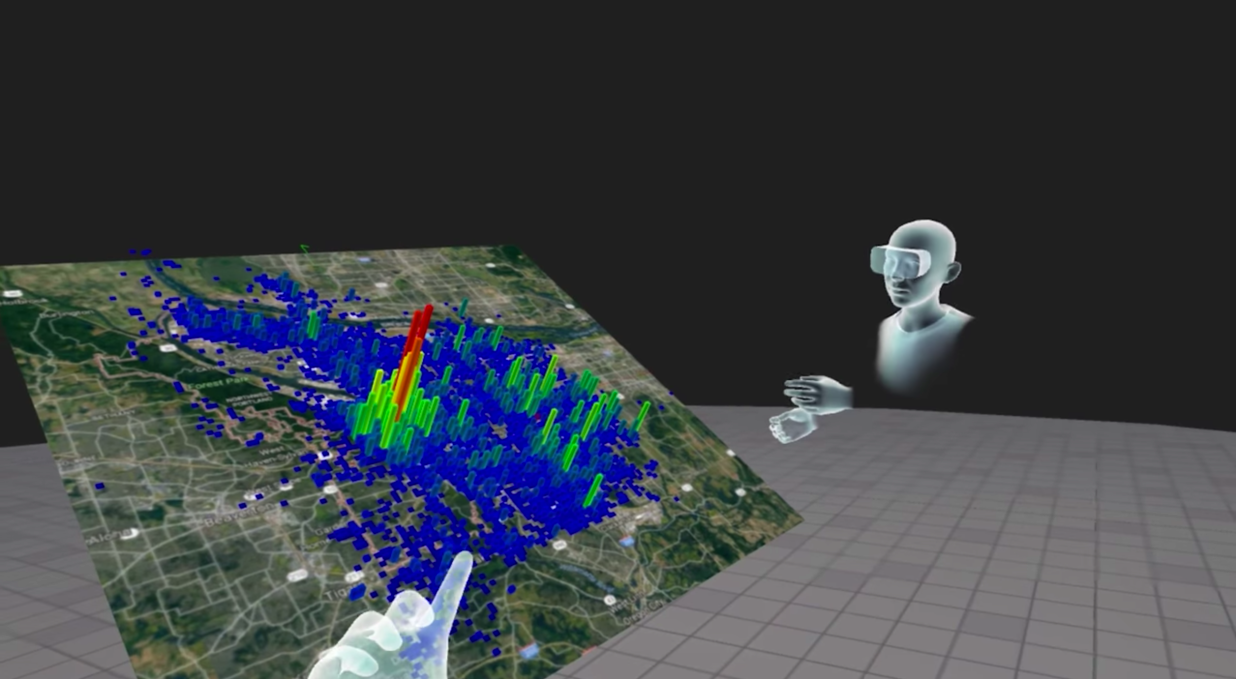 Virtualitics is aiming to bring insight through isolation, visualization and manipulation, giving you a chance to get up-close and personal with your data while wearing a VR headset.
Today, the startup announced that it has closed a $4.4 million Series A led by The Venture Reality Fund.
Business productivity use cases in VR are still a bit on the lacking side. While many expect tasks like training and orientation to be aided greatly by virtual reality, the level of fidelity isn’t quite there yet. Many are hoping that telepresence tools will allow deeper levels of collaboration inside environments that can be more easily manipulated.
See the full story with video here (Tipatat's investment):
Virtualitics raises $4.4 million to power its ‘Excel for VR’
Experts Ponder Implications of IoT Vulnerabilities and Risks
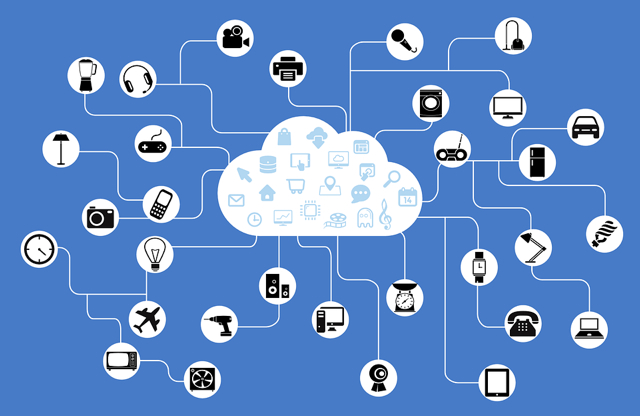 The Pew Research Center reports that at a September 2016 meeting of security conference DEF CON, experts revealed 47 vulnerabilities impacting 23 IoT-enabled items from 21 manufacturers. The items included door locks, wheelchairs, and thermostats. Now, experts are asking if such security risks could “prompt people, businesses and government to avoid or withdraw from certain online connectivity options.”
To answer that question, Pew Research Center and Elon University’s Imagining the Internet Center conducted a nonscientific canvas of “technologists, scholars, practitioners, strategic thinkers and other leaders.”
Of the 1,201 respondents, 15 percent said, “significant numbers would disconnect, and 85 percent said that, “most people will move more deeply into connected life.” The themes that arose from their responses were that, “people crave connection and convenience, and a tech-linked world serves both goals well,” and that “unplugging isn’t easy now, and by 2026 it will be even tougher.”
They also noted that risk is “part of life,” and that “most people believe the worst-case scenario would never happen to them.”
See the full story here: http://www.etcentric.org/experts-ponder-implications-of-iot-vulnerabilities-and-risks/#more-116859
The Patent behind Google’s Augmented Reality Camera Feature called ‘Google Lens’ Pops up at the U.S. Patent Office
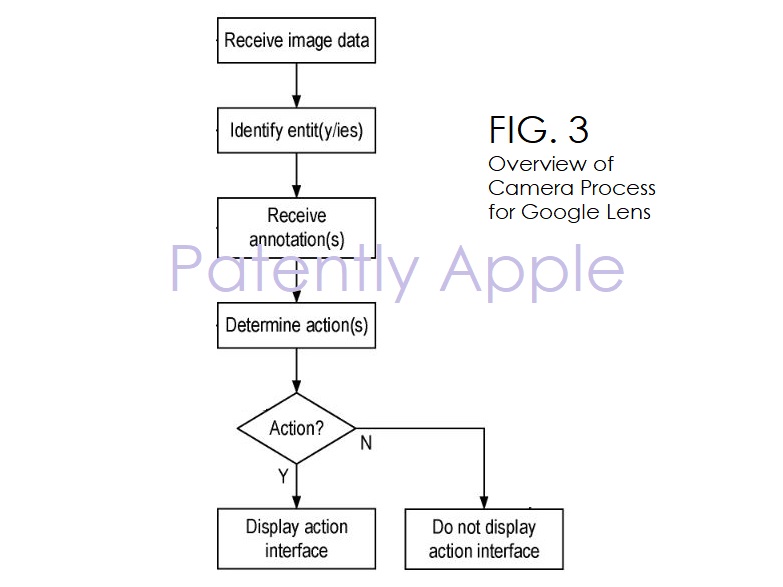 The feature is like a precursor to Augmented Reality. A user could take a photo and with one click get information about it. You could be in Chicago taking a photo of the tallest building and in one click you'll see 'Willis Tower' labeled on your photo.
This is the same technology that Apple owns which was recently granted a patent for.
Google Lens could go one step further by allowing a user to take a photo of a poster of an upcoming event and in one click they would be able to access Ticketmaster for tickets or more details of the upcoming event.
Location-Based Virtual Reality Startup Nomadic Raises $6 Million
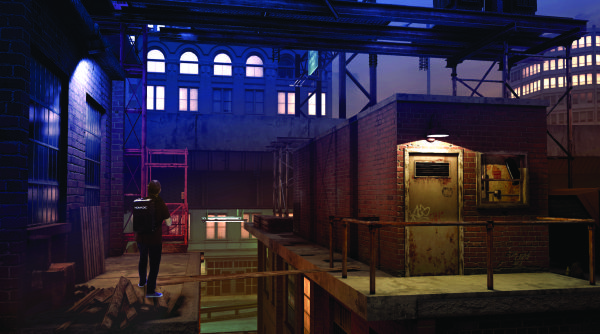 Bay Area-based virtual reality (VR) startup Nomadic has raised a $6 million round of seed funding led by Horizons Ventures, with participation from Maveron, Presence Capital, Vulcan Capital, and Verus International.
Nomadic is focused on location-based VR, and aims to launch VR centers in malls and theaters. The company is focusing on modular sets to make it easy to quickly switch out experiences — much in the same way a theater may replace movies every couple of weeks.
Nomadic is also in discussions with multiple studios, said CEO Doug Griffin. “We’ve heard this over and over and over from studios, that location-based is becoming part of their strategy.”
See the full story here; http://variety.com/2017/digital/news/nomadic-vr-6-million-1202462610/