UC San Diego and edX Offer Professional Virtual Reality Courses Online
The initial roster of Professional Certificate programs includes UC San Diego’s “Virtual Reality App Development” – a three-course series on how VR technology works and how to “design and implement successful interactive VR software apps using industry-standard software tools,” according to the edX announcement.
 The first course on how VR works will begin on May 15.
The VR App Development series was developed by two UC San Diego experts: Qualcomm Institute (QI) research scientist Jurgen Schulze, who is also an adjunct professor in the Computer Science and Engineering (CSE) department; and CSE professor Ravi Ramamoorthi, who also directs the Center for Visual Computing at UC San Diego. The online courses are based on courses that Schulze and Ramamoorthi teach in person in the CSE department.
See the full story here: http://ucsdnews.ucsd.edu/pressrelease/uc_san_diego_and_edx_offer_professional_virtual_reality_courses_online
You Can’t Upload Your “Self” Into Virtual Reality
 Metzinger made waves by publishing an article in Frontiers in Robotics and AI that argued that virtual reality technology—the ability to create illusions of embodiment—will “eventually change not only our general image of humanity, but also our understanding of deeply entrenched notions, such as ‘conscious experience,’ ‘selfhood,’ ‘authenticity,’ or ‘realness.’”
Now, of course, this offers itself for mortality denial; there is a religion already in California. It’s all these uploading freaks—the Singularity University, the techies. It promises immortality, but it doesn’t have all the old-fashioned stuff with God. You find these people who say will we upload our self-models into virtual reality in 30 years. They get big investors by saying this.
The problem—the technical problem—is that a large part of the human self-model is grounded in the body, in gut feelings, in inner organ perceptions, in the vestibular sense, and therefore you cannot really copy the human self-model out of the biological body unless you would at some point really cut it off, so to speak. And then you would maybe have a sense of self jumping into an avatar, but you would not have all that low-level embodiment, the gut feelings, the emotional self-model, the sense of weight and heaviness—all that would be gone.
Nevertheless, I think we’re going to see some dramatic changes in human self-awareness through these new technologies in the coming decades—no doubt about this. We may generate wildly different forms of self-experience.
One key word is “embodiment.” The bodies we have now and the way our conscious self-model is grounded in these bodies has been optimized for millions and millions of years, with our biological ancestors,.... This dense form of embodiment in virtual reality may be far away.
There is another possibility: We might have another form of embodiment, a technological form. Maybe it is something without gut feelings; maybe it is something without the sense of weight, for instance. Maybe we will have different artificial self-models that we learn to control, and with this process have different forms of self-experience as well. Why should we just replicate what biology has created? Maybe we want to create something more interesting or more cool?
See the full article here: http://nautil.us/issue/47/consciousness/you-cant-upload-your-self-into-virtual-reality
Epic Virtual Reality Experiences at Tribeca Film Festival Through April 30th
My problem with a lot of VR, especially 360 video, is that nothing really goes on behind you, while reducing the director's ability to manipulate time, space and perspective to tell a story. Remember, Remember, from Kevin Cornish, and Moth and Flame Productions. a live action 360 video, takes place during an alien invasion. It's one of the most inventive and cinematic experiences I had at the Arcade, but again I wonder if it might have been just as good as a film. Of course there's really no market for short films, while there will soon be a market for these kinds of VR experience.
Finally, no Arcade would be complete without a game. Bebylon Battle Royale was brought to the Festival by tiny LA start up, Kite and Lightning. You are in an arena driving a hovercar trading punches (and bombs) with an opponent. It takes place in a world where the fountain of youth was found, turning the entire civilization into greedy, violent babies. The company plans to turn Bebylon Battle Royale into a massive multiplayer environment, where additional player can sit in the stands and interact with the gladiators, throwing rotten tomatoes, etc.
Even sampling one third of the Tribeca Arcade's offering, one is struck by the rapid pace of the medium's development. Indeed, Tribeca should think about spinning off it's interactive hub into its own Festival. As such, it could be in a larger venue that offers more stations, which would mean more through put, and more people getting a taste of the promise of this amazing medium.
See the full story here: https://www.forbes.com/sites/charliefink/2017/04/24/epic-virtual-reality-experiences-at-tribeca-film-festival-through-april-30th/#6bd6404e4d94
NAB 2017: Pre-Conference Sessions Examine Virtual Reality
It was clear from the SMPTE Future of Cinema sessions and the Post Production World sessions on VR that the NAB community has moved beyond defining virtual reality to how to address specific challenges and questions. Industry leaders gathered in Las Vegas to discuss the latest in VR production and post production, covering areas such as audio, video, hardware and more. Discussions during the pre-NAB weekend sessions also addressed compelling issues related to augmented reality, artificial intelligence, deep learning — even ethics, PR and marketing.
Gary Adcock and Blair Paulsen, who each have 5 years of VR production experience, had prepared over an hour’s worth of slides for their Understanding VR Hardware session. They were repeatedly interrupted and redirected by questions from the audience on such nuts and bolts topics as how to synch the cameras in a 360 rig, how to select and mix lenses, what microphone configurations are best for specific shoot environments and for audio manipulation in post, and how to decide where and at what height to place the VR camera rig.

In the AR/VR/AI and Deep Learning session, Lionel Oisel, Technicolor’s principal scientist, said that the production experience will have to become much more intuitive and streamlined before he expects production costs to come down and broad industry adoption of VR.
Mach1 CEO Jacqueline Bosnjak pointed out that everything about VR is evolving rapidly. Planning the project and the workflow is good, she said, but be prepared to constantly iterate the plan up to the point where you deliver the project.
Oisel also mentioned that aligning a press release with a product release can be problematic due to updates in the VR platforms for which you are completing the project. Your press release may state that your project will work on a number of named platforms, but an update to any one of them may prevent your project from running on that named platform — and trigger a PR problem.
Oisel, who is an expert in artificial intelligence, noted that eventually AI will allow the audience to dictate the narrative experience. He also pointed out that the AI could shape the experience to the individual user based on whatever it can determine about the user’s tastes and their current emotional state.

On Saturday afternoon, SMPTE’s Patrick Griffis moderated a discussion titled “Do Consumers Really Care About Artistic Intent?” That discussion bounced between the cases of the controlled theatrical environment and the uncontrolled consumer device environment for produced, non-interactive linear content. With AR, VR and AI, the discussion backtracks to what constitutes the work of art, who are the artists, and what are the definition and boundaries of the artistic intent.
In response to an audience question, no one on the panel was aware of any laws, guideline or codes of ethics that could help companies determine how best to manage consumer data to satisfy consumer concerns. VR, AR and AI provide a more responsive and personalized experience when they can track and respond to every head motion, every consumer response to a sound, every interactive choice, and any other bit of sensory and position data that is captured by the equipment while the consumer is interacting with the piece.
The Entertainment Technology Center is aware of some efforts around the globe to construct guidelines and codes of ethics from managing user data for VR, AR and AI for commercial (as opposed to academic) situations. The ETC could play a role in shaping and publicizing those efforts.
See the original post here: http://www.etcentric.org/nab-2017-pre-conference-sessions-examine-virtual-reality/
Democratic Party’s virtual reality game featuring Renho draws mixed reactions
 In the game "VR Renho," players can become the prime minister trying to endure questioning from DP President Renho during Diet deliberations. Renho attacks with some of her famous lines such as "Huh? I don't understand the mean of that," and "Where do you see the freedom to play around here?" The game displays the player's level of composure in the face of Renho's grilling by measuring changes in the player's pulse rate.
The DP has received strong criticism from both outside and inside the party that the game is "stupid," but the DP's youth division that developed the game, maintains that it would like to connect with young people who are currently disinterested in politics.
See the full story here: https://mainichi.jp/english/articles/20170423/p2a/00m/0na/005000c
Milwaukee, Wisconsin, Sued for Requiring Permits on Augmented Reality Games

Candy Lab AR alleges a First Amendment violation in the way the city responded to 'Pokemon Go' mania.
That might have seemed appropriate to city officials who witnessed how Pokemon Go sparked nuisance litigation, but Candy Lab is challenging the constitutionality of the measure. The company, represented by attorney Brian Wassom (who wrote here about the real-life problems for augmented games), is hyping its lawsuit as having far-reaching implications for the industry.
According to the complaint (read here), the "restriction impinges on Candy Lab AR’s right to free speech by regulating Candy Lab AR’s right to publish its video games that make use of the augmented reality medium. The Ordinance is a prior restraint on Candy Lab AR’s speech, impermissibly restricts Candy Lab AR’s speech because of its content, and is unconstitutionally vague such that Candy Lab AR does not have notice as to what speech must be approved by permit and which it can express without seeking a permit."
See the full story here: http://www.hollywoodreporter.com/thr-esq/milwaukee-wisconsin-sued-requiring-permits-augmented-reality-games-996320
The Legal Issues of Augmented Reality Video Game Development
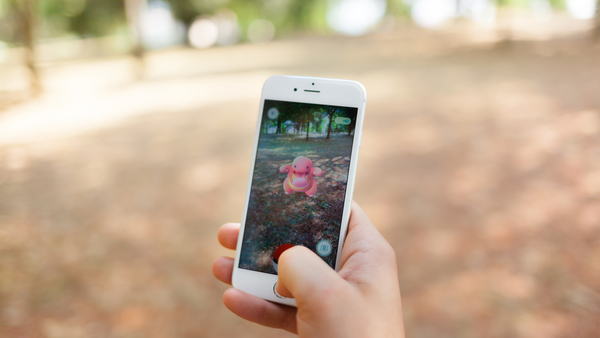 In addition, there are a lot of issues when you bring location-based data into gameplay. One of the most notable is data privacy and cybersecurity, in particular where children are playing the gaIn addition, there are a lot of issues when you bring location-based data into gameplay. One of the most notable is data privacy and cybersecurity, in particular where children are playing the game. Age-gating, and perhaps other game designs, should be employed to verify the age of the gamer. Location-based data also opens certain advertising strategies and partnerships for AR technology more generally.
Culp explained, “I was speaking with a privacy professional in the self-driving car space today, and she was convinced – as am I – that we will ultimately travel to work in self-driving AR bubbles, wherein we can do work, play games, receive advertising. Imagine the possibilities – and privacy challenges – if that car knows where you are and what you like.”me. Age-gating, and perhaps other game designs, should be employed to verify the age of the gamer. Location-based data also opens certain advertising strategies and partnerships for AR technology more generally.
See the full story here: http://www.insidecounsel.com/2017/04/21/the-legal-issues-of-augmented-reality-video-game-d