Pixie Technology uses fobs and augmented reality to locate your lost wallet
 [philip lelyveld comment; this is good if you lost something, but useless if it was stolen or moved out of range.]
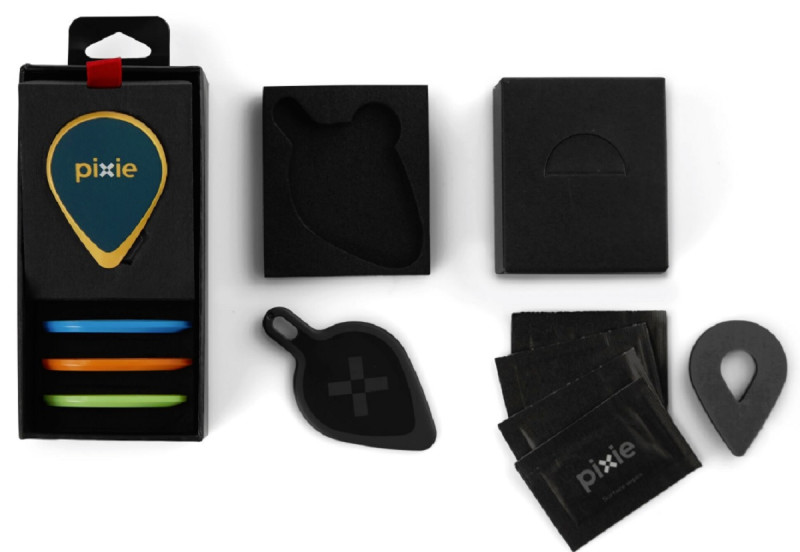
Los Altos, Calif.-based Pixie sells Bluetooth LE-connected fobs that create a connection with each other. When you are holding a fob, such as the one attached to your smartphone, it establishes a connection to the nearby fob. And then it uses the location information to guide you to the other fob.
That’s where the AR technology comes in. You turn on the Pixie app on your smartphone and point your smartphone camera in a particular direction. If you are within range of another fob, you can see it appear on your camera screen as a digital overlay on the camera’s view. If you move closer, you can home in on the lost item.
If the item is out of range, Pixie will show the street address, time, and date of when it was last seen by the app.
Rivals include Tile and Trackr. The Pixie Points are about an inch long (47 millimeters x 35 mm x 3.4 mm), which makes them a little bulky to put on your keychain, smartphone, or in your wallet.
See the full story here: https://venturebeat.com/2017/04/03/pixie-technology-uses-fobs-and-augmented-reality-to-locate-your-lost-wallet/
Mixing Realities In The Surprisingly Compelling Augmented Empire
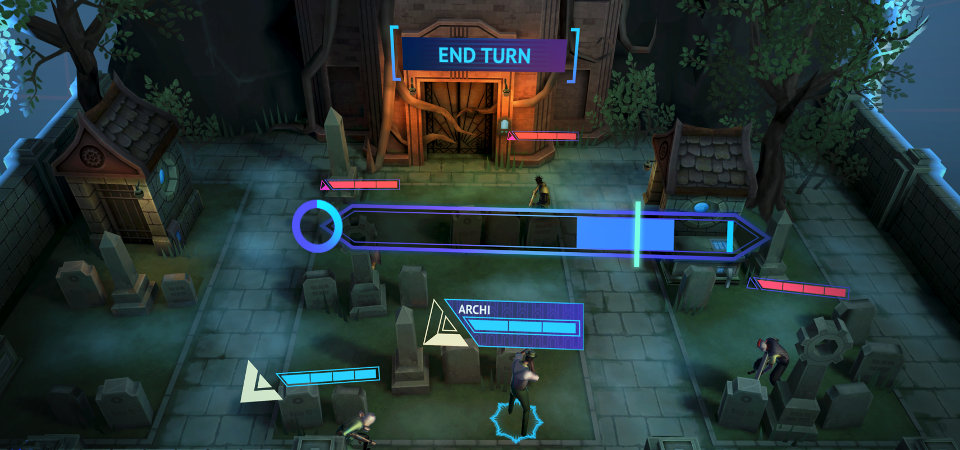 [philip lelyveld note: this is not AR, they create a virtual tabletop for game play.]
I’m pleased to report that Augmented Empire works rather well, using VR to draw you into a dystopian sci-fi future where you play as a mysterious criminal mastermind.
As the mastermind, you don’t need to actually sully yourself by committing any crimes directly. Instead you control your empire via a tabletop AR interface. That’s right, Augmented Empire is a game that’s using virtual reality to present you with a holographic augmented reality system that lives on your virtual desk.
Coatsink, the team behind the game, say that as you progress through the game’s narrative, you’ll see changes to your home accumulate, presumably reflecting your achievements.
Having your holographic projector be table sized is a smart touch for VR, allowing the world to be broken down into bite sized chunks. Although Coatsink could have given you the ability to move around a larger area, locking off your viewpoint feels a lot more comfortable for virtual reality.
The strongest element of Augmented Empire, however, is its narrative. The futuristic setting nods towards a larger dystopian world, and combined with the mysterious woman named Ashley who you issue orders to, you’re left with unanswered questions at the end of the demo. As a result, I’m deeply frustrated that I don’t have a Gear VR to find out the answers to these questions when the full game releases later this year.
See the full story here; https://www.thesixthaxis.com/2017/04/03/mixing-realities-in-the-surprisingly-compelling-augmented-empire/
Kennett Square’s Ben Lang – Road to VR founder’s story
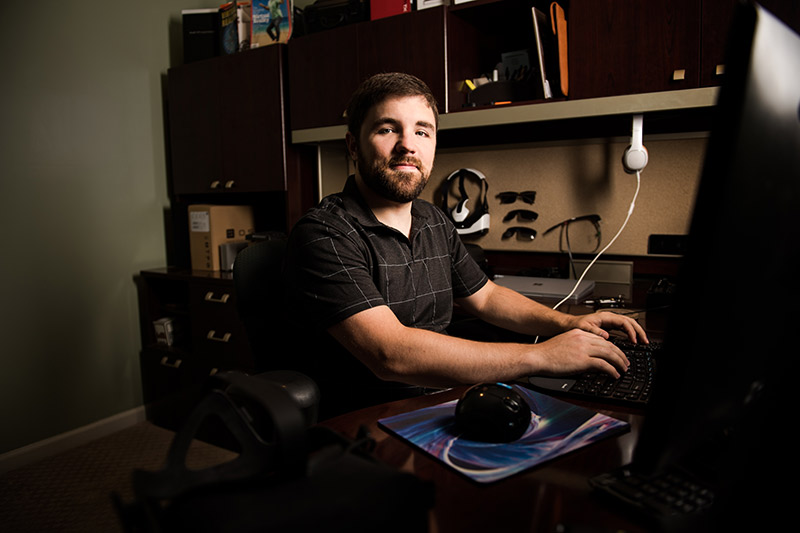 The simulated adventure begins with your trusty dog atop Vesper Peak in Washington State. Then, it’s on to an underwater shipwreck with a whale swimming at arm’s length—and later a trip to the operating room for an examination of a human spinal chord and brain. Hosting this hour-long itinerary is Ben Lang of Kennett Square, Mushroom Capital of the World and the unlikely fertile ground for Road to VR.
Meanwhile, Lang was celebrating a year in business since launching Roadtovr.com as a Temple University student. At first, the blog was a hobby for a guy curious about technology. Lang had worked in tech journalism, and he figured the best way to learn about VR was to write about it. He found himself immersed in an exploding industry.
At the techie age of 26, Lang is the co-founder and executive editor of the leading virtual-reality news source. He doesn’t sleep much—and won’t—
until he popularizes the industry enough that supply-and-demand makes start-up prices affordable, giving the technology mass accessibility. Virtual reality “yields the richness of the digital ecosystem,” he says.
Lang has always viewed technology as something that can change lives for the better. “I look at my parents’ lives compared to mine,” Lang says. “When they left high school, how did they keep in touch with friends? I had Facebook. My mind races at night with what’s possible [with VR] beyond gaming and entertainment.”
See the full story here: http://www.mainlinetoday.com/Main-Line-Today/April-2017/Kennett-Squares-Ben-Lang-is-Breaking-the-Borders-of-Virtual-Reality/
Virtual reality puts real-life spin on tackling emergencies at KLM
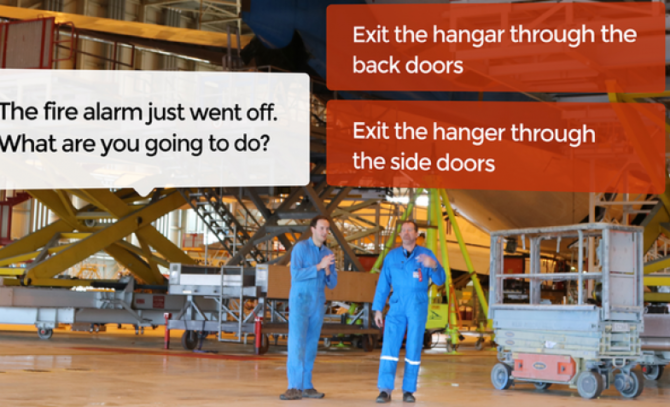 The manager had 300 mechanics working in shifts in the hangar. Although there were regular fire drills, the manager was not sure how well people would react in a real emergency situation. The worry was that when they heard the alarm in a fire drill they just followed the person in front of them to exit the building without really knowing what they were supposed to do.
So Helmerhorst created a virtual reality evacuation scenario training as a mobile app for the mechanics. The mechanics simply start the app, insert the phone in a headset and off they go:
The beauty of what we created with the evacuation scenario is if have decent smartphone you can play this and the only thing you need is a headset. It’s just a piece of plastic and lenses.
It may seem simple, but what it creates is very powerful, adds Helmerhorst:
It’s an immersive experience and it’s an individual experience.
KLM has since created a VR scenario for CPR training. It’s still early days, but initial analysis shows that there’s a much higher retention rate on remembering the procedure.
See the full story here: http://diginomica.com/2017/04/03/virtual-reality-puts-real-life-spin-tackling-emergencies-klm/
Get ready for ads to invade your HTC Vive virtual reality experiences
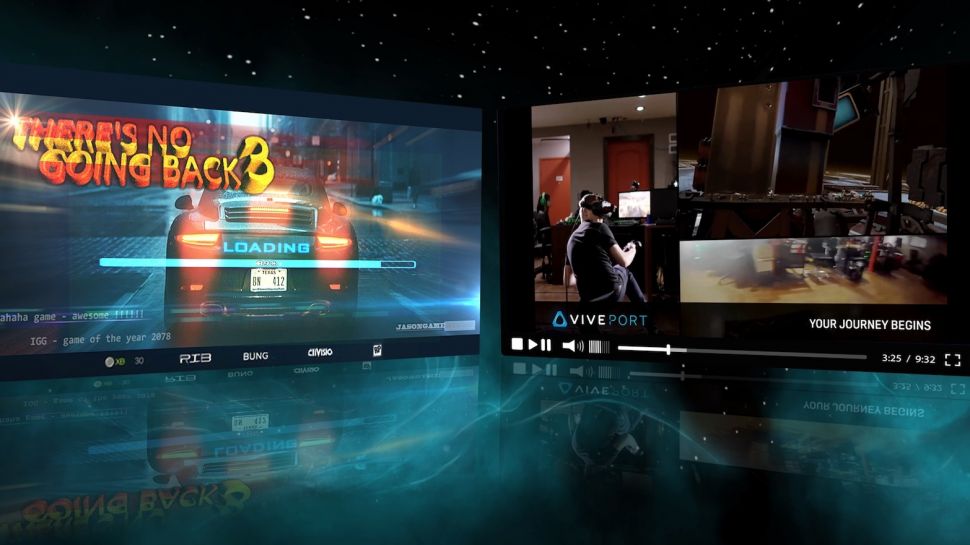
HTC’s new VR ad service.
The service is being rolled out for developers on the Viveport platform and claims that it will “maximize your ad revenue while maintaining a great user experience.”
Virtual reality for mine reclamation
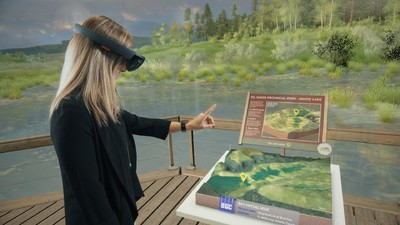 "I can show you a million 2-D drawings, but you’ll never understand it as clearly as if I show you the same information in 3-D using HoloLens," explained Bill Burton, VP at BGC, "This has the potential to revolutionise how we communicate on a day-to-day basis."
Some of BGC’s biggest projects involve land reclamation for mining companies.
See the full story here: http://www.miningmagazine.com/future-of-mining/future-of-mining-sustainability/virtual-reality-for-mine-reclamation/
Congress is trying to give even more power to Hollywood
 [Philip Lelyveld comment: inflamatory headline. The bill may give more power to one group, but it is still trying to control things that are technologically beyond control.]
On March 23rd, Reps. Bob Goodlatte and John Conyers introduced a controversial bipartisan bill with over 100 years of history behind it, though you wouldn’t know it from its boring name and seemingly boring topic. It’s called the Register of Copyrights Selection and Accountability Act of 2017 — the key part is that it makes the Register of Copyright a political position appointed by the President and approved by the Senate. That’s in contrast to the current state of affairs, which has been in existence since the creation of the Copyright Office in 1897.
Right now, the Copyright Office is a part of the Library of Congress, and the head of the office — known as the Register of Copyrights — is appointed by the Librarian of Congress, who, in turn is appointed by the president, and approved by the Senate.
Supporters of this bill (and there are many) argue that the location of the Copyright Office within the Library of Congress is merely an “accident of history,” brought about by the sixth Librarian of Congress, Ainsworth Rand Spofford, who wished to turn the dilapidated and often ignored Library of Congress into a world-class institution with a comprehensive collection of all American created works. Spofford realized that by housing the copyright registration function within the library, it would mean that everyone wishing to obtain a copyright would have to send a deposit copy, and the library’s collection would magically grow. The Copyright Act of 1870 made this arrangement the law.
Copyright itself has become a much bigger, and more important issue in the past few decades — in large part thanks to the rise of the internet, and the conflicts that arose because of it. In 1978 the copyright law in the US changed to a mandatory system, whereby any new and creative work was given automatic copyright — whether you wanted it or not — for your life plus another 70 years. Prior to that, the system had been opt-in only, where you had to register and follow certain formalities to obtain a copyright, that could, at a maximum last 56 years.
See the full story here: http://www.theverge.com/2017/4/3/15161522/mpaa-riaa-copyright-office-library-of-congress-dmca-infringement