Walk Inside a Gothic Prayer Bead in a VR Experience at the Cloisters

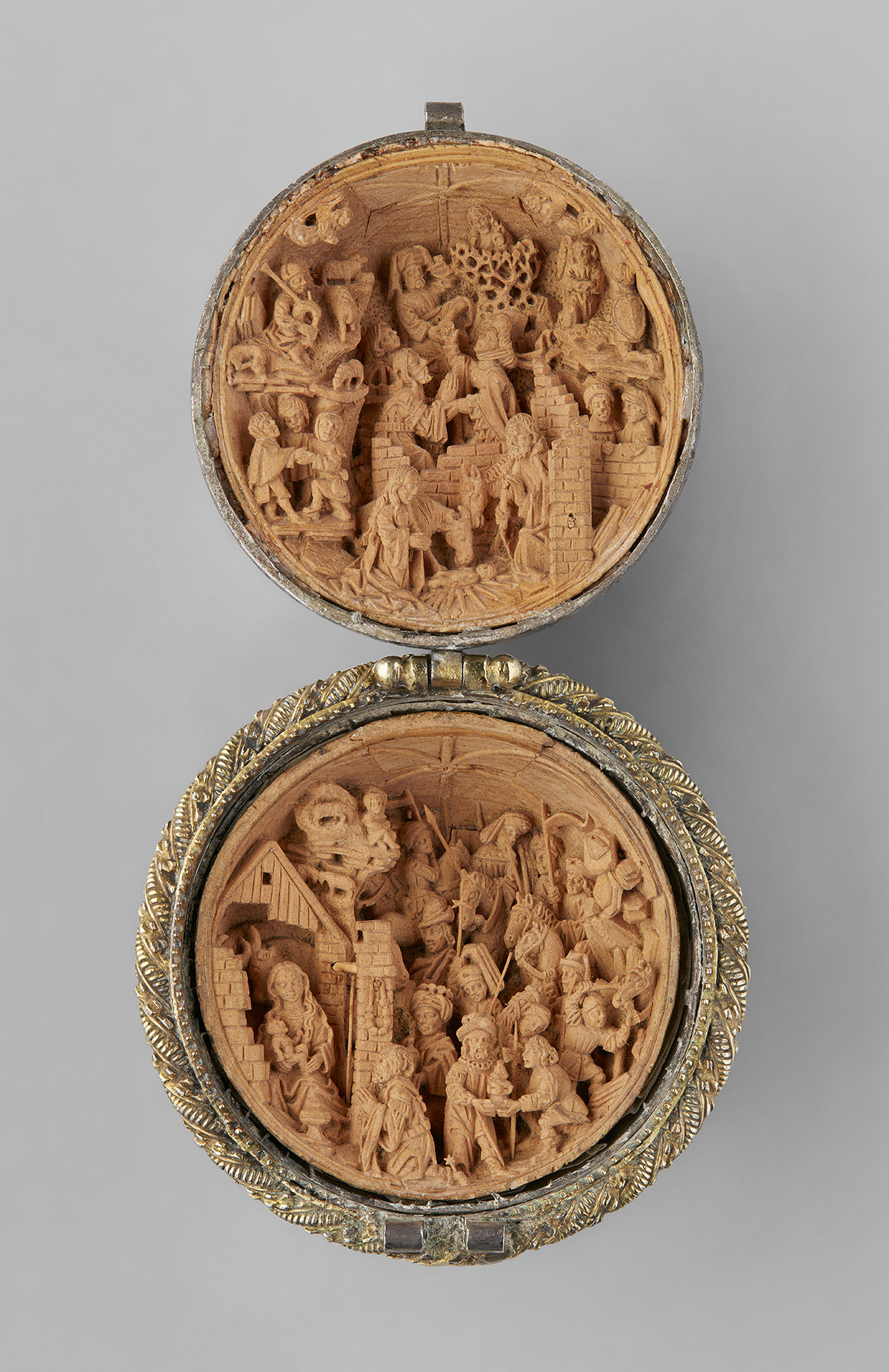
Photography by Ian Lefebvre
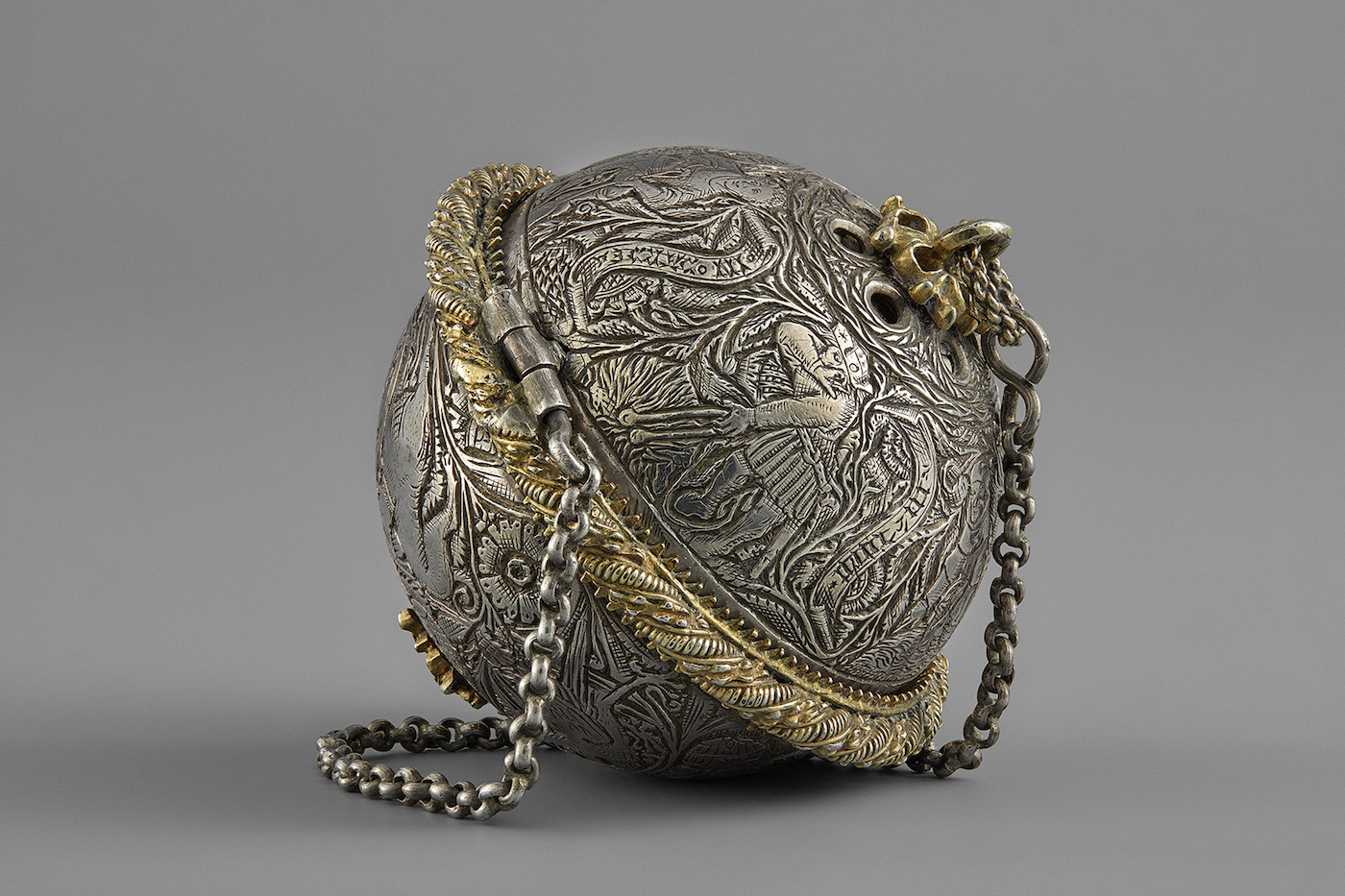 The VR helps recover the fascination that might have been felt by a person in the 16th century, when their seemingly impossible precision was part of that awe. It was a deeply contemplative mental condition, — not unlike, as Serrano put it, “the flow state you have when you are playing a game.”
The Small Wonders: Gothic Boxwood Miniatures exhibition that opened this week at the Metropolitan Museum of Art’s Cloisters is a rare gathering of around 50 tiny wood carvings created for religious meditation. The details on the prayer beads, some two inches in diameter, are incredible, so layered with their saints and devils, that, according to Anna Serrano, “The moment people see these objects, they wish that they could go inside.” Serrano is the chief digital officer at the Canadian Film Centre’s Media Lab (CFC), and producer for “Small Wonders: The VR Experience,” which allows museum visitors to do just that.
Unlike a lot of art-related VR I’ve experienced, the Small Wonders interactive is much more about appreciating an object in a different way than just a novelty. It’s also impressively transporting, as one moment you’re standing in the Fuentidueña Chapel at the Cloisters, and the next you’re on some Ender’s Game-esque gridded plane, the bead looming above you. A soundtrack of 16th-century Northern European spiritual songs sets the mood, drowning out the museum sounds. An attendant guides you through the process so you don’t trip over the rope and stumble into any priceless art, and with a controller you can explode and contract the diorama of the bead. Even though you are aware it is a digital view, there’s still something startling about walking through the carved surface. For Givord, who has an industrial design background, preserving that tactile nature with the scans, instead of simulating a digital wood grain, was essential to the project. He wanted something “that’s visceral and that you can touch,” even if your hand goes right through.
See the full story here: http://hyperallergic.com/361000/walk-inside-a-gothic-prayer-bead-at-the-cloisters/
How Will Facebook’s Oculus Rift Price Cut Affect the Virtual Reality Market?
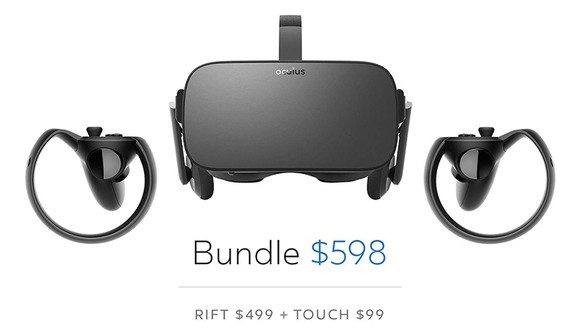 Facebook (NASDAQ:FB) has implemented price reductions for its Oculus Rift virtual reality hardware, reducing the cost of the headset by $100 (now $499) and the bundle featuring the platform's Touch controllers by $200 (now $598). The price for separate Touch controllers has also been reduced from $199 to $99, and the cost for an additional Rift sensor has dropped from $79 to $59.
The markdowns come on the heels of disappointing sales for the platform, and are the first major price reductions for the high-end VR device. HTC's (NASDAQOTH:HTCXF) Vive platform, not itself a great success, has shipped somewhere in the neighborhood of 420,000 units, and reports suggest that the Vive (which is priced at $800 for the headset and controllers) has sold roughly twice as many units as the Rift. HTC has said that it does not see a need to cut the price of the Vive in response to the markdowns for Rift hardware.
Companies including Lenovo, HP, and Dell will be launching mid-range headsets for Microsoft's (NASDAQ: MSFT) Windows Holographic platform -- with prices starting in the $300 range. These products will be compatible with a wider range of PCs and are likely to put pressure on Facebook's and HTC's VR hardware offerings.
See the full story here: https://www.fool.com/investing/2017/03/17/instant-analysis-how-will-facebooks-oculus-rift-pr.aspx
Apple Granted Patent to Make Augmented Reality Maps—Hinting at a Cool, Futuristic Version of Our Well-Worn Maps App
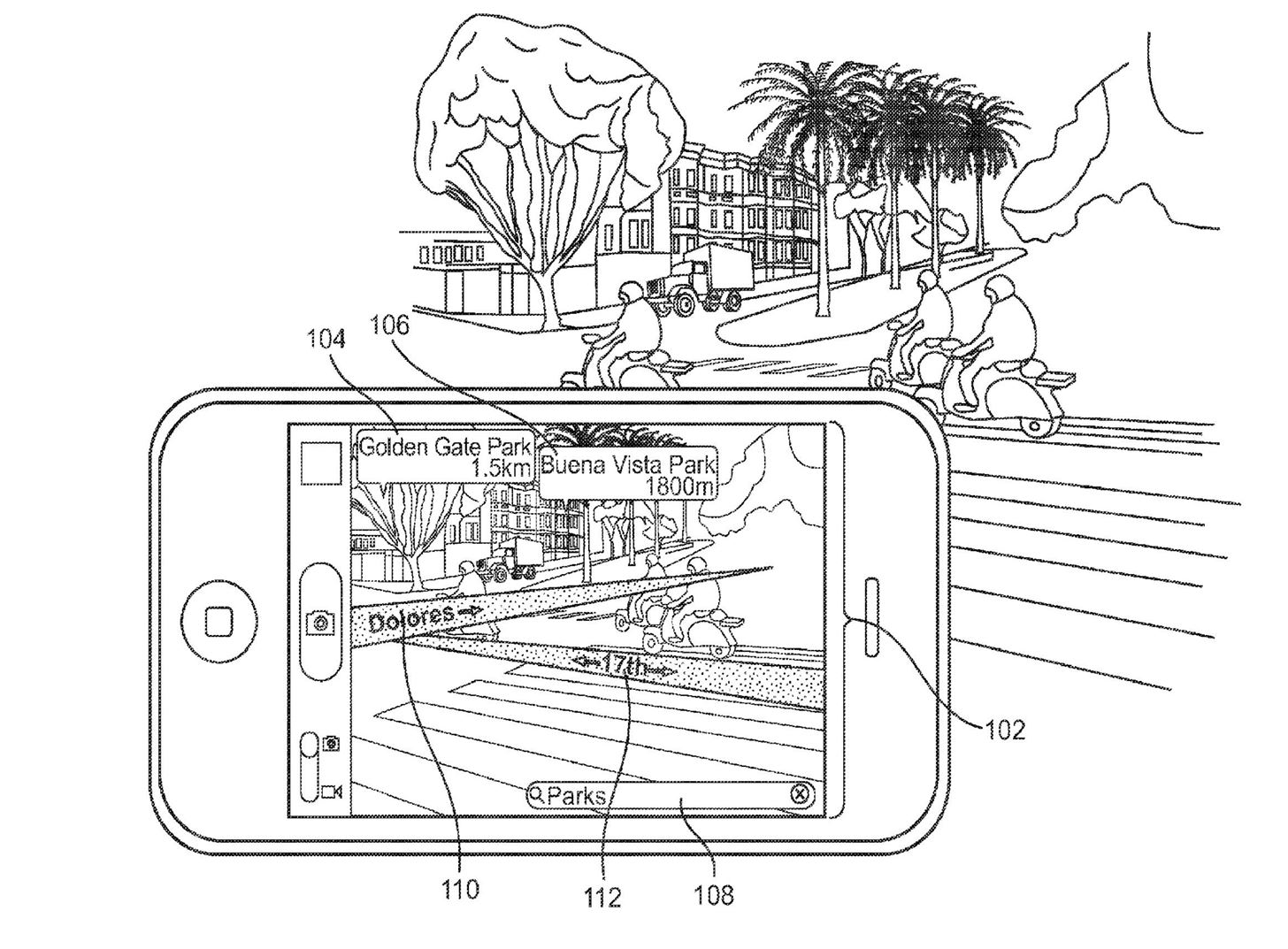 Apple recently scored a patent (number 9,488,488) to create augmented reality maps, hinting at possible AR integration into the iOS Maps application for iPhone.
Apple's augmented reality patent—which is currently being updated with application 15/341,915—describes an iPhone user as pointing her device at a location to capture and then display a live video stream. The iPhone finds your geographic position and recognizes the direction and tilt of your camera. Then, you can search for points of interest in relation to your area.
See the full story here: https://mobile-ar.reality.news/news/apple-granted-patent-make-augmented-reality-maps-hinting-cool-futuristic-version-our-well-worn-maps-app-0176600/
HTC to Sell Shanghai Phone Factory for $91 Million, Invest Proceeds in VR Business
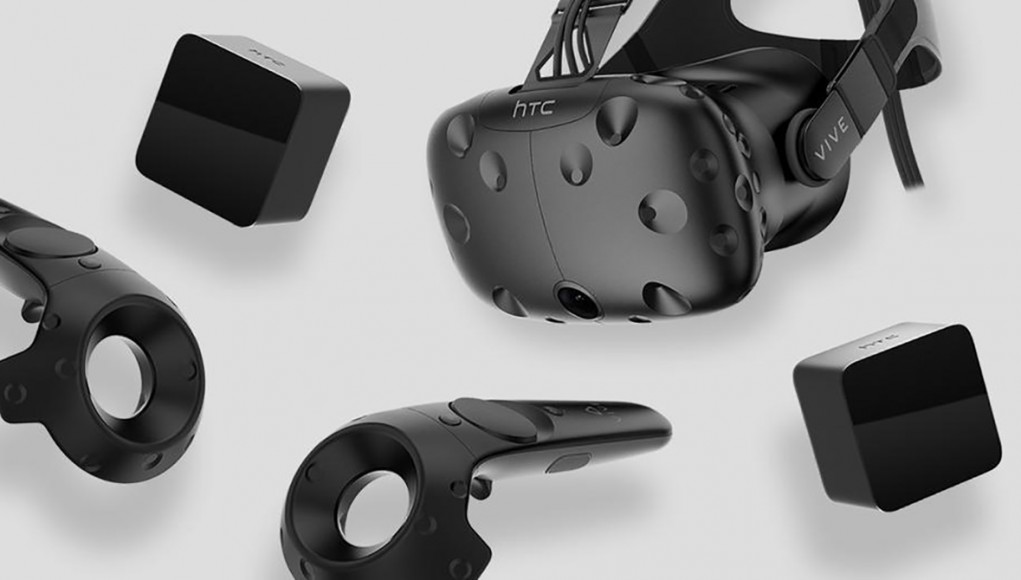 Despite its major role in the growing VR space, HTC’s overall business continues to struggle financially, posting significant losses over the last two years. Working to turn things around with a restructuring of assets and priorities, the company is facing the sale of a smartphone factory in Shanghai. The proceeds from the $91 million sale will largely funnel toward the company’s Vive VR business, according to China Daily.
See the full story here: http://www.roadtovr.com/htc-to-sell-shanghai-smartphone-factory-for-91-million-invest-proceeds-in-vr-vive-business/
Ethics – When Does Virtual Reality Violence Get Too Real?
“Something that I’ve been thinking about lately is the ethics and the consciousness of violence in VR shooters,” Buckley said. “VR right now just doesn’t have enough power to create visuals that make you feel like what you’re doing in the game is real. It’s like you’re playing paint ball or like an advanced version of tag. But when things do start get more real for a game like Onward, or another first person shooter, there’s going to have to be a responsibility for people to consider.”
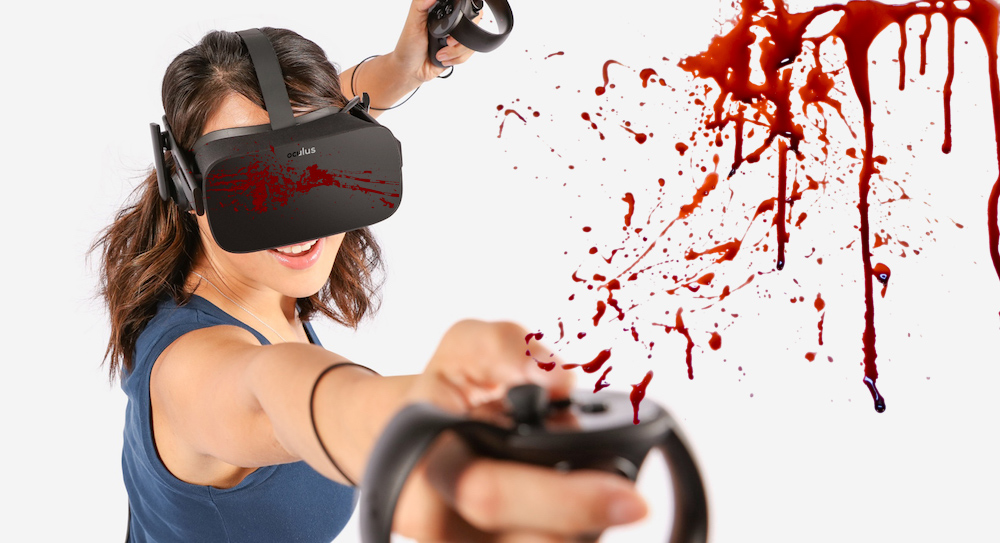
In Buckley’s mind, one way to address the issue as the fidelity of VR shooters improves would be to make the games more “casual” with a diminished focus on realism.
Video game purists have long turned up their nose at “violent video games create violent people” arguments, but it does seem that the debate should be given new light in the wake of such disruptive new hardware.
Arshya Vahabzadeh M.D. is the Chief Medical Officer at a VR startup called Brain Power and serves on the faculty at Harvard Medical School as a lecturer in psychiatry.
According to Dr. Vahabzadeh:
“Post traumatic stress disorder (PTSD) is commonly caused by a directly witnessed real life event that is life threatening or violent in nature. Current clinical diagnosis of PTSD excludes exposures that occur through electronic media, including movies and pictures.
However, given the immersive and interactive nature of VR, and the increasing ability to stimulate a range of senses beyond sight and sound, including tactile and olfactory sensations, one has to wonder if at some point these experiences may result in the rewiring the the brains fear centers in a similar way to that seen in PTSD.
One could postulate that if a person felt the VR experience was real, that they genuinely felt they were at risk of harm, and that they did not have a way of voluntarily ending the experience, they could experience rewiring of fear circuitry of their brain in a manner similar to PTSD. They would then perhaps have a range of PTSD like symptoms. Clearly this is an area that will need further research as immersive technologies become more realistic and widely used, and potentially abused.”
See the full story here: https://uploadvr.com/is-it-okay-to-kill-in-vr/
Turning James Joyce’s ‘Ulysses’ into a virtual reality game
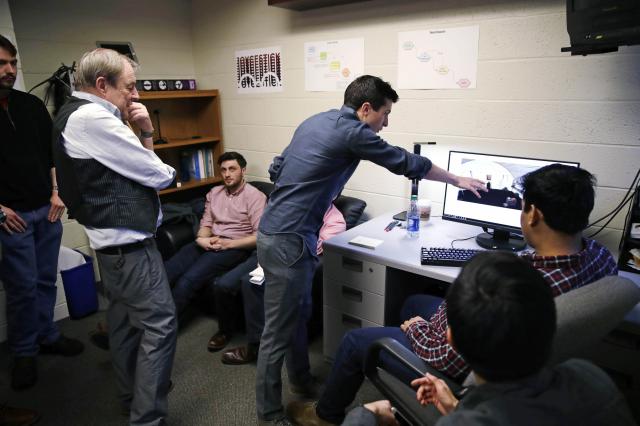 Students are developing a virtual reality game based on James Joyce's "Ulysses" as part of a class at Boston College.
The goal of "Joycestick" is to expose new audiences to the works of one of Ireland's most celebrated authors, as well as to give a glimpse of how virtual reality can be used to enhance literature, said Joseph Nugent, the Boston College English professor who is coordinating the project.
Nugent and his students hope to release a version of the game on June 16 in Dublin during Bloomsday, the city's annual celebration of the author and novel.
"Joycestick" isn't meant to be a straight re-telling of "Ulysses," which in some versions runs nearly 650 pages long, acknowledged Evan Otero, a Boston College junior majoring in computer science who is helping to develop the game.
Instead, the game lets users explore a handful of key environments described in the book, from a military tower where the novel opens to a cafe in Paris that is significant to the protagonist's past.
It's also not a typical video game in the sense of having tasks to complete, enemies to defeat or points to rack up, said Jan van Merkensteijn, a junior studying philosophy and medical humanities who is also involved in the project. For now, users can simply explore the virtual environments at their leisure. Touching certain objects triggers readings from the novel.
See the full story here: http://www.wral.com/turning-james-joyce-s-ulysses-into-a-virtual-reality-game/16589540/