Rift in Space: ‘Mission:ISS’ Launches Today
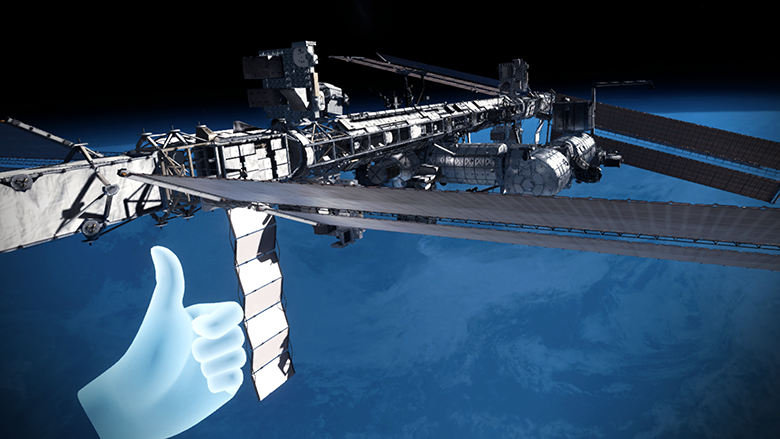 Based on NASA Space Station models as well as discussions with multiple astronauts and the VR Laboratory at NASA’s Johnson Space Center in Houston, Mission:ISS recreates the International Space Station in painstaking detail. While many of us dream of becoming astronauts, only about 500 people have ever been to space. Thanks to Mission:ISS and Oculus Touch, you can use your virtual hands to dock incoming cargo capsules, conduct spacewalks, and perform mission-critical tasks. Now anyone, anywhere, can experience the breathtaking view of Earth from orbit.
Designed and engineered by the Academy Award-winning team at Los Angeles-based Magnopus, this visceral, interstellar experience also marks a new cornerstone of interactive education. People will learn the history of the ISS and hear the stories of several astronauts in a series of immersive videos. We’re also piloting a limited beta program in the US to provide high school students with direct access to Mission:ISS.
See the full story here: https://www.oculus.com/blog/rift-in-space-missioniss-launches-today/
TRIBECA IMMERSIVE’S VIRTUAL ARCADE AND STORYSCAPES PROJECTS UNVEILED FOR TRIBECA 2017
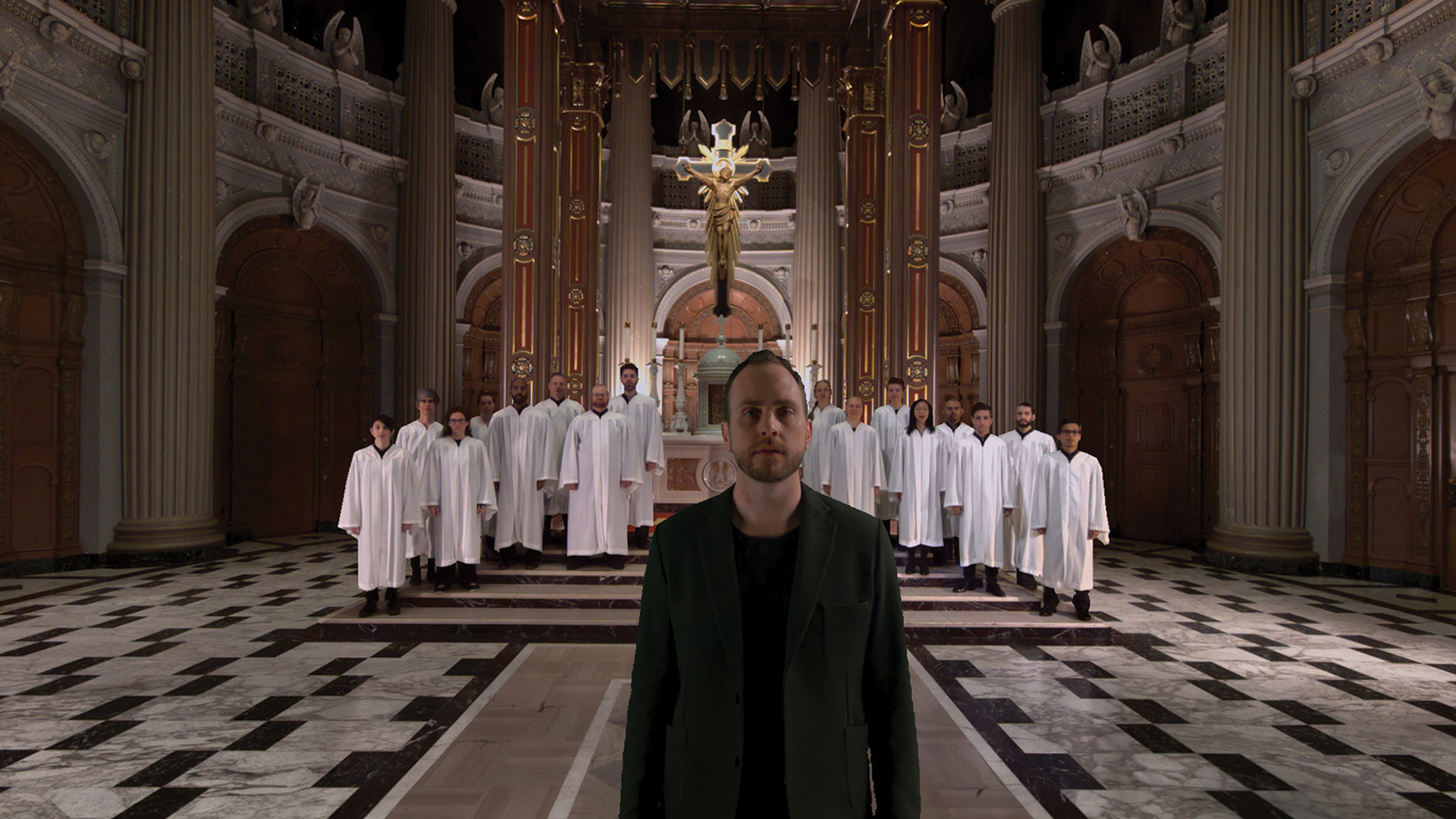 Hallelujah (World Premiere) – USA
Project Creator: Zach Richter, Bobby Halvorson, Eames Kolar
Key Collaborators: Chrissy Szczupak, Orin Green, Jess Engel, ECCO VR, International Orange Chorale of SF, Chris Milk, Aaron Koblin
Hallelujah is a revolutionary virtual reality music performance that reimagines Leonard Cohen’s most well-known song. It is the world's first VR music experience to provide an uncompromised sense of presence with six degrees of freedom using Lytro Immerge technology.
See the full list with descriptions, go here: https://tribecafilm.com/stories/tribeca-immersive-virtual-arcade-storyscapes-virtual-reality
Nearpod Raises $21 Million To Further Virtual Reality Education
 At Miami-Dade public schools, one of the largest English Language Learner (ELL) districts in the country, the company recently launched Nearpod for ELL to provide teachers with more than 500 lessons designed specifically for the fastest growing student demographic: non-native English speakers.
“Because we provide digital content they can edit, teachers can adjust their lessons to easily accommodate the diverse array of languages that are in their classrooms,” Kovalskys said.
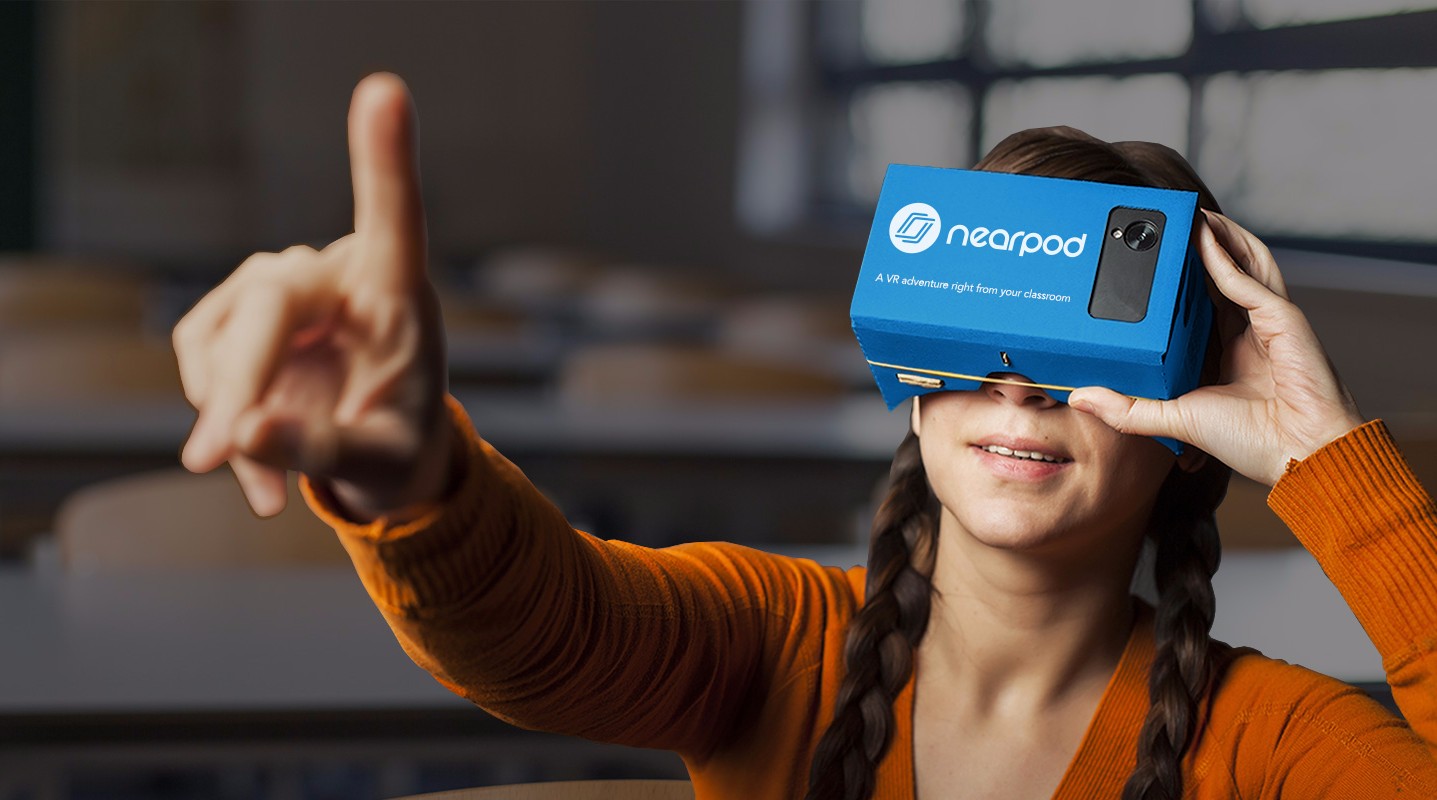
Nearpod VR is compatible with any digital device – smartphone, tablet, laptop, chromebook, etc.
Nearpod employs a multi-tiered business model. The company offers free accounts to teachers that allow them to use the app, create polls, interactive quizzes, open-ended questions, slideshows, and more. There’s a gold account that offers teachers the ability to assign homework, receive detailed reports and integrate multimedia into the lessons they create for $10 per month.
See the full story here: https://uploadvr.com/nearpod-raises-21-million-virtual-reality-education/
Zero Latency 2.0: New Levels In Virtual Reality
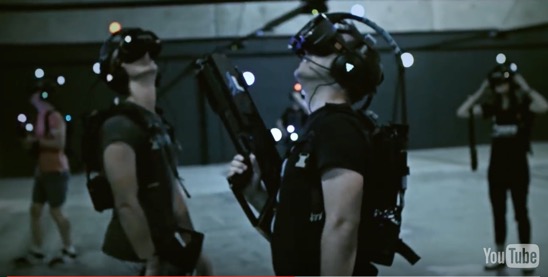 When I tried it in mid-2015, I was blown away by Zero Latency's immersive virtual reality — completely wireless, free roaming, warehouse-sized VR, built in Melbourne.
Almost two years on, the fundamentals are the same, but the Zero Latency experience is more refined than it has ever been. And that means new things are possible.
Since August 2015, Zero Latency has opened free-roam spaces in Tokyo, Japan at the Joypolis amusement park. In Madrid, Spain. In Orlando, Florida as V-Play Reality. The company that started in a Melbourne warehouse has expanded to three new continents.
New spaces that the company is expanding into internationally, it's found, are generally around 200 square feet in size rather than the nearly 400 of the North Melbourne warehouse.
That's a significantly smaller play area, but it never feels like you're confined to one location — both tricks of gameplay and level design, like in-game elevators to re-orient players in the opposite direction, and the complete escapism of virtual reality, both contribute to a complete loss of the sense of where you are in the outside world.
Because the hardware is newer, it's more powerful despite being smaller and lighter. The custom VR backpack — built for Zero Latency by an Australian military supplier — has enough graphical grunt to power games that look better and run more smoothly...
Zero Latency is introducing three new games as part of its first big overhaul. The first is Singularity, a sci-fi corridor shooter that feels equal parts Aliens and System Shock....
Engineerium doesn't use weapons, so players have their hands free. It's a physics puzzler, asking teams to explore a floating stone maze. Despite having their feet on terra firma, virtual reality means players walk on ceilings and through spiraling gravity-defying courses. It has soft lilting ambient music, too — a point of contention in VR development — that lends a sense of escapism and wonder to the already fantastical ancient Egypt meets Alice in Wonderland environment that players wander around.
Tickets are the same $88 price per person as the experience launched with in 2015, and that gets you anywhere between 45 minutes and 60 minutes in-game.
See the full story here: https://www.gizmodo.com.au/2017/03/zero-latency-2-0-new-levels-in-virtual-reality/
Interview: Frank Soqui, Intel’s General Manager of Virtual Reality
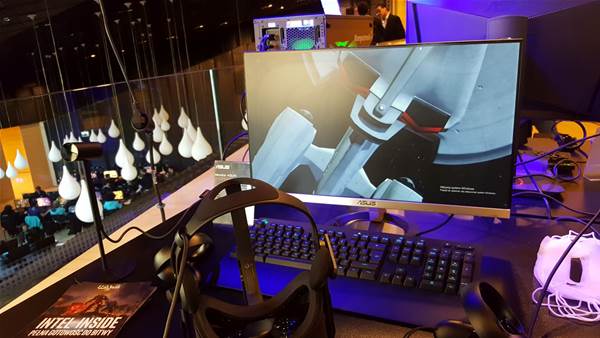 ...And, at the Intel Extreme Masters in Katowice, Intel is pushing the technology hard - after all, you need high end PC hardware to make the most of VR, so anything which drives CPU sales is definitely a good thing.
The one sticking point, though, remains the lack of truly killer titles and applications. Even Intel's own Frank Soqui, the General Manager of the company's VR division, admits that we're still waiting for the content that's really going to make VR sing.
"Well, for me 'here' has a specific meaning," Soqui says when I ask him, after pointing out that it is a kind of nebulous thing right now. "But I look at the level of industry investment; I'm looking at the hardware capabilities that are there. I'm looking at the cross-sector investments that are being made, not just in gaming, but they're getting made commercially, in the enterprise. I look at price points coming down, at the quality of the experience - I think that's here."
"What's not here," he says, "is the compelling content."
....
The first was an upcoming game, one that I've been excited about for a while - Star Trek: Bridge Crew. The game pretty much does what it says on the tin, placing you on a starship bridge, as either Captain, Helm, Tactical, or Engineer. It can be played solo, with AI in each position apart from yours, but it's ideally a co-op experience, with a live player in each position. The demo shuffled you through each of them, showing off how each role plays, and it was pretty amazing. I'm a Star Trek fan, so may be biased, but the sense of presence was stunning. Using controllers, I could look down at my virtual hands as they manipulated various ship functions, and it really was just like in the movies.
I may have gotten a little quietly emotional. For me, it's the first true killer app of VR. When I pointed this out to Frank, he predictably called me a big nerd, and I'm not going to deny it.
"For me," Soqui went on, talking about the game that was his 'ah ha!' moment, "it was playing a game where my avatar was a woman, and I looked down, and... Wow! I'm in someone else's body!"
"I've talked to film makers about this," he says, warming up to the topic, "about empathy. How does it feel to be in someone else's shoes?"
The second impressive use of VR was in eSports broadcasting. Watching a stream of a game online is nothing new, but what Intel's aiming for is letting viewers get inside these matches - virtually. There's something very compelling about the chance to be virtually present in the arena for a big eSports match, and even more compelling about then being able to actually get inside the game, to watch it from any angle. In fact, finding new ways to present eSports to wider, more diverse crowds is one of Intel's big challenges in growing competitive gaming.
See the full story here: http://www.pcauthority.com.au/Feature/453691,interview-frank-soqui-intels-general-manager-of-virtual-reality.aspx
Augmented Reality Seen Shifting To Headsets For Immersive Experiences
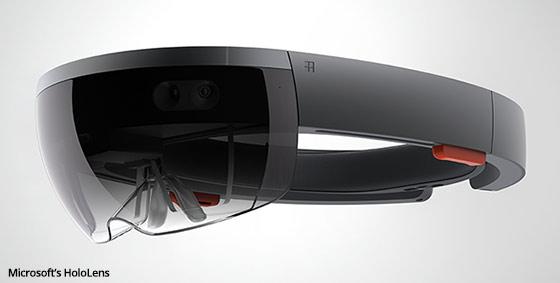 In the next couple of years, most AR devices shipped globally will be basic assisted reality glasses. However, between 2018 and 2022, the majority of AR devices shipped will shift toward mixed reality headsets, according to a new study by Tractica.
By 2022, nearly 23 million augmented reality or mixed reality glasses will be sold per year -- up from 150,000 last year, according to the study.
The types of devices shipped in six years leans toward mixed reality glasses. By 2022, assisted reality glasses will account for 2 million of the devices shipped and 21 million will be mixed reality glasses, according to the study.
Tractica defines assisted reality glasses as glasses that "layer digital images onto the real world without any specific knowledge of the environment" and mixed reality headsets as headsets that have "positional tracking and depth sensors to provide a more immersive experience, enabling interactions with holographic objects."
For example, a recent study by Citi ...
That study forecasts that the market for AR hardware to grow 68% between 2020 and 2025 and AR commerce to grow even more (78%) in the same period.
Tractica expects the revenue generated by shipments of assisted reality and mixed reality devices combined to grow from $139 million last year to $20 billion by 2022.
See the full story here: http://www.mediapost.com/publications/article/296365/augmented-reality-seen-shifting-to-headsets-for-im.html
This HoloLens Prototype Brings Golf to AR
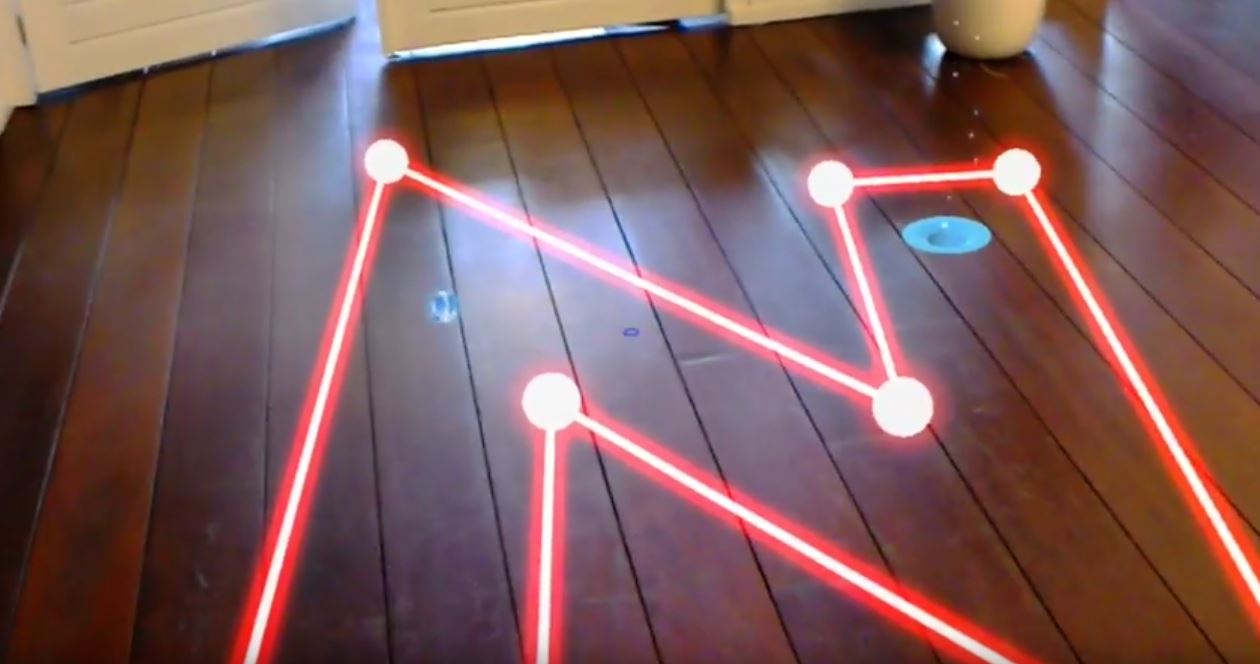 The starting goal was to create an AR program that was easy to use for people not very familiar with HoloLens. Robustelli says the team wanted something based on physics to create a sense of realism, but also have a futuristic aesthetic to it. The combination of simple gameplay mechanics, the potential for cool visuals, and an example of how spatial mapping works with HoloLens led the team to a golf game.
When it comes to setup, you place the glasses on and set waypoints in an open space. The tool the team developed can then build tracks around those points, taking into account the surrounding obstacles. Once things are in place, you’ll see the course on the HoloLens. You use one hand to aim where you want the ball to go and then you tap your fingers together to shoot. The farther out you aim with your hand, the harder the shot.
See the full story here: https://uploadvr.com/hololens-prototype-ar-golf/
Toshiba’s distribution deal with Vuzix has interesting timing
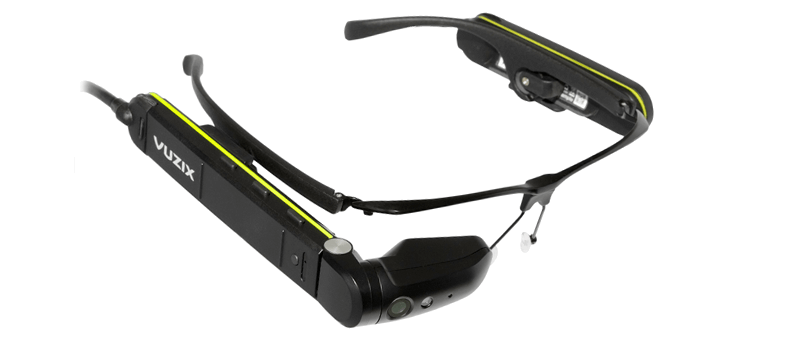 Vuzix expects to sell thousands of pairs of smart glasses in its distribution deal with Toshiba. The deal based on Vuzix M300 Smart Glasses will provide Toshiba with smart glass technology, this comes after the company canceled its own line of smart glasses.
Vuzix’s glasses delivers a “hands-free” digital world; its built-in HD camera records, stores, and plays back still pictures and video, along with expandable memory and wireless connectivity capabilities.
The glasses also have an integrated head tracking and GPS system that provide apps with your location the direction and angle of your current view.
Much like Vuzix smart glasses, Snapchat’s spectacles are also considered augmented reality glasses. If Snap’s spectacles get Vuzix’s technology behind them, the world of AR is about to get a lot more interesting.
[Philip Lelyveld note: except Snap glasses don't have positional tracking, which makes them not-really AR.]
Could Toshiba be gearing up to roll out next generation smart glasses for Snapchat? No one can say for sure, but between Toshiba’s distribution channels and Vuzix’s proven technology, it would seem like a lucrative step in the right direction.
See the full story here: https://thenextweb.com/augmented-reality/2017/03/05/snapchats-ipo-toshibas-distribution-deal-vuzix-interesting-timing/#.tnw_HrVGu7Be
What experts are saying about Apple’s next big thing
But perhaps the most interesting feature currently rumored for the so-called "iPhone 8" is a new "3D" camera. ...the first step towards a technology called "augmented reality,"
[Tim Cook]...earlier this year, he said it could "be as big as the smartphone,"..
Steven Milunovich, UBS
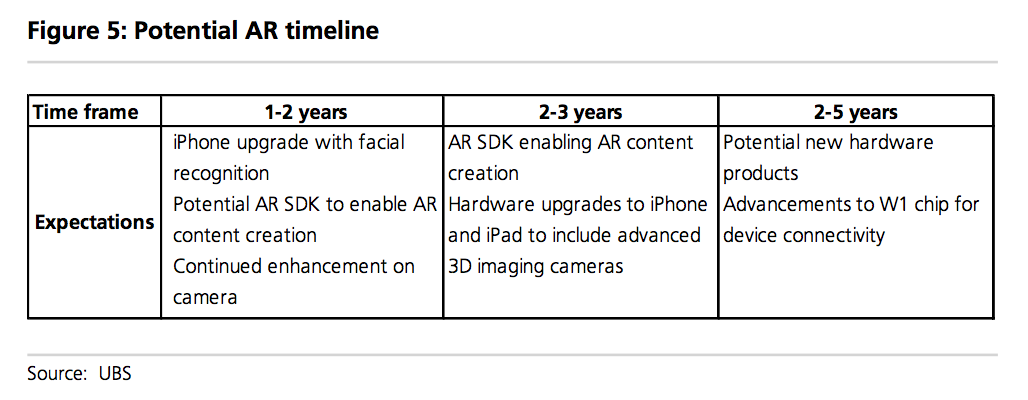 He writes that Apple has an advantage over companies like Magic Leap, Google, and Microsoft for AR for four reasons:
- "hardware expertise and superior hardware/software integration;
- consistent updated releases with most customers on the latest version of iOS compared with the fragmented Android OS base;
- an installed base of iPhone and iPad customers that can use AR rather than starting from scratch; and
- a cloud infrastructure that facilitates data gathering."
Milunovich also writes that "Apple's experience designing its own chips could present an opportunity."
Andrew Gardiner and team, Barclays
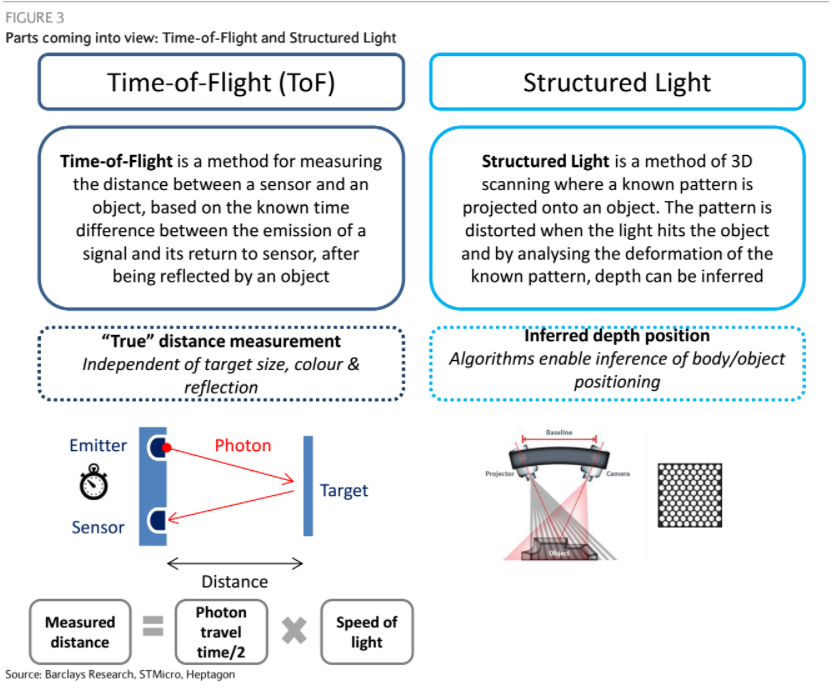 He believes chipmakers like AMS, STMicroelectronics, Lumentum, and II-VI may be big winners as Apple includes a 3D sensor in 10s of millions of iPhones.
Ultimately, the big question for Gardiner is whether Apple will use a time-of-flight sensor or structured light sensor. He thinks Apple will use a combination of the two.
Apple currently includes a "time-of-flight" sensor in current iPhones.
Morgan Stanley
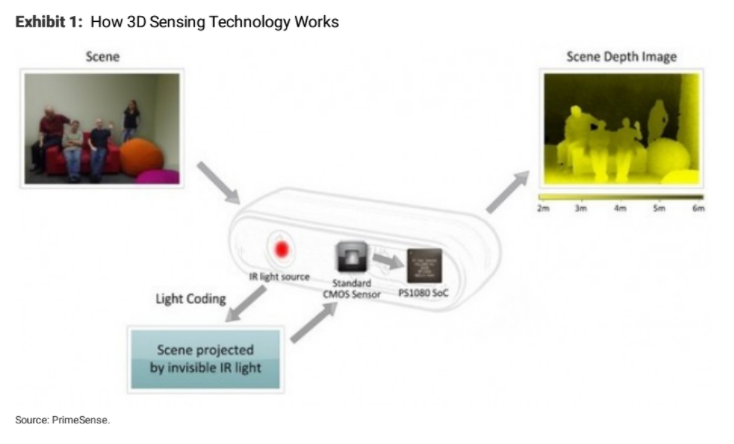 They include a diagram courtesy of Primesense, an Israeli company that Apple bought in 2013.
Morgan Stanley cites AMS, a current Apple supplier, for potential applications for this technology, including "augmented reality and virtual reality, gesture, face recognition biometrics, improved 2D and video images, body measurement as well as autonomous driving."
But Morgan Stanley questions the consumer appeal of AR and the viability of the requisite 3D camera technology, including whether most smartphones will have the necessary horsepower to do get the job done. Many people in the AR industry have told me that the power consumption and heat generated by processors are critical roadblocks.
Ming-Chi Kuo, KGI Securities
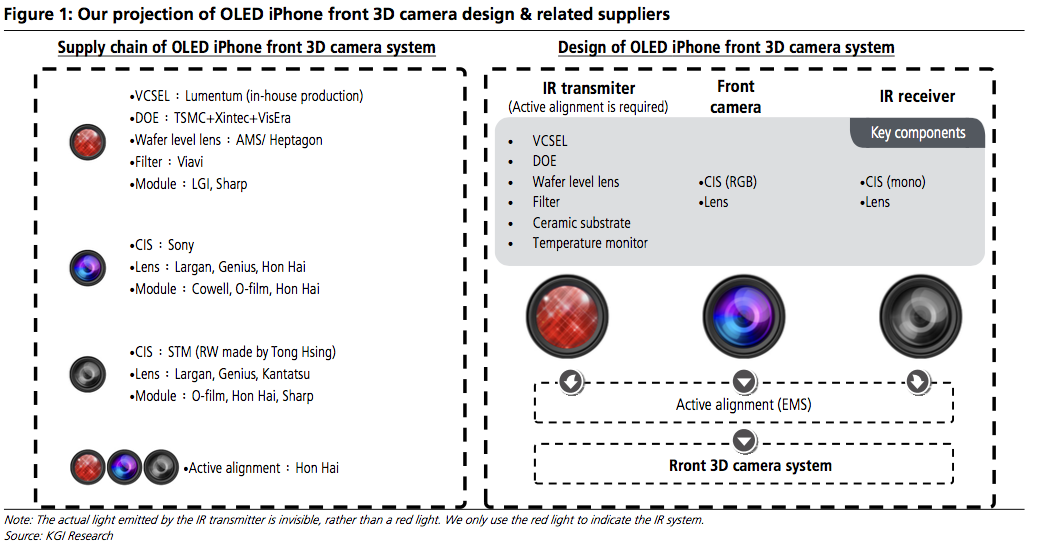 He believes that the 3D camera on the upcoming phone will actually take the place of the front sensor, and will be composed of three modules.
AR is related to all Apple’s current businesses; the key is that AR is an innovative human-machine interface that could be used in various devices & applications. All of Apple’s past successes were related to human-machine interfaces, such as mouse for Mac, click wheel for iPod, and multi-touch for iPhone and iPad.
See the full story here: http://www.businessinsider.com/what-you-need-to-know-about-apples-new-3d-camera-2017-2