VR is gaining ground in the academic world and the 3D industry
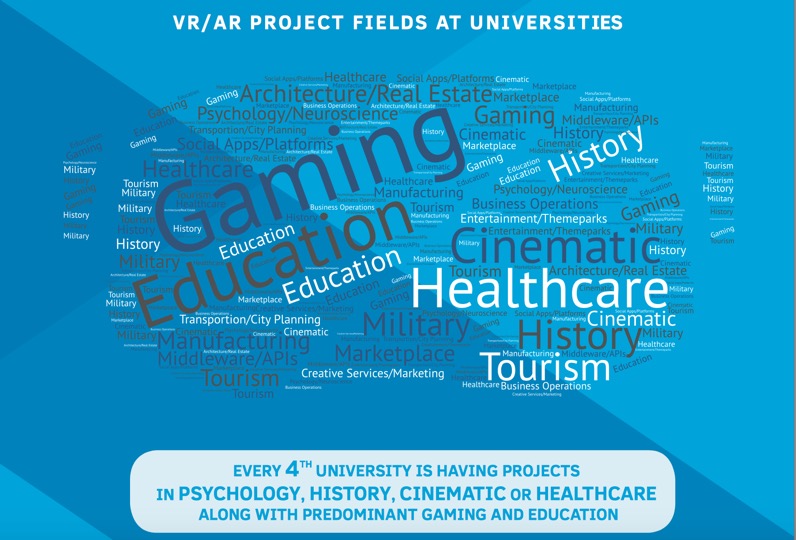 Two recent survey reports came in with news on positive traction in VR adoption by two very different segments of the industry: academic institutes and the 3D modeling community.
VR First announced the results of a survey they conducted of 151 participating universities from 38 countries, showing that the number of HMDs per university have jumped fivefold in the past six months, from 1.5 per university to 5.6. They also found that while 51 students had to share a single headset early last year, the average has dropped to 18 students per device.
“Our latest infographic exposes the growing appetite among universities to bridge the developer deficit facing the VR/AR industry, but there’s still a lot of work to be done,” Ferhan Özkan, director of Partnerships and Alliances at VR First, said in the press release.
(See the infographic here: https://www.vrfirst.com/assets/docs/VR_First_Infographic.pdf)
...
The second survey report came from Sketchfab, the center of the 3D models universe and an increasingly significant player in the VR space. The responses came from a sample of 1,000 members of the Sketchfab community, along with analytics from all their website traffic in Q1, which is more than 5 million uniques per month. The demographics are skewed; 75 percent are uploaders, those 3D model designers that have the skill sets the VR industry sorely needs.
(See the infographic here: https://sketchfab.com/trends )
(Sketchpad is a VR environment building and sharing platform - https://www.crunchbase.com/organization/sketchfab#/entity )
See the full story here: https://techcrunch.com/2017/01/23/vr-is-gaining-ground-in-the-academic-world-and-the-3d-industry/
MIT Made a Wearable That Knows How a Conversation’s Going
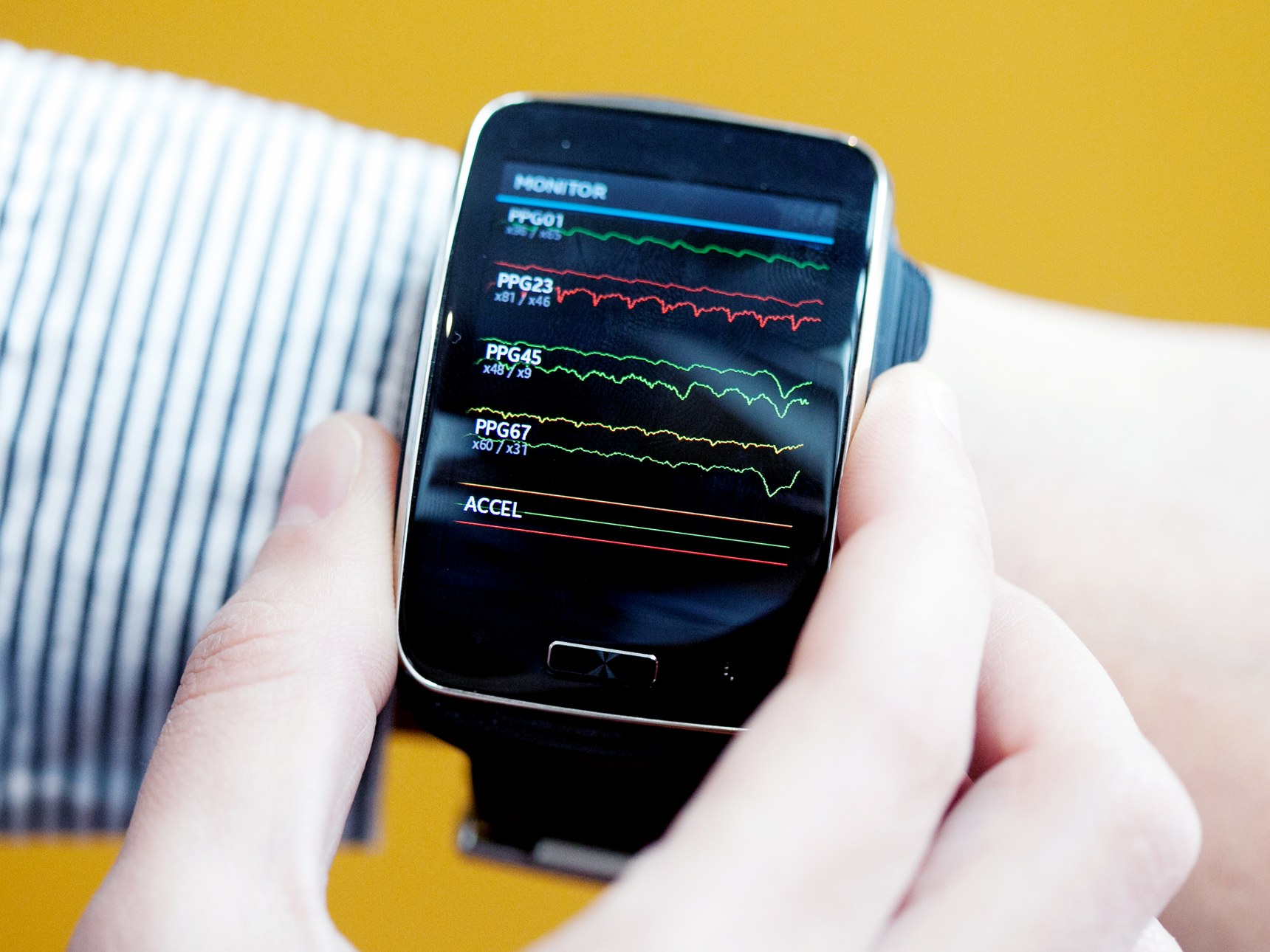 NO MATTER HOW debonair you are at your best, conversation can be awkward for anyone. That’s especially true for those who struggle to pick up on social cues. To help navigate those rocky exchanges, MIT CSAIL researchers have created a wearable system that can tell whether the person you’re talking to is happy or sad. It’s a start.
The device takes an existing research-grade wearable—Samsung’s Simband smartwatch, which can measure movement, heart rate, blood pressure, blood flow, and skin temperature—and pairs it with audio capture that can pick up signals like tone, pitch, energy, and word choice, and provide a transcript of the text. By weighing all of the incoming signals, algorithms can classify each five-second installment of conversation as either “positive” or “negative.”
See the full story here: https://www.wired.com/2017/02/mit-made-wearable-knows-conversations-going/
Fifty Shades fans have a ball with virtual reality experience
 Fifty Shades Darker fans are having their desires met inside a virtual reality reproduction of one of the upcoming movie’s key scenes; a masquerade ball inside the Grey family mansion.
Donning a mask participants can crane their neck around the costume party in full 360 degrees, interacting with stars Christian Grey and Anastasia Steele as they do so.
See the full story here: http://www.thedrum.com/news/2017/02/06/fifty-shades-fans-have-ball-with-virtual-reality-experience
Virtual Reality Sharks Nab Professor $240,000 Grant
 It was in the pool during physical rehabilitation for his Multiple Sclerosis when computer scientist and game designer John Quarles thought to himself, 'there has to be a way to make this more engaging.'
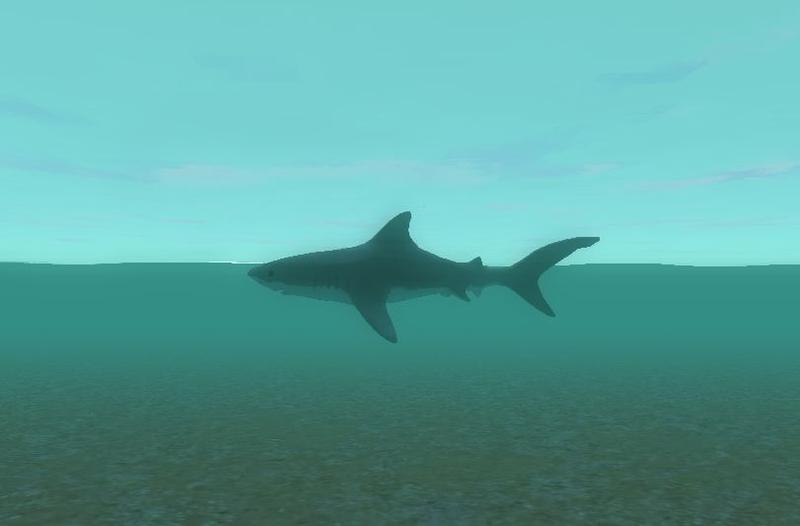
The game Shark Punch is the result. By using a slightly modified divers mask and a waterproof phone he is able to create a game where the player is being circled by a shark and when it bites.
"I know the shark is biting me because there is this sound effect," he says.
Quarles says you could wear underwater headphones, but he just turns the phone up and that is more than enough.
He submerges in the pool and begins looking around. He swings his fist at the virtual predator.
The game uses the phones internal motion sensors to register when you punch. The same thing a pedometer app would use.
But the water also limits what is possible. You can turn your head and the device registers it but you can't move forward and backward in the game. Blue tooth, GPS, wifi and other traditional location technology aren't great in water --the radio waves are affected--and real-time tracking is imprecise.
See the full story here: http://tpr.org/post/virtual-reality-sharks-nab-professor-240000-grant#stream/0
Eric Church releases virtual reality concert
 Eric Church fans can experience him in virtual reality.
Church’s performance at the Stagecoach Festival in Indio, California, last summer was filmed with eight cameras and in 360-degree audio.
The technology tracks users as they turn their heads to make it seem like they’re right there.
The concert is available for $34.99 at www.vantage.tv.
See the full post here: http://wixy.com/news/030030-eric-church-virtual-reality/
Microsoft is piling in Patent Filings for Augmented Reality to get the Leap on Apple
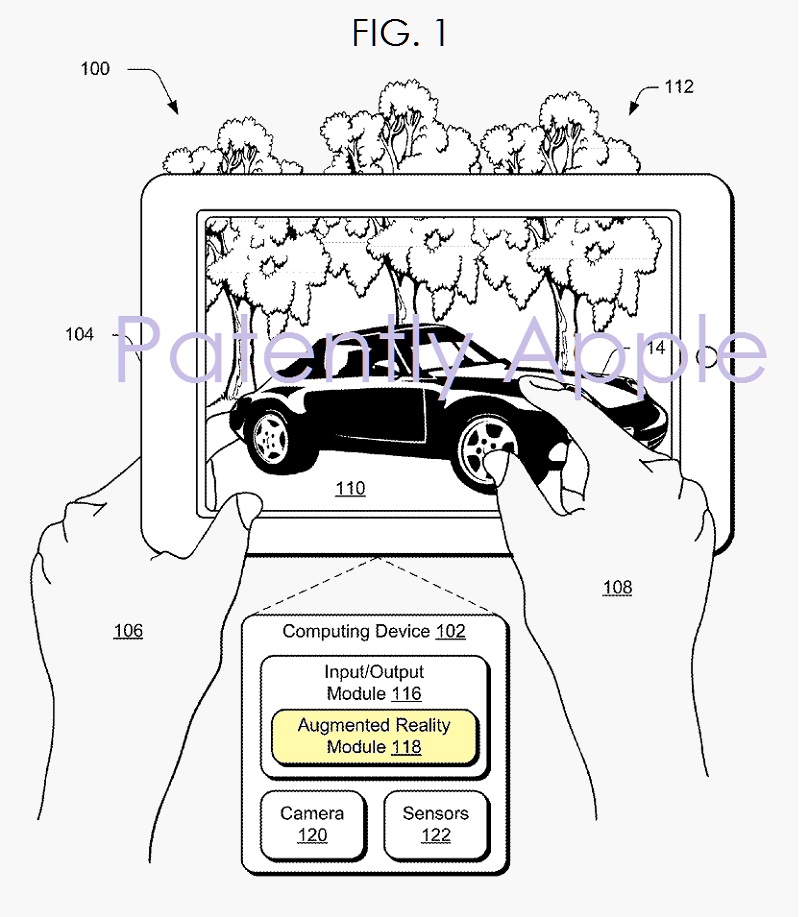 The augmented reality module is configured to output an augmentation (e.g., the car 114) to be viewed in conjunction with the physical surroundings. To generate this view and know "where" to place the augmentation, the augmented reality module may leverage a variety of techniques to determine an orientation and/or position of the Surface tablet in relation to the physical surroundings. For example, the augmented reality module may leverage a camera #120 to capture images of the physical surroundings. The augmented reality module may then process the images to locate one or more markers to determine how the Surface tablet is positioned, oriented, moved, and so on.
Earlier last month Patently Apple posted a report titled "Lenovo Adopts Microsoft Platforms to Challenge Android based Headsets and Tablets in 2017 and beyond. The Lenovo HMD system will be based on the Microsoft Windows Holographic platform and it's likely to be the first of many to follow throughout 2017 and 2018 to get the ball rolling winning over developers to Microsoft's new platform over iOS which has yet to publicly address Augmented Reality.
Microsoft is running like the wind to establish a beachhead from which to launch a larger attack against Apple and their operating systems to win over developers and excite the next generation to the Windows platform and away from iOS and macOS. Whether their strategy will prevail is too earlier to call. It's really up to Apple. If they're too slow to market it's going to be harder for them to win over developers. The Augmented Reality market is going to be gathering steam this year and we're hoping that Apple won't be a no-show. Then again, Microsoft had a few year lead on Apple regarding tablets and never quite understood how to make it work. Apple came out with iPad and it became a consumer phenomenon.
See the full story here: http://www.patentlyapple.com/patently-apple/2017/02/microsoft-is-piling-in-patent-filings-for-augmented-reality-to-get-the-leap-on-apple.html
Fashion Show Uses Augmented Reality To Captivate Audience [Infographic]
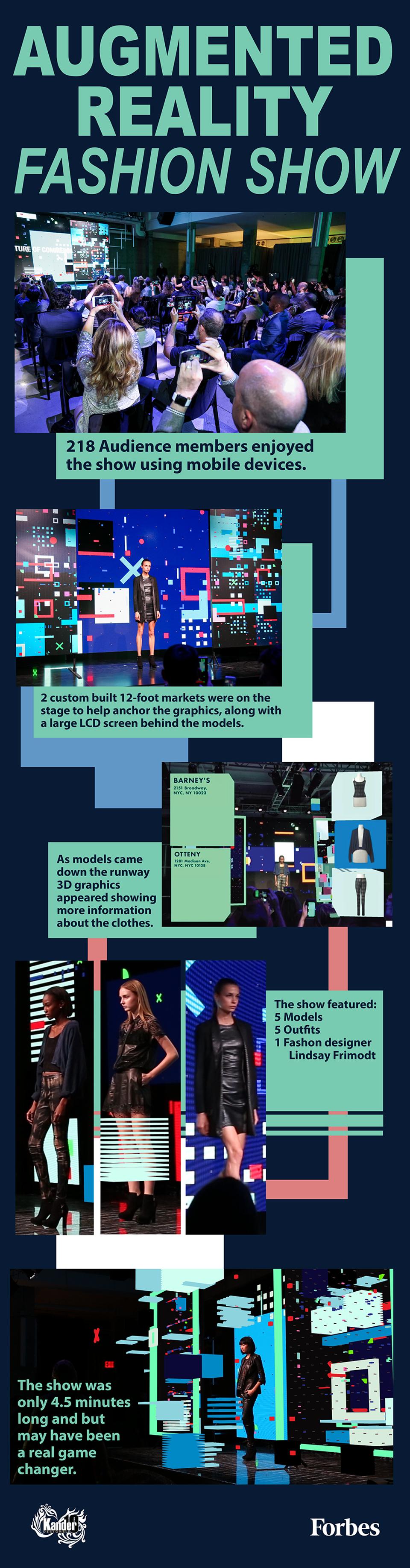 During Fashion Week, creative technology studio Superbright, working with xAd, stunned a 200+ audience with a fashion show that was truly one of a kind. It had all the regular elements of a fashion show: a runway with attractive models and well-designed outfits, but this show also tried something new, augmented reality.
On the day of the AR fashion show, the audience was able to use their mobile devices, as well as provided iPad’s running the application, to get a whole new perspective on the models and clothes. First, the audience members downloaded a custom app to their tablet or phone. Once downloaded the audience logged in and held the device up to view the stage. The showrunners were able to use the app to see how many people had logged in and as soon as they saw that the majority of the audience was synced they began the show.
Through their devices, the audience could see the digital effects added to the physical production. Colorful cubes shifting across the stage and flying pallets gave additional information about the models and clothes. These 3D elements were synchronized to follow each model down the runway.
See the full story here: http://www.forbes.com/sites/kevinanderton/2017/02/04/fashion-show-uses-augmented-reality-to-captivate-audience-infographic/#7500cd163dd4
Here’s What One Gym Class Looks Like In 2017
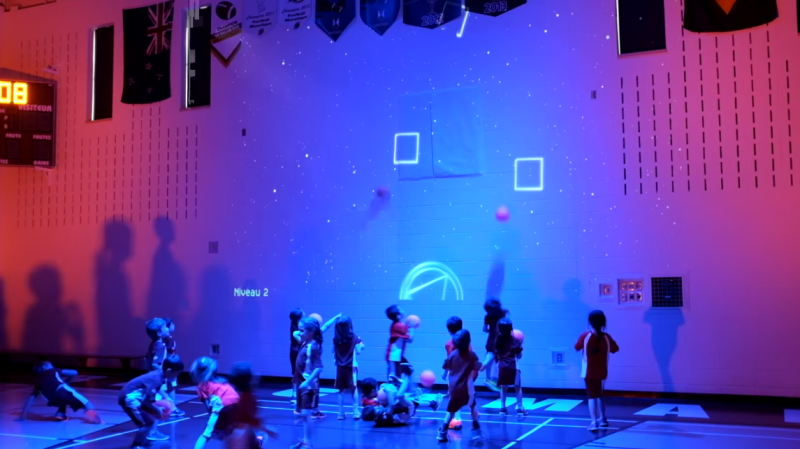 The Interactive Gym, the latest project from the Canadian tech company SAGA, takes the traditional idea of gym class and adds a layer of augmented reality, turning the walls into giant games of skee-ball.
“We use 3D camera vision to detect interactions on the walls and the floors,” said Vincent Routhier, SAGA’s CEO. “ This detection is then used as an ‘input’ for the games that are displayed using projection mapping, lighting and sound effects.”
See the full story here: http://kotaku.com/augmented-reality-turns-school-gym-into-an-interactive-1792005246
Modal VR thinks you’ll try it at the mall.
 Modal VR says its technology lets up to 16 users explore virtual reality in large spaces—as big as 900,000 square feet, in theory, which would offer a lot more mobility than you typically have in VR these days—and it has built a headset and three games so far (it also plans to let developers make games for its platform). One is a fighting game called Mythic Combat and another, called Project Zenith, is a first-person shooter game set in outer space. Pong is not meant to be one of its offerings—it was originally put together as a joke, in homage to Bushnell’s past—but the company decided to use the simple two-player game anyway to demonstrate what it’s working on at the World’s Fair Nano technology fair in San Francisco in late January.
Carly Kocurek, an assistant professor at the Illinois Institute of Technology who studies video gaming and its history, agrees that for many people it makes sense to try virtual reality out in a more arcade-like setting, especially since it could come with instructions on how to use the technology.
“I think people are looking for reasons to be out of their houses,” she says. “There are a lot of people who don’t drink or don’t want drinking to be the only thing they do.”
See the full story here: https://www.technologyreview.com/s/603562/pongs-inventor-wants-to-bring-virtual-reality-to-arcades/