How Virtual Reality Filmmakers Used Brands to Develop a New Skill Set
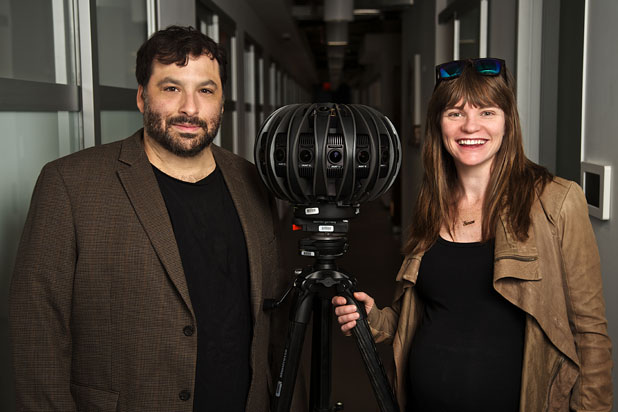 Now that it’s here, VR filmmakers like Annie Lukowski and BJ Schwartz of VR production company Vanishing Point Media, who have developed experiences for commercial clients like Banana Republic, Teen Vogue and “Jimmy Kimmel Live,” have taken those lessons to the narrative space they’ve always wanted to target.
“It just so happened that there’s not that many headsets out there,” Lukowski said. “To justify a whole budget for a narrative piece when you know there’s not going to be that many eyeballs is tough. Mostly when people come to us and ask us to do stuff, it’s commercials.”
Taylor Freeman, a co-founder of Upload, a virtual reality-focused incubator and media company, credits brands for providing a platform for early-stage VR filmmakers to start to figure things out.
“I think we’re seeing a lot of innovation coming from this experiential marketing,” Freeman told TheWrap. “Brands pouring this money into the space has really enabled the content creators to take time to learn.”
Freeman said he’s noticed VR filmmaking turning a corner from novelty branded experiences to something that resembles narrative content viewers would want to pay for.
“We’ve seen a shift from the early experimental phase,” he said. “That stuff has sort of faded away and now people are much more focused on creating high-value content.”
See the full story here: http://www.sfgate.com/entertainment/the-wrap/article/How-Virtual-Reality-Filmmakers-Used-Brands-to-10898417.php
Is Virtual Reality the Future of Adult Education?
 An estimated 70-75% of the 36 million adults who need literacy support have access to a smartphone, and while many of these phones are older models that would struggle to run the more high-end VR apps, this still leaves millions of adults who are eager to learn and can access virtual reality software on devices they already own. The $7M Barbara Bush Foundation Adult Literacy XPRIZEpresented by Dollar General Literacy Foundation is an effort to catalyze this needed momentum, as the competition incentivizes teams from all over the world to develop autonomous mobile learning software for low-literacy adults.
Shlomy Kattan is Senior Director of the $7M Barbara Bush Foundation Adult Literacy XPRIZE presented by Dollar General Literacy Foundation.
See the full story here: http://www.huffingtonpost.com/entry/is-virtual-reality-the-future-of-adult-education_us_5890d8bfe4b02c397c178d0b
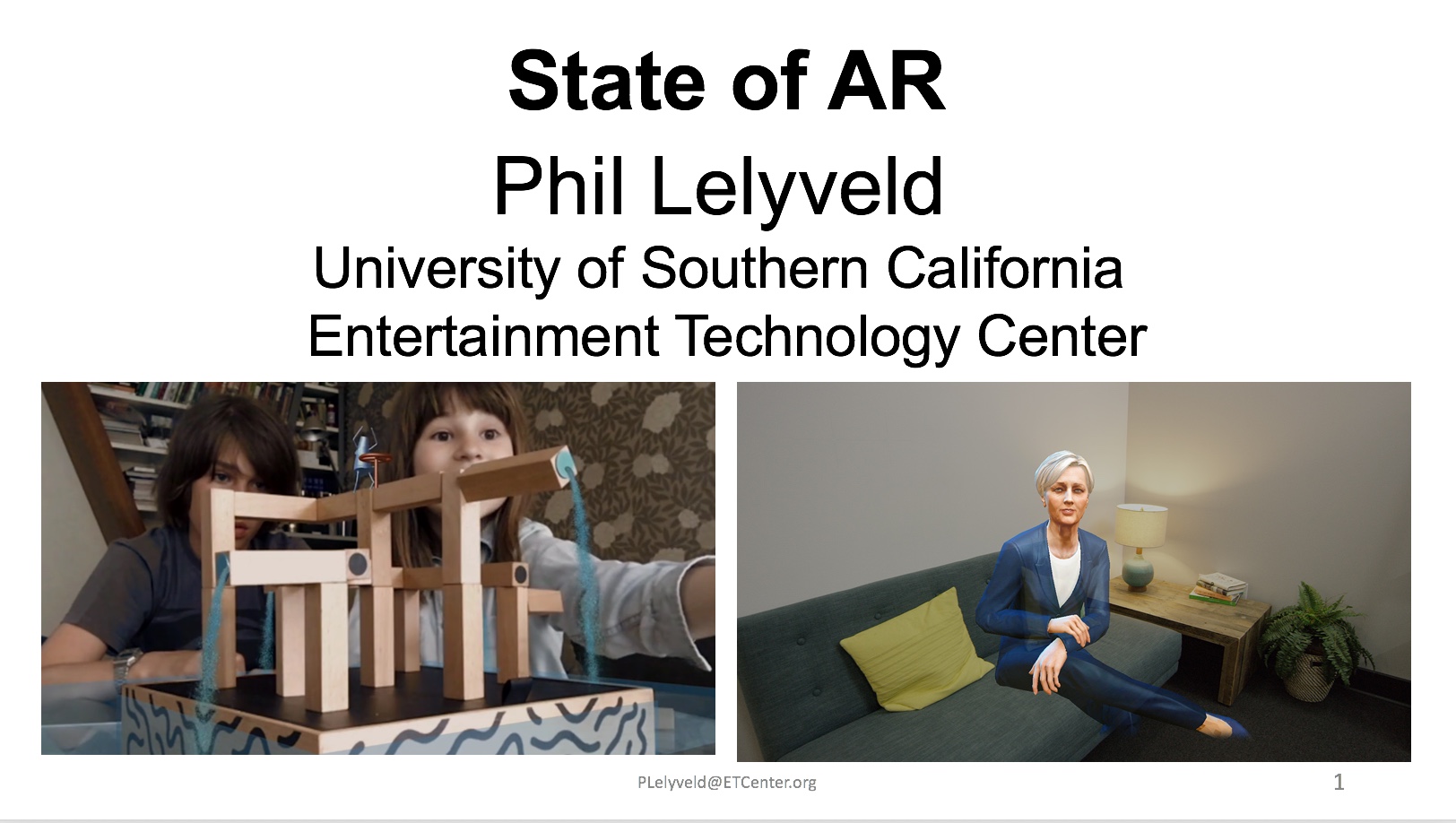
Phil Lelyveld’s ‘State of AR in Entertainment’ deck, DEW (Digital Entertainment World) Conf.
Here is the deck, with stills inserted for the video clips.
Apple patents detail augmented reality device with advanced object recognition, POI labeling
 At its core, the filing deals more with power efficient object recognition than it does visualization of AR data overlays. The former feature is perhaps the greatest technical barrier to wide adoption of AR. In particular, existing image matching solutions like those employed in facial recognition security systems consume a large amount of power and thus see limited real world use.
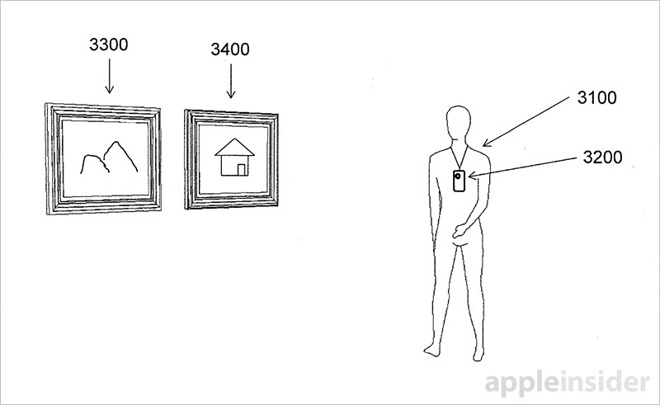
Apple's patent goes further than simple device control, however, as it details a power efficient method of monitoring a user's environment and providing information about detected objects. For example, the technology might be used as part of a guided tour app, scanning for and providing information about interesting objects as a visitor walks around a museum.
The document dives deep into initialization of optical tracking, or the initial determination of a camera's position and orientation. An integral facet of AR, initialization is considered one of the technology's most difficult hurdles to overcome.
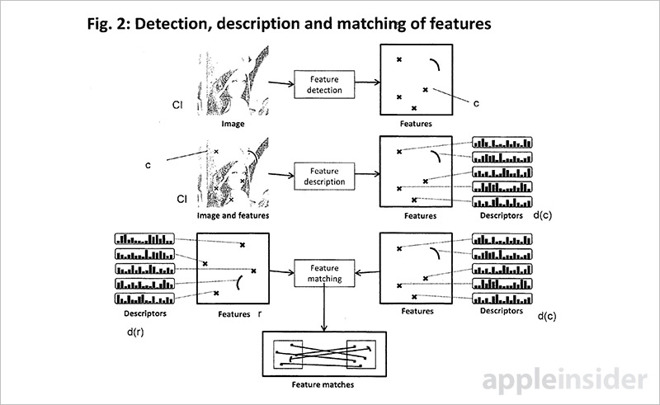
Apple notes the process can be divided into three main building blocks: feature detection (feature extraction), feature description and feature matching. Instead of relying on existing visual computing methods, Apple proposes a new optimized technique that implements dedicated hardware and pre-learned data.
Interestingly, the invention notes depth images, which result in better object determination, require a two-camera setup. Coincidentally, Apple last year introduced a two-camera design with iPhone 7 Plus.
See the full story here: http://appleinsider.com/articles/17/01/31/apple-patents-detail-augmented-reality-device-with-advanced-object-recognition-poi-labeling
Here’s What Happens When You Add Scent to Virtual Reality
 Li, who’s working with working with Jeremy Bailenson, the founding director of the Virtual Human Interaction Lab, thinks the combination of smell, touch, and VR could be used in a bunch of different ways in the future—some more dystopian-sounding than others.
Or perhaps using scent along with virtual reality could help you eat a healthier diet without feeling that you’re missing out. You might see and smell a juicy cheeseburger while actually chomping on a plant-based patty.
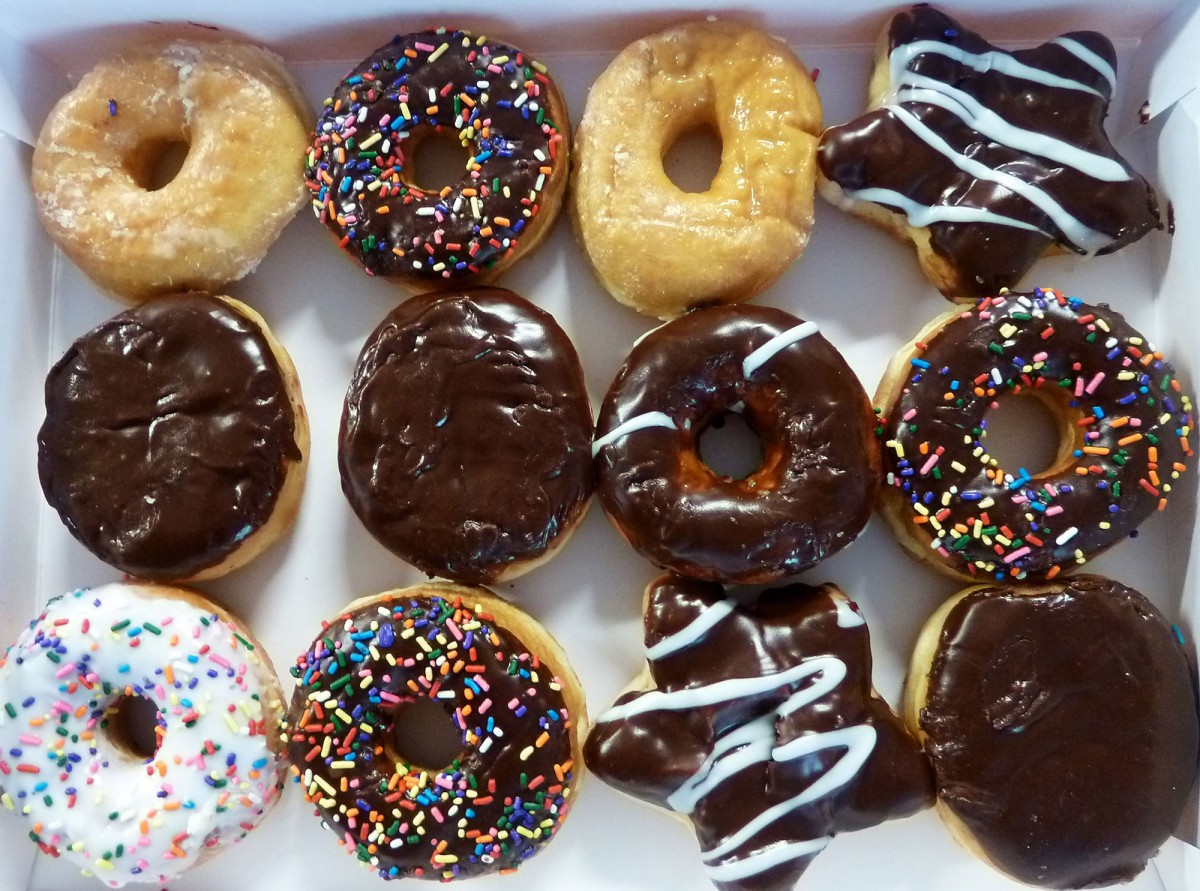
When it comes to food in VR, seeing is not enough to make someone who’s eating one thing believe it’s really another, Li says. To prove that, he’s conducting experiments with people to see how they react when they feel a doughnut in their hands, see one on their VR headsets, and get a whiff from a swab doused in a chocolate scent.
After the fake doughnut is revealed, Li offers participants real ones to eat. This is more than a reward—the researchers want to figure out if people who see, smell, and touch the doughnut have a greater appetite for real doughnuts than those who don’t.
Li isn’t ready to draw conclusions from the data. But he says that anecdotally, once people see, smell, and touch the doughnut virtually they start craving one—not surprising, considering how I felt after my experience in the lab.
See the full story here: https://www.technologyreview.com/s/603528/heres-what-happens-when-you-add-scent-to-virtual-reality/
Eastern Iowa gets in on ground floor of Virtual Reality with EON Reality
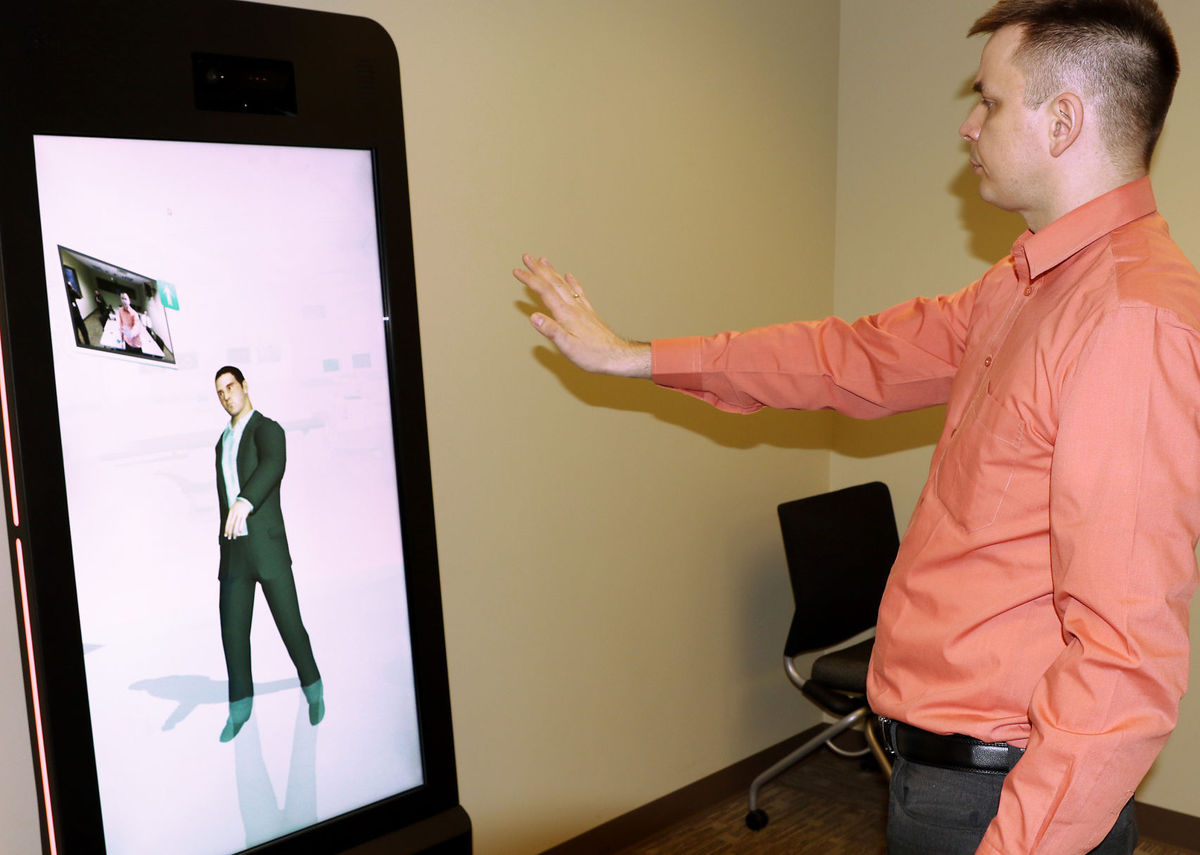 As the first students of the new EON Innovation Academy at Eastern Iowa Community Colleges, the group is delving into the world of Virtual Reality, or VR, and Augmented Reality, of AR. For the next 11 months, they will learn to create VR and AR content and software applications — 3-D tools that will ultimately change how employees train, students learn and products are designed.
The program — a partnership of the college and the Irvine, California-based EON — will create a new skill set in the manufacturing-based Quad-Cities. Working with EON, identified as the world leader in VR/AR-based knowledge transfer for industry, education and edutainment, the newfound skills could serve as a future economic driver for the region.
Joshua Drake, Eastern Iowa's VR Training Initiatives project manager, said the students will spend the first four months in the classroom being taught by visiting EON professionals from around the globe.
"Phase Two is the project phase, where they will be working in teams on real EON projects," he said.
The projects will have the students working with EON's VR experts as mentors and the company's clients, many of which are Fortune 500 companies.
First announced in March 2016, the academy is a three-year partnership between Eastern Iowa and EON Reality. It was announced on the heels of the college unveiling its new Virtual Reality lab at its Advanced Technology Environmental and Energy Center, which also now houses the innovation academy.
The Quad-Cities is one of only four U.S. cities with an EON Innovation Center, joining Dallas, New York City and Tulsa, Oklahoma. Worldwide, the company has established more than a dozen sites, including Manchester, UK; Laval, France; Tshwane, South Africa; Ebene, Mauritius; Jeddah, Saudi Arabia; Melbourne, Australia; and Dubai, UAE.
See the full story here: http://qctimes.com/business/eastern-iowa-gets-in-on-ground-floor-of-virtual-reality/article_0eb668d8-557d-53f3-8fe0-e2219cd042f3.html
First Look: Basemark’s ‘VRScore’ Benchmark Arrives With a Unique Solution for Accurate Testing
The software itself is broken into three sections:
System Test: Purely a test of your PC’s rendering grunt, this runs the Crytek developed ‘Sky Harbor’ VR experience, itself running on the company’s CryEngine software, and measures the resulting frame rate throughout the experience. The benchmark is rendered in stereoscopic 3D and uses pre-baked head motions, presumably recorded from an in-house playtest, to simulate VR headset usage. Each frame from the experience is rendered sequentially as quickly as possible and that sequence run multiple times. The faster you complete the loop, the faster your PC is. This clearly does nothing to gauge performance in relation to your VR headset, for that you’ll need to move to the full test.
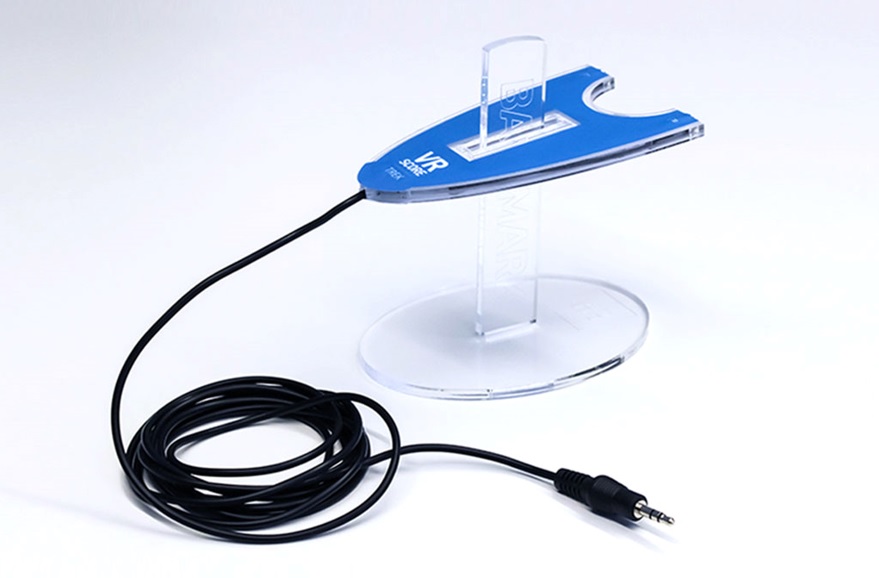 VRTrek Test: This is the more interesting of the two benchmark modes as it leverages Basemark’s unique selling point, the VRTrek sensor device. VRTrek tackles a difficult problem (measuring the latency between images being rendered at the PC and displayed on the VR headset) rather elegantly. This benchmark runs the same looped experience as the System Test above, but this time displayed through the headset, ready for latency measurement.
The VRTrek device contains two photosensitive sensors mounted on a height adjustable perspex stand. Tweak the height of the sensor for your VR headset and position them to sit in front of each lens. Then you simply attach the single audio cable to an enabled Mic 3.5mm jack on your PC’s sound card and you’re ready to go.
VR Experience Mode: Simply gives you the chance to try out the Sky Harbor benchmark experience for yourself and it is well worth doing so. Road to VR‘s Ben Lang was so impressed with VRScore‘s little demo after trying it at last year’s GDC, he remarked that Crytek had “accidentally made the most spectacular cinematic VR short I’ve ever seen”.
VRScore will be launching initially with its Corporate version, with both the Professional and Free versions following in Q2 2017. The differences between the editions are broken down on Basemark’s site here.
See the full story here: http://www.roadtovr.com/first-look-basemarks-vrscore-benchmark-arrives-unique-solution-accurate-testing/?utm_source=Road+to+VR+Daily+News+Roundup&utm_campaign=9f3f2c6398-RtoVR_RSS_Daily_Newsletter&utm_medium=email&utm_term=0_e2e394ad33-9f3f2c6398-168170213
Virtual reality films are Sundance’s latest sensation
 Jaunt debuted “My Brother’s Keeper,” an offshoot of the PBS series “Mercy Street,” which follows two brothers fighting on opposite sides of the Civil War. More than 150 Civil War re-enactors were used to film “My Brother’s Keeper,” and several of them crawl right up in your face as they die. You can practically feel the intensity of the battle.
Jaunt also premiered “Bashir’s Dream,” a mix of live action documentary filmmaking and animation that tells the story of Qusai Bashir Masaama, a 14-year-old Syrian refugee living in Jordan, who was shot in the back by a sniper while he was on his way to buy candy.
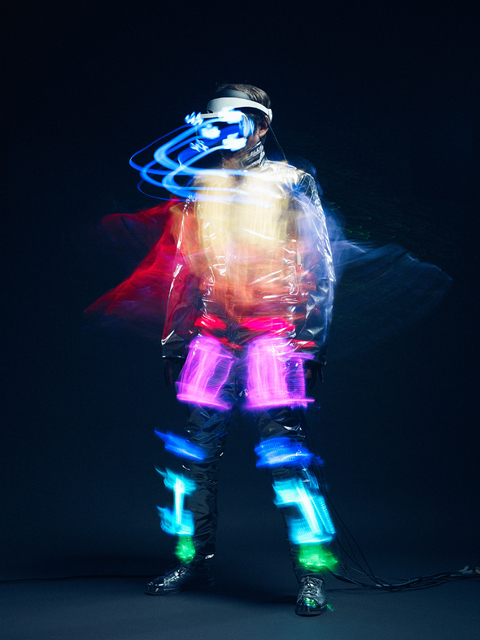
Other virtual reality standouts at Sundance include the Synesthesia Suit, a full-body exoskeleton-style suit with 26 sensors to provide as much sensation as possible while playing the video game “Rez Infinite” or experiencing the psychedelic sounds of “Crystal Vibes.”
In August 2014, Daniel Ashley Pierce recorded the audio of the verbal and physical abuse heaped on him by his conservative parents as they were kicking him out of the house because of his homosexuality. That audio is the soundtrack to “Out of Exile: Daniel’s Story,” which lets participants experience Daniel’s hurt and pain in 360 degrees.
And a three-hour wait accompanied “Tree,” a haptically enhanced virtual experience by artists Milica Zec and Winslow Porter that follows the life cycle of a rainforest tree.
“You start as a seed, you burst through the ground, and then all of a sudden when you start getting branches, you realize that your arms are branches,” Zec says. “You can move them, and your body’s a trunk. You get to witness what unfortunately way too many trees go through today in rainforests.”
See the full story here: http://www.reviewjournal.com/entertainment/columns/christopher-lawrence/virtual-reality-films-are-sundance-s-latest-sensation
Voxel Virtual Reality Parlour in St. Paul offers an eye-opening night out
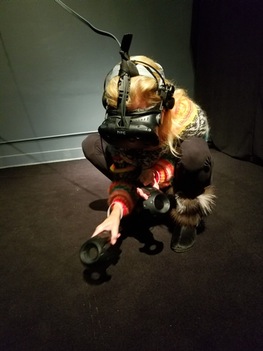 In October, he quietly opened the first virtual reality lounge in the Twin Cities. Voxel Virtual Reality Parlour also is among the first crop of such businesses around the country bringing the new technology to the masses.
The 1,500-square-foot space is in the same building as Lake Monster Brewing in St. Paul. It has three bays that patrons can rent out by the hour by themselves or with a group of friends. Each room can fit three to four people.