Augmented reality guides surgeons during spine and cranial surgery
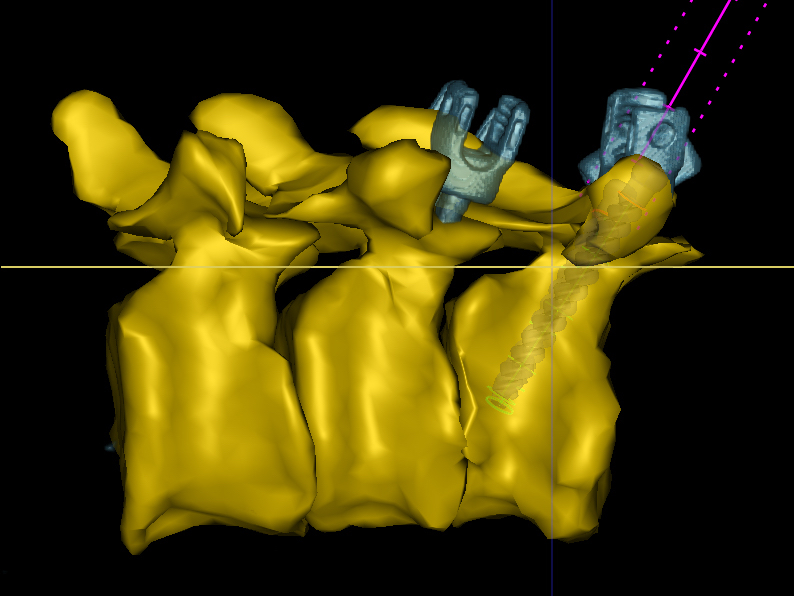
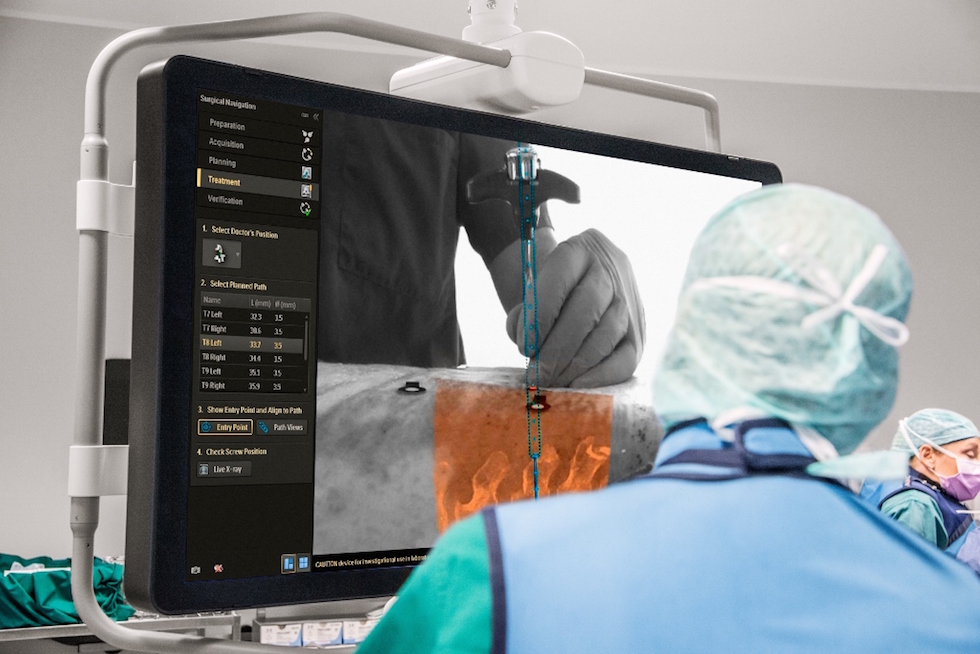 The system uses high-resolution optical cameras mounted on a flat-panel X-ray detector to image the surface of the patient. It then combines the external view captured by the cameras with the 3D internal view acquired by the X-ray system to create accurate real-time, augmented-reality images of the patient’s anatomy.
“We can make 3D acquisitions of the vertebrae of the spine, and show where they lie in the body, and we can also register what happens above the skin,” said Tabaksblat. “So now if the surgeon holds an instrument above the skin, we can show them a virtual path along which the instrument should be inserted into the body.”
The system generates different 3D views of the patient, from above and to the side, allowing the surgeon to align their instruments accurately before insertion.
The system has undergone pre-clinical trials in an experimental setting at Karolinska University Hospital in Stockholm, Sweden, and the Cincinnati Children’s Hospital Medical Center in the US. In the trials, which were recently published in the journal Spine, the technology was shown to improve the overall accuracy of screw placement from 64 per cent to 84 per cent.
See the full story here: https://www.theengineer.co.uk/augmented-reality-guides-surgeons-during-spine-cranial-and-trauma-surgery/
Scientists create 3D-printed objects that can change shape after they’re printed
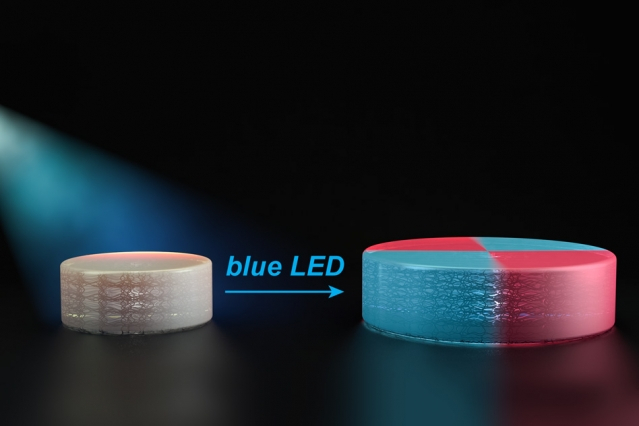 “The idea is that you could print a material and subsequently take that material and, using light, morph the material into something else, or grow the material further,” said Jeremiah Johnson, Associate Professor of Chemistry at MIT. Postdoc Mao Chen and graduate student Yuwei Gu led the research and wrote a paper on the findings.
The technique is called living polymerization and it creates “materials whose growth can be halted and then restarted later on,” according to the release.
The new technique uses “polymers with chemical groups that act like a folded up accordion.” When light hits the new materials they stretch out and change the material.
See the full story here: https://techcrunch.com/2017/01/16/scientists-create-3d-printed-objects-that-can-change-shape-after-theyre-printed/
IMAX VR Experience across from The Grove
After you fill out the Waiver form the site will let you buy tickets.

China’s Baidu opens augmented reality lab to boost waning profits

A sign of Baidu is seen during the third annual World Internet Conference in Wuzhen town of Jiaxing, Zhejiang province, China November 17, 2016. REUTERS/Aly Song
Chinese search engine Baidu Inc on Monday launched an augmented reality (AR) lab in Beijing as part of a $200 million effort to revitalize the company's shrinking profits with cutting edge technology.
The lab, which currently employs 55 people, will initially aim to drive revenue through AR marketing, though will later explore healthcare and education.
"AR marketing is taking off," Andrew Ng, the chief scientist overseeing Baidu's artificial intelligence (AI), augmented reality and deep learning projects, told Reuters.
AR technology is still going through a regulatory teething phase in China. While Pokemon Go is yet to launch there, location-based AR concepts have sprung up, drawing the ire of regulators who have refused to license some services over security concerns.
See the full story here: http://www.reuters.com/article/us-baidu-augmented-reality-idUSKBN1501I2
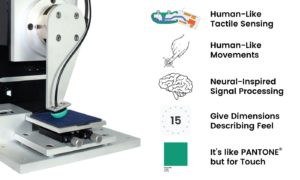
Syntouch – haptic texture measurements explained
 Macrotexture
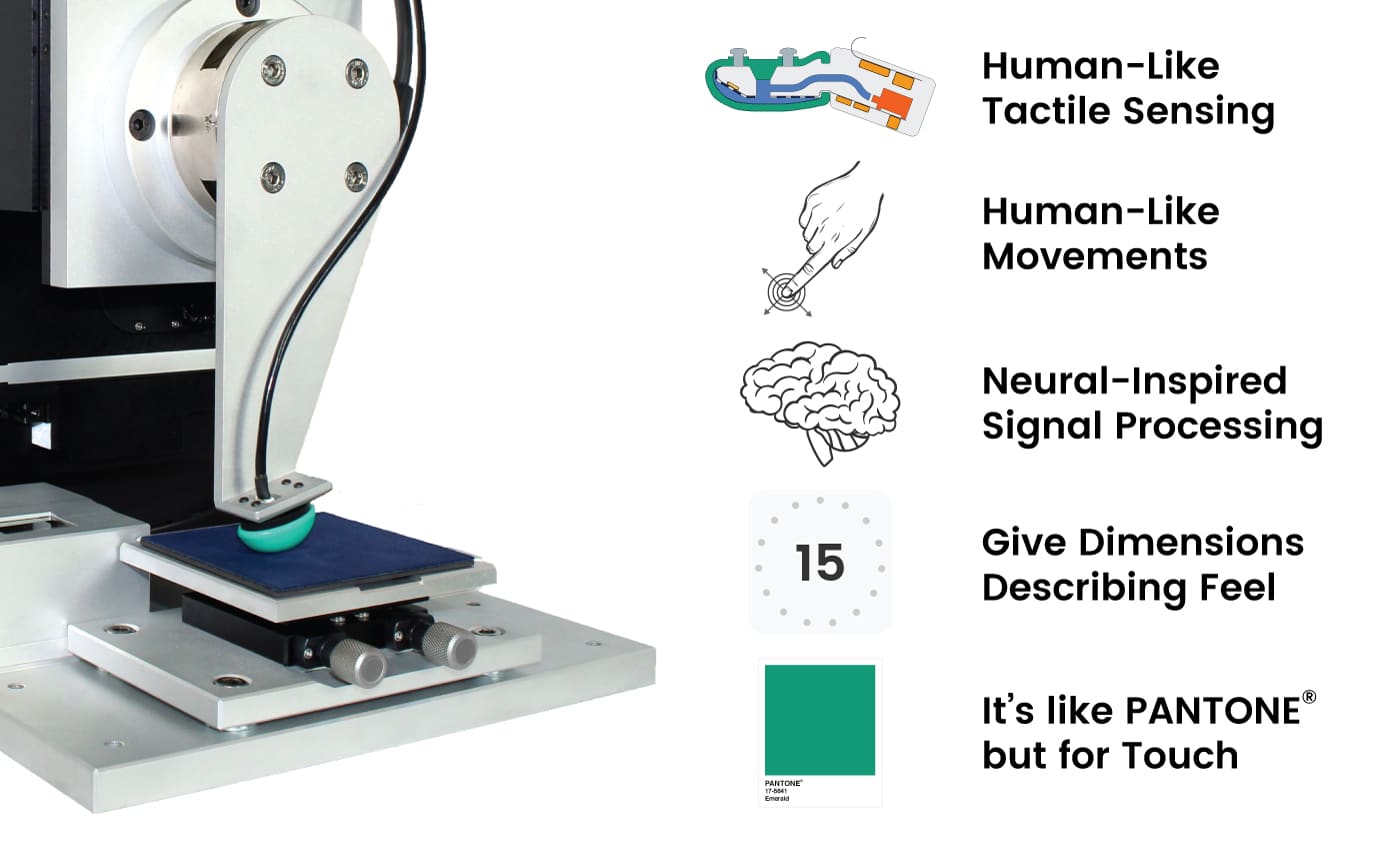
Macrotexture (mTX) – The intensity of large features (>1mm spacing) that creates the perception of texture ranging from smooth to textured.
Macrotexture Coarseness (mCO) – The perceived spacing of large features (>1mm spacing), ranging from fine to coarse.
Macrotexture Regularity (mRG) – The perceived uniformity of large features, ranging from random to regular.
Microtexture
Microtexture Roughness (uRO) – The intensity of small features (<1mm spacing) that creates the perception of roughness ranging from smooth to rough
Microtexture Coarseness (uCO) – The perceived spacing of small features (<1mm spacing), ranging from fine to coarse.
Friction
Tactile Stiction (fST) – The effort required to initiate sliding on a surface, ranging from low grip to high grip.
Sliding Resistance (fRS) – The effort required to continue sliding over a surface, ranging from slippery to resistive.
Compliance
Tactile Compliance (cCM) – The degree that a surface deforms under pressure, from rigid to compliant.
Local Deformation (cDF) – The degree to which the surface wraps around the fingertip when being deformed, ranging stays flat to high wrap.
Damping (cDP) – The speed that a surface returns to its original shape after being deformed, ranging from springy to damped.
Relaxation (cRX) – The degree to which a surface stops pushing back after being deformed, ranging from maintains force to relaxes.
Yielding (cYD) – The degree to which a surface remains deformed after being pressed, ranging from recovers shape to stays deformed.
Thermal
Thermal Cooling (tCO) – The initial rate that a surface draws heat from the fingertip, ranging from warm to cool.
Thermal Persistence (tPR) – The extent that a surface continues to draw heat from the fingertip, ranging from transient cooling to sustained cooling.
Adhesive
Adhesive Tack (aTK) – The effort required to break contact with a surface, ranging from no adhesion to sticky.
See the full post here: https://www.syntouchinc.com/biomimetic-process/
Corporations Are Adopting AI, Startup Debuts AI-Based Video
 Founder Justin Fuisz says the video technology company will “help marketers pull together video shot by teams on the ground at live events and use that content to populate their various social media feeds.”
Fuisz describes how a brand could send “a group of social media executives” — who don’t need to be professional videographers — to, say, the Super Bowl, where they “shoot lots of footage on their phones using Octi’s app.” Octi’s editing filter will choose the desired clips that can “instantly be woven together in a narrative form,” similar to Snapchat or Instagram Stories. Then, with a digital dashboard, the user can “quickly push the videos out to social media platforms like Facebook and Twitter.”
See the full story here: http://www.etcentric.org/corporations-are-adopting-ai-startup-debuts-ai-based-video/
Death to the dashboard: AR windscreens in cars could make driving safer and easier
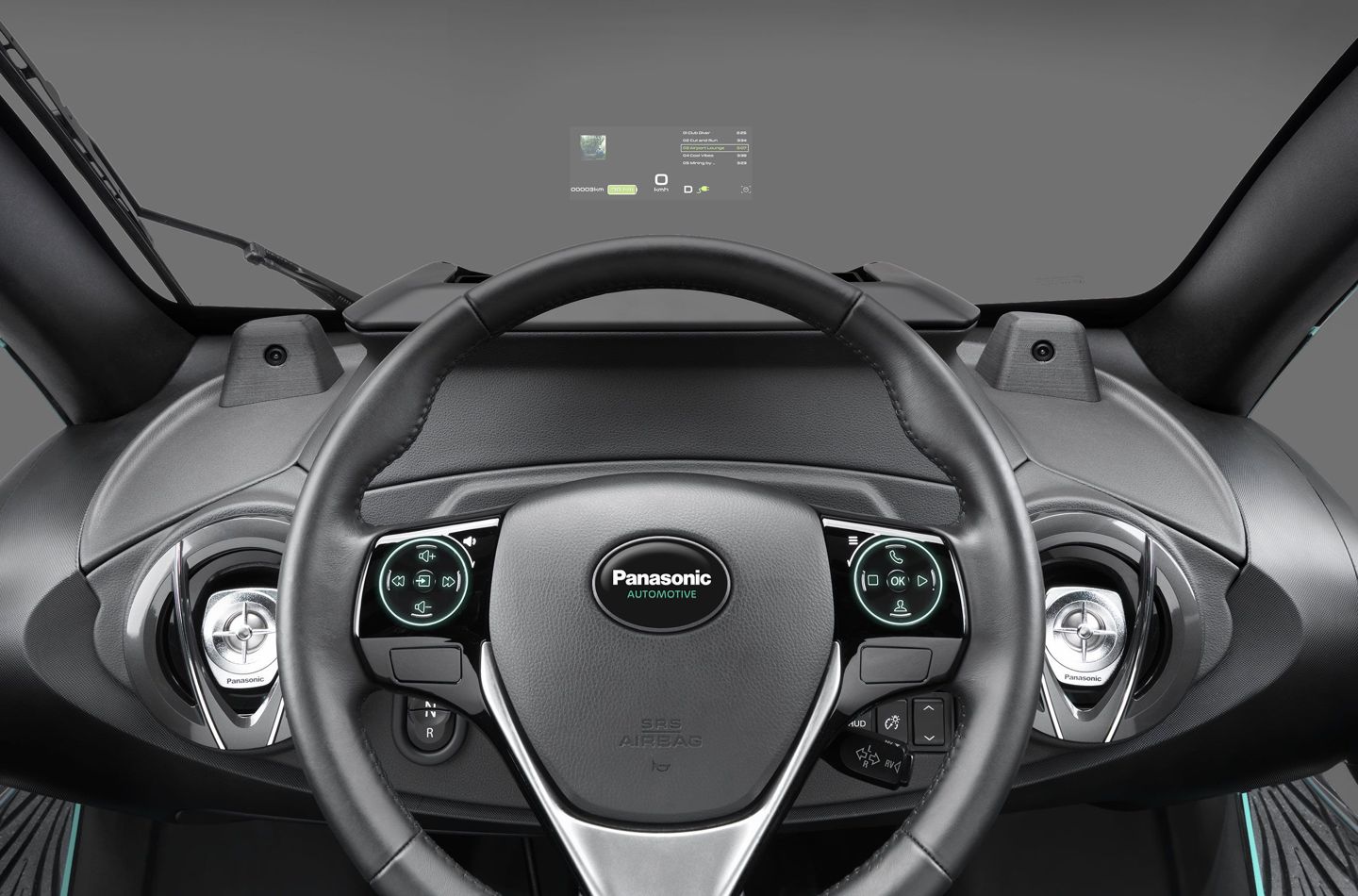 The adapted vehicle has been developed by Panasonic to include an augmented reality heads-up display. Taking six weeks for engineers to alter, the car is able to automatically adapt its screen view to the size and position of the driver.
In particular, it is able to identify objects in front of it using a range of inbuilt cameras. It then highlights them to the driver. A car changing lanes has a line appear under it showing movement and pedestrians can be highlighted, for example.
The two in-car cameras monitor the driver's position within their vehicleand adjust the on-screen display so it is at the same position as the driver's eyes.
The car made its debut at CES in Las Vegas earlier this month.
CES 2017 – Vuzix Blade 3000 smart AR glasses
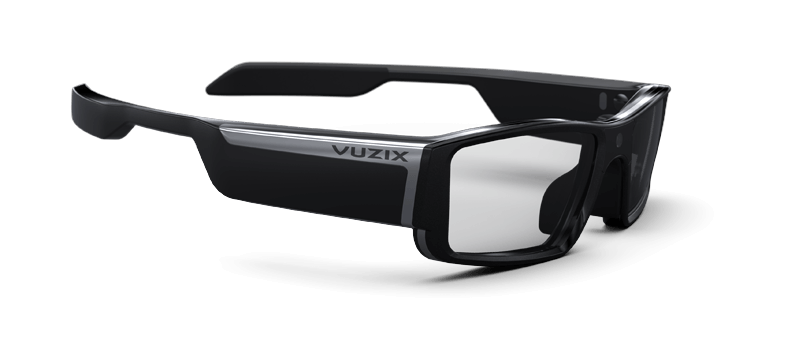 One product that made a splash with both Wired and Barron's are augmented/virtual reality glasses from Vuzix (NASDAQ:VUZI). Both respected magazines came away from the technology show touting Vuzix’s Blade 3000 Smart Sunglasses product as the class of its field.
The appeal of the Vuzix product according to Wired and Barron’s is its combination of functionality and style. The Blade 3000 runs Android with integrated video and AR overlays, which allows for users to have cloud-connected information and entertainment everywhere.
While the Blade 3000 Smart Sunglasses are going to appeal to the retail early adopter, it is the Vuzix M3000 Smart Glasses for commercial use that are what will appeal to the investor. There is little doubt that commercial smart glasses are about to become big business.
See the full story here: https://www.equities.com/news/the-coolest-thing-to-come-out-of-ces-2017-is-attached-to-an-interesting-business