Niantic Is Working On More Augmented Reality Projects
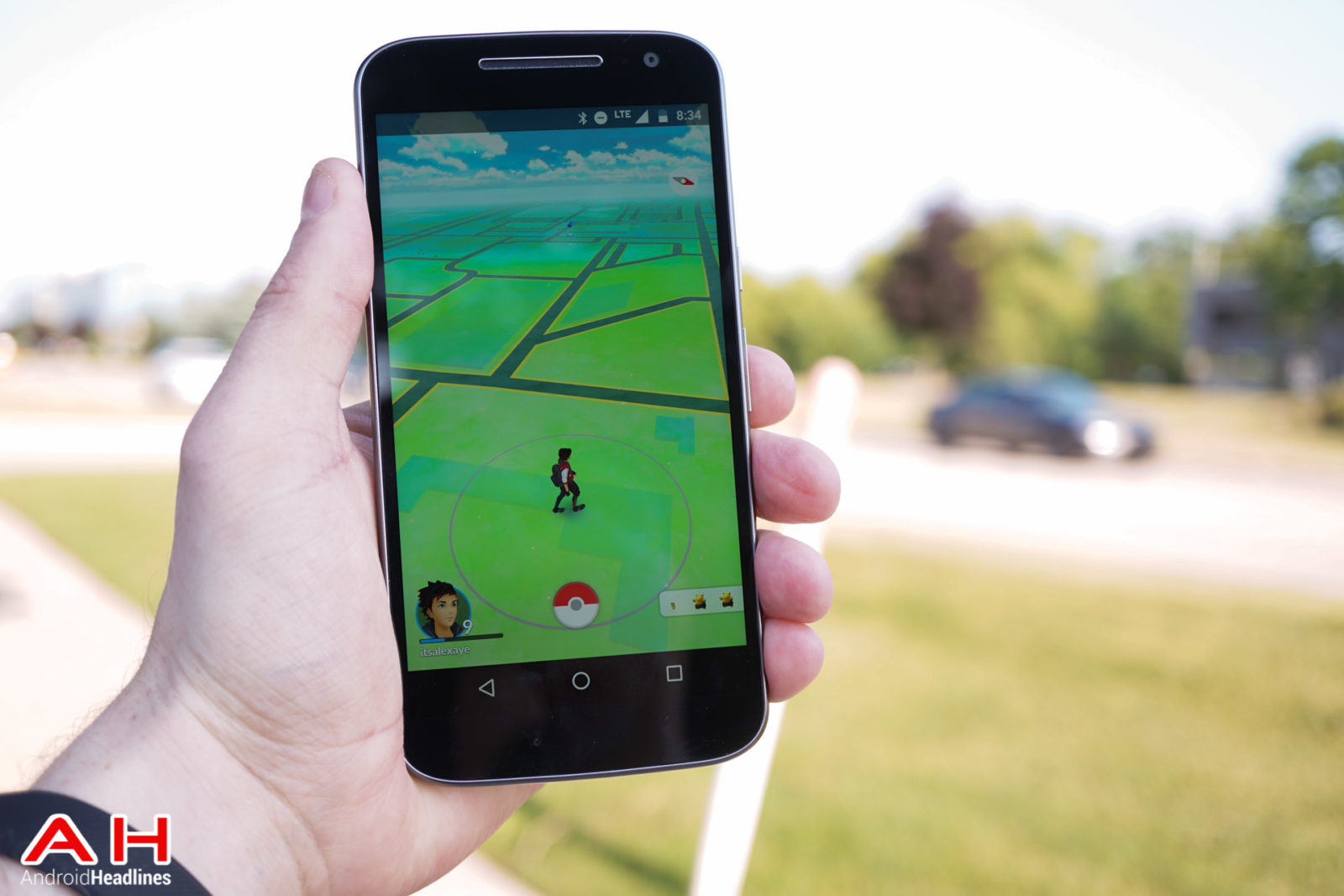 According to John Hanke in the recent interview, Niantic’s strategy has always been to create “a platform underneath a game that can be used for other games, and frankly other experiences that may not exactly be games, but are still within that area of exercise, discovery, and social interaction.”
“The Niantic platform is very much a part of our long-term vision”, said CEO John Hanke, revealing that the company has “some projects that are in the early stages” projects that will apparently be built on top of the so-called Niantic platform.
See the full story here: http://www.androidheadlines.com/2016/09/niantic-working-augmented-reality-projects.html
Electronic empathy: meet the next wave of virtual reality
 “Experiential marketing is about intimacy at scale,” says Jason Alan Snyder, chief technology officer at Momentum Worldwide. “The danger for brands is that the algorithms we increasingly use are pushing us into ever-narrowing information silos and connecting us with tribes of people we agree with. Empathy is about understanding different perspectives and VR can alter perceptions. My hope is to leverage VR into a connective tissue by creating empathetic groups.”
How long will it be before we can touch what we see in AR...
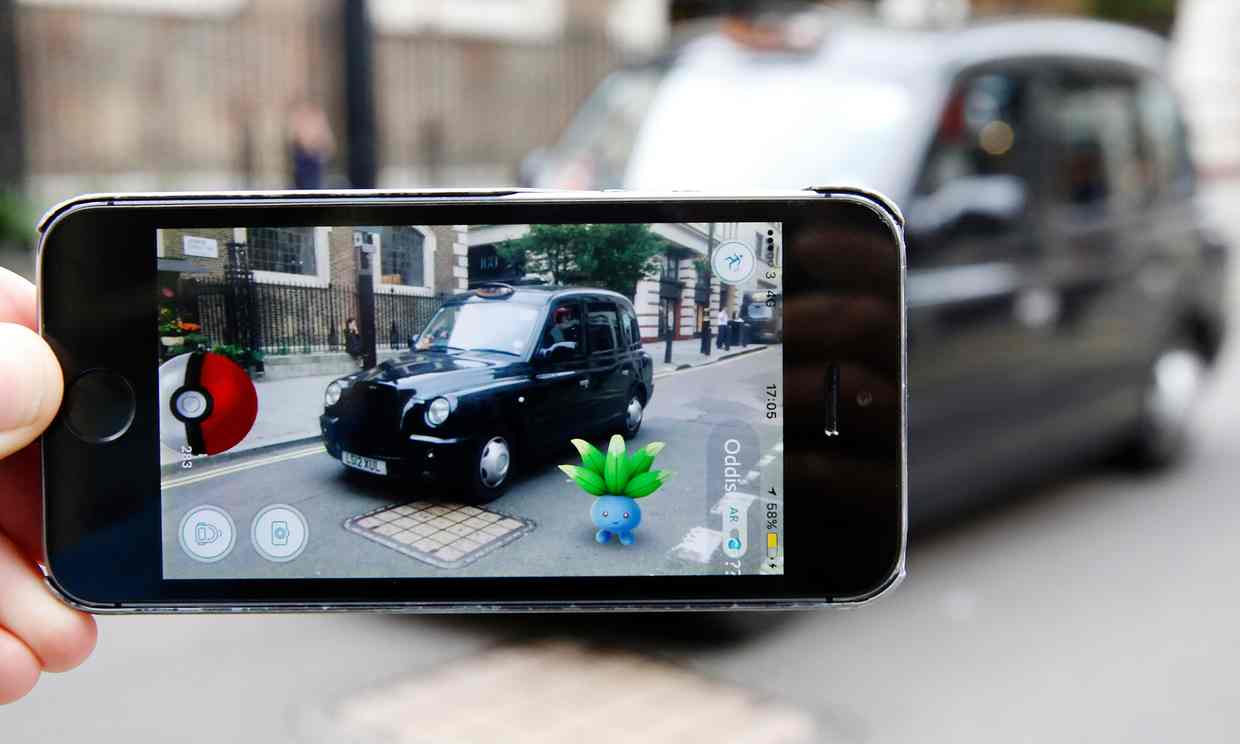
Davis uses video to virtualise physical content so that it can interact with virtual content, so that when you see – on your smartphone – a Pokémon interact with a flexible object, you also see that object react.
“We are still some way from producing real-time dynamic AR, which conveys reactions and behaviours as well as experiences and interactions.”
A recent Virtual Futures Salon highlighted that electronic empathy is about emotional involvement and does not require hyper-realism. “The key is to establish an emotional connection between the consumer and the experience – it is not about the technology,” says Los Angeles based digital content adviser Scott Nocas,...
“Empathy is about discovering things that we share and engage with emotionally,” says Snyder. “Immersive technology needs to focus on connecting humans to humans in a profound way. It can change people’s perceptions, and if used properly it has the potential to change the world.”
See the full story here: https://www.theguardian.com/media-network/2016/sep/08/electronic-empathy-virtual-reality-pokemon-go-oculus
Gartner’s 2016 Hype Cycle for Emerging Technologies Identifies Three Key Trends That Organizations Must Track to Gain Competitive Advantage
 Key Technology Trends
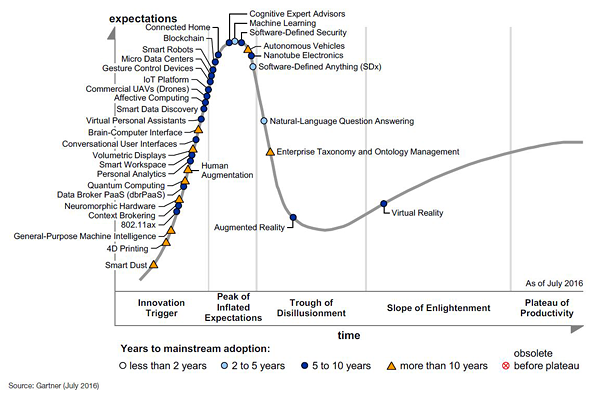
Transparently immersive experiences: Technology will continue to become more human-centric to the point where it will introduce transparency between people, businesses and things. This relationship will become much more entwined as the evolution of technology becomes more adaptive, contextual and fluid within the workplace, at home, and interacting with businesses and other people.
Critical technologies to be considered include 4D Printing, Brain-Computer Interface, Human Augmentation, Volumetric Displays, Affective Computing, Connected Home, Nanotube Electronics, Augmented Reality, Virtual Reality and Gesture Control Devices.
The perceptual smart machine age: Smart machine technologies will be the most disruptive class of technologies over the next 10 years due to radical computational power, near-endless amounts of data, and unprecedented advances in deep neural networks that will allow organizations with smart machine technologies to harness data in order to adapt to new situations and solve problems that no one has encountered previously. Enterprises that are seeking leverage in this theme should consider the following technologies: Smart Dust, Machine Learning, Virtual Personal Assistants, Cognitive Expert Advisors, Smart Data Discovery, Smart Workspace, Conversational User Interfaces, Smart Robots, Commercial UAVs (Drones), Autonomous Vehicles, Natural-Language Question Answering, Personal Analytics, Enterprise Taxonomy and Ontology Management, Data Broker PaaS (dbrPaaS), and Context Brokering.
The platform revolution: Emerging technologies are revolutionizing the concepts of how platforms are defined and used. The shift from technical infrastructure to ecosystem-enabling platforms is laying the foundations for entirely new business models that are forming the bridge between humans and technology. Within these dynamic ecosystems, organizations must proactively understand and redefine their strategy to create platform-based business models, and to exploit internal and external algorithms in order to generate value. Key platform-enabling technologies to track include Neuromorphic Hardware, Quantum Computing, Blockchain, IoT Platform, Software-Defined Security and Software-Defined Anything (SDx).
See the full story here: http://www.gartner.com/newsroom/id/3412017
Round VR walking rugs
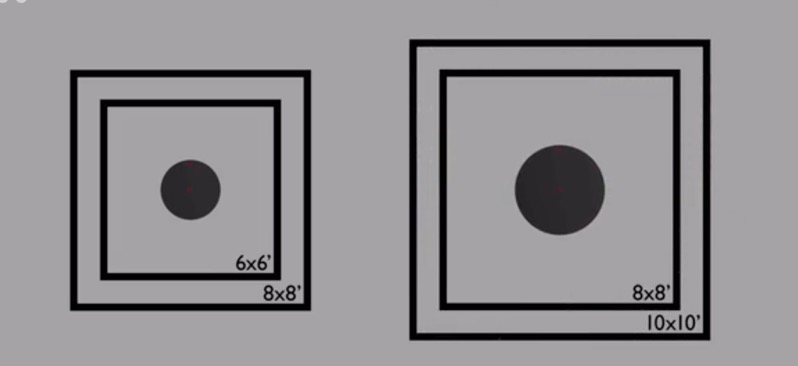 [Philip Lelyveld comment - round rugs are standard for good VR walking experiences. This company is creating premium round rugs designed for VR.]
...24″ and 36″ diameter mat were perfect for standard room sizes. The definable safety zone is considerably larger than the diameter of the mat because it is designed to allow for 1 foot on and one foot off when stepping away from the center of the mat.
The next step was to create a more definable center of the mat which we call the “Home” locator, this was accomplished by using a harder rubber that is taller than the matting itself without creating a catch point or something that could hurt you if you stepped down on it. The choice was a translucent red urethane for the black mat and a translucent blue urethane for the gray mat which were chosen for aesthetics and how well they worked. We are looking at alternatives for the buttons on the final production.
See the full story here: http://www.geeky-gadgets.com/virtual-reality-spatial-proximity-mat-05-09-2016/
Venice Film Festival – VR Theatre
[Philip Lelyveld comment; this image of a VR theatre is less than inspiring.]
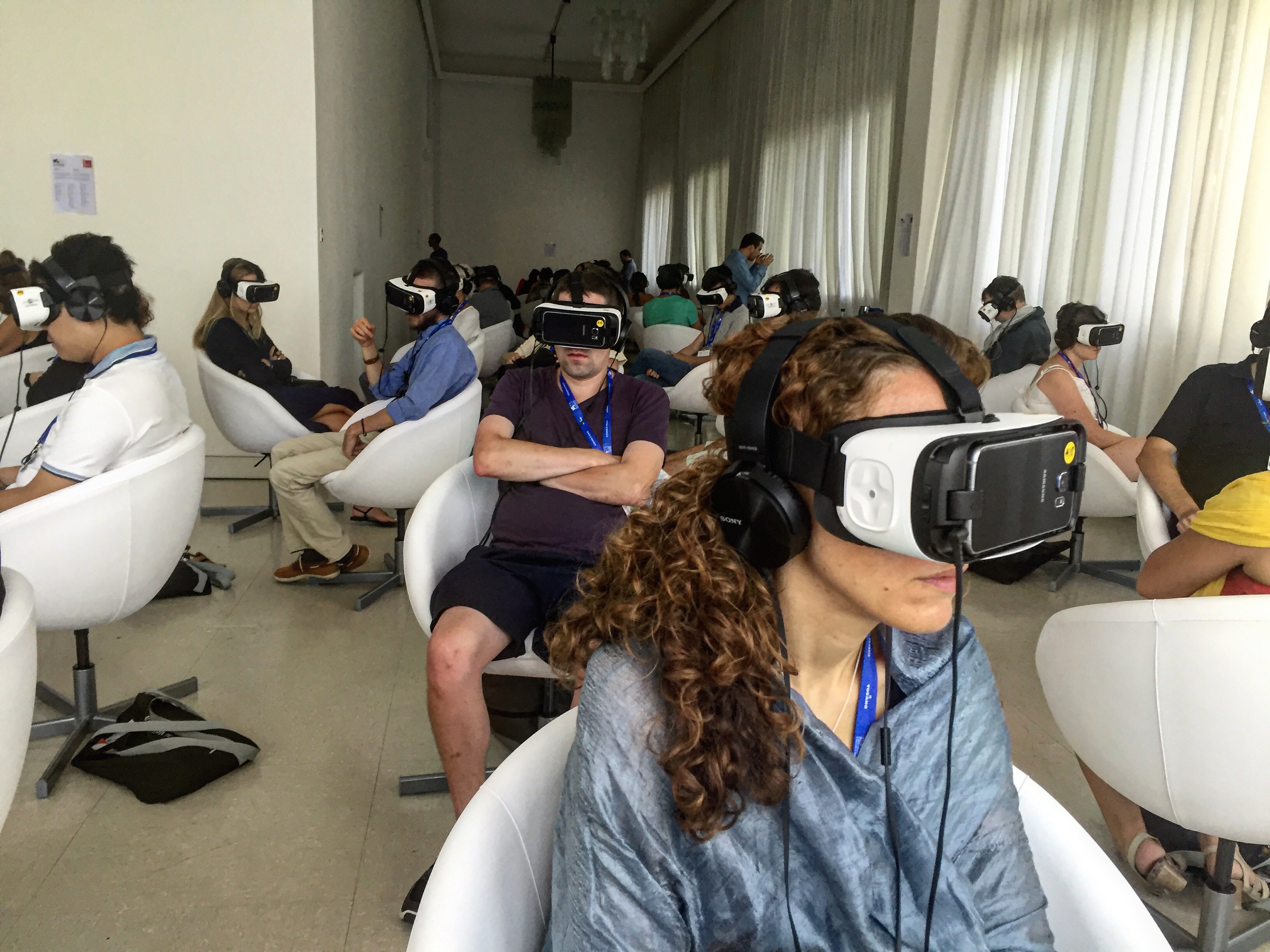 See the full story here: http://www.goldenglobes.com/articles/vr-jesus-venice-virtual-reality-cinema’s-second-coming
Auckland VR/AR center – NZ opens international virtual reality hub
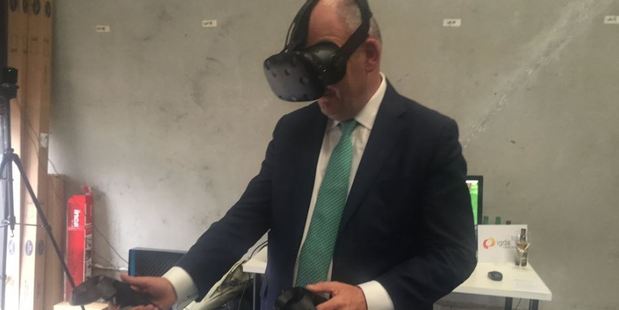 One of New Zealand's rapidly developing industries, augmented and virtual reality, has found a home in Auckland's city fringe.
In a spacey warehouse on Eden Terrace, the augmented reality/virtual reality "AR/VR Garage" has been set up, with rooms full of headgear, consoles, screens and space to play.
The building will be a hub for technology companies and individuals looking to create projects using the equipment, and is part of Auckland Councils GridAKL innovation precinct. The council has invested an initial $20 million across ten years for the precinct.
The AR/VR Garage is part of a global group, the VR Society, and will be the Oceania base for the organisation. The Society last year secured more than US$170 million for its global members.
See the full story here: http://www.nzherald.co.nz/business/news/article.cfm?c_id=3&objectid=11704612
Intel snaps up Movidius to create future computer vision, VR tech
The deal could push Intel further into next-generation technologies including VR, drones and artificial intelligence.
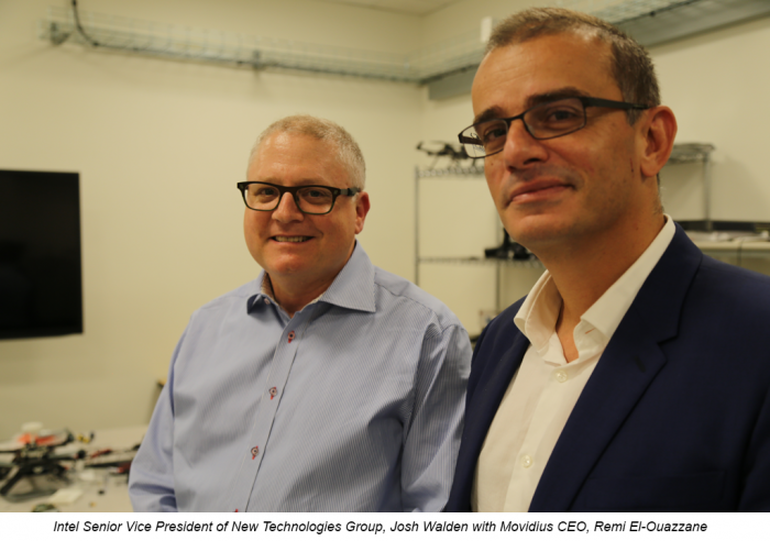 Remi El-Ouazzane, CEO of Movidius said in a blog post that Movidius will continue to focus on the "mission to give the power of sight to machines," but the deal will give the firm's development teams more resources to boost research and execute at scale.
The executive also revealed that Movidius has recently begun to focus on granting "sight" to low-power hardware, a complex task considering the use of sophisticated algorithms at the device level. At Intel, this challenge will continue, but cloud computing and networking will also be included in the project.
See the full story here: http://www.zdnet.com/article/intel-snaps-up-movidius-to-create-future-computer-vision-virtual-reality/
Halloween Haunt now admitting patients to a virtual reality mental hospital
 Part of a wave of virtual reality experiences sweeping theme parks this year, Fear VR: 5150 will be available during Halloween Haunt on select nights in September and October at Knott’s in Buena Park, California’s Great America in Santa Clara and Canada’s Wonderland outside Toronto. The 5150 attraction takes its name from the California police code for a mentally ill person who is a danger to himself or others.
I got a sneak peek at 5150 last week at Knott’s and found the five-minute VR experience immersive, captivating and scary.
... visitors are strapped into a wheelchair...
The Knott’s creative team, with technical assistance from Simi Valley-based Hollow Studios, shot the VR images for 5150 during three days of work at an Orange County college movie studio.
See the full story here: http://www.latimes.com/travel/themeparks/la-tr-halloween-haunt-virtual-reality-5150-20160905-snap-story.html