Enterprise augmented reality: AR applications are just around the bend
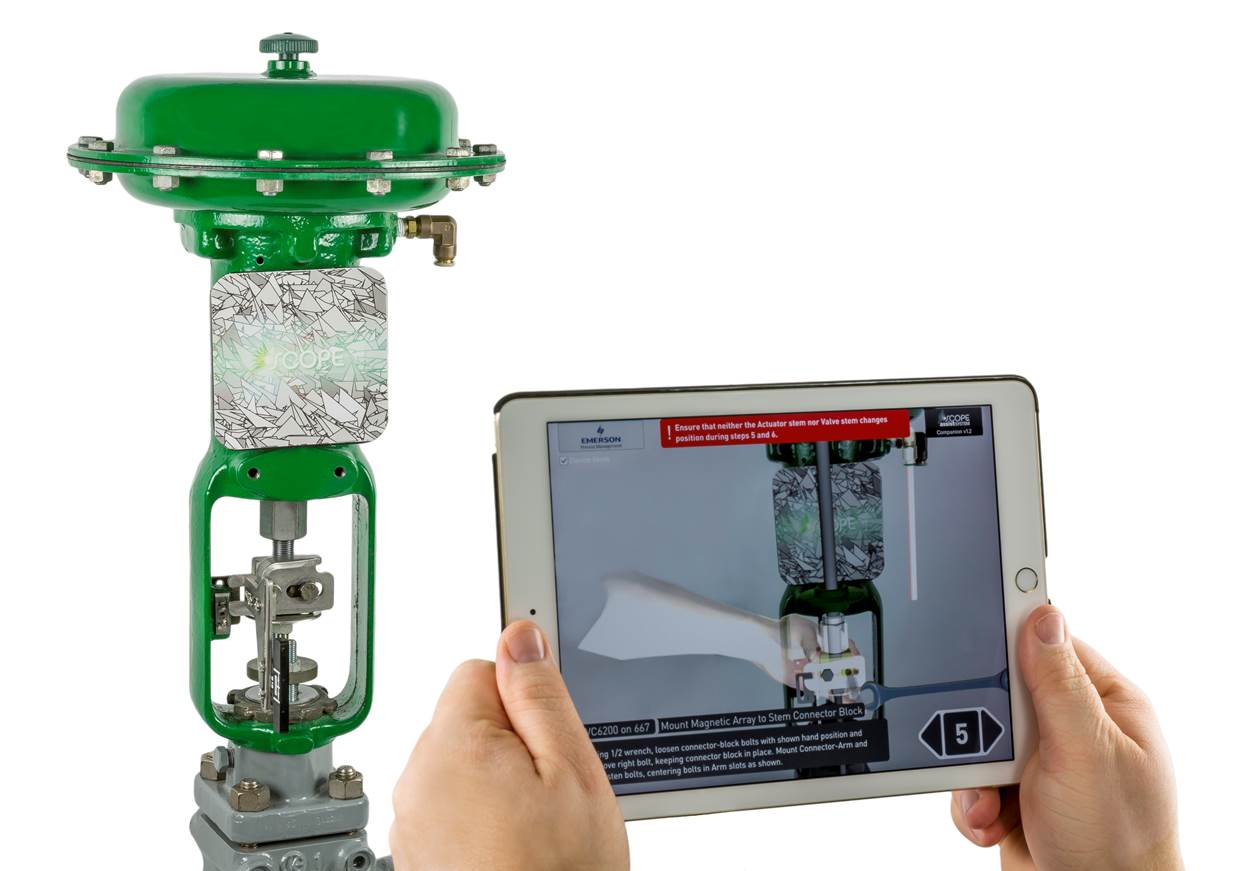 Developed with PTC's Vuforia AR platform, one shipbuilding application helps workers identify and remove temporary steel -- the steel that helps hold ship parts together during construction but is not needed when construction is complete.
Such inspection applications tend to require that workers' hands be free.
"One of the groundbreaking tools we are working on is augmented reality, allowing us to superimpose a 3D computer model onto a real world object in real time," said Richard Ritter, instructional designer at Emerson Process Management, in an email exchange.
In the retail industry, merchants are giving their customers new perspectives on the wares they offer. For example:
- Canadian Tire's WOW Guide is a 200-page printed shopping catalog that enables customers to gain additional information, including videos and reviews, by hovering a smartphone over a product image. Canadian Tire calls the technology "Phygital" a combination of physical and digital.
- Wayfair, an online retailer of home furnishings and décor, offers WayfairView. The smartphone-based app is downloadable from Google Play and enables shoppers to superimpose furniture images on the spaces in their homes. It is intended to work with the Lenovo Phab 2 Pro smartphone running Google's Tango AR technology.
- Lowe's Holoroom lets customers design projects, such as a kitchen or bathroom, and view the layout in a YouTube360 video. Holoroom VR technology runs on Facebook's Oculus Rift or Google Cardboard, and AR version for the Apple iPad is in the works.
Whatever the industry, a common theme is emerging for AR strategy: Start with widely-used smartphone and tablet devices and build from there, adding headset technology when it is ready for the mainstream.
See the full story here: http://searchcio.techtarget.com/feature/Enterprise-augmented-reality-AR-applications-are-just-around-the-bend
What does Pokemon Go mean for the supply chain of the future?
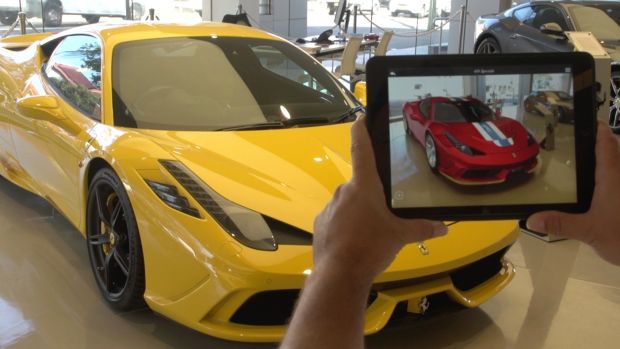 A good way to think about how augmented reality will transform the supply chain is to apply the way ridesharing service Uber allows users to view where a driver is on a map to a business context.
As soon as a ride is booked, users can follow the car from its departure point to its destination. A more advanced version of this technology, drawing on these augmented reality tools, will soon help power optimised supply chains, allowing businesses to view all the supply chain's moving parts, giving them the ability to know exactly where their goods are in real time.
Augmented reality is only one of the emerging technologies that will underpin the supply chain of the future. Other new practices such as radio frequency identification (RFID), which uses minuscule computer chips to track items, are also critical.
Another tool that will transform the supply chain of the future is additive manufacturing, which is the industrial application of 3D printing.
The ultimate benefit of these technologies is better inventory management, which means improved profits down the track. "The supply chain revolves around inventory; having the right stock in the right place at the right time is fundamental," Lorge said.
See the full story here: http://www.smh.com.au/business/innovation/what-does-pokemon-go-mean-for-the-supply-chain-of-the-future-20160829-gr3s3s.html
What Does The Future Of Augmented Reality Look Like For Marketers?

External App Experiences
First, there’s the possibility of external app experiences, using an augmented reality app as some means of promotion for a company. For example, your company could design an app to be used by your audience as a way to increase brand awareness.
As an alternative, you could also simply advertise your business in an augmented reality app that’s already popular, or harness the power of an app that already exists.
Bridging the Physical and Digital
You could also use augmented reality the way it was intended to be used—to bridge the gap between our physical and digital realities. There’ s no limit to the possibilities here, since marketers have barely scratched the surface, but these are just a few ways your business could take advantage of it in the near future:
- Coupons, discounts, and offers.
- Searches and trials.
- Seamless experiences.
Interactive Ads
Augmented reality could also be used to create more interactive ads; QR codes are already capable of this to some degree, allowing audiences to connect with physical items in some digital way, such as playing a video.
Avoiding Gimmicks
Beyond Augmented Reality
As a marketer, keep your eyes forward and focused on the next new technological development; the better prepared you are for those coming changes, the further ahead of the competition you’ll be.
See the full story here: http://www.forbes.com/sites/jaysondemers/2016/08/31/what-does-the-future-of-augmented-reality-look-like-for-marketers/2/#7011c3281cf1
Rauch introduces augmented reality app
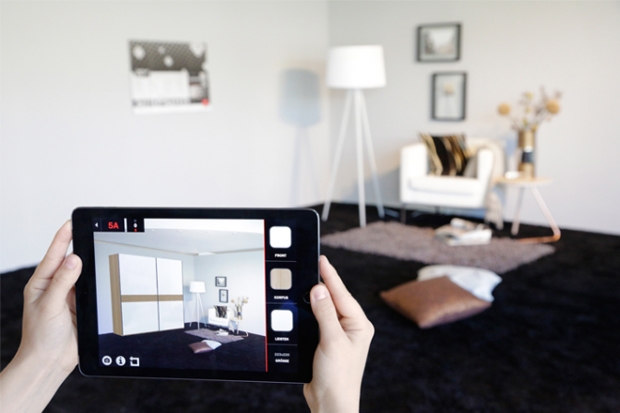 German bedroom furniture manufacturer Rauch has developed a Configurator app, which employs augmented reality (AR) technology to help customers decide upon a purchase by electronically visualising how the furntiure will fit into their homes.
According to Rauch, these apps are particularly useful for furniture offering various configuration options, such as the 20up wardrobe system in its Steffen range, which displays the various front designs, doors, colours and sizes of wardrobe.
See the full story here: http://www.furniturenews.net/news/articles/2016/08/871917015-rauch-introduces-augmented-reality-app
Why Facebook’s Oculus Team Had to Rebuild Some of Its Virtual Reality Software

BERLIN, GERMANY - FEBRUARY 24: A woman puts on the Head-Mounted Display Oculus Rift on February 24, 2016 in Berlin, Germany. Facebook presented its Innovation Hub where new technology and ideas were shown. (Photo by Florian Gaertner/Photothek via Getty Images)
Speaking at Facebook’s annual engineering conference on Wednesday in San Jose, Oculus software engineer Khoi Nguyen described the challenges of making a new technology user-friendly.
The original Oculus home screen, which he said was slow and cobbled together, was rebuilt from scratch to ensure everything would run as smoothly as possible. The interface’s design didn’t necessary put off users, Nguyen explained, but rather it was the software plumbing that needed a serious overhaul.
It took seven months to rebuild Oculus Home, which was ready on Nguyen’s birthday, March 16, 2016. The rewritten software makes problems easier to diagnose and fix, he said, and he’s “confident I can jump into any file and know what is going on.”
See the full story here: http://fortune.com/2016/08/31/facebook-oculus-rebuild-virtual-reality-software/
Smashbox Cosmetics takes the virtual reality plunge
 [Philip Lelyveld comment: this photo shows the HypeVR rig, but there is no mention of it in the story.]
“A lot of beauty brands are adopting the behind-the-scenes approach, but it’s not as authentic as the place we come from,” she said. “We were literally born out of the studio.”
The 3 minute-long video highlights the studio, its technology and the brand’s products. It starts off with founder and photographer Davis Factor bursting into the entrance of the studio with Lori Taylor Davis, the brand’s global lead makeup artist.
Factor then takes a backseat as Davis leads the rest of the tour. She takes viewers on a quick round of the rooms that make up the studio, from the versatile “Bigbox” studio to the “Lightbox” studio, for shoots requiring ample natural light. The scene then shifts to three behind-the-scenes photo shoots, where Davis finishes applying some final touches for a few models before they strut into action. The video includes some of the brand’s bestselling products, including its Photo Finish foundation primer and its Studio Skin foundation.
The virtual tour is the next step in Smashbox’s attempt to elevate its digital marketing, said Chien. Unlike most beauty brands, Smashbox does not do print advertising....: Its 2013 Webby-winning “Love Me” campaign, for example, invited fans to express what “Love Me” meant to them on Facebook, which were then projected live on a digital billboard over Hollywood Boulevard during the week of the Oscars.
See the full story here: http://www.glossy.co/store-of-the-future/smashbox-cosmetics-takes-the-virtual-reality-plunge
Weeview Eye-Plug Transforms Your Smart Phone Into Your Personal 3D VR Camera Lens
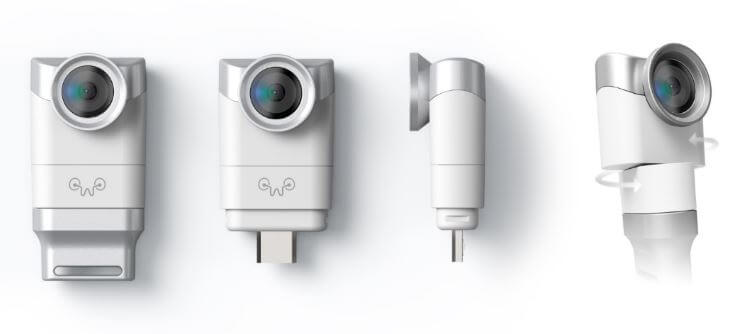 Key features
Capture your story in 3D, and share it with your friends and family anywhere, anytime.
- Easy Viewing: After you’ve captured your video using the Eye-Plug 3D app, relive your moments in 3D with any 3D Viewer. Record your 3D videos to share with your friends.
- Photo Editor App: The App allows you to adjust your point of focus or control background blur after the fact to achieve the creamy bokeh effect, just like high F-stop lens cameras, or get creative with our unlimited filters.
- Simple & Compact: Plug the Eye-Plug into your Android phone and you are ready to shoot, anywhere, anytime.
Specifications
- Dimension 20mm x 39mm x 13 mm
- Weight: 6 grams
- Lens Construction: 4 elements (3 plastic + 1 filter)
- Object Distance: 0.9mm to infinity
- F-stop: F/2
- Field of View: 75.7 degrees
- Pixel Array: 1280×720 (HD)
- Optical Format: ⅕”
- Resolution: HD 30fps / Output Format: JPEG/MP4 (30fps)
- Operating System: Android 4.4 or higher
- Interface: Micro USB
- Power: via Micro USB
- Material: ABS + PC
- Aperture: 2.0
How it works
Three simple steps:
- Attach the Eye-Plug to the micro-USB connector on your Android device.
- Launch the Eye-Plug 3D app to capture your moments in 3D.
- Watch your creation with any compatible VR Viewer, edit your moments and share them with a touch of a button.
See the full story here: https://virtualrealityreporter.com/weeview-eye-plug-transform-your-phone-into-your-personal-3d-vr-camera/
Crazy Camera Rig Captures Volumetric VR Video with 14 Cameras and LiDAR
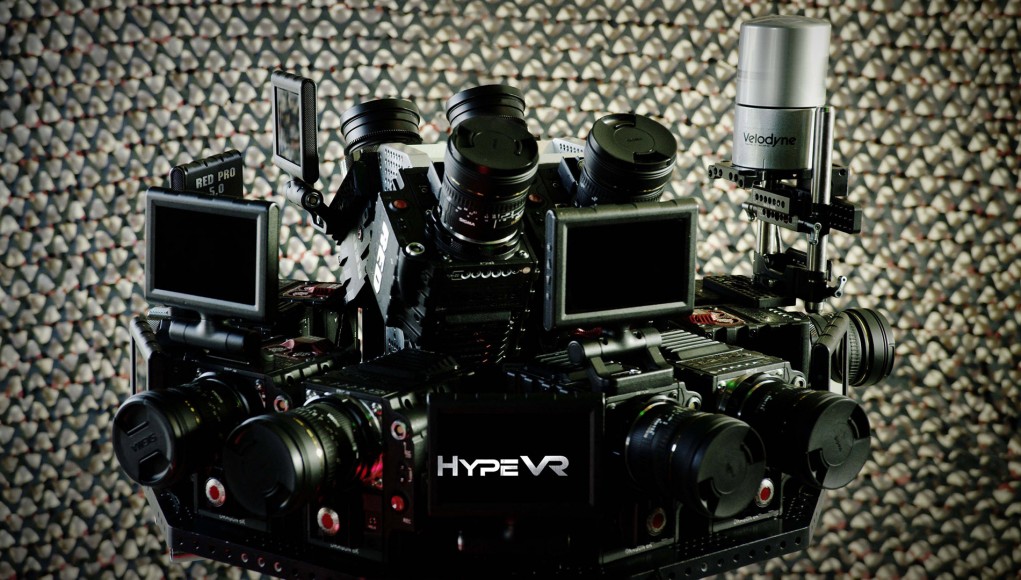 [Philip Lelyveld comment; after a long period in stealth mode, HypeVR is finally showing something.]
HypeVR is working to bring live-action volumetric 360 video to VR. The company’s crazy camera rig, built to capture the necessary data, is a mashup of high-end cameras and laser scanning tech.
HypeVR recently shot a brief demonstration of the output of their rig, which they say can capture ‘volumetric’ VR video that allows users to move around in a limited space within the video, similar to Lytro’s Light field capture which we saw the other day.
Fortunately, HypeVR says that this massive camera platform is not the only option for capturing volumetric VR video. The company’s purportedly patent pending capture method is camera agnostic, and can be applied to smaller and more affordable rigs, which HypeVR says are in development.
See the full story here: http://www.roadtovr.com/crazy-camera-rig-captures-volumetric-vr-video-with-14-cameras-and-lidar/
Qualcomm announces an ambitious, risky all-in-one VR headset
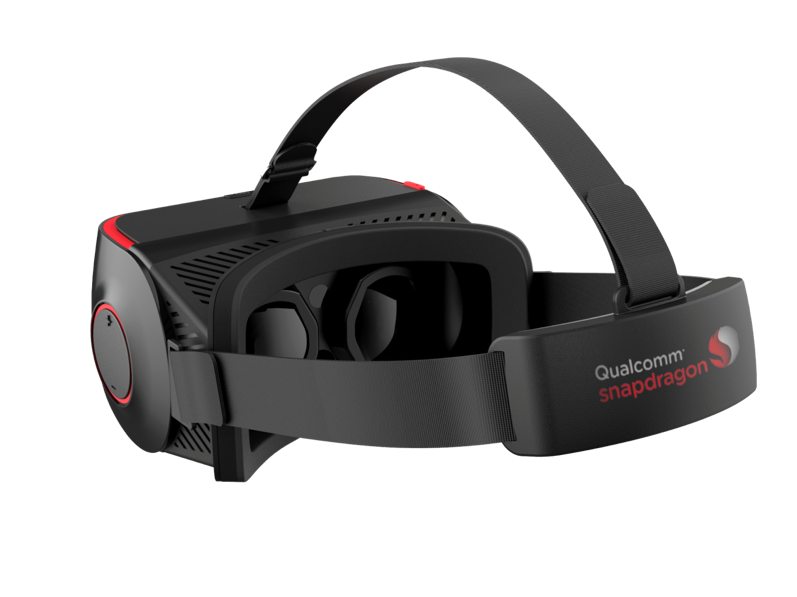 Chip maker Qualcomm has revealed a reference platform for a standalone virtual reality headset, which it’s calling the Snapdragon VR820. The VR820 was created in partnership with Chinese electronics company Goertek, built on Qualcomm’s Snapdragon 820 mobile processor and software development kit. Qualcomm says the headset can be quickly adapted into a product by other companies, despite promising features that remain cutting-edge for virtual reality — like a self-contained form factor and "inside out" tracking that can measure head position without external cameras or feedback systems. The VR820 is supposed to be available by the end of 2016, with commercial devices based on it coming out "shortly thereafter."
Perhaps most notably, the headset is supposed to have "inside-out" tracking capabilities, using cameras mounted on the device to track head motion instead of relying on external sensor systems. Inside-out VR tracking is theoretically achievable, but it’s rarely been spotted in a workable state, especially on a headset that’s supposed to be so close to release.
It’s hard to say exactly what a commercial version of the VR820 would look like, though, and where it would be sold.
See the full story here; http://www.theverge.com/2016/9/1/12734482/qualcomm-snapdragon-vr820-virtual-reality-standalone-headset
When Technology Sets Off a Populist Revolt
[Philip Lelyeld comment - Wow! This is phase 2 of the so-called sharing economy. Now that a few have captured huge chucks of wealth by convincing millions that they are adequately compensated independent contractors, let's protect these 'special' disrupter elites so the general population doesn't rise up against them.]
 ...how to create the conditions in which a minority of hyperproductive people can do their work.
a new social contract, in which an undisrupted few assume new obligations to the disrupted many, in order to be freed to go back to their disruptive works.
“To put it crudely, it’s bribing the population to be well-enough-off,” Mr. Khosla said. “Otherwise, they’ll work for changing the system.”
See the full story here: http://www.nytimes.com/2016/08/30/us/vinod-khosla-silicon-valley-disruption.html?_r=0