Augmented Reality System Lets User “Be the OS”
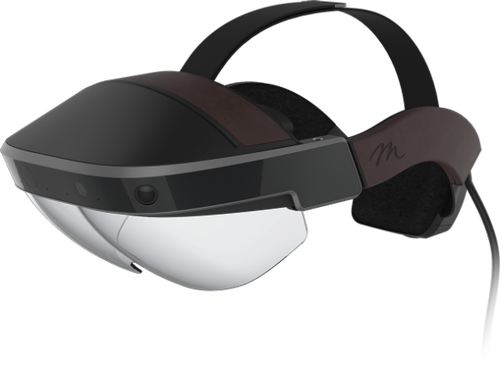 At 3:35 in the video, Dr. Adam Gazzaley at his lab at UCSF accesses, manipulates and shares 3D digital holographic information in an intuitive way using natural hand gestures. He developed his “glass brain project” using the neuroscience-driven interface of Meta’s Meta 2 Development Kit.
“Our mission is to take AR to the next level by bringing together displays, embedded systems, optics, sensors, computer vision and SLAM (simultaneous location and mapping), and then pack all these advanced techniques into a mobile, head-worn form factor,” said Harner.
“the user is the OS.
“That means we reduce complexity by spatializing content in front of the user, rather than placing content in nested hierarchies, like Folders, as operating systems have traditionally done. This improves working memory and reduces load on the machine.”
It also happens to be the way humans have always worked with physical tools in 3D space. We reach out and move them around. In other words, for the processing to be fast, accurate and efficient, the relationship between input and output — the thought/action and the resulting outcome/reaction — must be maximized. Traditional operating systems (OSes) for 2D space use a chain of abstractions that creates a disconnect between thought and action, placing an unbearable load on working memory.
Thus, Meta’s technology allows the creation of AR tools to organize digital content alongside physical tools in the user’s physical workspace.
See the full story here: http://www.eetimes.com/author.asp?section_id=36&doc_id=1330308
5 Unique Uses Of Virtual Reality At The 2016 Rio Olympics
 1 Broadcasts
2 Hardware and software
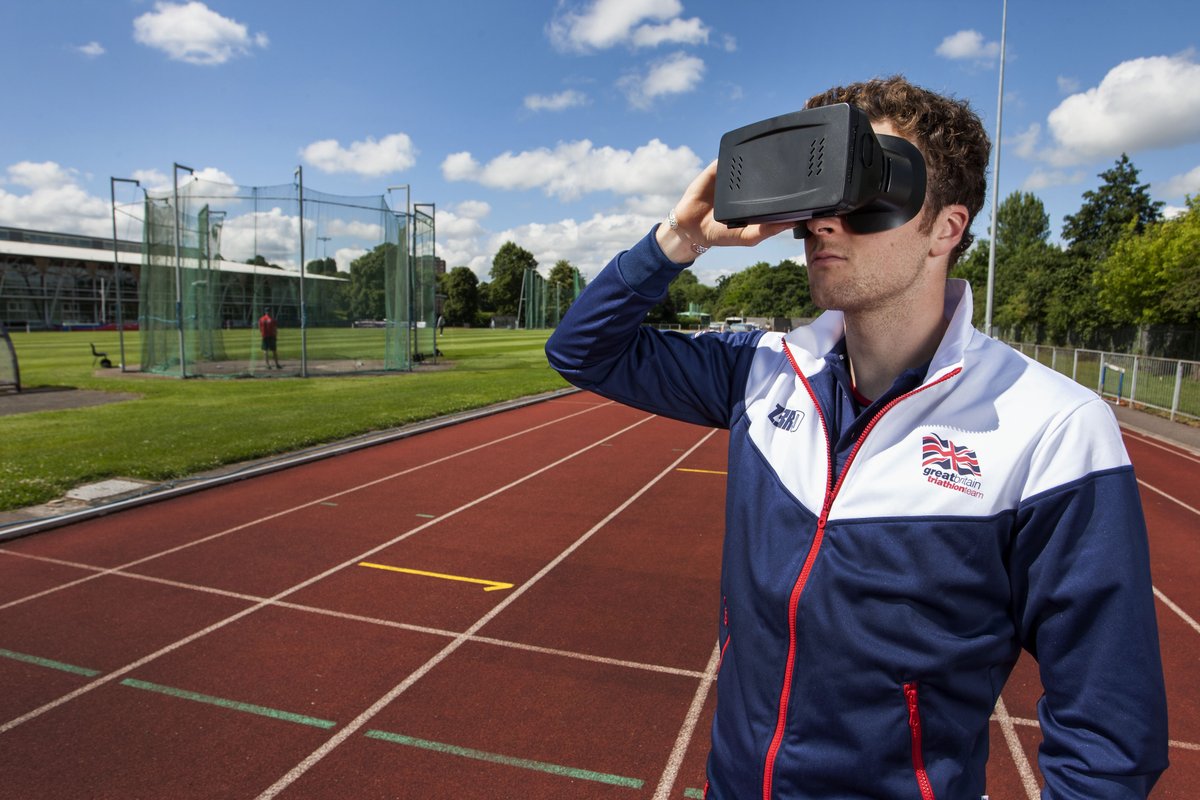
3 VR-Vantage - Jointly created by BAE Systems and British government organization UK Sport, the main purpose is to help athletes learn environments thoroughly by method of virtual reality.
4 VR Tours - Using special headsets, users are immersed in VR footage shot from from the air over places like Deodoro, Barra, and even Copacabana beach.
5 360 Virtual Tours - Google Maps has produced a 360-degree virtual tour called Beyond the Map in which users can explore points of interest around Rio for themselves.
See the full story here: http://www.sporttechie.com/2016/08/17/5-unique-uses-of-virtual-reality-at-the-2016-rio-olympics/
Virtual pop star Hatsune Miku is getting a virtual reality game
 Hatsune Miku is no stranger to the video game world, but the virtual pop star will soon be entering a new frontier: virtual reality. Sega has announced that a new Miku game is coming to PlayStation VR when the device launches in October. Called Hatsune Miku: VR Future Live, the game attempts to re-create the experience of a Miku concert set in a packed virtual stadium.
RadicalMedia Teams Up With Uncorporeal to Capture Celebrity Holograms for Augmented Reality
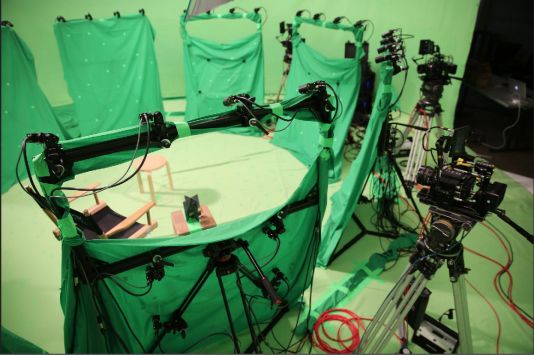 ...RadicalMedia CTO Evan Schechtman joking that securing rights for celebrity appearances can take just as long as the development of cutting-edge technologies.
In the case of the RadicalMedia cooperation, this is being achieved with an array of 48 off-the-shelf cameras placed in a circle around a green screen stage. This video is then being augmented by footage shot with a few Red cameras. The result can not only be used in augmented reality, but also repurposed as a traditional 2D video.
And thanks to the massive amount of data captured, Uncorporeal can always build higher-resolution versions for headsets that have yet to be built.
See the full story here: https://www.yahoo.com/movies/radicalmedia-teams-uncorporeal-capture-celebrity-holograms-augmented-reality-130031448.html
How VCs are looking at investing in VR experiences
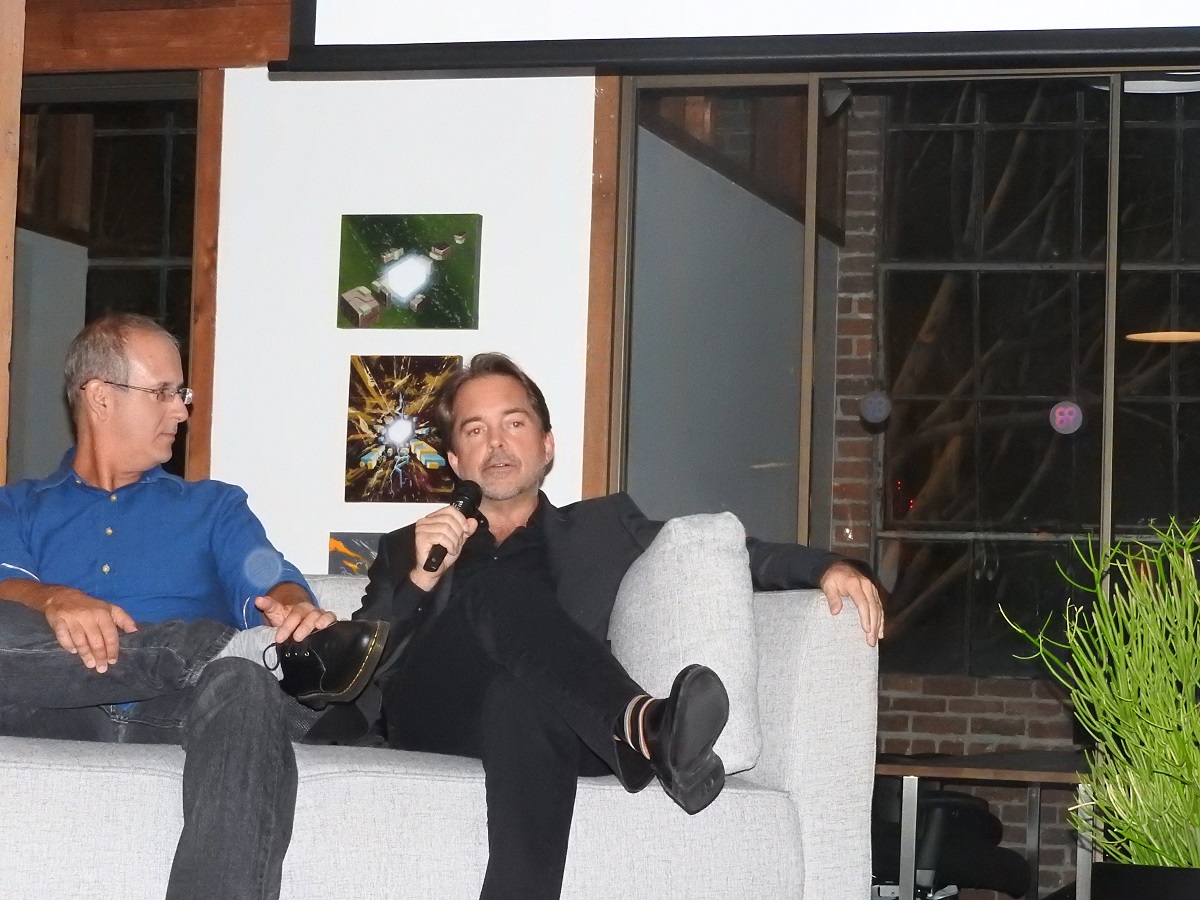 We’re all looking from an investment standpoint at VR and AR. If you look at the acquirers in the space and the investors and the space, you’ll notice that in the early days, the Oculus—Oculus first started this revolution. Around the time they were acquired by Facebook, the investors in the space were looking mainly at technology companies. Fast forward to now, we’re seeing Disney and Fox and the other studios that Technicolor services investing in the space. As well as Technicolor itself and our competitors. It’s an important piece of data, to know who will be potentially buying you or your companies, giving you those awesome exits.
I can make a couple of quick observations. Both Hollywood, which I’ve been close to for a long time, and the bay area, where I’ve spent a lot of my time dealing with video game publishers—the community around financing films and the community around financing tech companies have a very difficult time understanding what interactive entertainment is. Interactive entertainment, for a very long time, has been a key storytelling medium. I think of game design and interactive entertainment as very often being a business model in itself. Some designers are so talented that they can come up with ways of engaging consumers. We’ve seen this in the mobile revolution. You can design around a specific engagement application that brings in consumers in ways that surround them with story, but also engage them and make them part of the storyteller’s vision.
Now I see, for the first time in my career, a true convergence coming in VR. That’s why I’ve committed my career to what I consider the best storytelling talent, doing primarily interactive storytelling, in the VR medium. My hope is I can help create a new type of financing mechanism for these companies.
I just got back from a trip to Asia, where this was especially interesting. People are talking about all these experience centers. It’s exploding in China and Korea and others. Hundreds of experience centers opening up everywhere that are just dying for amazing content. They’re all looking to us to find out how we get this content over to the U.S. from all these content creators in China and other Asian countries.
VR is in a unique position right now where if we strategize correctly, we can capitalize on that and help U.S. content creators get access to money from abroad that will enable them to continue with not only capital, but also alternative forms of funding, so I’d be curious to hear your thoughts on that pipeline to Asia.
The typical models have been, as opposed to pure commercial art, where generally you go to people who do slate financing–versus a publishing play, where you’re building infrastructure around your content that is about cross-promotion and customer acquisition. Increasingly we’re seeing things in mobile game development that are going to apply to VR, which is becoming a social platform. That’s things like live operations.
A few of the filters I go through—of course, like everyone said, team is the most important thing. But I start my filter from genre. There’s lots of historic data around genre, whether it’s film genres or game genres. What are the sales cycles there? Looking at those cycles, you can see the ups and downs.
From genre, does a team have technology that supports a genre in an interesting way? That’s where it becomes more of a venture bet, where you can see there’s some kind of technical competence that undergirds that genre. Finally, is that team capable of doing something interesting with the technology in that genre? Do they have a history that ties them to this particular project? What are their contacts in this space? I’m always a bit nervous when I see entrepreneurs, particularly in a new market like this, who are jumping in without a wide set of contacts related to what they’re doing. As it turns out, in the early stages of a platform, the early adopters are other people in the industry.
See the full story here: http://venturebeat.com/2016/08/15/how-vcs-are-looking-at-investing-in-vr-content/?curator=MediaREDEF
Intel’s new Project Alloy is a wireless VR headset for ‘merged reality’
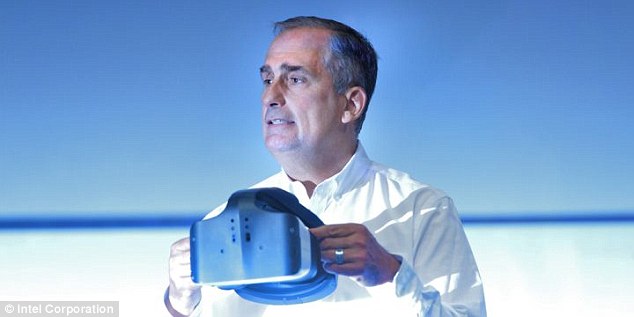 [Philip Lelyveld comment: This is a really good development, but it is VR in my view. Rather than transport you in space, these pass-thru HMD approaches transport you in time - to 15ms or more in the past as it processes the video of the world in front of you and blends in virtual objects. 15ms doesn't sound like much until someone throws a ball at you and you try to catch it.]
...the headset contains the computational and graphics power necessary to create the virtual images and an internal battery for power, as well as 3D cameras and sensors powered by Intel's RealSense motion tracking tech. CEO Brian Krzanich says the device is capable of "merged reality," which blends images from the real world like handheld objects into virtual environments.
Intel says this type of merged reality technology should alleviate some concerns about VR headsets blocking out the real world and creating a potentially dangerous situation for users and other people in the room. This type of tech also removes the need for complex sensor setups or hand controllers, Intel says.
See the full story here: http://www.theverge.com/2016/8/16/12503948/intel-project-allow-vr-headset-cordless-mixed-reality
Virtual world meets virtual reality as Minecraft heads to Oculus Rift

"Minecraft: Xbox 360 Edition" offers a streamlined version of the original and it works well, making the game accessible to more people.
Microsoft-owned Mojang announced Monday that it has updated its Lego-like virtual world game to support the new virtual reality headset from Facebook's Oculus unit. Mojang customized the game in numerous ways, including changing what happens when users turn around in their worlds, to better the experience for Rift users.
They can immerse themselves in the virtual world they are building. Alternatively, they can shift to something Mojang calls the "Virtual Living Room," which allows them to play Minecraft as they would in the real world, by viewing it on a screen in a room in their house -- in this case, a virtual screen in a computer-generated house. The mode was designed to "give players a break" from being fully immersed in their Minecraft worlds, Persson said.
See the full story here: http://www.mercurynews.com/troy-wolverton/ci_30250002/virtual-world-meets-virtual-reality-minecraft-heads-oculus
Making the wildly successful dystopian augmented reality short, “Hyper-Reality”
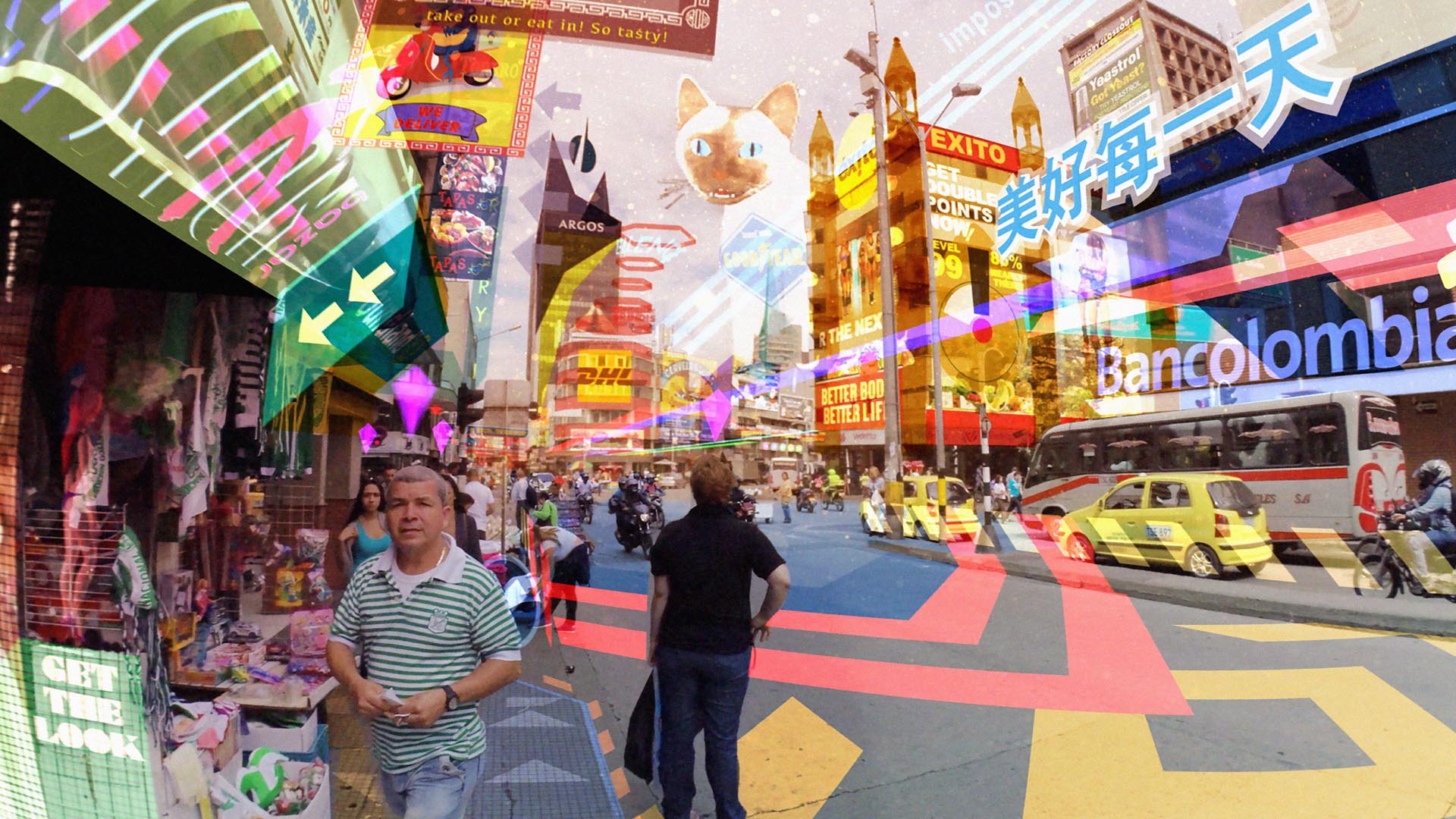 The Kickstarter-backed project combines live-action footage with motion-tracked visual elements “to present a provocative and kaleidoscopic new vision of the future, where physical and virtual realities have merged, and the city is saturated in media,” according the the video description.
See the full story here: http://motionographer.com/2016/08/15/making-the-wildly-successful-dystopian-augmented-reality-short-hyper-reality/
Israeli army developing augmented reality tech for battlefield
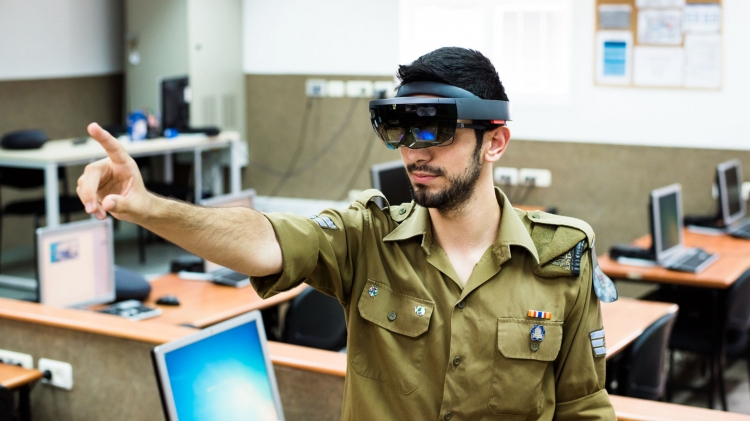 The Israeli army has purchased two Microsoft HoloLens glasses and plans to use the augmented reality device on active duty within months, Bloomberg reported on Tuesday.
In less than a month, Bashi's team developed software that superimposes battlefield maps on the terrain and creates an interactive overlay that can be controlled via sight, voice, and hand gestures, according to Bloomberg.
The department is also developing methods for medics to use the device for operating on wounded troops while receiving real-time instructions and for soldiers to use it to help fix equipment problems.
It is also looking to develop software that would transmit readings of a soldier's physiology in the field to headquarters.
Instead of completing a lengthy development process before deploying new technology, the unit is now starting to use a "minimal viable product" that can be upgraded along the way, thus avoiding a situation in which technology is almost obsolete by the time it is ready for use.
See the full story here: http://www.i24news.tv/en/news/israel/diplomacy-defense/122811-160816-israeli-army-developing-augmented-reality-tech-for-battlefield