Pokémon GO, Augmented Reality and the Future of Gambling
 In the US, for example, the states of Nevada and New Jersey have rewritten their gaming laws to permit “variable payouts,” which will pave way for the advent of video-game-slot hybrids on the casino floor. Previously, anybody playing a gambling machine had to be offered the same chance of winning as everyone else. The advent of variable payouts means that, now, players who have mastered a certain video-game-style bonus round, for example, have a better chance of winning.
See the full story here: https://www.casino.org/blog/pokemon-go-augmented-reality-and-the-future-of-gambling/
World’s First Virtual Reality Camera Satellite Set for 2017
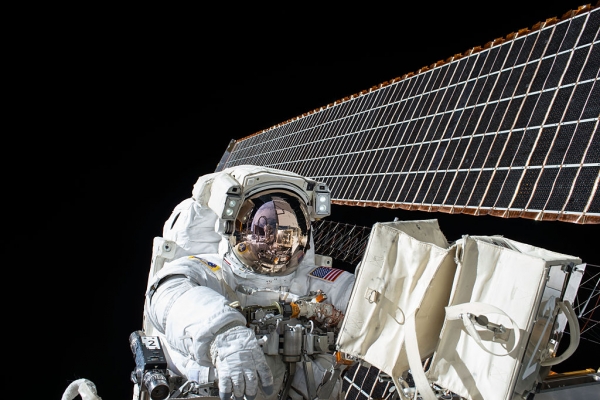 Thanks to a signed a launch agreement, SpaceVR will send a virtual reality satellite to the ISS with the help of a SpaceX Falcon 9 rocket. Along with a commercial laboratory by NanoRacks, SpaceVR will prepare the twin-camera cube satellite, Overview 1, during the SpaceX CRS-12 Mission. It'll be released into the Earth's orbit with NanoRacks' CubeSat Deployer by 2017.
SpaceVR will have full control over the world's first ever virtual reality camera satellite. The company will be taking footage from the cameras and will be stitching it into a 360-degree sphere. The live-stream of the photos is said to be the company's ultimate goal.
See the full story here: http://www.natureworldnews.com/articles/26560/20160810/worlds-first-virtual-reality-camera-satellite-set-2017.htm
How augmented reality paves the way for fully autonomous cars
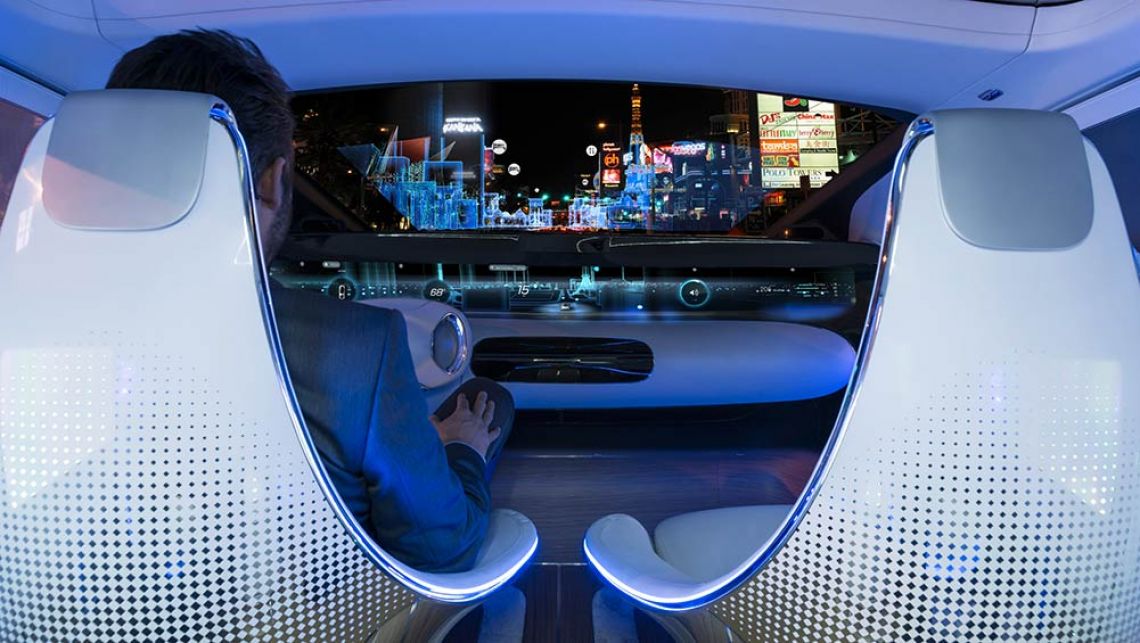 While major brands — Tesla excepted — aren't rushing to promote fully autonomous driving in production vehicles (largely due to legislative and liability issues), they are all rolling out augmented reality.
Mini's "X-ray vision" goggles that let the driver "see through" panels and Jaguar Land Rover's "transparent" windscreen pillars may seem futuristic but they're destined to find their way into your next car well before governments work out how to deal with autonomous travel.
Augmented reality (AR) software can detect and highlight potential obstacles, from inattentive pedestrians to animals near the roadside at night.
Automotive AR isn't just confined to the in-car experience. Mercedes-Benz and Volvohave signed deals with Microsoft to use its "HoloLens" headset to create virtual showrooms, changing interior designs, wheel shapes and exterior colours with the swipe of a hand or touch of a button.
See the full story here: http://www.carsguide.com.au/car-news/how-augmented-reality-paves-the-way-for-fully-autonomous-cars-45210
This man is cycling around the UK in virtual reality using Google Street View
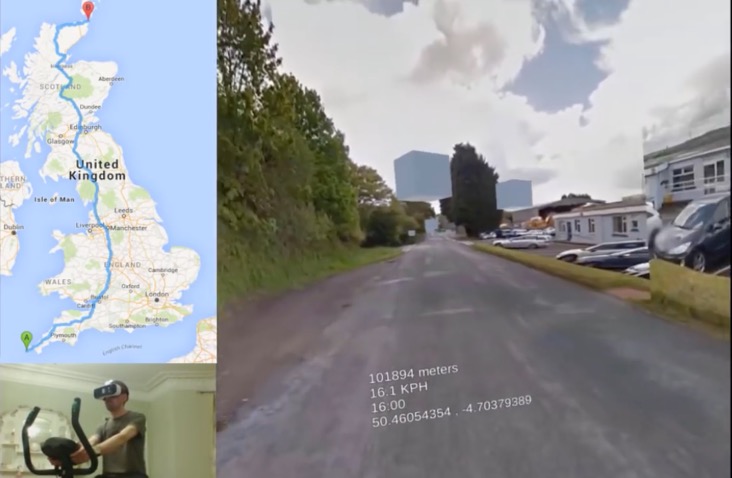 Hooking a Galaxy Gear up to Google Street View and cycling the length of the UK — 1,500 kilometers from Land's End to John o' Groats — all from the comfort of his front room.
Puzey has been documenting his travels on his blog, Cycle VR, updating the site with edited video highlights of every 100 kilometers. He says he's been lengthening the amount of time he dedicates to the journey, and reckons he'll be finished in around 50 days.
"The single biggest problem with the Street View data is the high compression on the depth information," says Puzey, with Google storing a limited number of planes to represent complex scenes. "Some things, like buildings, fit very well to this model and look quite solid, but things like trees and hedges and anything lumpy often just looks a mess.
...nausea can be a problem, especially when he's navigating complex routes — like roundabouts — that have been squashed into only a few layers of depth. "The problem [is that I'm] telling the 'bike' in VR to face in the direction of the path it was moving along," says Puzey. "Then I had a breakthrough and realized if I make it face about 5 meters ahead of where I was it made an enormous improvement."
See the full story here: http://www.theverge.com/2016/8/9/12411262/cycle-vr-google-stree-view-uk
New iFly virtual-reality experience tricks your brain into thinking you’re skydiving
 While it’s not an exact re-creation of the daredevil activity itself, the sensations of the wind blowing against a user’s belly combined with the video that shows one plummeting toward Earth at high speeds might help to temporarily trick the brain into thinking it’s actually happening. A switch of a button could also mimic different types of skydiving — from basic free fall out of a plane, to BASE jumping off a cliff, to gliding through the sky in a wing suit.
“We think some of the biggest innovation possible is combining things that already exist in just a really unique way,” said Gaddis.
See the full story here: http://www.marketwatch.com/story/new-virtual-reality-experience-tricks-your-brain-into-thinking-youre-skydiving-2016-08-09
Symphonies in space: orchestras embrace virtual reality
 [Philip Lelyveld comment: These examples are simple pairings of old media ideas, but the experimentation with classical musicians will lead to new experiences and the evolution of the language of VR.]
At Brooklyn’s Prospect Park on Saturday, the emerging technology took New Yorkers inside the Orion Nebula, the gaseous cloud of dust and evolving stars some 1,500 light years away. The VR installation was part of the Hubble Cantata, an hour-long composition for orchestra, 100-voice chorus, soloists and narration, by composer Paola Prestini and librettist Royce Vavrek.
Staged at the BRIC Celebrate Brooklyn concert series, the cantata’s climatic moment came in its last five minutes, when audience members were cued to slip their phones into free cardboard VR headsets that were distributed at the gates. As the narrator, astrophysicist Mario Livio, poetically described the life and death of stars, attendees shifted in their seats, craned their necks and even stood to view the three-dimensional renderings of Hubble photographs, directed by Eliza McNitt.
Last year the Adelaide Symphony Orchestra in Australia hired Jumpgate, an Australian VR studio, to create a stage-view, 360-degree performance video of Sibelius’s Finlandia. Created using a rig of 16 GoPro cameras in front of conductor Guy Noble, the video has been distributed through YouTube and Facebook (it can be viewed using a headset or on a desktop computer).
Similar in concept is a 360-degree rehearsal film of Tchaikovsky’s Sixth Symphony created by the Toronto Symphony Orchestra with the Canadian studio VR Cinematic.
Last year the American violinist Tim Fain worked with Jessica Brillhart, a VR film-maker at Google, on the 360-degree short film, Resonance. The vaguely surreal film shows Fain performing an original composition against several backdrops, including a graffiti-tagged empty warehouse, a barnyard and a church, with directional sound guiding the viewer through each new space. Filmed using Jump, a new camera rig intended to create a greater sense of depth, it has drawn over 420,000 views since November.