HoloLens concept lets you control your smart home via augmented reality
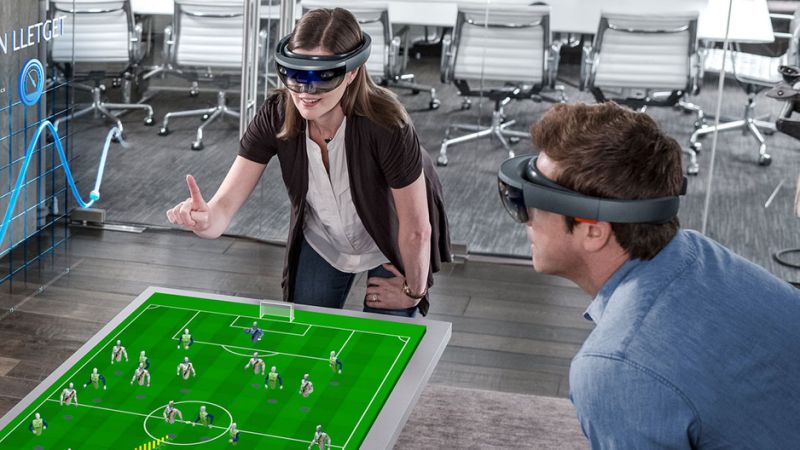 “The primary goal of the app is to provide a 3D spatial UI for cross-platform devices — Android Music Player app and Arduino-controlled Fan and Light — and to interact with them using gaze and gesture control,” Ian Sterling, a design student at California College of the Arts, told Digital Trends.
Our demo featured a connection between a music player and a light in order to set a certain mood in your home.”
While the so-called IoTxMR concept is just a demo, Sterling thinks it signals the way our interactions with smart devices need to go. “I feel that in order for smart devices to be less obtrusive, while at the same time becoming more robust in functionality, new forms of interaction will be a requirement,” he continues.
See the full story here: https://www.yahoo.com/tech/hololens-concept-lets-control-smart-162351903.html
As Pokemon Popularizes Augmented Reality, Hollywood Explores AR’s Potential
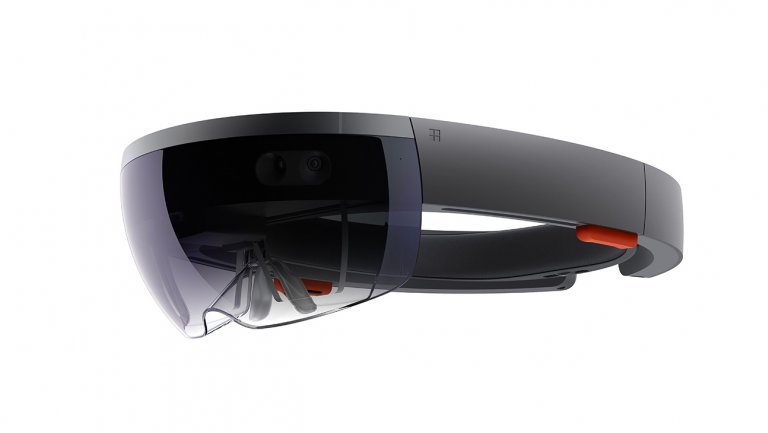 AR is poised to become ubiquitous, predicts Ben Grossmann, who won an Oscar for the visual effects on Hugo and is now a co-founder and CEO of Magnopus, a L.A.-based firm that is developing applications for AR and other emerging technologies.
Various Hollywood studios have already shown a keen interest in AR as well — among them is Twentieth Century Fox’s Fox Innovation Lab, which is testing systems such as the HoloLens.
AR "could be applied to all walks of life, in theory,” says Danny Kaye, executive vp of global research and technology strategy at Fox Home Entertainment, who also co-manages the Fox Lab.
“One of the most amazing things about the HoloLens is the tracking,” Grossmann explains. “Early AR systems gave people a headache because the latency between the graphics and real world would slip. The HoloLens nailed tracking and matches the real world. Plus it’s all mobile, so you have a platform to start imagining what's possible.”
See the full story here: http://www.hollywoodreporter.com/behind-screen/augmented-reality-post-pokemon-is-913390
HACKADAY PRIZE ENTRY: AUGMENTED REALITY FOR FIREFIGHTERS
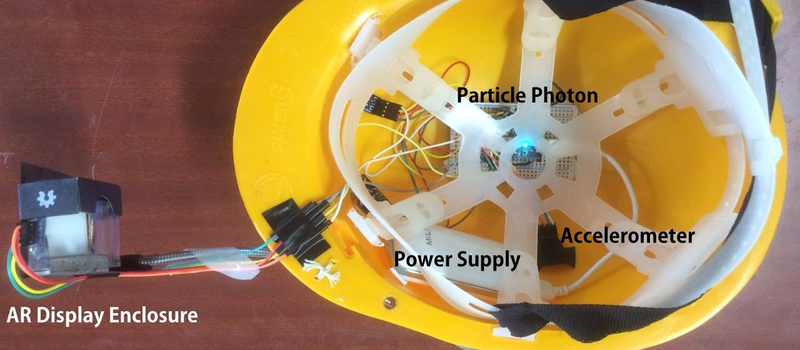 There are more useful applications of augmented reality, as [vijayvictory]’s Hackaday Prize entry shows us. He’s built an augmented reality helmet for firefighters that will detect temperature, gasses, smoke and the user’s own vital signs, displaying the readings on a heads up display.
The core of the build is a Particle Photon, a WiFi-enabled microcontroller that also gives this helmet the ability to relay data back to a base station, ostensibly one that’s not on fire. To this, [vijayvictory] has added an accelerometer, gas sensor, and a beautiful OLED display mounted just behind a prism. This display overlays the relevant data to the firefighter without obstructing their field of vision.
See the full story here: https://hackaday.com/2016/07/24/hackaday-prize-entry-augmented-reality-for-firefighters/
Emirates is bringing augmented reality to economy class with a new amenity kit
 Emirates airlines has announced that it has launched the world’s first interactive amenity kit in economy class. The bags, which include necessities like a toothbrush, earplugs and eye mask, use augmented reality technology to unlock immersive content on traveller’s phones.
By using an app called Blippar, customers can scan the bag and unlock activities, music or health tips.
Read more: http://www.lonelyplanet.com/news/2016/07/25/augmented-reality-amenity-emirates/#ixzz4FXeOhUh6
The year that virtual reality took over Comic-Con
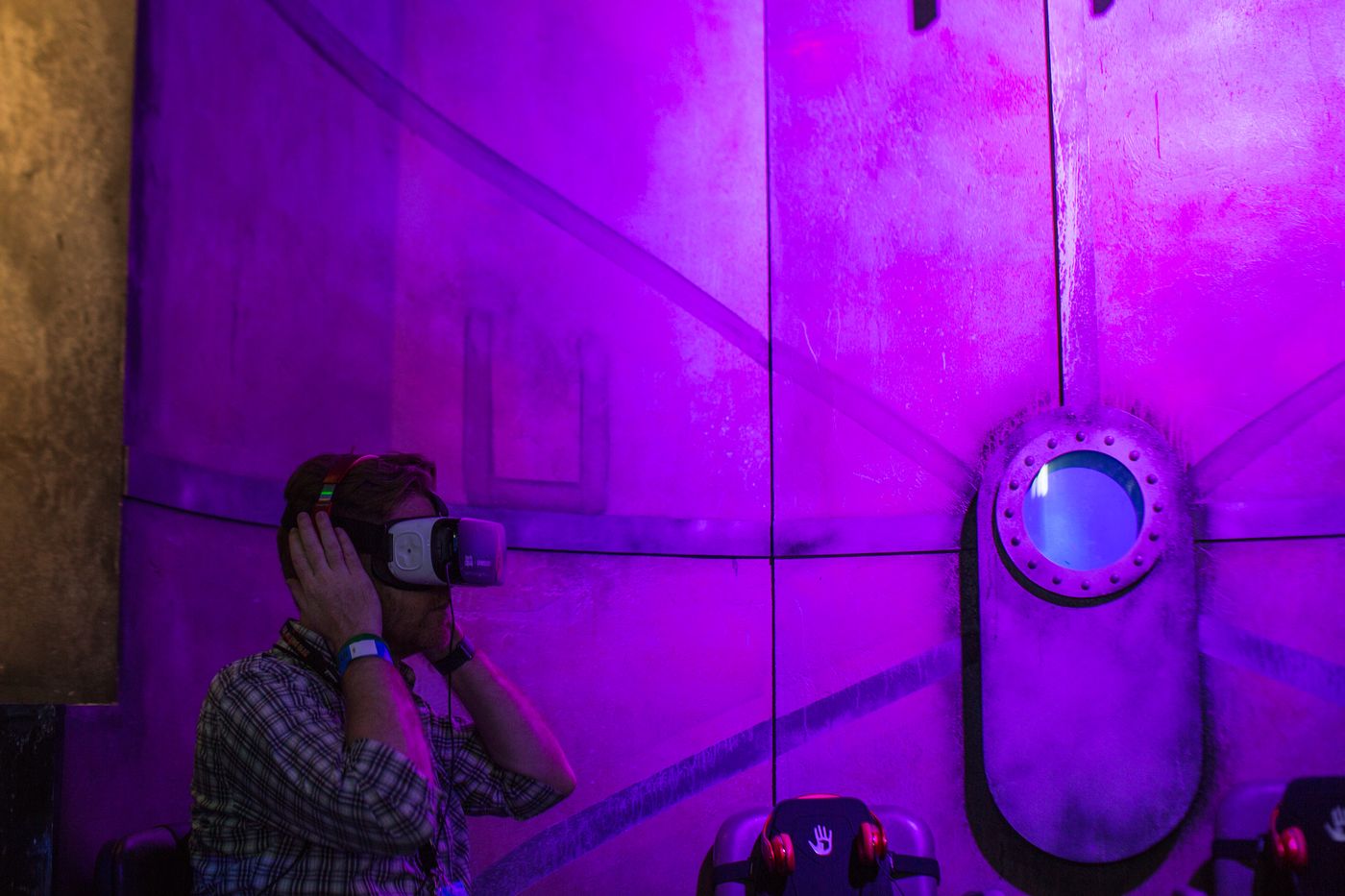 What stood out was that despite the lines, attendees largely didn’t care about virtual reality, augmented reality, or any other ballyhooed technology that was being utilized. They simply wanted to take a further step into their favorite fictional worlds — to the point where most at the Mr. Robot site called out the activation’s recreation of several sets as the draw, not the VR experience. "I just wanted to see how well they replicated the set, and get a real experience of how it would feel in Mr. Robot’s office," said 48-year-old Ben Kam. Down the line, O’Toole agreed. "We did the virtual reality Conan thing. So I’ve done virtual reality before," she said.
Comic-Con is all about promotion, with the idea that every piece of news or footage shown will soon ricochet around the world...
The irony is that the better the experience is, the more attention it will get, so there isincentive to create works that are actually interesting unto themselves. Filmmaker Kevin Cornish, who directed the Teen Wolf VR experience for MTV, explained that on his project, corporate sponsor AT&T was extremely pleased because the experience went beyond static, 360-degree video captures — low-hanging swipes at VR that are already starting to feel old thanks to the proliferation of 360-degree video on Facebook.
in the end, the state of VR at Comic-Con is a lot like the state of Comic-Con itself. Noble at times, catering to the pure of heart, but always looking to use the faithful to springboard into ever-higher orbits of hype.
See the full story here: http://www.theverge.com/2016/7/25/12279274/virtual-reality-x-men-mr-robot-suicide-squad-comic-con-2016
Virtual Reality Waits for the Music Industry to Catch Up
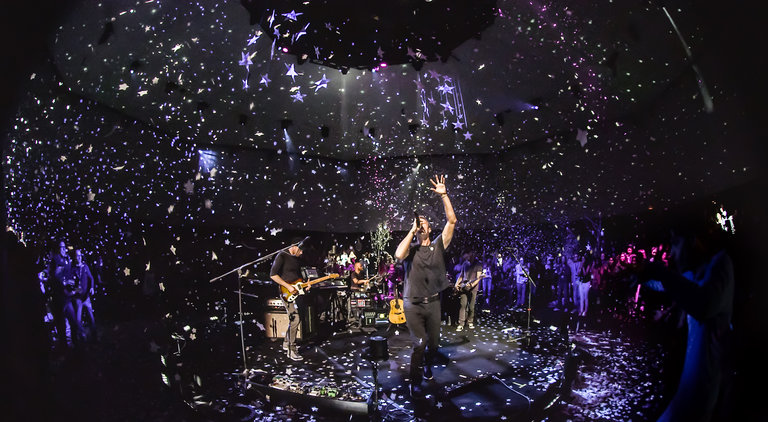 [Philip Lelyveld comment: this is a nice aggregation of recent music VR efforts, including subscription v free discussion.]
Distribution has been slow because the music industry is waiting for the virtual reality ecosystem to catch up, according to Ben Lang, a co-founder and executive editor of Road to VR, an publication that covers the virtual reality industry. “A lot of these deals are strategic announcements to ward off other companies and show market leadership,” he said.
One setback has been logistical: It is still a challenge to get virtual reality viewers into consumers’ hands.
Although its competitors, like NextVR, give away content, Vrtify is experimenting with subscription and pay-per-view models. Facundo Diaz, its co-founder and chief executive, said 70 percent of the revenue went to the owner of the content, and the company received 30 percent, an arrangement similar to the music-streaming business, which has become a significant part of the music industry.
“This kind of revenue-sharing model gives us access to music labels and artists,” Mr. Diaz said. “It has opened a lot of doors for us.”
See the full story here: http://www.nytimes.com/2016/07/26/arts/music/virtual-reality-waits-for-the-music-industry-to-catch-up.html?_r=0
Virtual Reality Studio Kite & Lightning Raises a $2.5 Million Seed Round to Create Cinematic Social Gaming Universe
 Kite & Lightning, the technology startup known for pioneering work in cinematic virtual reality (VR), today announced it raised a $2.5 million seed round led by Raine Ventures. The funding will enable Kite & Lightning to expand its team to create Bebylon Battle Royale, a world built around competitive spectator gaming. The hybrid film and gaming studio will continue to expand the universe around its core three VR pillars: gaming, social & story.
“This marks a pivotal moment for us as we transition to expanding beyond our two-person team,” said Ikrima Elhassan, co-founder and CEO of Kite & Lightning. “We’re elated to have world-class investors that share our vision and believe in our ability to pioneer groundbreaking VR experiences melding cinematic storytelling with interactive gaming.”
See the full PR here: http://www.businesswire.com/news/home/20160726005337/en/Virtual-Reality-Studio-Kite-Lightning-Raises-2.5
A VR Tutorial for Journalists
New Tools Open Up Virtual Reality to Journalists
 I got really interested in the development of WebVR technology and the impact it could have in journalism. This led me to explore a variety of tools for making VR easier to develop, both for journalists and for developers without graphics programming knowledge.
Here are three tools for making VR in the open web, in descending order of required technical skills. But even if the first are harder to use for non-technical people, I’ll bet that if you can write just couple of lines of JavaScript, you’ll be able to create amazing VR scenes.
See the full write-up here: http://gijn.org/2016/07/26/new-tools-open-up-virtual-reality-to-journalists/
Veeso wants to share your smiles and eye-rolls in VR
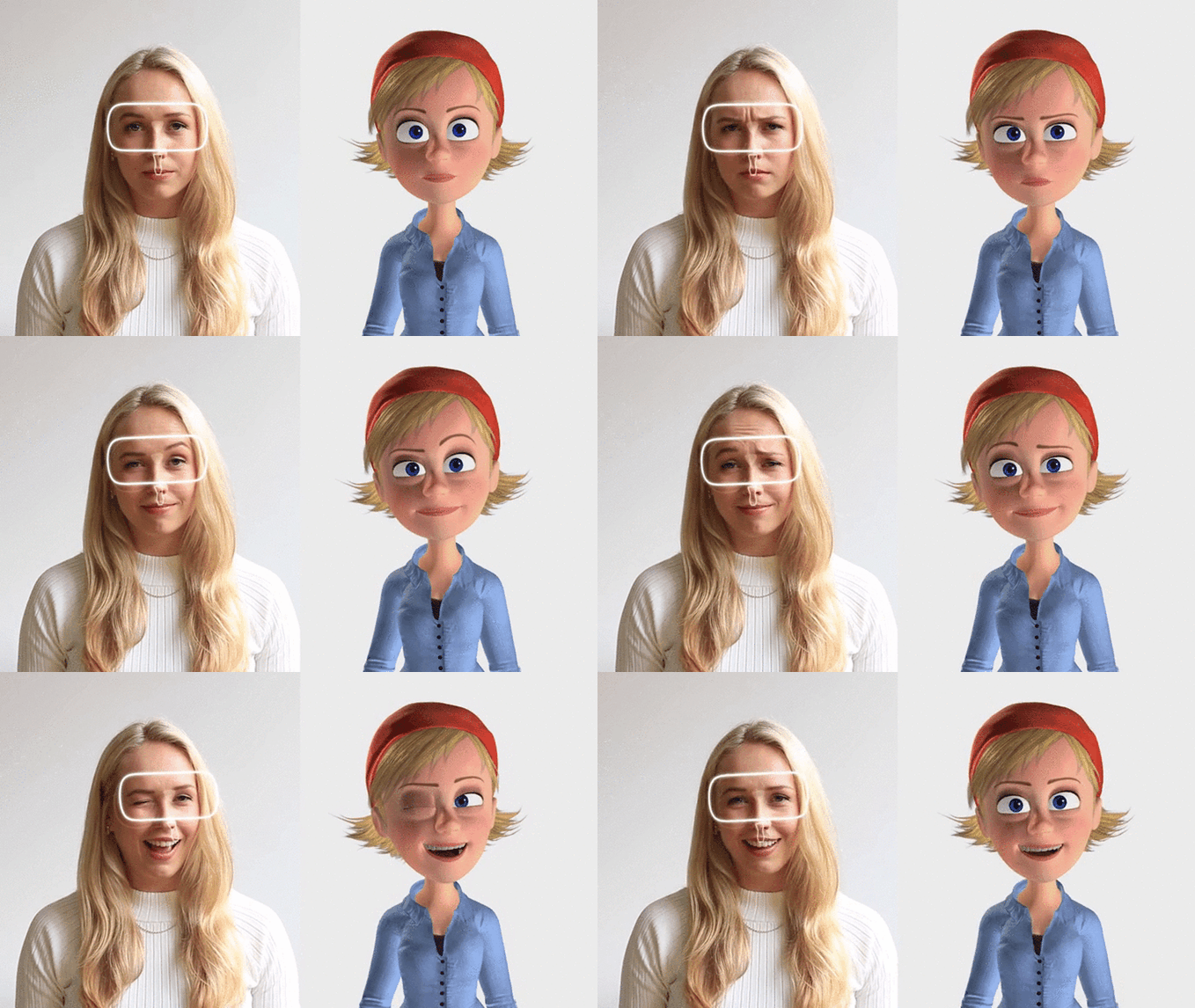 The Veeso headset not only tracks the user’s mouth and jaw but also has infrared eye-tracking sensors built into the headset to track the user’s line of sight. This is especially effective for social VR, saving you from weird interactions with avatars with dead eyes.
See the full story here: https://techcrunch.com/2016/07/25/veeso-wants-to-share-your-smiles-and-eye-rolls-in-vr/