UK’s first virtual reality centre opens in Lincoln
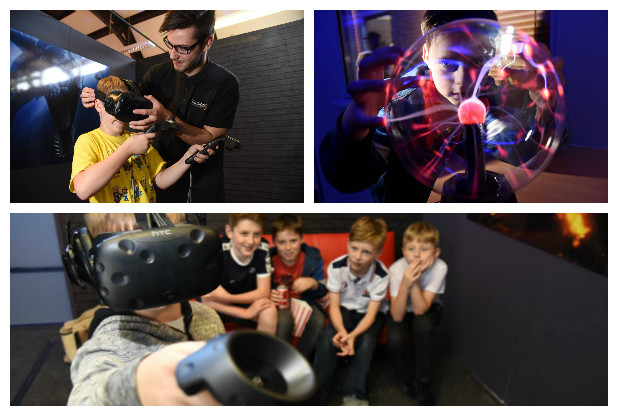 You can now step into a another world in Lincoln city centre thanks to a ground-breaking new virtual reality facility - the first of its kind in the country.
The £200,000 Tension VR centre offers punters the opportunity to experience an "immersive, and incredibly believable" encounter in a different time or place.
Using HTC Vive technology, people are able to try an alternative reality with 30 different interactive games, 150 videos and plenty more.
See the full story here: http://www.lincolnshireecho.co.uk/sneak-peek-uk-s-first-virtual-reality-centre-opens-in-lincoln/story-29470620-detail/story.html
Full Sail wades into virtual reality coursework with new lab
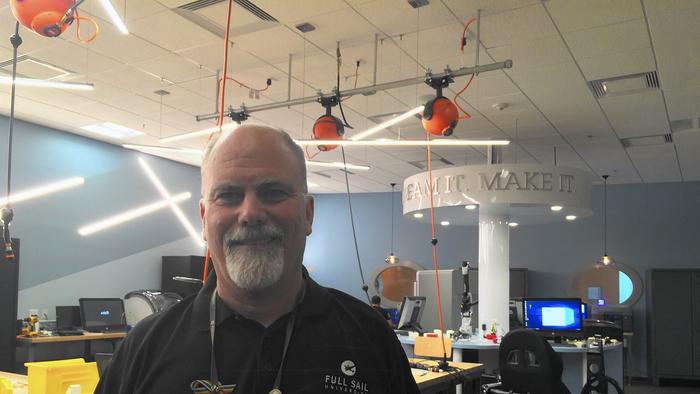 "No one has spent money on the constant development side," said Armstrong, president and CEO of Engineering & Computer Simulations in Orlando. "Everyone is spending on hardware. That is what is going to change it: finding people to build the applications."
It's part of a $3 million space that combines two labs, one equipped with manufacturing tools as a sort of makerspace and another for the AR/VR program.
"There are going to be jobs out there that haven't even been created yet," said Rob Catto, Full Sail's director of game studies and simulation.
Cogswell College, which sits in California's Silicon Valley, introduced what Forbes called the first AR/VR studies certificate program in the U.S. this summer.
Professor Timothy Duncan said when the class was announced that virtual and augmented reality, though most common in gaming, would eventually "impact many industries across the globe."
"By having students learn these new areas now, they will position themselves as the next generation of technical and creative leaders within exciting new VR and AR frontiers," Duncan said in a news release.
"Educational institutions producing multi-disciplinary talent will play a major role in developing talent that will mature the technology and push it to greater heights," Civinskas said. "Lockheed Martin continues to partner with science, technology, engineering and math programs to help inspire future talent to address the next generation of challenges."
See the full story here: http://www.orlandosentinel.com/business/os-virtual-augmented-reality-business-education-20160701-story.html
German Engineers Developing AR Helmet for Pilots
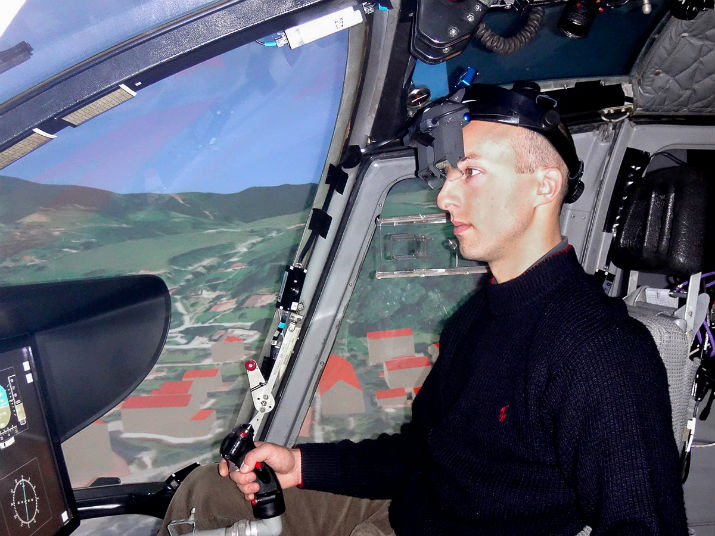 All of the data is processed on-board and projected directly to the head-mounted display, allowing the pilot to not only see with his own eyes, but also retrieve the digital outlines of the landscape and potential obstacles. Pilots also have access to flight data, like speed, altitude, position and course, directly on their display. The team also implemented a head-tracking system to make sure that the projections adjust to the pilot's line of sight, depending on whether he is looking forward, downward or out the side of the cockpit.
"The main problem is poor visibility caused by clouds or snow, or dust blown up when taking off and landing. Augmented reality can help to overcome this white-out or brown-out phenomenon,” he said.
See the full story here: http://electronics360.globalspec.com/article/6953/german-engineers-developing-ar-helmet-for-pilots
UW CoMotion opening new HQ with space for virtual, augmented reality startups
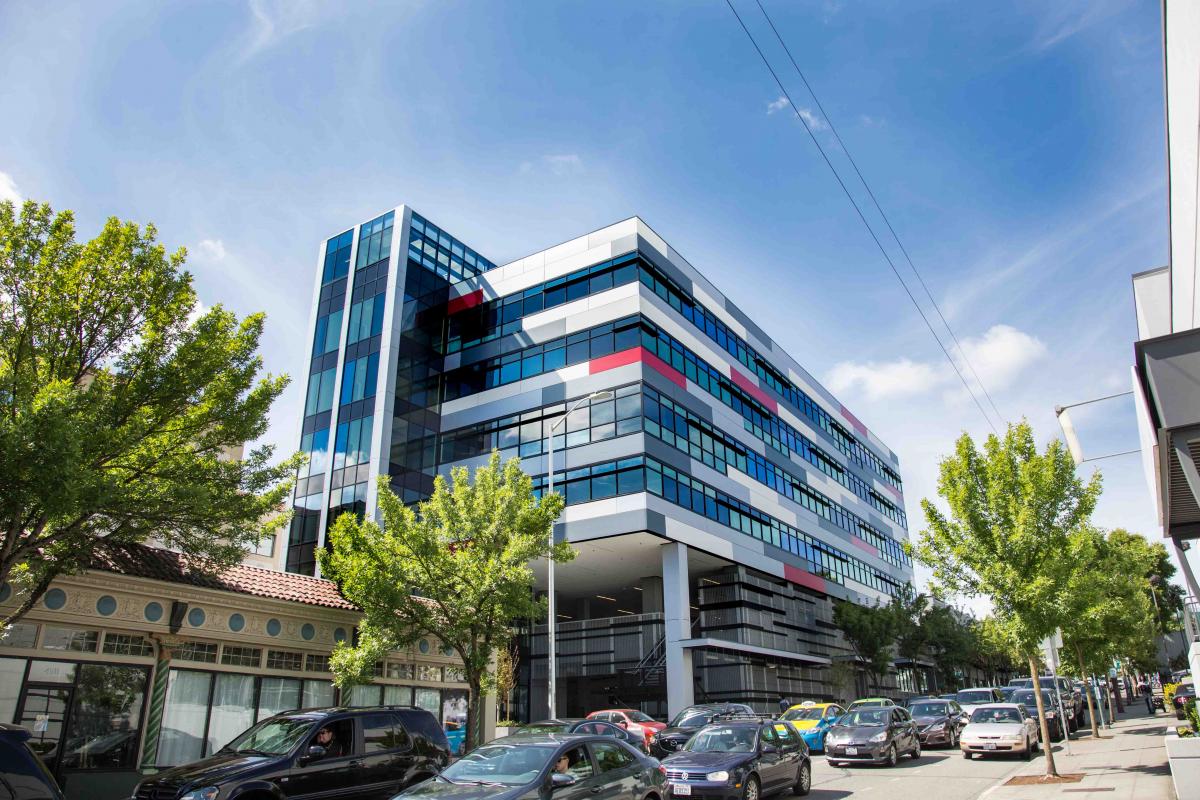 One floor of the new headquarters will include space for CoMotion’s day-to-day operations. The other floor will have a pair of virtual reality lab areas, 34 co-working desks and an event/teaching space with room for 150 to 200 people. CoMotion charges $350 a month for a desk and access to its programs.
‘Pokémon Go’ is Where I Draw the Line on “Augmented Reality”
[Philip Lelyveld comment: Pokeman Go sounds like it is less than expected. Just proximity and floating objects - suitable for the Google Glass!]
The thing is, in order to ‘augment’ reality, the system doing the augmentation needs to know something about your reality; like how Snapchat knows the shape of your face so that it can augment it in interesting ways. But Pokémon Go knows nothing more about your reality than almost any other app on your phone.
Because of this, you’ll frequently find Pokémon floating superimposed into walls or other objects in a way that doesn’t make sense, with their scale totally misrepresented against a backdrop that doesn’t suit their size at all. When you walk toward the Pokémon they’ll simply slide along the ground at a fixed distance from you, passing through whatever real world obstacles might be in their way. This isn’t augmenting reality, it’s merely conflicting with it.
Aside from the superimposed camera view, which you can (and likely will) opt to turn off with a small button at the top right of the app, the only other argument to be made for Pokémon Go as an AR app is that in order to find Pokémon and other game objectives (like gyms), you have to physically move around the world (a quick stroll up the street might reveal a few).
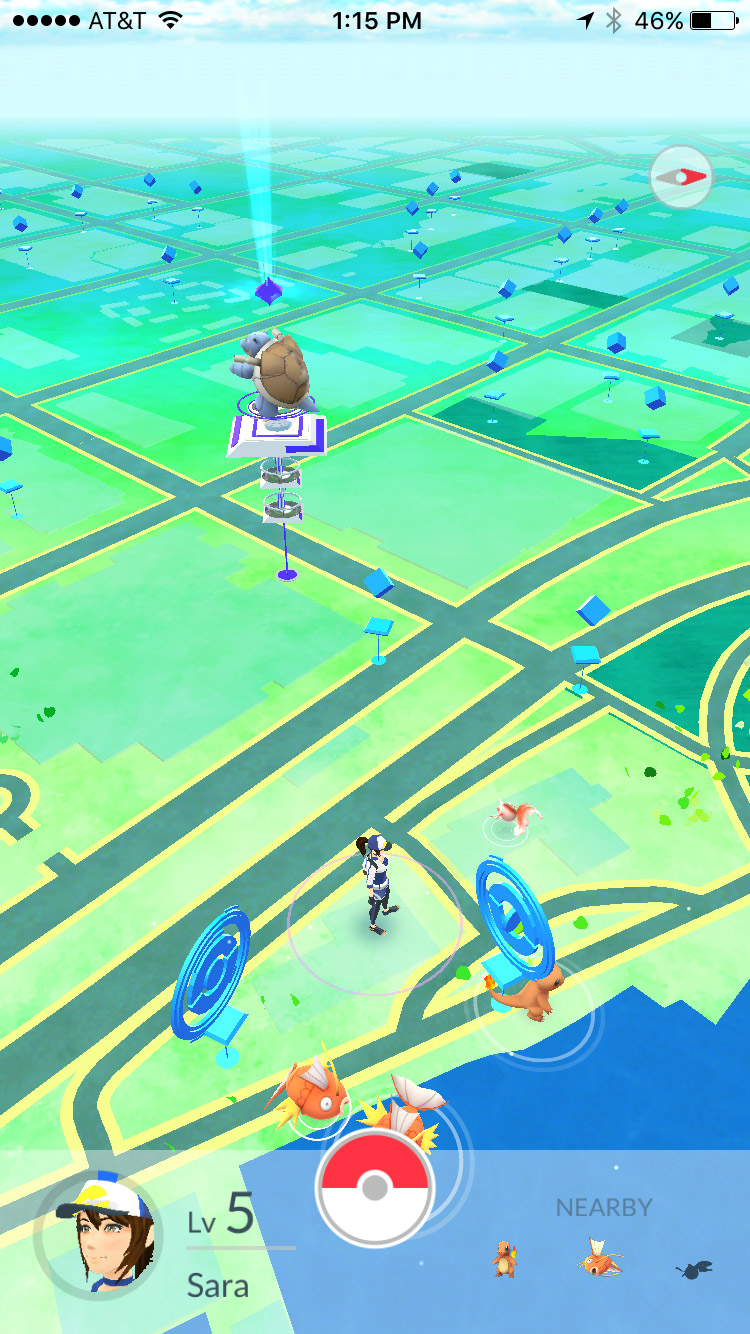 But unlike the CGI video, you won’t find any Pokémon hiding behind trees or battling atop bridges. You’ll simply be looking at the map on your smartphone (which takes the form of a stylized version of the sorts of roadmaps you’d find on Google Maps) and occasionally see a Pokémon pop up on the screen. Then, whether you’re 10 feet for 50 feet from them, just tap on your smartphone and you’ll be engaged into the superimposed camera view to capture the creature.
Pokémon Go could be an amazing AR app, if only they delivered anything remotely like what was shown in their audacious CGI video. Until then, let’s not muddle the definition of augmented reality...
See the full story here: http://www.roadtovr.com/pokemon-go-is-where-i-draw-the-line-on-augmented-reality/?utm_source=Road+to+VR+Daily+News+Roundup&utm_campaign=339c858fa3-RtoVR_RSS_Daily_Newsletter&utm_medium=email&utm_term=0_e2e394ad33-339c858fa3-168170213
Google is Adding a VR Shell to Chrome to Let You Browse the Entire Web in VR
 Google is working to add fully immersive browsing capability to Chrome, allowing users to browse any part of the web in VR, not just those sites that are specially built for VR.
Google has played an active role in helping to define and deploy ‘WebVR‘, a set of standard capabilities that allow for the creation of VR websites which can serve their content directly to VR headsets.
The latest builds of Google Chrome Beta and Google Chrome Dev on Android bring two important new features for making this a reality. Chrome Beta now contains a WebVR setting which enables enhanced VR device compatibility with VR websites built against WebVR standards.
Samsung introduced a VR browser for their Gear VR headset last year which achieves similar functionality, but is not available to the wider Android ecosystem. As the stable version of Chrome on Android has been downloaded between 1 – 5 billion times, it stands to bring VR web browsing to a much larger group. Google is also in development of Chrome support for headsets like the Oculus Rift and HTC Vive on desktop.
See the full story here: http://www.roadtovr.com/google-is-adding-a-vr-shell-to-chrome-to-let-you-browse-the-entire-web-in-vr/
First Look Inside ‘The Void’ Ghostbusters: Dimension, Opens July 1st
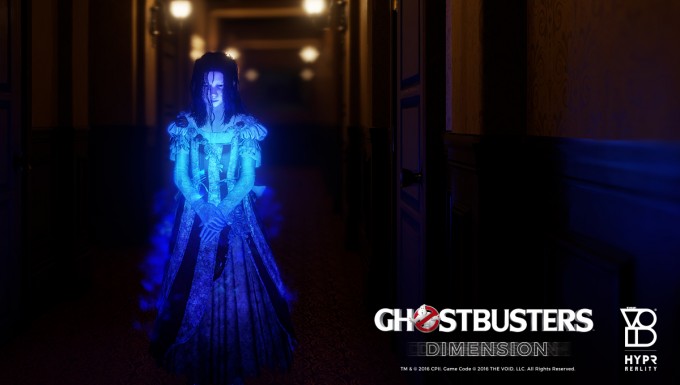 Ghostbusters: Dimension will give players the chance to strap a virtual proton pack to their backs and track a supernatural manifestation through a New York apartment block. The experience is apparently around 15 minutes long, with groups of three players taking part at any one time.
“The Ghostbusters world is the perfect fit for THE VOID because you literally strap our RAPTURE gear on and it turns into your proton pack and proton gun,” said James Jensen, Chief Visionary Officer at THE VOID.
The virtual portion of the experience is powered by The Void’s proprietary VR hardware and built entirely on the Unity game engine, one of the first engines to offer Oculus Rift integration and remains of the most popular among VR devs.
See the full story here: http://www.roadtovr.com/first-look-inside-the-void-ghostbusters-dimension-opens-june-30th