Why AMD is betting big on virtual reality
 Advanced Micro Devices CEO Lisa Su was conducting a live interview with CNBC's "Squawk Alley" a few weeks ago when the questions turned to one of this year's most buzzed-about technologies: virtual reality.
"Virtual reality is one of those great applications that just changes the way you deal with immersive applications and devices - and it's not just gaming. It's really across a number of different segments," Su told the CBNC reporters. "We actually really believe that as we get the performance levels to the right place we can get the next 100 million VR users - and that's our goal."
AMD recently released its first VR-capable graphics cards, called Radeon RX 480, which are based on its new Polaris design
Price point is the important part: AMD will sell it for $199, making it at least $100 cheaper than its main competitor, Nvidia Corp.
AMD also wants to be the go-to chipmaker for VR developers. The company announced in March a special graphics process for VR developers called Radeon Pro Duo, which retails for $1,499. It is packaged with AMD's "LiquidVR" software.
The chipmaker hasn't reported an annual profit since 2011. In the last quarter it lost $109 million. Its sales declined nearly 28 percent in 2015 from the previous year.
Much of AMD's troubles are due to the sales slump in the PC market,..."AMD has to do 'Hail Mary' kind of activities because their back is against the wall," Kay said. "They need to take a fairly high risk and take big bets on things that might pay out because that's what will get them out of the hole."
Hacking a Desktop Printer to Make Batteries and Circuits
 Under a bench at Sang-Young Lee’s lab is an ordinary, somewhat beat-up ink-jet printer he has modified so that it spits out electronic circuits and a type of energy storage device called a supercapacitor. To make it work, Lee empties the ink cartridges and refills them with specially formulated battery materials and conductive inks. When loaded with treated paper, his hacked printers make flexible, durable supercapacitors and simple circuit components in the form of a high-resolution map of the Republic of Korea, a flower, a logo, or any other desired design.
Lee, a battery chemist at the Ulsan National Institute of Science and Technology (UNIST) in South Korea, has been working on flexible printed batteries for the past five years. “The architecture of the battery hasn’t changed since the birth of the lithium-ion battery,” he says.
To make it work, he had to tailor all the materials in the recipe. If the inks smear or run in the paper, the supercapacitor won’t work. So the first layer to be printed is a cellulose primer that absorbs inks and won’t run. That’s followed by carbon nanotubes, which replace the foil current collector in a battery, and silver nanowire electrodes, followed by an electrolyte ink. Each ink had to be formulated so that it would flow through the print head and not clump up while sitting in the cartridge.
Lee’s prototype, described in the journal Energy & Environmental Science, shows how the battery and the circuit alike disappear into printed designs. On one printed sheet, the word “BATTERY” powers the words “Printed Circuit,” which carry electricity into an LED. In a design for a coffee-mug wrap, a supercapacitor powers a sensor to turn on a blue light by the printed word “COLD” or a red light by the word “HOT” depending on the beverage’s temperature.
“The goal for the Internet of things and ubiquitous computing is to have technology go into the background so we can interact with the world in ways that feel natural,”...
See the full story here: https://www.technologyreview.com/s/601800/hacking-a-desktop-printer-to-make-batteries-and-circuits/
Pokémon Go is launching on iOS and Android today
 Surprise! It looks like Pokémon Go, the much-anticipated augmented reality game backed by Nintendo, is coming to Android and iOS devices near you today.
The game is free to download, but has in-app purchases to unlock some characters. A $35 wearable device to accompany the game is set to go on sale later this month.
The game is very similar to Ingress, the flagship game from Niantic Labs, the company behind Pokémon Go which was spun out of Google last year. Ingress is essentially a global battle between two different teams, who compete to capture flags and gain territories across the world. Unlike an online game, AR lights up Ingress by turning the world into the game’s battlefield.
See the full story here: https://techcrunch.com/2016/07/06/pokemon-go-is-launching-on-ios-and-android-today/?ncid=tcdaily
DARPA Develops Virtual Eye That Captures a Real Time Virtual Reality View Using Two Cameras
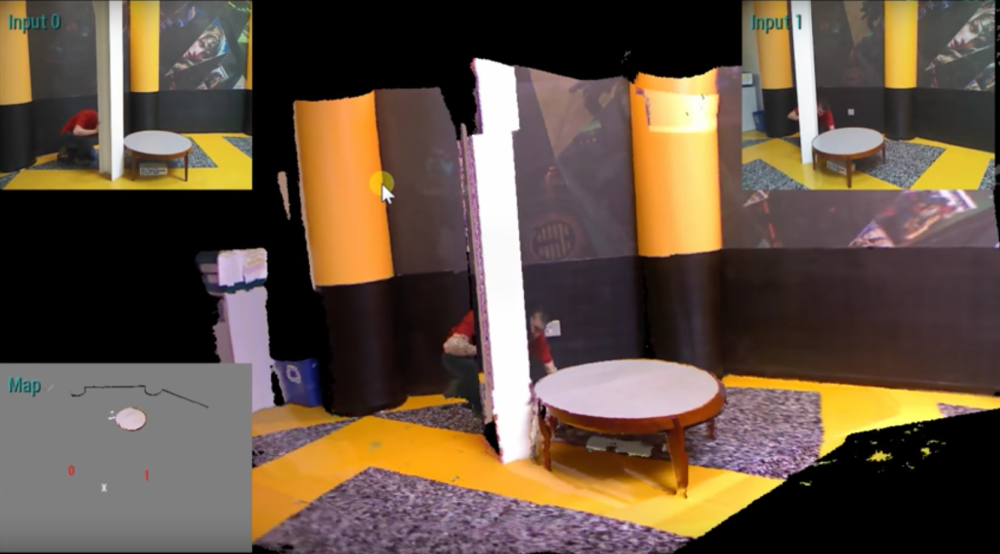 Virtual Eye is a software system that can capture and transmit video feed and convert it into a real time 3D virtual reality experience. It is made possible by combining cutting-edge 3D imaging software, powerful mobile graphics processing units (GPUs) and the video feed from two cameras, any two cameras. This allows first responders — soldiers, firefighters or anyone really — the option of walking through a real environment like a room, bunker or any enclosed area virtually without needing to physically enter.
Two drones or robots would be inserted into a questionable environment, each outfitted with a camera. The cameras would be strategically placed at different points in the room with opposing viewpoints. Both video feeds would then be fused together with the Virtual Eye software and converted into a 3D view, and it will extrapolate any missing data using the 3D imaging software so the real time virtual reality feed is complete.
Currently the Virtual Eye system is only capable of combining data from two cameras, however Tran expects that to change soon. The DARPA team is hoping to have a new demo version that is capable of combining up to five different camera feeds by next year.
See the full story with a 1-minute video here: https://3dprint.com/140953/darpa-develops-virtual-eye/
Virginia Heffernan on technology, virtual reality, and what the Internet means
 Within this little feud, culture critic Virginia Heffernan has been a longtime outlier, peacemaker, and iconoclast. Heffernan has literary East Coast chops—she earned a PhD in English Literature from Harvard, and then worked as a TV and tech critic at the New York Times for close to a decade.
But Heffernan has long celebrated the aesthetic potential of the web’s whackier and more whimsical corners. She may well be the least cranky tech critic east of the Rockies. In her new book, “Magic and Loss,” she argues that “the Internet is a massive and collaborative work of realist art”—a kind of giant role-playing game that demands “a new aesthetics and associated morality,” and, perhaps above all, a sense of wonder.
Are the artistic project and the profit motive incompatible in some ways?
Thing just aren’t produced if money isn’t being made.
Why did poetry suddenly become short when the New Yorker was the gatekeeper for all poetry? If you’re weighing it against a cartoon and columns of text, then suddenly you can’t write like Walt Whitman with long lines. Most great American art forms, including novels, do end up finding a way to make some money. I know some artists don’t like to have to push back on the market, but to a great extent I appreciate the art that finds dynamic tension in that relationship, and not just crushing tyranny.
See the full story here: http://www.salon.com/2016/07/04/im_in_awe_every_day_virginia_heffernan_on_technology_virtual_reality_and_what_the_internet_means/
(Mktg Research) It Doesn’t Look Like Virtual Reality Is a Thing Yet
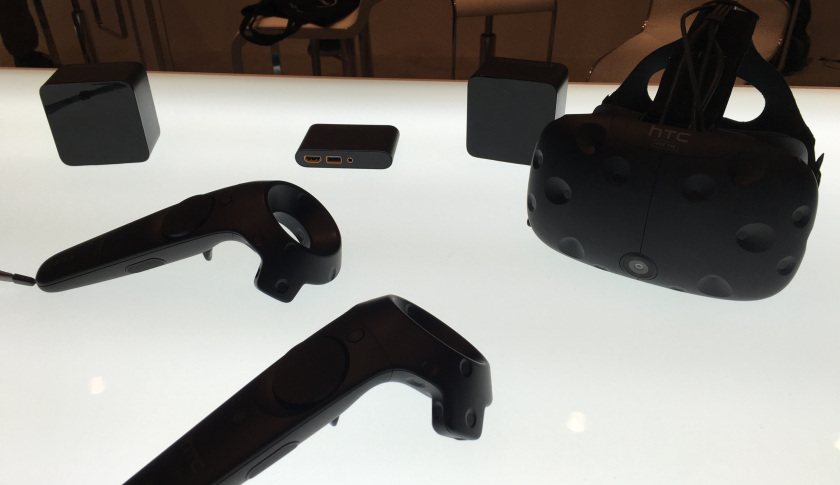 HTC has sold almost 100,000 units of its Vive virtual reality headset that went on sale March, according to an estimate based on customer usage. The $800 Vive headset came with several games that operate on the Steam video gaming network. Steam usage statistics show almost 78,000 people have played Job Simulator, which was bundled with the Vive hardware, the website Road to VR reported on Monday. Several other Vive games that can also be used on other hardware showed usage of almost 95,000.
The Vive sales figures, representing an estimated $62 million of revenue, show that the device isn’t a flop, but it’s not exactly a mass-market hit either. Some analysts have cut their estimates for VR hardware sales this year due to shipping delays at HTC and its competitors, as well as the requirement for a powerful PC. The small numbers for HTC would seem to back up that pessimism.
Analysts are divided over how quickly virtual reality will catch on. At the high end, 20 million units could be sold this year, including all types of VR headsets and accompanying controllers and accessories, according to market research firm Tractica. Neil Schneider, executive director of the Immersive Technology Alliance, came up with a much smaller estimate of 300,000 units in the first 12 months on sale. Cheaper VR hardware that relies on using smartphones and not a PC, such as the Samsung Gear, could sell 10 times as many units, Schneider estimated. And looking out a few years, market tracker Digi-Capital cut its rather optimistic forecast for spending on virtual and augmented reality in 2020 to $120 billion, down from an earlier forecast of $150 billion.
See the full story here: http://fortune.com/2016/07/05/virtual-reality-htc-sales/
Aurasma – AR for marketing, education, ….
 [Aurasma is] the world’s leading augmented reality platform with over 200,000 customers using the technology to make print interactive. Our customers are using Aurasma for marketing, training, and educational purposes across different verticals, use cases, and age groups. Our users include world-renowned commercial brands, as well as primary school-age classrooms and educators. In addition to an app available on the Apple App Store and Google Play, Aurasma includes an intuitive, drag-and-drop AR creation studio. We are laser-focused on ease of creation, and users with no formal technical training can build, launch, share, and track their own augmented reality campaigns.
Other companies who seek to retain their branding throughout the mobile app and AR experience can have Aurasma build them a white-label app or use the Aurasma SDK to embed AR into their existing app. Mohawk Paper, a long-time Aurasma customer, offers interactive print newsletters that launch AR through the Mohawk Live app.
See the full story here: http://mobilemarketingmagazine.com/reality-augmented/
American AR Meta Gains Chinese Stamp Of Approval
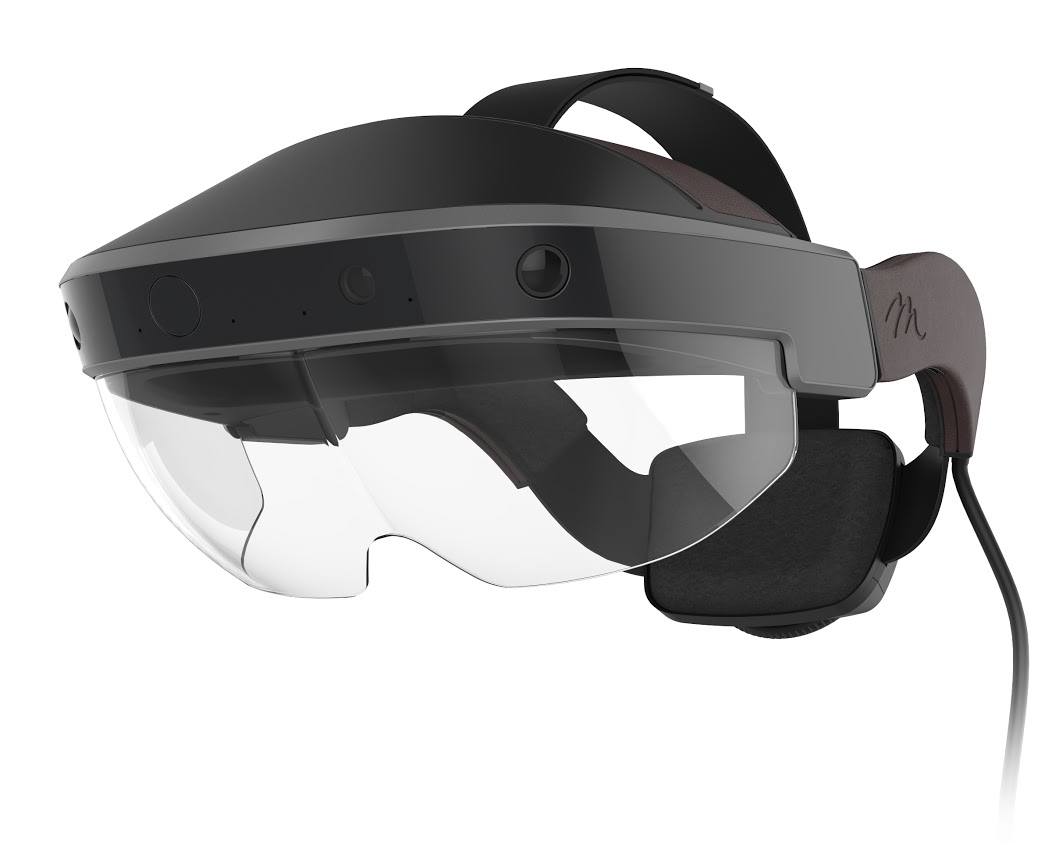 American augmented reality technology company Meta announced the completion of its USD50 million round of funding and its major investors included Horizons Ventures Limited, Lenovo, Tencent, Banyan Capital, Comcast Ventures, and GQY.
Meron Gribetz, chief executive officer of Meta, said that Meta integrates the leading optical solutions with an interactive system designed basing on neuroscience principles. Compared with traditional products, it is easier to use and features stronger functions for users.
Yue Bin, founding partner of Banyan Capital, said that Meta may be the only start-up that can directly compete with large companies such as Microsoft and Magic Leap in the AR sector. Other Chinese firms like Lenovo and Tencent added to the Sino flavoring of this latest round of investment.
See the full story here: https://www.chinatechnews.com/2016/07/04/23715-american-augmented-reality-gains-chinese-stamp-of-approval