NextVR is teaming up with music promoter Live Nation to offer hundreds of concerts in virtual reality.
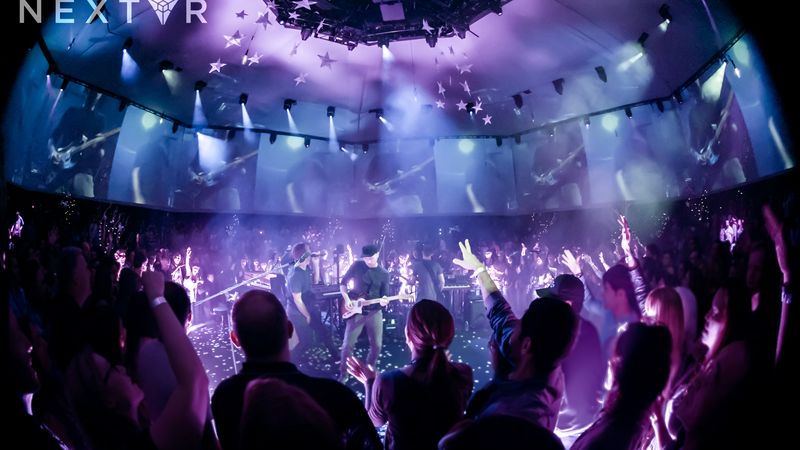 Virtual reality producer NextVR has struck a deal with concert promoter Live Nation to broadcast hundreds of upcoming concerts in virtual reality. The five-year deal will kick off with a yet-to-be-announced event this summer.
"This agreement actually spans from what you might consider an intimate performance to very large music festivals," NextVR co-founder Dave Cole told Recode. The effort will begin with free events, with the possibility that some will be pay-per-view as the audience grows and technology matures.
Concerts are a good candidate for VR for another reason: There is really only one key spot where you want to be.
One of the advantages of the long-term Live Nation deal is that NextVR will be able to work with the musicians ahead of time, designing camera positions into their staging.
See the full story here: http://www.recode.net/2016/5/5/11634242/live-concerts-could-be-just-the-ticket-for-virtual-reality
The New Yorker releases its first augmented reality cover
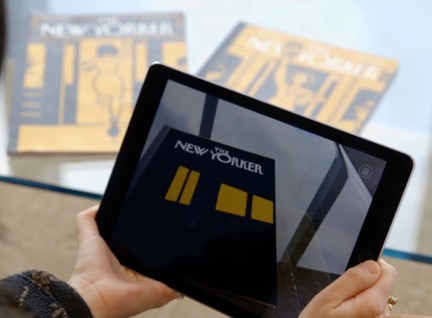 [Philip Lelyveld comment: Watch the video at the link. The biggest news is that the New Yorker has an annual Innovation Issue. Who knew?]
See the full story here: https://news.fastcompany.com/the-new-yorker-releases-its-first-augmented-reality-cover-4006426
Terragon Group to make Augmented Reality (AR) mainstream in Africa
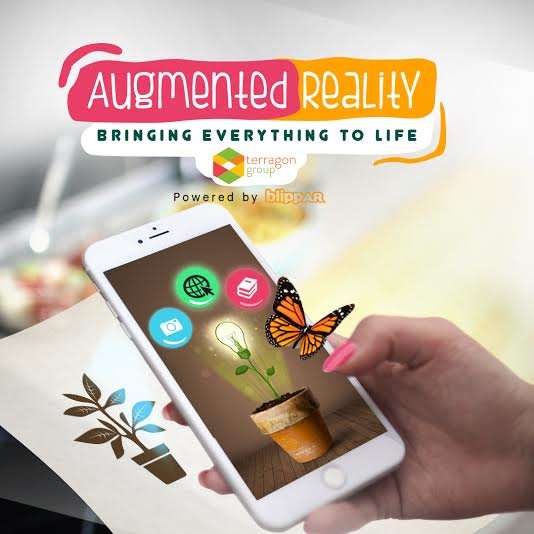 Terragon Group, Africa’s largest digital media company, recently announced its capabilities to create Augmented Reality (AR) solution in Africa.
Terragon Group has partnered with Blippar Inc., a leading technology company in AR globally, to bring the solution to the African market.
“The opportunities for AR are endless to any organization as it seeks to enhance our real world experience. By superimposing digital information on real life objects, individual customers are given a personalised and rich user experience that enables them to easily connect to a brand’s offerings. With the use of AR, Brands have an in-depth understanding of their customer behaviour that will increase affinity, user engagement and interaction with their various product/service offering," Esan said.
See the full story here: http://pulse.ng/tech/blippar-terragon-group-to-make-augmented-reality-ar-mainstream-in-africa-id4996566.html
Adding a level of reality to online shopping
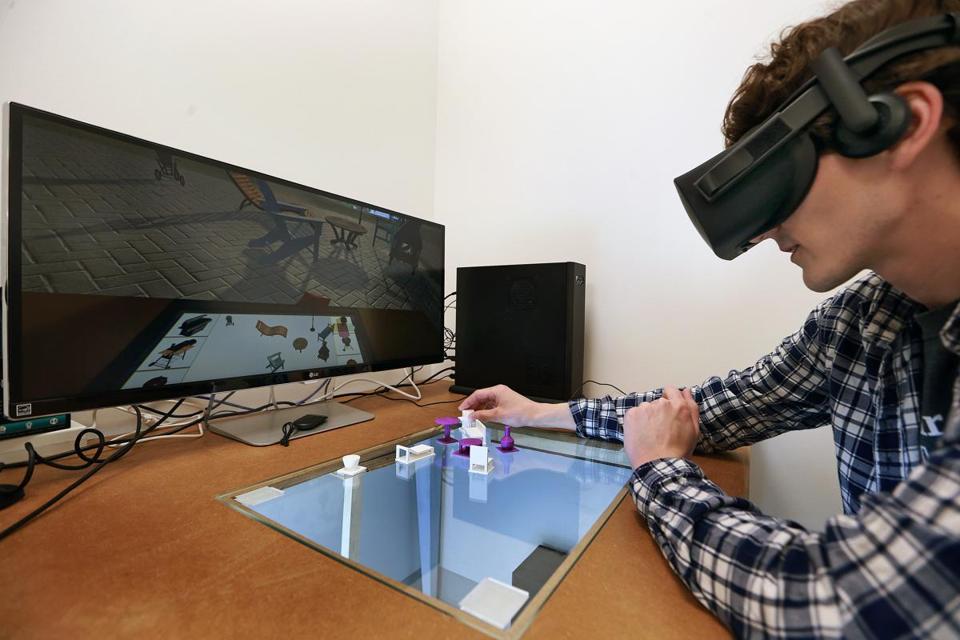 In a rather bland office above the Copley Place mall, Shrenik Sadalgi is doing a little redecorating. He installs a $1,000 chandelier in the ceiling in a matter of seconds, without a drill or a shower of plaster dust. Then, without breaking a sweat, he places an upholstered armchair beneath it.
Sadalgi’s only tool is a small tablet computer outfitted with an “augmented reality” app that he and his team at Boston-based Wayfair are developing. Because the chandelier is merely a digital object overlaid atop the real environment, with a click he can move it to another part of the ceiling, and with another click he can turn it on to see how it would illuminate the space.
The first step is creating a three-dimensional digital model of the furniture the site sells. That involves putting an item onto a turntable that rotates it as four high-resolution digital cameras mounted onto a vertical pole snap about 3 gigabytes’ worth of still photos.
Wayfair cofounder Steve Conine talks about using this technology to “close the gap,” so that shopping for furniture on the Internet appeals to people who haven’t done it before, and makes Wayfair more competitive with brick-and-mortar retailers where you can sit on a sofa before you buy it.
See the full story here: https://www.bostonglobe.com/business/2016/05/05/adding-level-reality-online-shopping/wXRlzWBdGIo7j5LO8sOg5K/story.html
Virtual reality: The Next Big Thing for college creatives
 [Philip Lelyveld comment: Featuring my USC VRSC friends!!!]
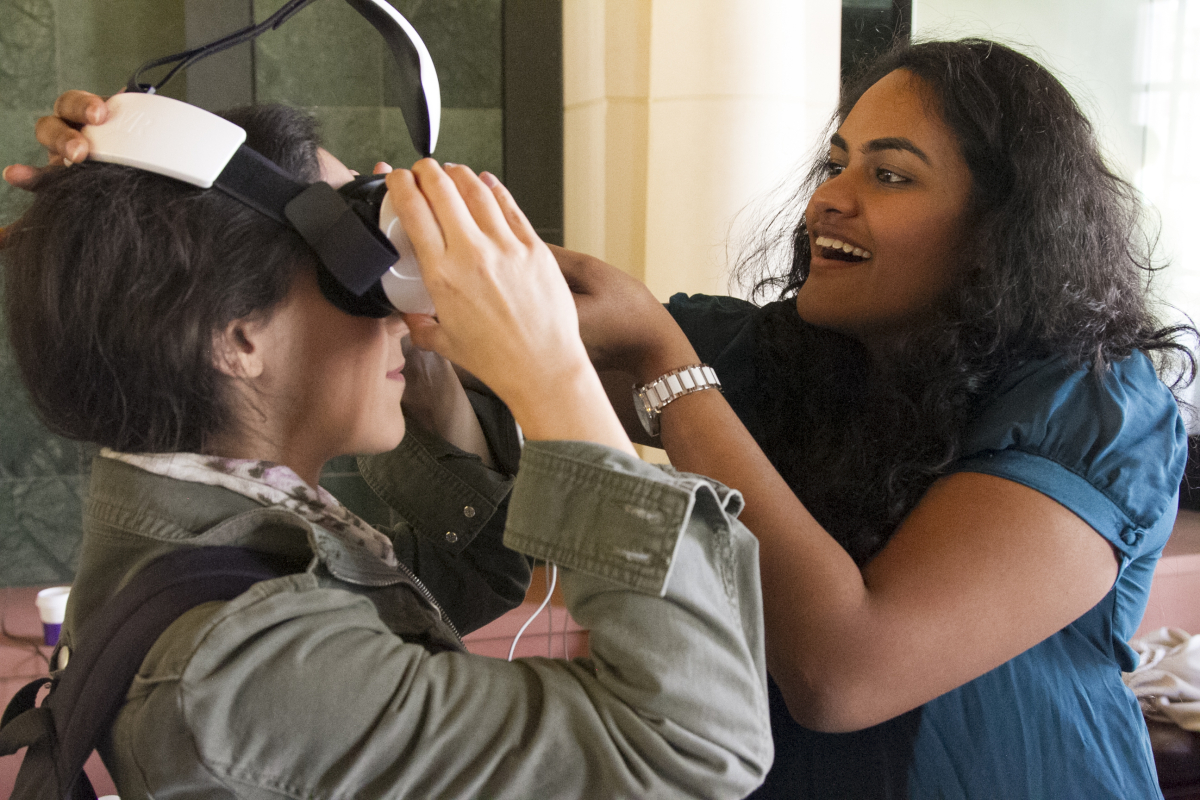
Among the bigger showcases for the technology took place last month, when the University of Southern California’s Virtual Reality Club (VRSC) hosted its first annual Virtual Reality Festival and Demo Day, a showcase of projects and panels with The Walt Disney Company as its title sponsor.
Students traveled from the University of California-San Diego, UCLA, Chapman University, Loyola Marymount University and the University of Colorado-Boulder to attend the fest. The judges were industry professionals from companies including NVIDIA, Google, Maker Studios and Industrial Light and Magic’s X Lab.
Some $25,000 in prizes were split among winners in four categories: 360 Live-Action Videos, 360 Animation, Interactive VR Games and Immersive Technology/Augmented Reality (AR). VR/AR categories ranged from health care to games, journalism, interactive design and interpretive dance.
“I encourage all virtual reality creators to say ‘no’ to things like Grand Theft Auto,” Townley says. “Make something worthwhile. That should be the No. 1 priority. That needs to be the future.”
See the full story here: http://college.usatoday.com/2016/05/02/virtual-reality-college-campuses/
Magnify – The Virtual/Augmented Reality Pacific Summit
 Presented by Air New Zealand
Spend two days with some of the best minds in Virtual and Augmented Reality. If anyone is interested in Gaming, Story-telling, Advertising, Fine Arts, Journalism, Digital Marketing and any other form of creative expression, then this is the event for them!
See the full story here: https://www.thebigidea.nz/events/207143-magnify-the-virtual-augmented-reality-pacific-summit
Get real! How augmented reality toys could make VR feel like a gimmick
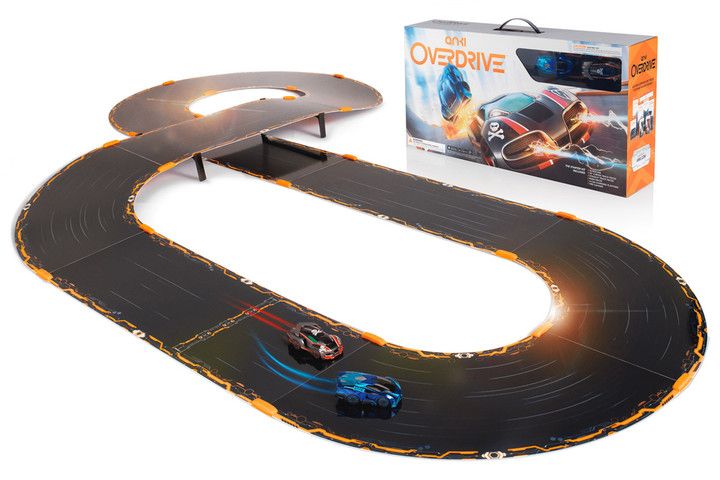 Anki is the maker of Overdrive slot-less, slot-car racers that utilize AI driven cars and smartphone controls to add whole new levels to the classic living room racing experience. The toy has proved a winning combination over the past few years, earning it several awards at toy tradeshows.
“People have an emotional connection to a physical product they can hold in their hand” said Mark Palatucci, co-founder of Anki. “But video games can be a lot more fun. They’re adaptive, they scale the difficulty with the skill of the player. Overdrive takes the emotion and powerful connection with a physical product and combines it with the magic that makes video games so engaging.”
Silas Adekunle, founder of Reach Robotics – which makes real-life robots with augmented reality features – agrees. “People love to play with toys,” he said. “And that’s when they are happy to make big purchases, too. They’ll spend $100-$200 on a physical product, where they wouldn’t spend anything like that on a game.”
See the full story here: https://www.yahoo.com/tech/real-augmented-reality-toys-could-101504497.html
One Year Later, Oculus and Valve Still Mum on Timeline to Open Tracking to Third-parties
 [Philip Lelyveld comment: open and interoperable standards are the key to building a market for the higher value VR experiences. Google is setting the baseline by launching and ecosystem to support nearly device- and OS-agnostic live 360 VR streaming capture and playback, including free training at their facilities. Oculus and Valve remaining closed on the higher-level functionality will slow market growth as consumers wonder wither either will be able to maintain an adequate experience-stream to justify buying, and regularly upgrading, the hardware.]
Both Oculus and Valve have gone on the record to say that they’d be opening up their respective tracking systems for third-parties to make use of, but after a year, neither company is ready to talk specifics.
So called ‘6DOF’ (degrees of freedom) tracking is critical to virtual reality. VR systems need to know where your head is and precisely how it’s moving through space in order to render a virtual world which moves around you as you would expect to see in real life. 6DOF tracking is also important for adding motion input to allow users to effortlessly interact with the virtual world.
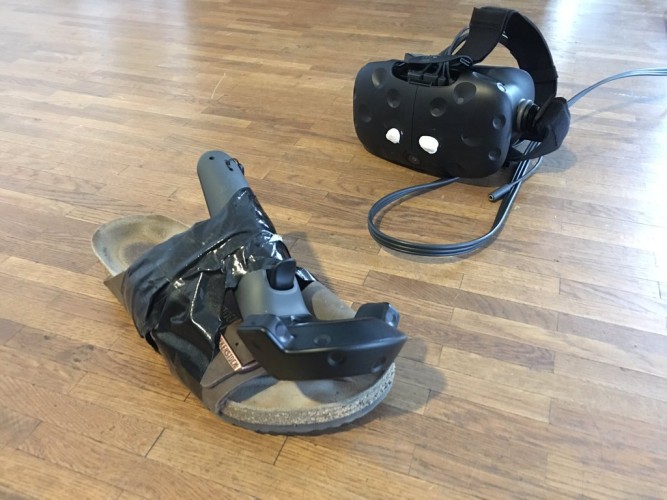
But extending those tracking systems beyond the head and hands has a wide range of uses; tracked third-party peripherals could open up a world of new opportunities for VR interactivity. One major use-case is simply mirroring the virtual item—be it a bat, golf club, sword, etc.—to the real object that the player is holding. This enhances immersion because not only is the object shaped and held just as it would be in real life, but the user benefits from all the expected forces like weight, leverage, and momentum from the object’s mass.
Third-party controllers with features that go beyond the first-party offering would also be viable with access to an established tracking system. Tactical Haptics, for instance, is creating a VR controller with ‘Reactive Grip’, a unique haptic solution which can create feedback not possible with rumble alone.
Both companies have gone on record to say that they plan to open up their tracking systems, but have been extremely tight-lipped about timelines or specifics.
Given that it could mean increased developer interest, I’m quite surprised neither company has been vying to be first and best when it comes to opening up their tracking systems to third-parties. Surely both Oculus and Valve/HTC have been busy dealing with some not-so-smooth initial launches, but it’s clear that there’s demand from developers and companies to track more than just head and heads in VR.
See the full story here: http://www.roadtovr.com/oculus-constellation-valve-lighthouse-open-tracking-third-party-api/