VR Bedtime Stories
 It’s designed to give parents the ability to read bedtime stories to their children within the boundaries of a virtual reality environment. In the accompanying promo video, the child wears a Google Cardboard headset and the parent wears Gear VR—the kid’s includes a playful character mask—and they can interact with each other even if they’re miles apart. (You can tour the app’s virtual world in a 360 degree video.)
The shitty reality is that we need to do this in the first place, because for a lot of parents, it’s not feasible to sit next to little Susie every night and read her a bedtime story. The future may be bleak, but the gadget, in this case, is only trying to help.
Perhaps we’ll just have to wait for teleportation. Or, you know, a decent parental leave policy.
See the full story here: https://www.youtube.com/embed/dKjwazpmS-w?wmode=transparent&rel=0&autohide=1&enablejsapi=1&showinfo=0&start=0
Why Major League Baseball Teams Are Turning to Virtual Reality
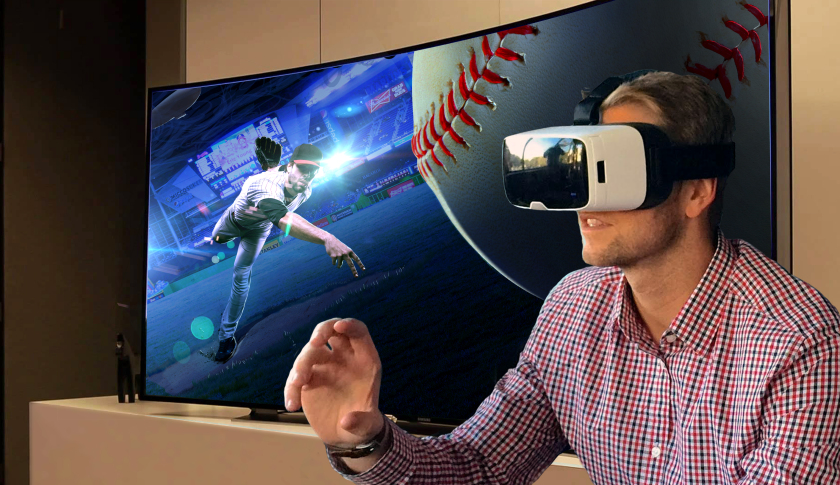 When it comes to improving the performance of professional athletes, however, it has started to make a profound change. One study by Stanford University concluded that using virtual reality technology was more effective than watching video game film. StriVR, a VR company used by at least seven NFL teams and 13 college football programs, has been credited with a significant role in pushing the Arizona Cardinals and the Minnesota Vikings into the playoffs last year.
For Eon Sports, a test of its VR headset with 30 young quarterbacks over a few days showed that it improved decision making by 30%. (Results of how it boosts baseball hitting are due later this season.) This nudges Reilly closer to his one mission for EON Sports VR: to use virtual reality to train young athletes the fundamentals of a sport.
See the full post here: http://fortune.com/2016/04/29/mlb-eon-sports-vr/
‘BigScreen’ Lets You Throw Virtual LAN Parties, Desktop Mirroring in VR
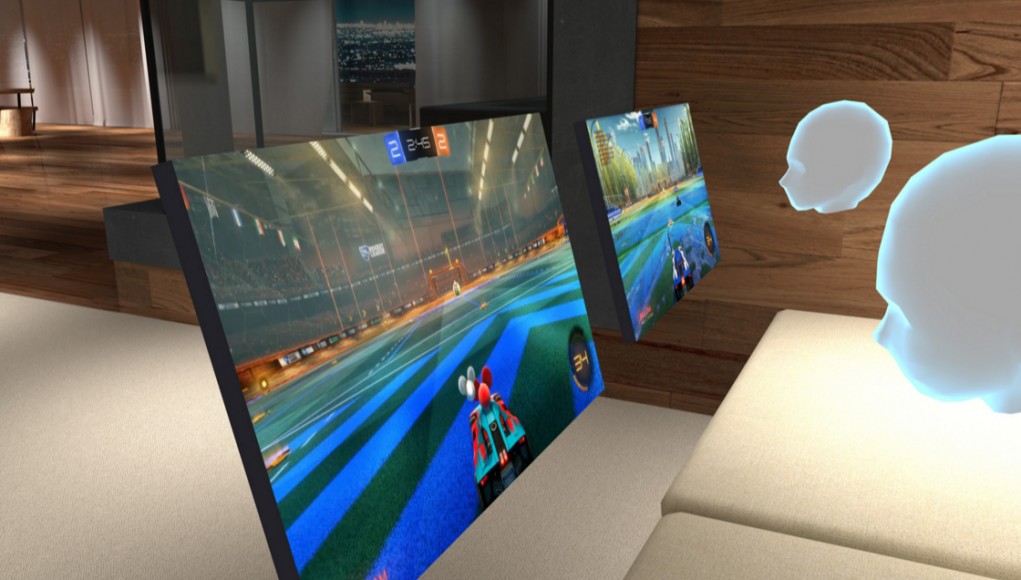 Because BigScreen offers you a way to mirror your monitor to others in a social VR space, you can do everything you would normally do—like browsing the web, streaming your favorite series on Netflix, or playing a game of Rocket League on Steam. And that goes for everyone in the environment too, letting you and 3 other people contemporaneously stream your own desktops and view them just as if your friends were sitting in a room with their own personal computers.
One of the most interesting bits about BigScreen is the fact that only one person in the party needs to have access to any given piece of content, like a locally stored video or their own Netflix account—which is unlike any social VR space we’ve seen until now. Programs like AltspaceVR allow you to browse the web and stream content in a shared setting, but with the caveat that everyone in the space has equal access to view it—meaning everyone needs a Netflix account. Not so for BigScreen. You will of course need your own copy of a game if you plan on playing in the same room as someone, and you don’t have the ability to interact with another person’s screen either, but that goes for real life LAN parties too.
BigScreen is available for free on Steam starting April 28th, and is cross compatible with Oculus Rift and HTC Vive.
See the full story here: http://www.roadtovr.com/bigscreen-lets-throw-virtual-lan-parties-desktop-mirroring-vr/
The Climb turns virtual reality acrophobia into an extreme sport
 Instead of reaching out a physical arm, you’ll look at a ledge or crevice to center one virtual hand over it, then hit the corresponding trigger to pull yourself up. The key mechanic is a fatigue system that kicks in whenever you’re hanging from one hand, giving you a few seconds to anchor the other one and recover. You can buy more time by stopping periodically to rub your hands with chalk — using another controller button — or by carefully half-releasing a trigger, gaining stamina but risking a fall. To grab particularly distant ledges, you’ll need to press a button to jump, throwing yourself off one side of a cliff and hoping to get a good grip on the other.
See the full story here: http://www.theverge.com/2016/4/28/11526150/crytek-the-climb-vr-oculus-rift-review
Cracker Jack ditches toys in favor of augmented reality
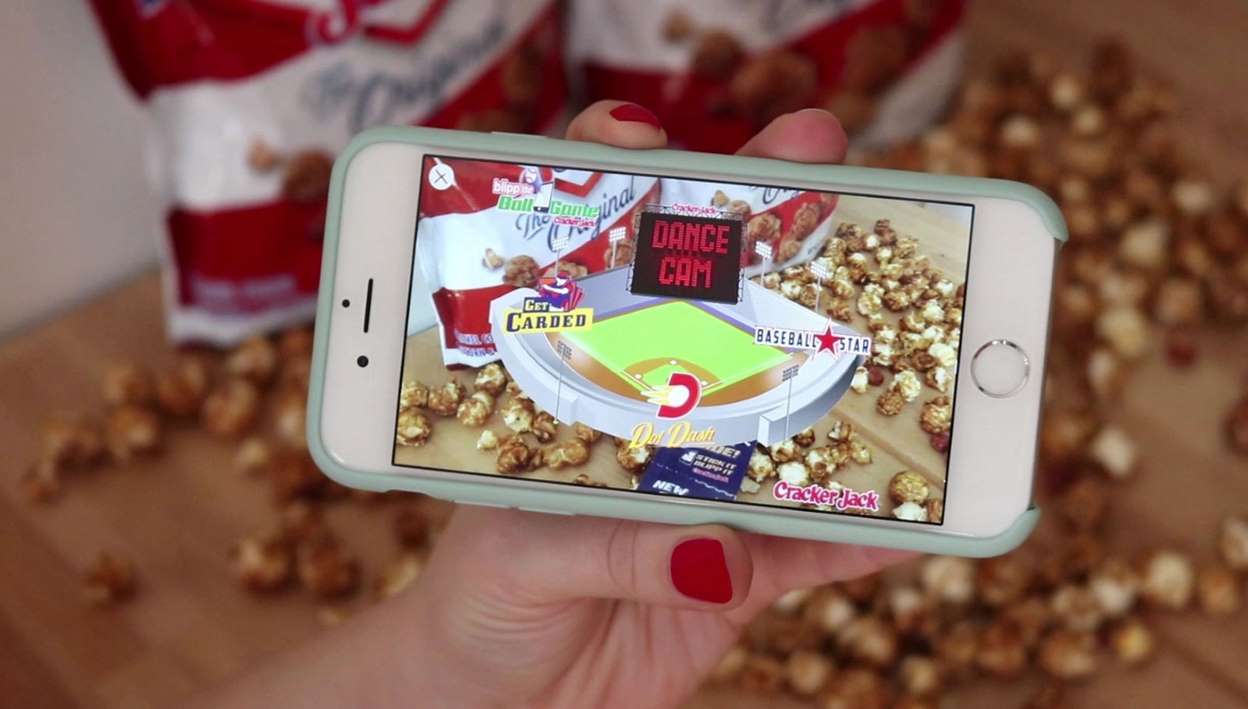 Rather than unwrapping a plastic figurine or trinket, you'll find a sticker that you scan with your phone's camera to "bring the ballpark to life" with a mobile game or photo treatment. Oh yeah, you'll have to download the Blippar augmented reality app first.
Once you scan the included sticker, you'll be greeted with one of four "experiences" that mimic activities at a real baseball game. There's "Dance Cam" that allows you to pretend you're up on the jumbotron, a "Dot Race" around the field and the ability to create both baseball cards and autographed photos of yourself. Those cards and photos can be traded among your family and friends, in case you were wondering. The changes coincide with the start of baseball season across a number of leagues, so don't forget to take your phone when you head to the stadium this year.
See the full story here: http://www.msn.com/en-us/news/other/cracker-jack-ditches-toys-in-favor-of-augmented-reality/ar-BBsmgyI
USC Students work toward the future of VR
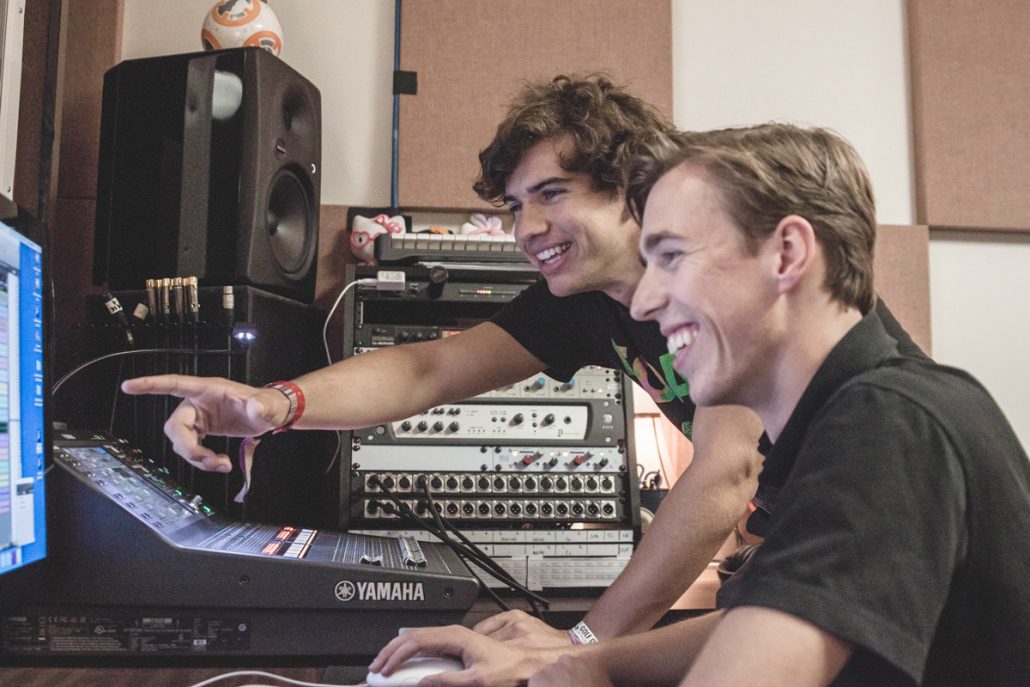 “I’ve been into virtual reality for about six months now. I got to work on it in my internship,” Feingold said. “I was able to buy a camera at SXSW, one of the first 360-degree consumer cameras. It’s just two cameras and it stitches [the video] automatically.”
For one of their first projects, Feingold used the $350 camera to film a VR production for the USC Men’s Rowing team, which picked up hits from around the world.
“I made a rowing film — I’m on the rowing team at USC. I sent it to a few people but it got really viral within the rowing community,” Feingold said. “We got messages from the Kuwaiti national rowing team, people in Great Britain, teams in Australia. Lots of people were sharing it.”
“I started getting a lot of requests from people to make them videos, real estate firms, marketing companies, convert and record labels,” Feingold said. “People in L.A. might want to see a house in New York and they don’t even have to be there.”
Jensen spoke on the barriers that VR technology faces. He mentioned the limits of stereo sound when using an interactive headset or VR phone app.
“It’s weird because you’d be looking at something [different], but the audio wouldn’t change, and video games have picked up on that,” Jensen said. “They’ve started mapping sound based off the viewer’s head movements. Consumer public video hasn’t really caught up yet.”
“It’s such a low barrier of entry, the fact that I could just buy one of the [cameras] but also there’s not a lot of people doing it yet,” Feingold said. “It took a lot of teaching myself to stitch and edit.”
See the full story here: http://dailytrojan.com/2016/04/25/students-work-toward-future-virtual-reality-films/
Aremi: The Magic of Gaia Lets Users Become Wizards Through Augmented Reality
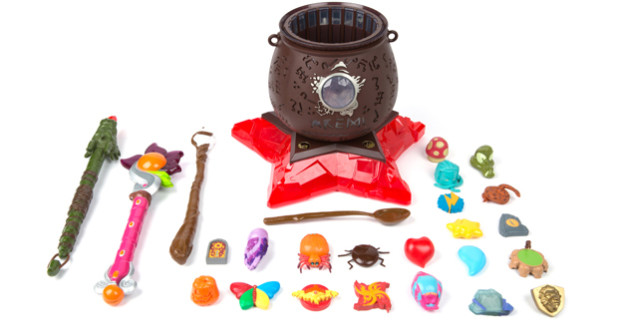 Immersive Play (Immplay), a member of the Zynga co.lab accelerator, announced that it will release Aremi: The Magic of Gaia, its augmented-reality-supported magic cauldron toy, in limited quantities this holiday season, ahead of the product’s retail release in 2017. Aremi: The Magic of Gaia combines real-world toys with a mobile application, and will allow children to become wizards and create virtual potions.
Aremi: The Magic of Gaia features a real-world cauldron toy, which parents can fill with water to produce mist while their children create potions. In a recent demo with SocialTimes, Immplay co-founder and CEO Marco Carvalho compared the cauldron’s mist creation to a humidifier, making it safe for kids. The platform features more than 40 waterproof potion ingredients, which players will be able to combine in specific ways to create potions within the app.
Elsewhere, users will be able to create traveling potions, which will virtually transport them to another city or country. While users will be able to view their new surroundings through their device’s screen, players with a separate virtual reality headset, like the Samsung Gear VR, will also be able to experience the location through virtual reality.
See the full story here: http://www.adweek.com/socialtimes/aremi-the-magic-of-gaia-lets-users-become-wizards-through-augmented-reality/638532
News Corp invests in ‘augmented reality’ business Plattar
Rupert Murdoch's News Corp has invested in a startup that aims to make augmented reality, well, more of a reality.
The startup, Plattar, has been spun out of Christchurch digital agency One Fat Sheep, which has previously created augmented reality games and apps for Hell Pizza, Frucor and ASB Bank.
Hell's game let players point their smartphone camera at a Hell Pizza box which then "opened" into an interactive 3-D map of Auckland, Wellington or Christchurch, at the centre of which was a Hell Pizza store, under attack from zombies which had to be destroyed.
Deans will run Plattar from Melbourne while his brother, Sebastian Deans, continues to develop One Fat Sheep in Christchurch.
See the full story here: http://www.stuff.co.nz/business/industries/79371504/News-Corp-invests-in-augmented-reality-business-Plattar