How Facebook’s Social VR Could Be The Killer App For Virtual Reality
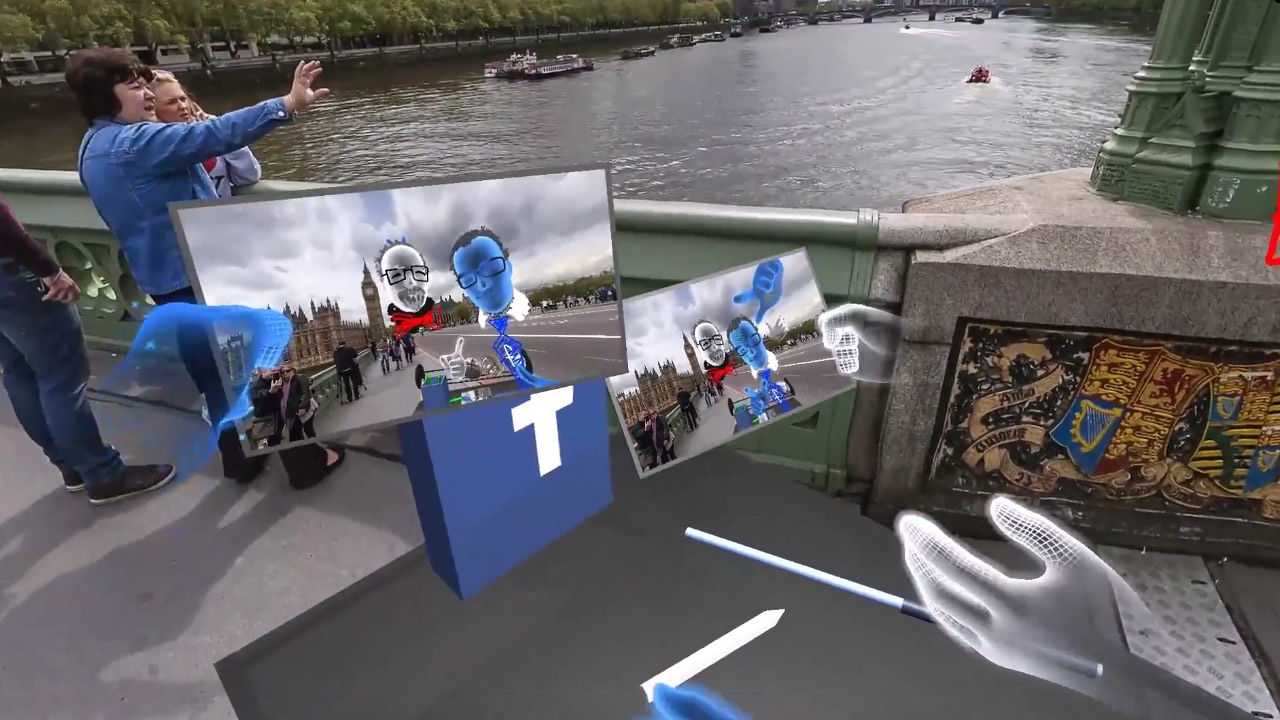 ...a demo that Schroepfer showed on stage at F8 was just a very early prototype of what social VR could be, and while the company would surely love to hand ready-for-primetime social VR experiences to users today, it’s a safer bet to expect them when they’re ready, and really capable of delivering what the company calls "social presence"—the sense that you’re really with other people, sharing real experiences, when you’re using multiperson VR.
Oculus first began showing people multi-user VR last year, it’s "Toybox" experience, a delightful two-person romp that utilizes the company’s hand-held Touch controllers, which integrate users’ hands in three-dimensional space. If you ever listen to Facebook CEO Mark Zuckerberg talk about VR, you’ll inevitably hear him talk about how you can play ping-pong against another person in VR. That’s Toybox.
Now, though, Facebook is making multi-user VR much more social. During his keynote, Schroepfer showed how he and Mike Booth, a Facebook engineer located at the company’s Silicon Valley headquarters more than 30 miles away, were able to jump together into a series of 360-degree photographs, with each person represented by an animated avatar, and each able to see all around them as they interacted.
They even pulled out a VR selfie stick and took an instant selfie, which they then uploaded directly to Facebook. This was totally social—no game mechanics at all. That’s because, Social VR product manager Mike Beltzner explained to Fast Company at F8, Facebook found through its research that playing games, even with other people, took away from the social experience. "The more game-like it is," Beltzner said, "the less you interact."
"Some have raised concerns that VR and [augmented reality] might be disconnecting, but Facebook's social VR demo shows how these immersive experiences can bring people together," said Linc Gasking, the cofounder and CEO of 8i, a leading VR technology developer. "It's clear that the holy grail for VR and AR is people. It's real humans that are going to drive these social interfaces that will connect us in ways we haven't yet imagined. Soon you'll not only be able to take a virtual selfie with your friend, but imagine taking a selfie with your friend and Steph Curry after watching a Warriors game in VR."
While the on-stage demo involved Schroepfer and Booth interacting inside a still 360 image, Beltzner told Fast Company that the social VR group has worked with 360 video as well.
Anthony Batt, co-founder of the VR production company Wevr. "The Internet has taught us that computers are as much about communication as they are about computation.
Gasking said "These immersive platforms will bring about a transition of how we experience the many tech applications we use on a daily basis. In the future, we'll essentially walk into volumetric immersive applications, not just social apps like Facebook, but also e-commerce, real estate, dating, education, or any number of apps we consume on a flat screen today."
See the full story here: http://www.fastcompany.com/3058914/how-facebooks-social-vr-could-be-the-killer-app-for-virtual-reality
What Began as April Fool’s Day Joke is Now $49 VR Headset
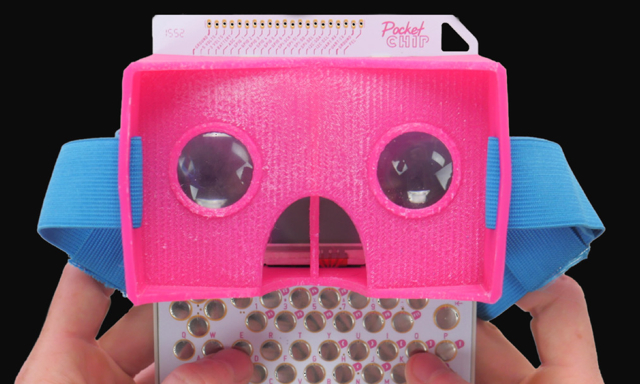 Pockulus is based on another Next Thing invention, PocketChip, which combines the Linux-based CHIP computer with a 4.3-inch screen and QWERTY keyboard. CHIP also has a Web browser, word processor, built-in Wi-Fi, storage, a battery and programs to make music and games.
Currently, people are using Pockulus to play “homebrew 3D games, as well as some 3D games that Nintendo made in the mid-1990s for its Virtual Boy system.” In fact, although Virtual Boy was Nintendo’s least successful system, a group of enthusiasts have continued to code games for the system — and all of them are compatible with Pockulus.
“Armed with the knowledge that Pockulus does in fact work, we’re really excited to see what the people do with it.”
Among the “crazy things” that hackers have done with it are to make a $10 version of the Amazon Echo or an old Teddy Ruxpin doll that says nutty things.
See the full story here: http://www.etcentric.org/what-began-as-april-fools-day-joke-is-now-49-vr-headset/
Orah 4i live-streaming Prosumer VR camera from VideoStitc
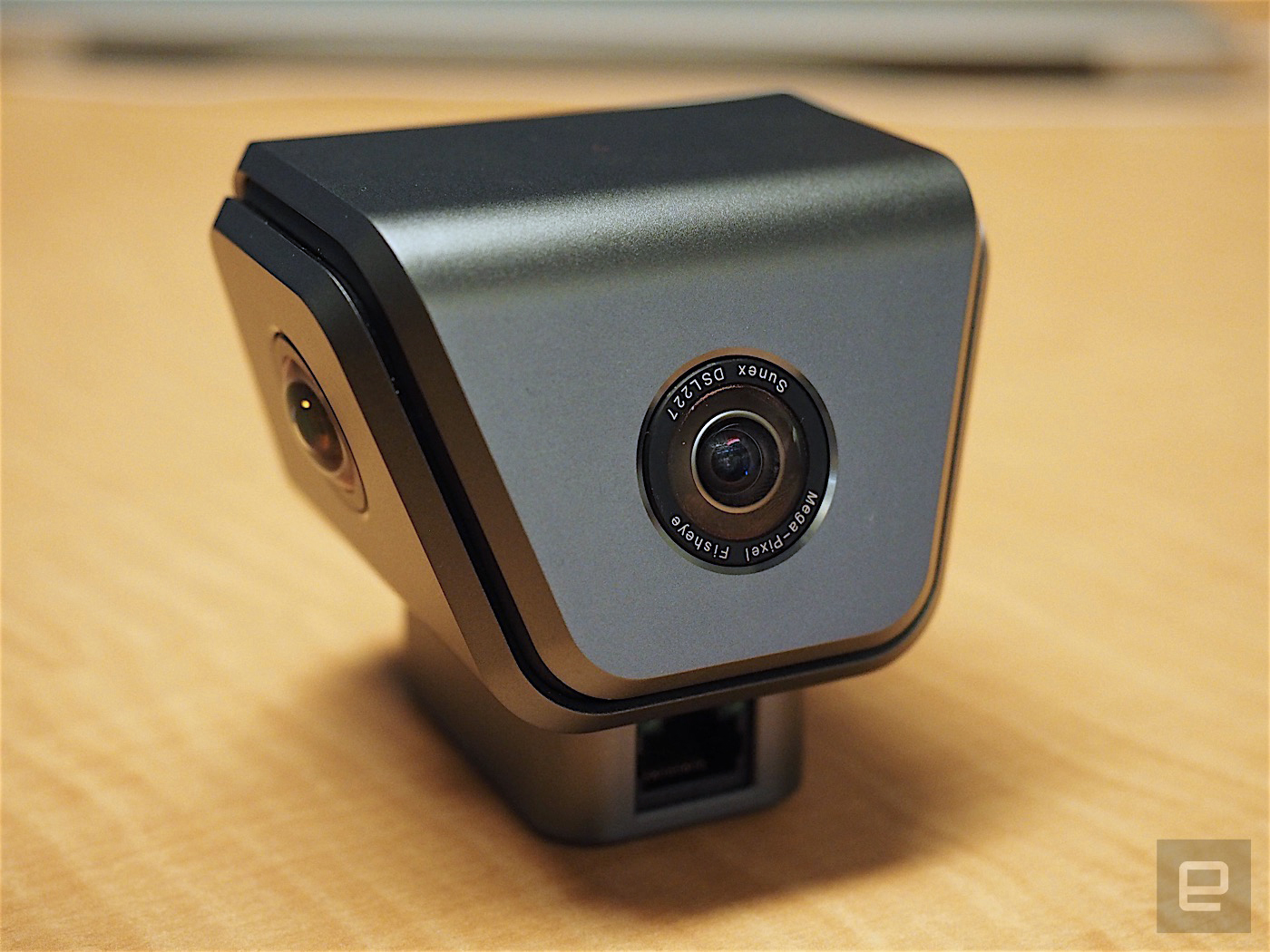 measures about 3.1 x 2.7 x 2.5 inches and weighs only 17 ounces
four fisheye 8-layer f2.0 lenses and four Sony Exmore image sensors.
four microphones in it for capturing four-channel "ambisonic" sound
captures and streams all of that video in 4k
anodized "precipitation-hardened" aluminum
requires you to attach it to what VideoStitch is calling a "Stitching Box," which is essentially a single-purpose computer dedicated to stitching together the 360 video. The box has an Intel CPU, an Nvidia GeForce GPU and an 120GB SSD. Also aboard are four USB 3.0 and two USB 2.0 ports, dual Gigabit LAN, WiFi 802.11 ac/b/g/n and Bluetooth 4.0.
Will retail around $3,600, though the company is running a promotion right now where it's only $1,800.
Caveats;
-there is a 30-second delay in the ‘live’ stream
- not truly portable, because the Stitch Box requires a power source
-
-See the full story here: http://www.engadget.com/2016/04/06/orah-live-360/
Virtual reality can make guns ‘real,’ and that’s a bit terrifying
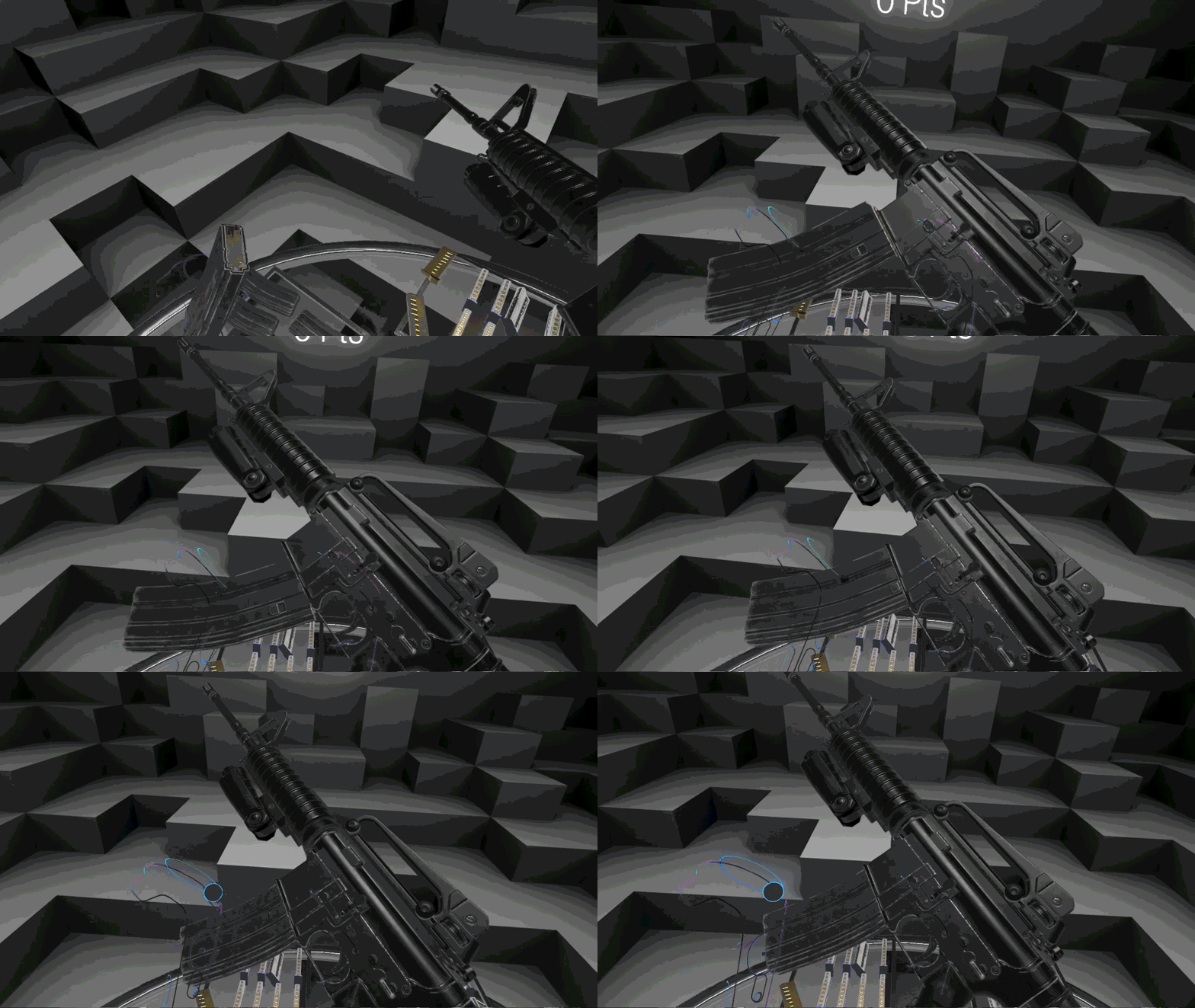 Hot Dogs, Horse Shoes and Hand Grenades is $19.99 and is available now, with more content being added on a regular basis. I don't know if I had "fun" playing it, as the video suggests, but I'm glad it exists. It proves how powerful a medium virtual reality can be for encountering something that may make you uncomfortable in real life in a way that's completely safe.
I can also see actual gun safety being taught by virtual reality programs such as this. Imagine games in which your firearm becomes a working machine, forcing the player to learn proper use and perhaps even maintenance. What happens when your gun jams in the middle of a firefight? How do tactics change when the bullets left in the clip actually stay in the clip when it's removed during reloading?
See the full story here: http://www.polygon.com/2016/4/12/11413572/guns-virtual-reality-htc-vive
Deluxe Launches VR Unit to Facilitate Industrial-Scale Virtual Reality Productions
 Deluxe Entertainment Services officially took the lid of Deluxe VR on Monday, announcing a dedicated creative services unit for virtual reality (VR) projects. Deluxe VR is being headed by Malte Wagener, who previously was VP at Deluxe’s Method Studios and Company 3. The unit will have its official coming-out at NAB next week, where it will show off two VR experiences.
Deluxe VR consists of a team of 35, but also taps into the existing resources of its parent company, including its network of 3,000 artists worldwide.
Last April, the company began to quietly assemble a team of specialists from both the world of visual effects and video game production.
Wagener himself also has a background in both...
...ready for the next step, when studios want to produce experiences that aren’t just two or three, but 20 minutes long. And maybe not just as a one-off, but as a serialized production. “It has to be at an industrial scale,” said Wagener.
See the full story here: http://variety.com/2016/digital/news/deluxe-vr-launch-1201749398/
Lytro’s 755 megapixel Cinema light field camera is going to kill the green screen
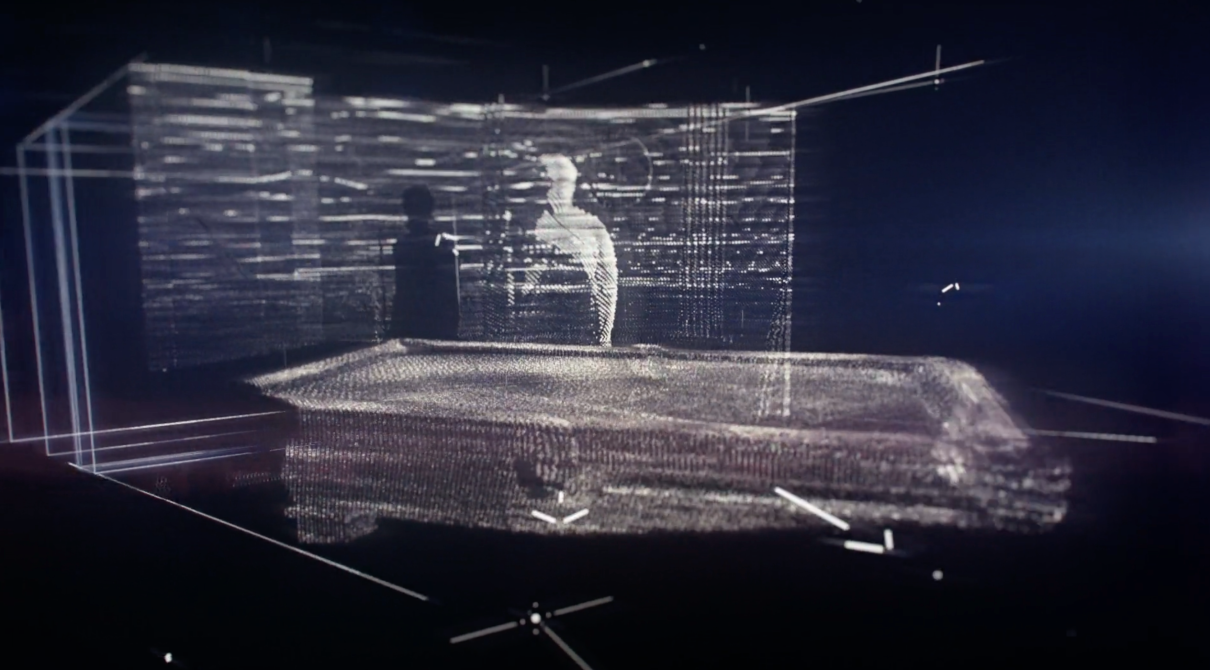 Lytro is taking its rich volumetric 3D camera capture technology into the world of TV and film.
The company’s light field solution is a truly beautiful technology that may eventually be in every camera we snap a shot or video with. The tech essentially uses data on all of the available light in a photo to separate objects by depth and store them in a three-dimensional grid. Eventually this technology will allow the simple creation of VR-ready navigable 3D spaces, but right now it’s allowing filmmakers the ability to achieve a level of detail and flexibility in gathering shots and making post-production edits that wasn’t previously possible.
Today, the company introduced Lytro Cinema, which is the company’s effort to woo those in the television and film industries with cool camera technology that makes their jobs easier.
The Lytro Cinema camera gathers a truly staggering amount of information on the world around it. The 755 RAW megapixel 40K resolution, 300 FPS camera takes in as much as 400 gigabytes per second of data.
Things like changing the depth of field, focus position, shutter speed or dynamic range can now take place after the fact thanks to the truly dynamic data being captured. Lytro believes that this tech is going to make the merger of CGI images and real-world footage even more seamless, and I believe it too.
Lytro Cinema is implementing light field technology to create something called a “depth screen,” which allows filmmakers to capture green screen shots without actually having to place actors in green screen environments.
VR headset hygiene mask keeps things sanitary
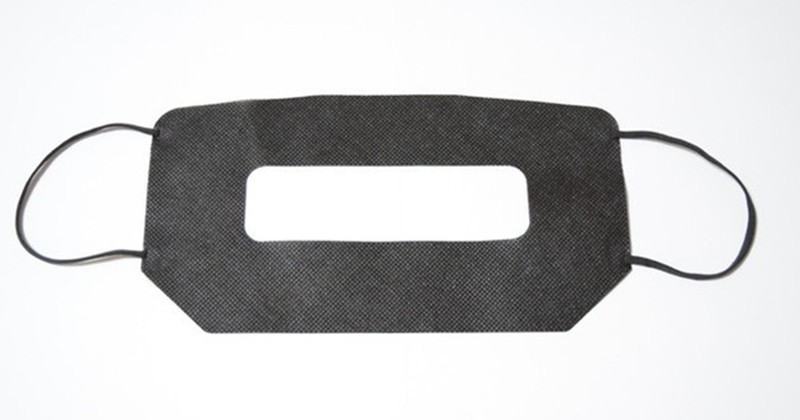 Its the little things that can make or break an experience.
Anyone running VR headset demo's may want to invest in some of these sanitary masks for their guests' health and peace of mind.
Each time a VR headset is placed against someone's face it picks up oil and dirt that, over time, can make it greasy and rather disgusting. During demos such as those at CES many thousands of people will wear the same headset. The headset is briefly cleaned by the person providing the demos. These disposable sanitary guards are primarily intended for demo booth situations, but anyone who wants to keep their headset clean may be interested.
They can be purchased in sets of 100 masks for 2980 yen ($27.50) here http://store.shopping.yahoo.co.jp/moguravrstore/eiseinuno-gear-vr.html
See the original story here: http://www.slashgear.com/vr-headset-hygiene-mask-keeps-things-sanitary-05434880/