NVIDIA Demonstrates Experimental “Zero Latency” Display Running at 1,700Hz
 [Philip Lelyveld note: this very fast display still needs a very fast processor/CPU and, if tethered, a very fast connection.]
At GTC 2016 this week, Luebke demonstrated an experimental display with a refresh rate that’s almost 20 times faster what we see in current consumer head mounted displays. Running at a whopping 1,7000Hz, the display was mounted on a rail system which allowed it to be rapidly moved back and forth. When shaken vigorously, the image on the display stayed locked in place to an impressive degree. Even when magnified closely, the image on the screen seemed entirely fixed in place.
A 90Hz display shows an image every 11 milliseconds, while this 1,700Hz display shows an image every 0.58 milliseconds.
“…if you can apply this to a VR display, that kind of ultra-low latency would help things stay rock-solid in the environment, to the point that the display would no longer be a source of latency. So this is effectively a zero latency display,” said Luebke.
..you also need extremely low latency input. ...wheels on the rails feed the movement of the carriage almost instantaneously into the system.
See the full story here: http://www.roadtovr.com/nvidia-demonstrates-experimental-zero-latency-display-running-at-17000hz/
Time Warner and Nielsen Will Study How Virtual Reality Affects the Subconscious
 Time Warner and Nielsen are partnering up to study how video content affects the actual hearts and minds of those viewing short-form video and virtual reality.
The three-year partnership between Time Warner and Nielsen will allow the companies to study how video content—both programming and advertising—registers with viewers at a subconscious level. By measuring eye-tracking, facial movement, heart rate and brain activity, Time Warner hopes to tap the technologies and research capabilities of Nielsen Consumer Neuroscience to better understand how consumers think and feel at a deeper level.
Using an EEG (electroencephalogram), researchers can capture brain activity related to arousal and intensity, allowing them to capture whether a video's approach is working or if someone is attracted to a voice. Research on VR and other video between 15 and 90 seconds will focus on three types of brain processing: shifts in attention, memory activation and emotional motivation.
Much of the research will be based at the Time Warner Medialab, said Kristen O'Hara, Time Warner's CMO for global media. She said the lab is in the middle of building a VR facility, which should be ready by the third quarter of 2016.
While neuroscience studies related to marketing have been around for a decade, brands and media companies increasingly are turning to neuroscience research to better understand how consumers perceive advertising.
See the full story here: http://www.adweek.com/news/technology/time-warner-and-nielsen-will-study-how-virtual-reality-affects-subconscious-170614
New high tech Australian Zoo to use drones, robots, and augmented reality
 Lions and tigers and… drones? Oh, my!
The impending western Sydney Zoo plans to use drones, robots, augmented reality, and whatever innovative technology that an upcoming hackathon at Western Sydney University will dream up. The hackathon is expected to attract more than academics and scientists, but also start-ups, business and industry professionals, and engineers. The partnership between the new zoo and the university could disrupt any current norm of what a zoo experience entails.
So what will the entire visitor experience be like? Professor Scott Holmes, the Deputy Vice-Chancellor and Vice President at WSU, is focused on creating a completely unique and transformative visitor experience unavailable anywhere else in the world.
See the full story here: http://www.inquisitr.com/2970078/new-high-tech-australian-zoo-to-use-drones-robots-and-augmented-reality/
This is GoPro’s new virtual reality camera rig
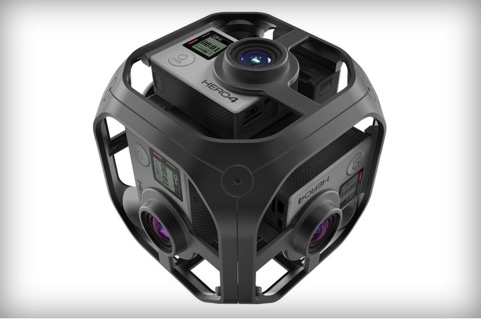 GoPro unveiled a new look at its smaller virtual reality camera rig this morning. The rig is called the Omni, and it's essentially a hollowed-out cube that holds a Hero4 Black camera on each side, for a total of six cameras capturing footage at once. When stitched together, the six cameras will create a single 360-degree video.
Pricing for the rig hasn't been announced yet, but you're looking at $2,500 or so for the cameras alone. At least one somewhat comparable third-party rig already exists, holding six GoPros and selling for about $500 (not including the cameras).
See the original post here: http://www.theverge.com/2016/4/7/11383668/gopro-omni-virtual-reality-video-rig-nab
In Jerusalem, A Musical Moment Making Coexistence A (Virtual) Reality
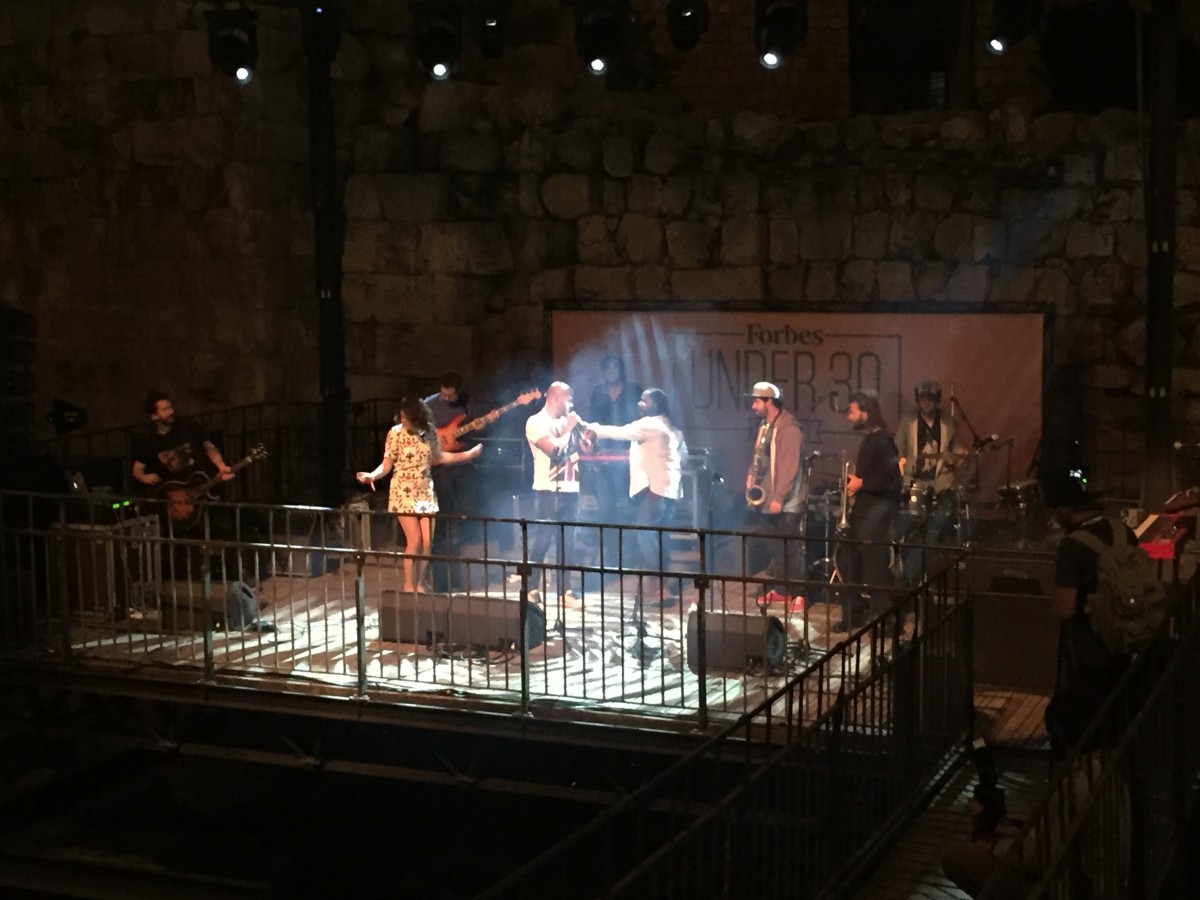 In addition to Simz’ set, the concert for coexistence featured a number of rare treats. Hamilton star and 30 Under 30 alum Okieriete “Oak” Onaodowan opened the night by debuting an original spoken-word piece preaching unity and accountability.
Israeli funk collective Lucille Crew followed with a rollicking and eclectic performance, closing with a dubstep-infused coexistence collaboration with Palestinian rapper Saz. The latter returned to the stage backed by a band made up of Muslims, Jews and Christians, energizing the crowd with rhymes in three languages–and by occasional forays into the front rows.
U.S. rock act MAE ended the night with the first-ever large-scale live musical performance synced to virtual reality. Revelers dropped their mobile phones into specially-designed headsets that allowed them to view a brand-new animation meant to represent the creation of the universe while the band played in time.
See the original post here: http://www.forbes.com/sites/zackomalleygreenburg/2016/04/07/in-jerusalem-a-musical-moment-making-coexistence-a-virtual-reality/#3a670c8d7bb2
NAB and ETC to Present Virtual Reality Summit in Las Vegas
 NAB and the Entertainment Technology Center at USC are coproducing a Virtual Reality Summit at the annual NAB Show on Wednesday, April 20, from 1:00-5:00 pm at the Las Vegas Convention Center. The half-day summit will address key concepts and lessons learned regarding VR production. Hands-on practitioners will discuss the technical and business aspects of producing content in this emerging marketplace, which some consider to be a new media type and art form. You can register for the Virtual Reality Summit and learn more about the NAB conference at the event’s website.
Virtual Reality is climbing the hype cycle. There are daily stories about the funding and star power behind a new VR experience — or the VR content development plans of an Internet company, equipment startup, gaming house or production studio.
The summit at NAB will provide important insights involving this compelling new space. Check out the schedule below.
1:00 pm — The Current State of VR: Market projections, recent hardware and software developments, and perspective on business opportunities for content creators.
Philip Lelyveld, VR/AR Initiative program lead, Entertainment Technology Center at USC
1:30 pm — Live Streaming VR: Producers with hands-on experience in a variety of live VR streaming situations will discuss their victories, pitfalls to avoid, and lessons learned.
Chris Blandy, EVP Technology Solutions, Fox (Moderator)
DJ Roller, Co-Founder, NextVR
Juan Santillan, Co-Founder and CEO, Vantage.tv
Mike Davies, SVP of Field and Technical Operations, Fox Sports Media Group
Jason Farkas, Executive Producer, CNN
2:30 pm — The Business of VR: Business people will have a lively discussion of market projections, company valuations, and how individuals expect to make money.
Scott Lenet, President, Touchdown Ventures (Moderator)
Tony Mugavero, CEO, LittlStar
Brandon Zamel, CEO, Springbok Entertainment
Marco DeMiroz, General Partner, The VR Fund
3:30 pm — VR Audio: We can only see what is in front of us, but we hear and can identify sounds from every direction. Audio is a key component of the emerging language of VR, with unique challenges impacting capture, production, and end-user experience. This panel will focus on this extremely important yet rarely covered topic.
Jacqueline Bosnjak, CEO & Partner, Q Department | Mach1 (Moderator)
Martin Walsh, Vice President, R&D, DTS, Inc.
Nicolas Tsingos, Director of E-media Technology, Dolby Laboratories
Jean-Pascal Beaudoin, President and Lead Creative Sound Director, Headspace Studio
Jyri Huopaniemi, Head of Formats and Platforms, Digital Media Business Unit, Nokia Technology
Tim Gedemer, President, CEO of Source Sound, Inc.
See the original post here: http://www.etcentric.org/nab-and-etc-to-present-virtual-reality-summit-in-las-vegas/
Augmented Reality, Not VR, Will Be the Big Winner for Business
 The introduction of AR let Lockheed Martin engineers work up to 30 percent faster.
Meanwhile, at Boeing, several teams are looking at using AR systems to perform running quality control of parts for several aircraft, including the 787 Dreamliner. AR systems also allow maintenance crews to carry out full airplane checks much quicker than was previously possible.
“Traditionally, these tasks are carried out consulting manuals and using paper and pen,” says Barry Po, director of product management at NGrain. “Using AR-systems lets you overlay any needed information, while you have both hands free, and our visual inspection and damage assessment software can make it much quicker to identify potential issues. The result is that the time it takes to do a full plane check can go from several days to a matter of hours.”
While AR in enterprises has shown impressive results, most of these come from initial pilot projects, using a limited number of devices.
AR is also facing a number of challenges, including a lack of industry standards which can make integrating AR units and software within current enterprise IT ecosystems difficult.
“Traditional software systems like ERP or WMS are not necessarily ready to integrate fully with the new technologies, like AR, that make up Factory 4.0,” Pete Wassel, CEO of Augmate, says.
AR’s Stealth Mode About to End
Enterprises are quickly becoming aware of the potential of AR, with two-thirds of companies recently interviewed by Tech Pro Research saying they were considering integrating AR solutions.
At the same time, the number of use case scenarios for AR is growing rapidly.
Training, maintenance, warehouse management, emergency response at breakdowns, co-worker location, damage assessment, work order creation, assembly product design, and marketing and sales are all being augmented.
One of the biggest use cases across industries is remote maintenance and inspection. Using AR systems, experts will be able to give advice to on-site personnel in any of a number of situations. This would not only eliminate having to fly key personnel around the world but dramatically improve response times.
“It makes it possible to create what I call ‘John Madden’ guides, where experts are able to draw instructions and point things out in real time,” Pete Wassel says.
A Future Beyond the Factory
As a species, we build knowledge on what was discovered by previous generations. We quickly realized it was impractical to rely on memory alone to do this, so we invented the printed word.
See the full story here: http://singularityhub.com/2016/04/06/augmented-reality-not-vr-will-be-the-big-winner-for-business/