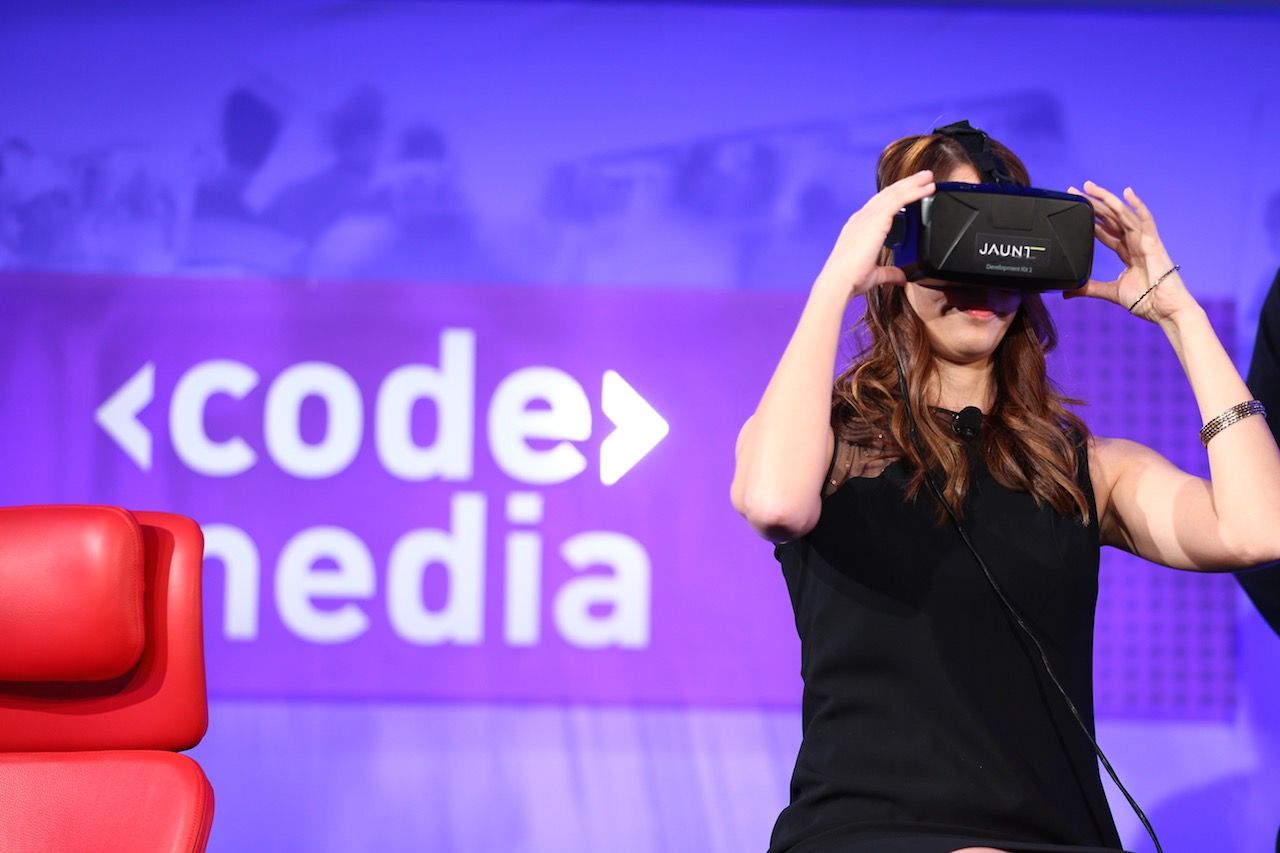
Virtual Reality Startup Jaunt Builds Sales Team to Become the ‘Netflix for VR’
 See the original post here: http://recode.net/2016/03/21/virtual-reality-startup-jaunt-builds-sales-team-to-become-the-netflix-for-vr/
Jaunt, a startup that makes applications and hardware for virtual reality, has hired a fleet of sales executives to cajole more media companies and advertisers into building content for VR.
That fleet includes Julie Uhrman, the former founder and CEO of the Android game console company Ouya, who joins as Head of Platform Business Development. Beth Greve, the Chief Revenue Officer for YouTube network AwesomenessTV, is coming on as a “senior consultant” focused on the revenue strategy. Two more execs are coming on in Europe, rounding out the first business development team for the startup.
Much of their job will be spent convincing partners that producing for VR is worthwhile as the first mass consumer devices hit the market this year. The hires point to Jaunt’s aim to be the premiere media destination for consumer VR as the young field gets an injection of attention from tech behemoths. The startup, which has raised over $100 million from several investors including Disney, markets a 360-degree camera for shooting VR. It also runs a production studio and has focused increasingly on its media library assets.
David Anderman, the startup’s chief business officer, has referred to this ambition as becoming the “Netflix for VR.”
Anderman will work on growing partnerships with media companies like Condé Nast, ABC News and the NFL and adding others, the company said. Uhrman, in particular, comes with deep ties to the gaming and Android world. Ouya, which attempted to bring the mobile app model to gaming, struggled to get traction but did net investment (and interest) from several Asian tech giants.
In its attempt to be the go-to studio for VR, Jaunt faces formidable competition — namely from Facebook, which is pushing media and brands to make VR video, and Google, which is doing the same and building similar hardware. Scott Broock, a former business exec for Jaunt, was hired away by YouTube in January.
How Virtual Reality Can Enhance the Life of Older Adults
 For seniors, one can imagine several exciting possibilities:
–Sensory enhancement via augmented and cued auditory and visual sensations to compensate for hearing impairment, macular degeneration and other common age-related maladies.For example, imagine being able to light up the road and add digital warning signals and verbal advisories to a headset or a windshield display used by an older driver at night.
–Cognitive enhancement via visual and auditory cues, symbols and reminders. For example, facial-recognition software can remind someone who they are meeting. Household items can be inventoried and tracked, and then a headset or other device can guide someone to them when a verbal request is made.
–Brain training via regularly cued lessons. Imagine brain games that boost both cognition and function by integrating them into real-world activities. For example, a person could take a stroll through the neighborhood following a virtual ball or other image to exercise muscles while simultaneously shaping visuospatial abilities.
–Musculoskeletal and neuromotor enhancement. Programs could tailor gesture control to help someone with arthritis or Parkinson’s disease interact more easily with their environment, while also serving to improve movement, strength and dexterity.
The possibilities are endless for such practical applications, but there are several key considerations when designing and programming for the senior crowd. Headsets must account for age-related changes in visual acuity and hearing loss, and integrate with existing glasses or hearing aides. Non-headset forms of interface such as wearables on arms or wrists or other projection devices could also deliver meaningful images and sounds without obstructing and burdening one’s head and neck. The technology must also consider design conventions that are familiar to older users, such as the haptic and auditory feedback of buttons, knobs and switches.
While the goal for young gamers is to escape into a virtual world, the goal for most seniors is to make the existing world more accessible–to bring services to them that might otherwise be missed. These services have to be seamlessly integrated into daily life without being too distracting, dizzying or excessively complex to access and manage. They must also provide what Altitude’s CEO Dan Ostrower has described as the “richness, emotional relevance and real experiences” of the analog world–a synthesis he labels Integral Reality.
See the full story here: http://blogs.wsj.com/experts/2016/03/21/how-virtual-reality-can-enhance-the-life-of-older-adults/
Serious Simulations Claim Their ‘Zero Frame Latency’ Tech Can Make VR Headsets Wireless
 Serious Simulations are a young company, as many are entering the VR space. Started some 18 months ago by founder and CEO Chris Chambers, the company is aiming to capture a slice of the professional VR market with bespoke immersive systems for the likes of the military. In doing so however, they found that the high-end VR systems available relied on a tethered-to-PC cable solution, one that didn’t fit their requirements.
So, they went away and designed a system which can stream HD video at extremely low latencies to a VR display, low enough they claim to be good enough to replace the (currently unavoidable) cabling.
The prototype system Serious was demonstrating at Vision VR/AR Summit last month uses the company’s proprietary video reformatting process to deliver the first pixel from every new frame from computer to HMD in 17 microseconds, using a 60GHz wireless link. SS’ solution requires another unity to be situated in close proximity to the HMD, worn on the user’s person. The extra box receives the image data wirelessly then ‘reformats’ the image for delivery over local HDMI/MIPI interface direct to the HMD’s display.
By contrast, Serious Solutions’ claimed 17 microsecond for a single 1080p 60Hz feed led them to dub their system ‘zero frame’ latency.
See the original post here: http://www.roadtovr.com/serious-simulations-claim-their-zero-frame-latency-tech-can-make-vr-headsets-wireless/
We may have found the unexpected killer app for augmented reality… opera
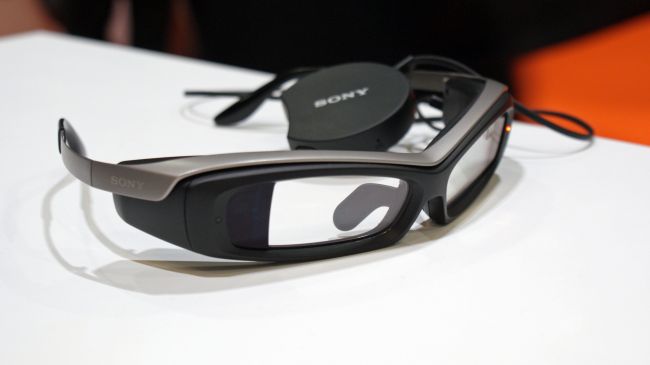

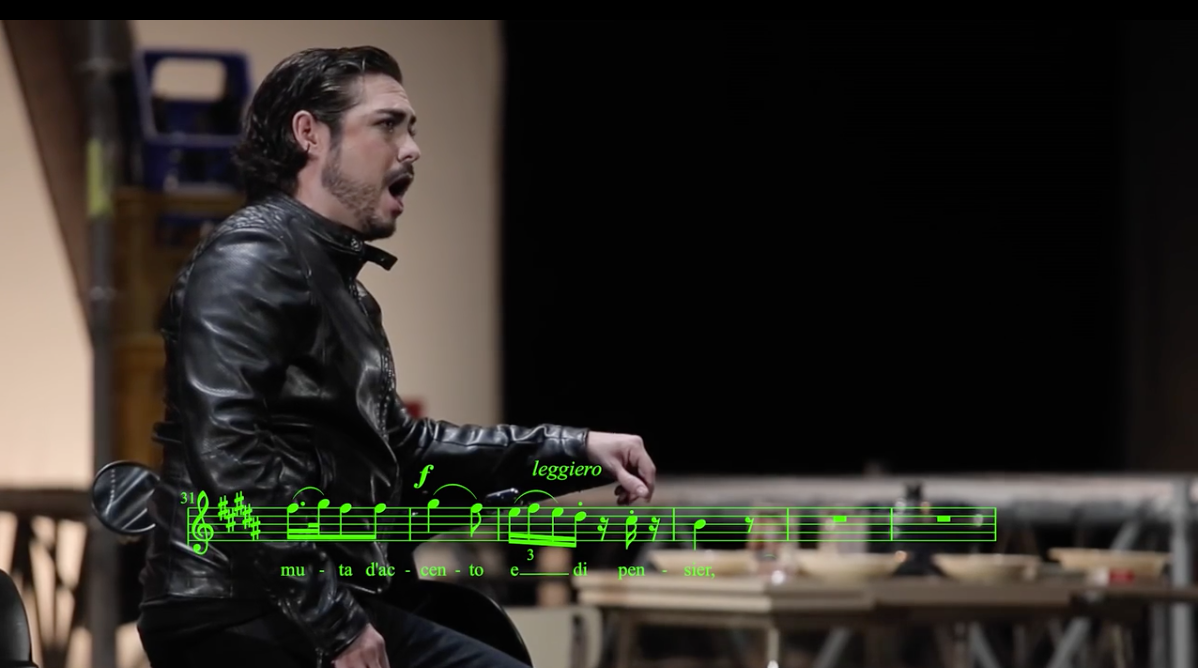
A company called Opera Touch has been working with the SmartEyeGlass and has created an app that allows opera audiences to use augmented reality to see subtitles of the show in a large number of languages.
My first feeling was that this was technology for the sake of it – after all, there are subtitles above the performance to offer this very functionality.
However, the issue is that having to scan up and down to see what's being said is jarring, not letting the audience see what's going on and understand the words at the same time. By using AR, it brings the feeling of subtitles in films to a real world performance.
On top of that, the glasses can also feed information on the artists and let them see the score unfold in front of them, offering something that the subtitles above can't. A spokesperson for Opera Touch told me the new company has already sold the system into an opera house in San Sebastien, Spain, and is in talks to do the same with larger venues in UK, US and Spain in the future.
While it does depend on the business model of each opera house, the spokesperson told me the use of the glasses may either be bundled into the price of the ticket at purchase, or hired at the venue itself.
See the full story here: http://www.techradar.com/us/news/wearables/we-may-have-found-the-unexpected-killer-app-for-augmented-reality-opera-1316969
Sony Corporation Unveils New “Future Lab” Devices
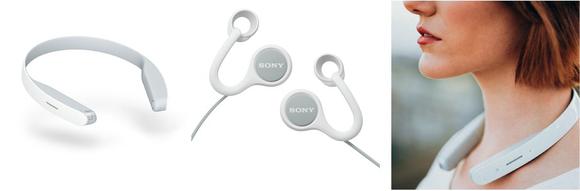 Concept N
Concept N resembles a pair of Bluetooth headphones, but the device is worn around the neck instead of on the ears. The device has four microphones with noise-cancelling features so it can clearly hear your voice-based commands. The device also features cleverly placed speakers which project the audio to a user's ears without the use of earbuds.
AR tabletop projectors
Sony also showcased a projector that turns a tabletop into a touchscreen while beaming depth-sensitive digital objects onto the surface. It can also recognize and interact with physical objects. In a SXSW demo described by Engadget's Nathan Ingraham, the projector made the illustrations in a physical copy of Alice in Wonderland "jump" off the book and onto the table.
Next-gen game controllers
Sony also revealed an advanced haptic controller, which consists of a touchscreen and sensors that simulate the feeling of different objects inside the device. For example, if a ball is rolling around on the screen, the user feels like there is a real ball rolling around inside the device.
See the full story here: http://www.mysanantonio.com/business/fool/article/Sony-Corporation-Unveils-New-Future-Lab-Devices-6924618.php
‘The Most Dangerous Women in Hollywood’ is a Virtual Reality Production that will Transport Viewers to the Next Level
 Virtual Reality Group MightyVR, Momentum Entertainment and Sports Network, Interpix, Inc. and Replay Collective are pleased to announce the production of “The Most Dangerous Women in Hollywood,” an unprecedented 360 degree virtual reality movie and game series.
Viewers journey on a fully immersive experience by wearing a headset that allows the virtual reality experience of trying out jets, sports cars and choosing one of “The Most Dangerous Women in Hollywood” to join up with and get away from the bad guys. Headset options range from high end models such as the Oculus to a $20 Google Cardboard set.
“We believe the entertainment industry is on the verge on a complete shift in media consumption because of virtual reality and, soon, augmented reality,” said Replay Collective producer Siddharth Ganji. “As storytellers, we are always looking at how technology will shape storytelling, and there is no doubt that VR is the next big evolution in this arena.”
The exciting new project is dedicated to all of the daring stunt actresses who provide audiences with an array of thrills including flying military planes, racing sports cars and more.
“The Most Dangerous Women in Hollywood” will be released on MightyVR’s distribution platform as an app that may be purchased. It will be also be available online, for smartphones and its book releases will be sold by Amazon.com and Borders.com.
See the full story here: http://www.groundreport.com/dangerous-women-hollywood-virtual-reality-production-will-transport-viewers-next-level/
Long-term effects of virtual reality use need more research, say scientists
 Sarah Sharples, professor of human factors at the University of Nottingham and president of the Chartered Institute of Ergonomics and Human Factors, said much more research was needed. She said: “We haven’t really yet got to the stage where people have been using virtual reality for prolonged periods of time - over, for example, periods of weeks or months - to identify with any clear certainty any long-term effects of virtual reality.”
Yet Sharples is cautious about linking known “effects” with “problems” - the evidence, she says is simply not available. “The key point is : there are effects, but are they detrimental?”
But as Rizzo is keen to point out, the benefits of virtual reality systems are myriad, revealing that they have been used in a host of therapeutic situations, from helping those living with post traumatic stress disorder to those suffering from depression. “I’m one of the biggest proponents that we can do things in VR that make a positive difference for people in the real world,” he said. “But if you accept that then you have got to accept that maybe this technology could have detrimental effects that are yet to be seen. I don’t think we should be hysterical about it, I think we should have watchful caution.”
“Absolutely there are potentially negative effects of using VR. The most important thing that we should do is just to be cautious and sensible” she says. “But we shouldn’t let that stop us from taking advantage of the massive potential this technology offers as well.”
See the full story here: http://www.theguardian.com/technology/2016/mar/19/long-term-effects-of-virtual-reality-use-need-more-research-say-scientists
SXSW panel explores virtual reality porn: ‘more eye contact and dirty talk’
 As an experience, it was more bizarre than erotic, but VR porn is gaining a highly engaged following of fans. Now 2D porn is not enough – they want to feel as they are in an imaginary world having sex with fantasy women. Eventually, some suggest, “teledildonic” technology will enable them to feel sex as well as see it, though a strict patent, according to delegate Ela Darling, has prevented technological developments in this area.
At the moment, virtual reality porn is largely aimed at heterosexual men. Dinorah Hernandez, the content manager for BaDoinkVR, a subscription site which includes virtual reality scenes, says that she soon discovered that users of the site did not want the male actor to make any sounds, or to touch the female actor, the better to preserve the illusion that she is having sex with them. “People are requesting less sexual positions and more eye contact and dirty talk and being close to the camera,” she said.
However, her fellow industry insiders agreed that as VR grows in popularity, porn will be made aimed at female and gay audiences. “The market is males,” said Hernandez. “We have released scenes from female perspective, and got a bashing because it’s a ‘gay scene’. But one user said his wife enjoyed it.”
Fabien Grey of AliceX, another site which uses virtual reality for users to interact with women live on camera, said VR porn users are more engaged: they are four times more likely to return to the site, and spending six times more money than on a regular “cam show”. “It has to do with an emotional bond that a user is prepared to build up,” he concluded.
“When you’re in VR you feel like you’re in the same room with this person, and if the artifice is apparent then you feel like you’re with a hot girl and she wants nothing to do with you.”
See the full story here: http://www.theguardian.com/culture/2016/mar/18/virtual-reality-porn-sex-sxsw-panel
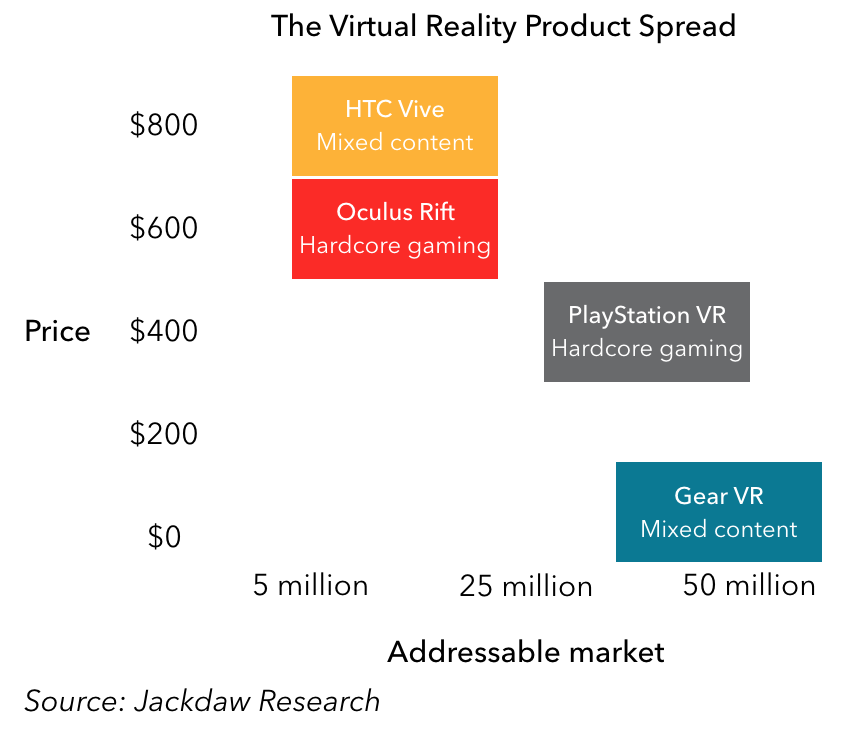
The Emerging Virtual-Reality Product Parade
See the full story, which explains the graphic, here: http://recode.net/2016/03/18/the-emerging-virtual-reality-product-parade/