Cake AR platform puts virtual makeup on your face in real time
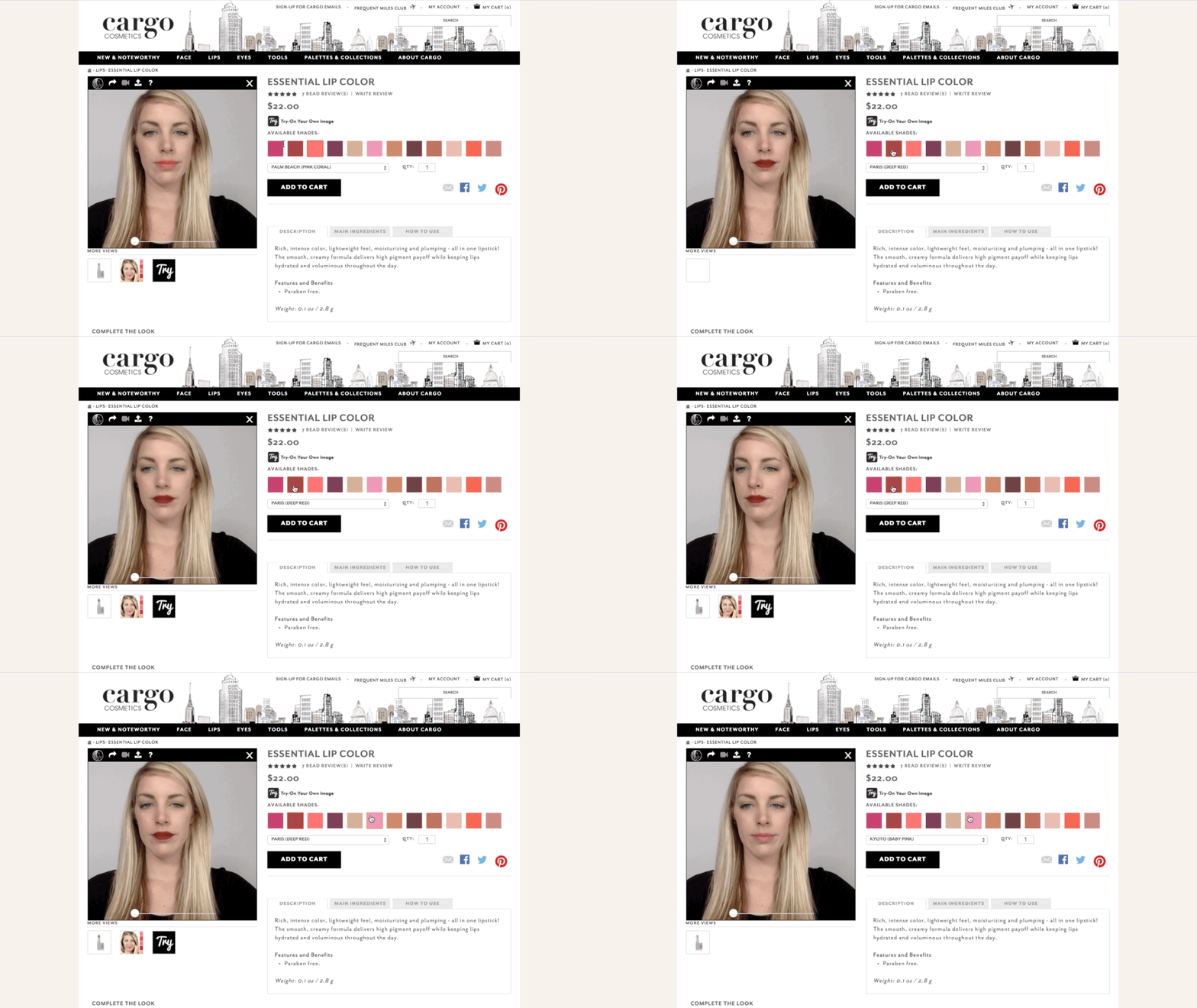 Unlike most virtual makeover apps, you don't have to upload a pic to use it. You don't even have to download any add-on. It was built with HTML5 and JavaScript, and so long as you have a webcam, you can try on virtual makeup in real time right on your browser.
Cargo has already activated the feature on its lipstick and eyeshadowpages, which you can play with right now. While I notice a little bit of lag (and I do wish I can change the program's lip shape to fit mine), the virtual products can follow your face around if you don't move too fast or too close to the camera.
See the full story here: http://www.engadget.com/2016/03/05/cake-augmented-reality-shopping-platform-makeup/
First code of conduct for the use of virtual reality established
 Based on their analysis of the risks, both researchers from the Department of Philosophy at Mainz University offer concrete recommendations for the use of VR. For example, in experimental work developing new clinical applications, researchers should be careful not to create false hopes in patients. They should repeatedly remind them of the merely experimental nature of the research. Madary and Metzinger also note that a code of ethical conduct, however important it may be, can never function as a substitute for ethical reasoning itself on the part of researchers. Out of concern for consumers of VR, they call for long-term studies into the psychological effects of immersion. They see a special danger with particular content such as violence and pornography, where the advanced technology increases the risk of psychological trauma. Users should be clearly informed of these dangers, as well as risks of hallucinations, personality changes, and the powerful unconscious influence of advertising in VR. Finally, Madary and Metzinger draw attention to the need for regulations regarding ownership and individuation of avatars, regulations that should also address concerns about surveillance and data protection.
The authors sum up their article, "Real Virtuality: A Code of Ethical Conduct. Recommendations for Good Scientific Practice and the Consumers of VR-Technology," by writing, "One of our main goals was to provide a first set of ethical recommendations as a platform for future discussions." The article appears in Frontiers in Robotics and AI, a well-known Open Access platform for scientific publications.
See two versions of the story here: https://www.newscientist.com/article/2079601-virtual-reality-could-be-an-ethical-minefield-are-we-ready/ and here http://esciencenews.com/articles/2016/03/04/first.code.conduct.use.virtual.reality.established
And there is this critique: http://motherboard.vice.com/en_uk/read/vr-code-of-ethics
Google Patents Physical Books Based On Augmented Reality
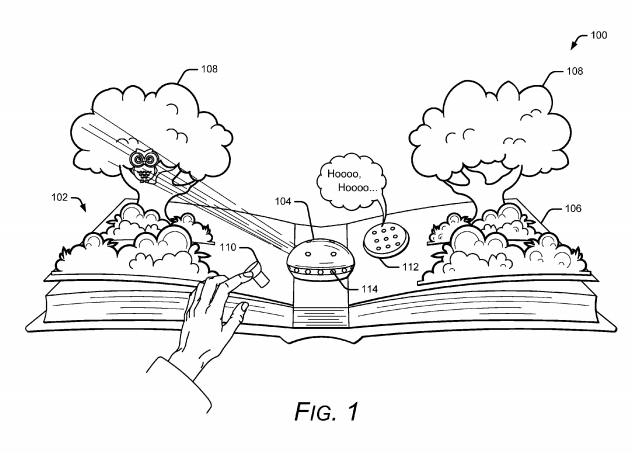 There are two patents in total, the first is for a “Media Enhanced Pop-up Book” and this one will make use of a smartphone or tablet to aid in the process by interacting with the use of the book. So for instance, as you turn a page, the phone or tablet understands and responds accordingly. The second patent is the far more interesting one, as this one essentially forgoes the use of a smartphone and tablet and instead employs a small device which has been likened (in appearance) to a hamburger. The device is placed in the middle of the book and then embedded sensors on the pages allow for a more interactive reading experience. The hamburger will essentially be able to interact with the reader’s pressure or motion and change the imagery displayed on the pages.
See the full story here: http://www.androidheadlines.com/2016/03/google-patents-physical-books-based-on-augmented-reality.html
Archaeology’s Information Revolution

A general view shows the Temple of Bel in the historical city of Palmyra, Syria, August 4, 2010. The hardline Islamic State group has destroyed part of an ancient temple in Syria's Palmyra city, a group monitoring the conflict said on August 30, 2015. The militants targeted the Temple of Bel, a Roman-era structure in the central desert city, the Syrian Observatory for Human Rights said. Picture taken August 4, 2010. REUTERS/Sandra Auger TPX IMAGES OF THE DAY - RTX1QFZ9
“I’ve lived through this data transition,” said Thomas Levy, an archaeologist and anthropology professor at the University of California, San Diego. “We still dig like our 19th-century predecessors—with trowels, rubber buckets, shovels, toothbrushes, and so on. But we used to be really encumbered by our ability to record data. We had to be more selective. Now, with these digital tools—with GPS, total stations, laser scanning, and structure from motion photography—we can elect an unlimited amount of data.”
Thanks to satellite data, those data points can now be embedded within a topography of the entire planet. For instance, Sarah Parcak, a space archaeologist, analyzes satellite imagery of Earth, looking for telltale features that might signal a long-lost historical site.
Georgia Tech is in the midst of a major renovation of its library system, an overhaul that will include removing many of the books from public spaces.
“The huge issue now is data,” she said. “It’s probably more important than text.
“Having Palmyra real is much more important than having 3-D models of it, obviously,” Levy told me, referring to the ancient city where several historic sites have been destroyed by ISIS in recent months. “But in a world where we have so much intentional destruction of cultural heritage, we’re in a position now to record it in ways that were impossible even a decade ago.”
See the full story here: http://www.theatlantic.com/technology/archive/2016/03/digital-material-worlds/471858/?curator=MediaREDEF
Is virtual reality the future of the fashion show?
 This week, Balenciaga announced that they would be streaming their AW16 show – the first under new creative director Demna Gvasalia of Vetements – to a mobile and tablet app in the form of 360 degree, virtual reality footage. Calling it “a new panorama, for a new era of Balenciaga”, the house described the gesture as “an egalitarian proposition, allowing a worldwide audience the unique opportunity to view a Balenciaga show like never before…immediate and real-time for the new creative identity of the maison.” While details on how this will look are sparse, we can assume that giant VR headsets won’t be necessary – viewers will most likely be able to simply move their phones or manipulate their screens to control the direction of the camera.
Yesterday morning, renowned runway experimenter Hussein Chalayan announced that shortly after his show today, a 360 video will be available to view online.
For Chalayan, who is working in collaboration with Swarovski, it’s far from the first time he’s dabbled in the high tech and futuristic – he’s previously shown LED-lit dresses, transformative robotic outfits, and last season, models wore garments that simply melted away beneath streams of water.
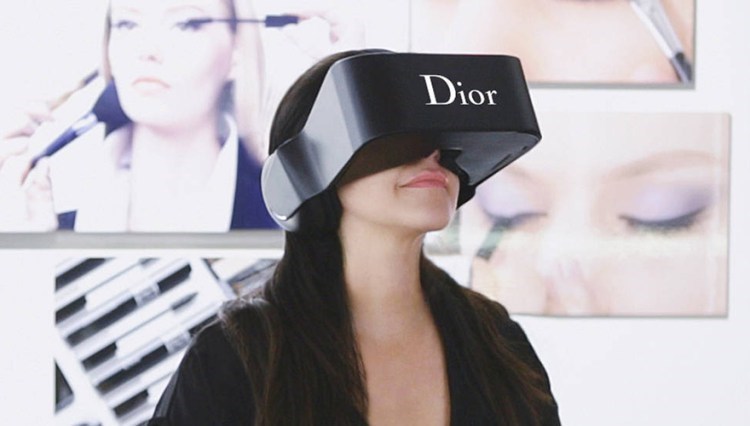
360 filming is a technique that’s already been employed in several high-profile cases – last season, for what was later revealed to be Raf Simons’ final show for Dior, the house made a post-show video available in this style where viewers could use a click wheel to view different aspects of the runway. Back in June, they also debuted Dior Eyes, a 3D printed virtual reality headset found in select stores that promised to “lift the curtain” on the house’s latest ready-to-wear show, giving shoppers an immersive look behind the scenes. Björk also famously used the technique for her recent Dazed-premiered “Stonemilker” video, and (unsurprisingly) companies have started exploring the pornographic, first-person POV possibilities of VR headsets.
The adoption of 360 is evidence that this digital democracy is ever-expanding, and gaining pace – with brands increasingly prioritising fans and consumers over now seemingly archaic systems (as with the See-Now, Buy-Now trend embraced to different extents by everyone from Burberry to Prada).
See the full story with video here: http://www.dazeddigital.com/fashion/article/30163/1/is-virtual-reality-the-future-of-the-fashion-show?curator=FashionREDEF
Augment Raises Series A Funding to Expand its Augmented Reality Enterprise Solution
 Augment, an augmented reality platform that allows users to envision any object in their current environment through a simple mobile app, today announced a Series A funding round, bringing the total funding since launch to $4.7 million from Salesforce Ventures and other investors.
The company, headquartered in Paris, France, has experienced tremendous growth over the past year and will use its funds to expand global sales and partnership programs, accelerate product development, and scale its global reach, which includes the onboarding of several key hires.
Over the last year, Augment has increased its revenue by over 200 percent and expanded its customer base to include AccorHotels, Coca-Cola Germany, Engie and L'Oreal.
See the full story here: http://www.itbusinessnet.com/article/Augment-Raises-Series-A-Funding-to-Expand-its-Augmented-Reality-Enterprise-Solution-4319690
HoloLens Developer Documentation Reveals Interesting Details About The Augmented Reality Headset
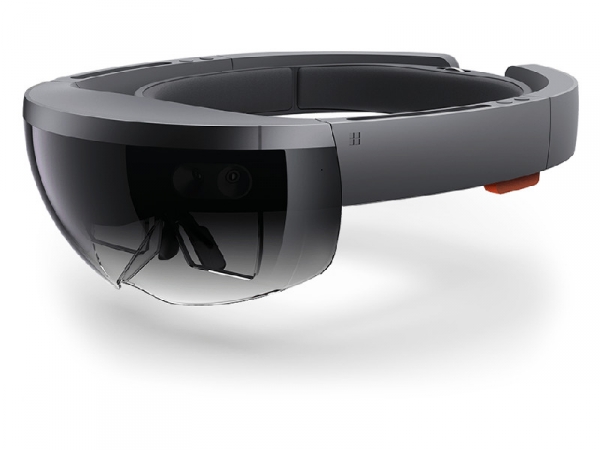 Low Resolution 1,268 x 720p.
Automatic App Killing "If HoloLens exceeds its thermal capabilities, the foreground application will be shut down to allow the device to cool off," says the documentation.
Holographic Density According to the company, the HoloLens has a holographic density of 2.5K radiants and the holographic resolution is 2.3 million light points.
Holograms Distance Limitation The HoloLens has a limited field of view, which means the displays are fixed at an optical distance of 2 meters (6.56 feet). Once the user moves closer, the holograms begin to fade at about 1 meter (3.28 feet) and disappear completely when one nears 0.85 meters (2.79 feet).
Memory Limitations 900 megabytes
See the full story here: http://www.techtimes.com/articles/138243/20160303/hololens-developer-documentation-reveals-interesting-details-about-the-augmented-reality-headset.htm
Intel Working on Augmented-Reality Headset
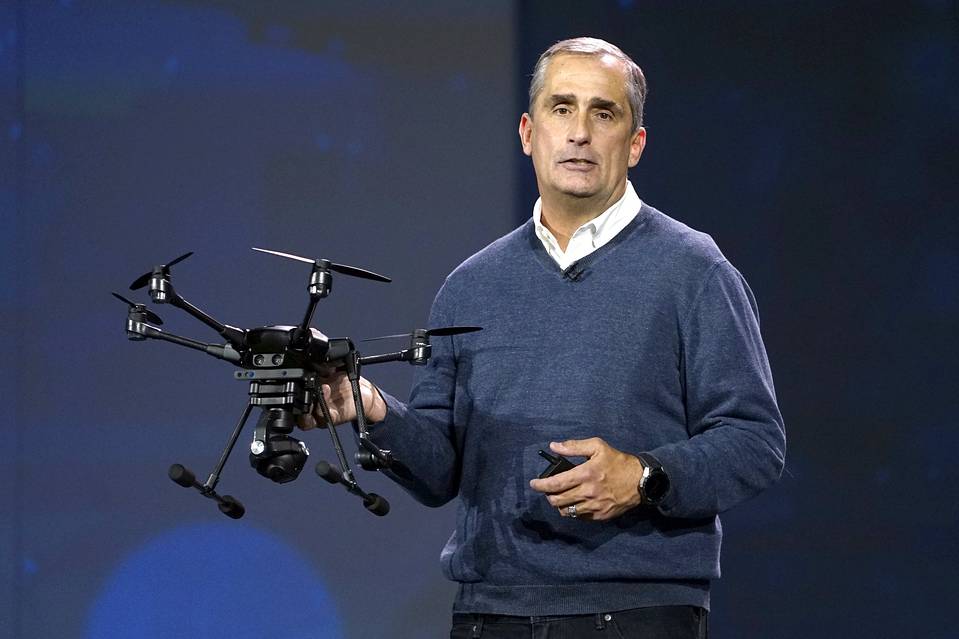 Under Chief Executive Brian Krzanich, Intel has been developing components for new markets like wearable fitness trackers, smart jewelry and drones. Augmented reality presents an additional opportunity, requiring not only the company’s microprocessors but also special-purpose image-processing chips and 3-D camera components.
Intel has acquired at least five companies working on augmented-reality technology and has invested in and joined with with others. In June 2015, for example, the company bought Recon Instruments, whose goggles for sports enthusiasts project information like maps and distances on a small display near the wearer’s right eye.
See the full story here: http://www.wsj.com/articles/intel-working-on-augmented-reality-headset-1456954081
Virtual Reality Studio Felix & Paul Taps New Regency’s Ryan Horrigan (Exclusive)
 Horrigan, who served as a senior development and production executive on projects including 12 Years a Slave at the production company that was also behind The Revenant andBirdman, will remain based out of Los Angeles and will build out an office there for the Montreal-based company.
See the full story here; http://www.hollywoodreporter.com/news/virtual-reality-studio-felix-paul-872199
This Wall Street Firm Says Virtual Reality Is Like Smartphones Nine Years Ago
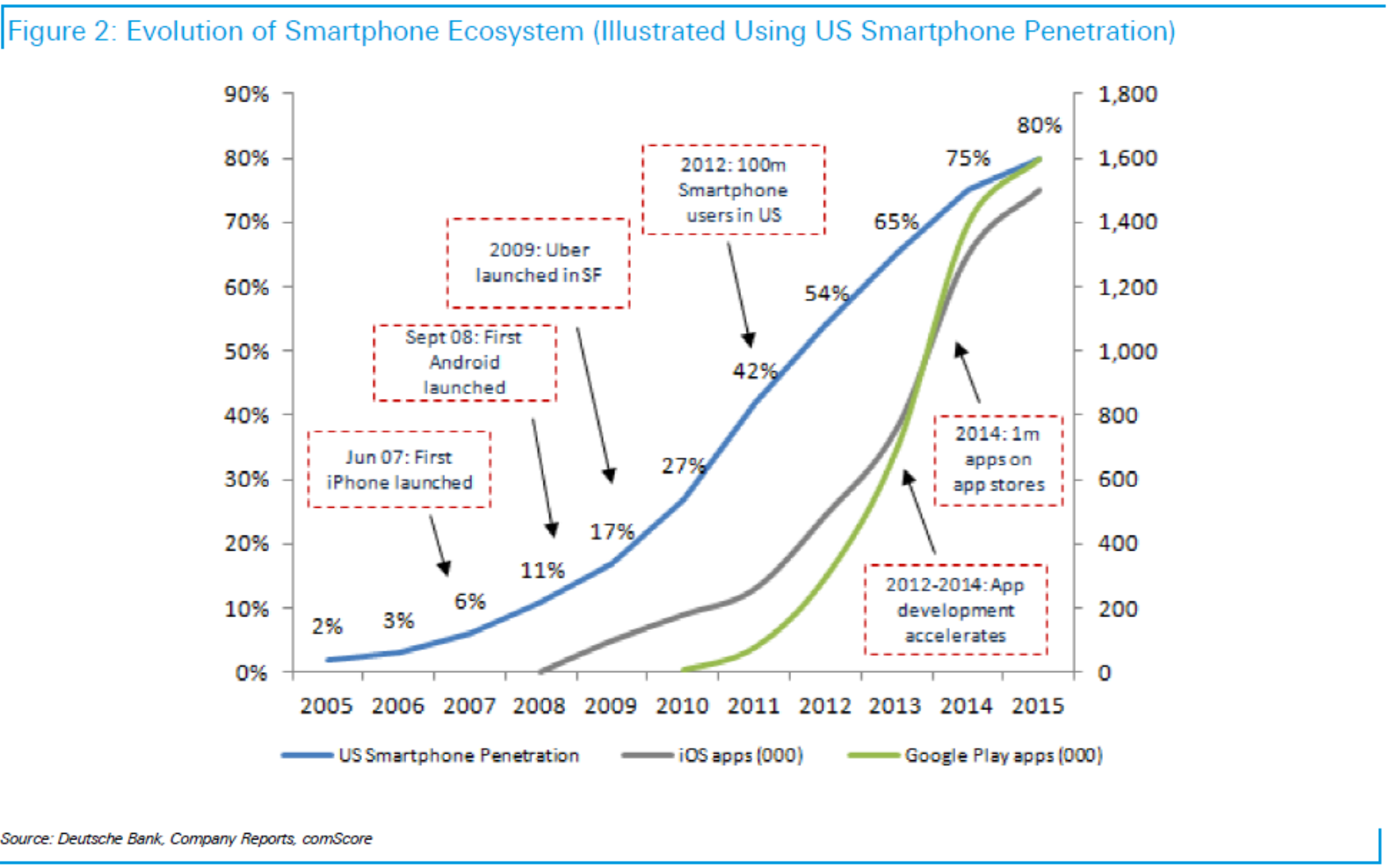
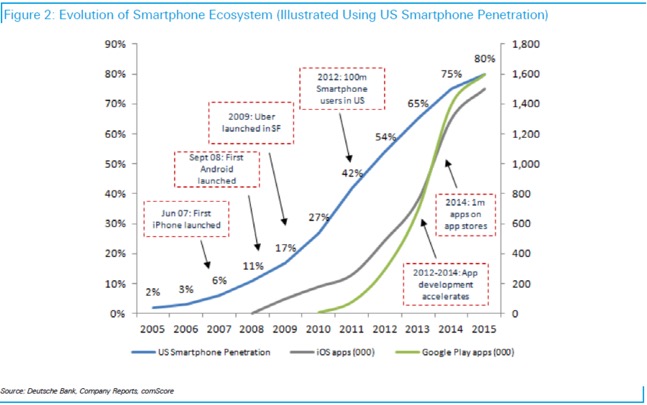 Deutsche Bank AG analysts led by Ross Sandler draw a parallel to early sales of smartphones by companies that include Apple Inc.
"We think the VR [virtual reality] ecosystem is in its '2007-smartphone' moment in terms of the adoption cycle," the analysts write in a 68-page note published on Thursday. "It took four to five years for smartphones to reach 100 million users in the U.S., we expect a slower adoption curve for VR, but still strong enough for an enormous market."
The risk, however, is that the next two years could bring about a period when people actually turn negative on the space due to a high rate of hardware sales without the accompanying content needed to be truly "wowed." They draw a parallel once again with the launch of Apple's iPhone in 2007 and the extra time it took for popular apps from Snapchat Inc., Facebook, or Uber Technologies Inc. to be launched and help build a user following and drive sales.
See the full story here: http://www.bloomberg.com/news/articles/2016-03-03/this-wall-street-firm-says-virtual-reality-is-like-smartphones-nine-years-ago#media-4