How This Startup Hopes to Improve Virtual Reality Video Delivery
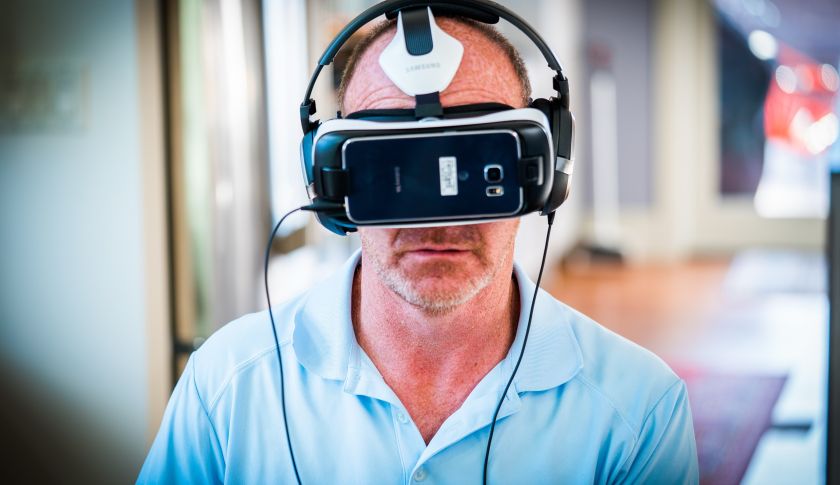 Pixvana has raised $6 million to develop virtual reality video cloud production and a delivery platform for a 2016 launch.
...And yet when he began researching this new medium, he discovered no company was developing software that will help deliver high quality 360-degree video content through the cloud.
“Pixvana is a set of platform capabilities that will work with clouds such as Amazon Web Services, Microsoft Azure, and others to deliver great VR video experiences on major VR and AR headsets such as Valve’s Steam VR platform with HTC Vive, Oculus VR, Google Cardboard, Samsung Gear VR, and those that we expect Apple, Amazon, and Google are also building,” Key says.
“The industry is going to deliver these VR headsets and they are going to be great,” Key says. “The real question is will the software/content be as marvelous as we think it has the potential to be, and that’s where VC capital is flowing (into software and content).”
Key says Pixvana does not see a distinction between live and pre-recorded video, which are both important markets for the company. This opens up additional livestreaming opportunities for companies like NextVR, IM360, and LiveLike VR, which have been exploring how VR can enhance viewer experiences for everything from sporting events to the MTV Video Music Awards.
The Seattle-based company received its initial $6 million investment led by Madrona Venture Group with participation from Paul Allen’s Vulcan Capital, as well as angel investors.
Key says this seed round will be used to expand the company’s engineering team and get its first products ready for market.
“We have quite a bit of core technology and systems working in the lab—this is our ‘get Version 1 to market’ funding,” Key says.
Key has assembled a team of executives from the technology and entertainment industries, including chief product officer Bill Hensler from Apple AMZN 1.53% and Adobe ADBE 1.68% , as well as CTO and creative director Scott Squires from Industrial Light and Magic, and vice president of product management Sean Safreed from Red Giant.
See the full story here: http://fortune.com/2015/12/14/prixvana-vr-video-delivery/
MIT’s Reality Editor App Lets You Reprogram the World With Augmented Reality
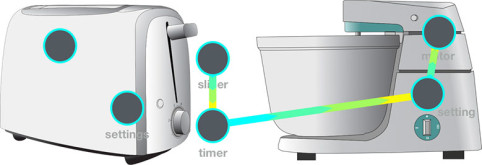
[Philip Lelyveld comment: this is a cool concept piece. Use an augmented reality app to mix and match the components of your appliances to create appliances with greater functionality. Its a virtual 'maker' app. It will, of course, require coming up with a whole appliance product line that accommodates the app.]
Heun is a researcher at the MIT Media Lab’s Fluid Interfaces Group where he’s building an app that he hopes will effectively turn the one-dimensional objects in our lives into a library of parts whose functionalities can be mixed and matched via an augmented reality interface.
A more concrete example: If you wanted your food processor to have a timer, all you’d have to do is look at the object through the Reality Editor interface and drag a line from the toaster’s timer knob to the food processor’s motor; the two would then automatically be connected over the Open Hybrid server.
Using Reality Editor to reassign functionality from one object to another could not only declutter a physical interface, it could also ultimately free us from the shackles of our smartphones, instead letting us rely on the physical world to manipulate our devices.
Interestingly, Heun’s app assumes that users want more control over the objects in their lives, which isn’t always the case. Smart objects are attractive if only because they cater to our laziness—we don’t think about them simply because we don’t want to. Reality Editor requires active participation—at least at first. And maybe that’s not such a bad thing.
See the full story here: http://www.wired.com/2015/12/mits-reality-editor-app-lets-you-reprogram-the-world-with-augmented-reality/
Augmented Reality ‘VisitPalmSprings’ App Now Available on iTunes
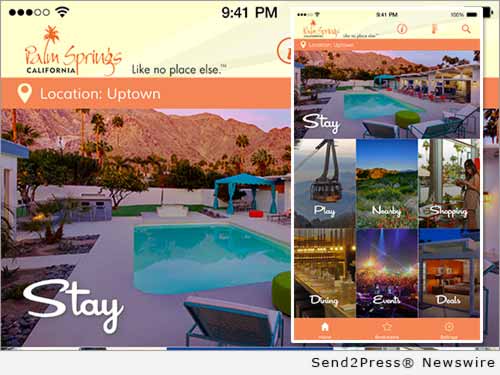 [Philip Lelyveld comment - this is Virtual Reality, not Augmented Reality. Its a nice little travel brochure with 360 prerecorded look-around and interaction capabilities.]
Civic Resource Group (CRG) and the Palm Springs Bureau of Tourism of Palm Springs, Calif. today announced the availability of the Augmented Reality "VisitPalmSprings" App on iTunes.
"VisitPalmSprings" includes key functional features covering the latest information for those looking for what to do and how to get around the city using public transportation in Palm Springs. Users will be able to find accommodations, events, dining, attractions and more; get exclusive access to local deals; use bookmarks to help plan a journey. The app includes interactive maps and compass view. Users can virtually "move" to another location to see what's waiting for them at the next point of interest. The app also includes Augmented Reality features such as geospatial search, pointing, and pointing- enabled search. The app works offline - meaning no surprise roaming/data charges for the users. The City's newest addition, the BUZZ Trolley, shows real-time route information.
See the full story here: https://www.send2press.com/newswire/augmented-reality-visitpalmsprings-app-available-on-itunes-2015-1215-01.shtml
The Business of Virtual Reality workshop – the report
 On Nov. 17, 2015 I produced a workshop on the business aspects of virtual reality. 104 executives from 72 organizations attended this half-day event.
10 Virtual Reality Games to Watch in 2016
 Sony used its annual PlayStation Experience two-day fan event in San Francisco to unveil new virtual reality games for its upcoming PlayStation VR headset. While some of these games are exclusive to Sony’s 2016 virtual reality platform, others will also play on competing PC platforms like Oculus Rift and HTC Vive, which runs on Valve’s SteamVR.
Piper Jaffray senior analyst Gene Munster forecasts sales of virtual reality headsets will grow from 12.2 million in 2016 to 100.2 million by 2020. That gives game developers a very large audience to tap into. There are over 30 million Sony SNE -1.18% PlayStation 4 consoles in the market today, all capable of running the new PlayStation VR. Munster believes approximately 10% of current PCs will be able to run virtual reality platforms like HTC Vive and Facebook FB -3.24% -owned Oculus Rift out of the box, with another 10% requiring a $300 graphics card upgrade.
With over 50 games in development for PlayStation VR, and dozens in production for Oculus Rift and HTC Vive, there will be plenty of new content for gamers. Here’s a list of 10 virtual reality games to look out for in 2016.
See the full story here: http://fortune.com/2015/12/11/virtual-reality-games-2016/
Chaos Group Labs Releases Virtual Reality Guide
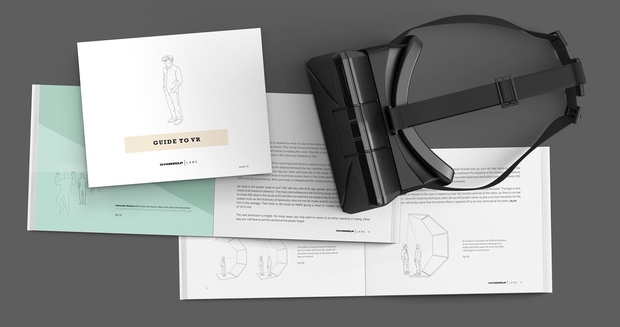 Chaos Group Labs has released a free virtual reality (VR) guide that teaches artists how to create successful VR projects with pre-rendered content and V-Ray. Common pitfalls associated with VR are addressed through scientific research and production insights, culminating in step-by-step instructions that explain how to make VR stills and video.
The paper was written by a trio of artists with vast experience in professional visual effects and architectural visualization. Contributors include: Christopher Nichols, Director of Chaos Group Labs; Justin Denton, a VFX Supervisor who leads Legend3D’s VR Division; and Kim Baumann Larsen, a former architect and current Creative Director for The World Building Institute.
See the full story, including a link to the free download, here: http://www.awn.com/news/chaos-group-labs-releases-virtual-reality-guide