B8ta, a new shop in downtown Palo Alto, puts cutting-edge gadgets on its shelves within days of their release and provides sellers with instant feedback.
 Each product in the new B8ta store—many of them new techie gadgets you probably last saw on a crowdfunding website like Kickstarter— sits next to an iPad showing real-time pricing across multiple online sites versus B8ta’s in-store cost. B8ta takes a small cut of each in-store sale, but overall the process is meant to be agnostic; customers are encouraged to order from whichever outlet they wish.
The point is to mimic the sales environment customers encounter online. Product makers set their own in-store price and can change it instantly, bringing e-commerce tactics like flash sales into the real world.
Even the products B8ta offers are normally constrained to the Internet. At launch, it will carry the Hexo+ and Lily drones ($1,349 and $799, respectively), which are built to autonomously film their users. An in-store mock kitchen will invite you to brew tea with the Internet-connected Teforia tea maker ($699). A space is even set aside to test the Internet’s farthest-fetched products like Avegant’s Glyph ($599), which is a pair of headphones with a strap that converts into a virtual-reality screen.
Algorithms exploiting light’s polarization boost resolution of commercial depth sensors 1,000-fold.
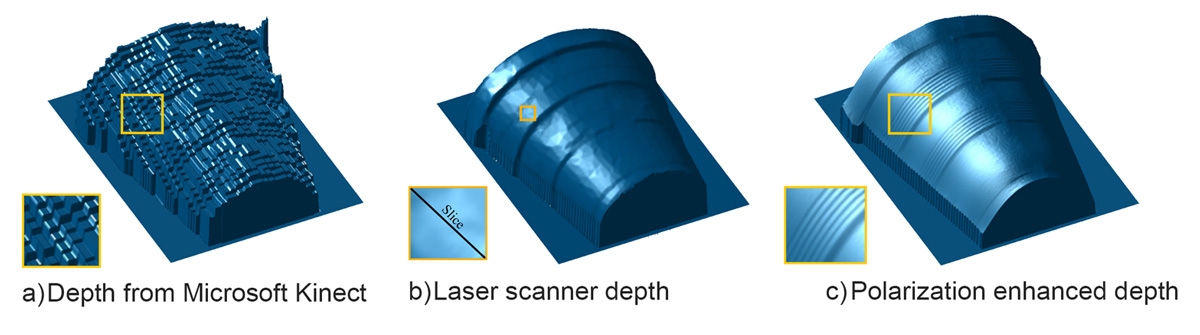 MIT researchers have shown that by exploiting the polarization of light — the physical phenomenon behind polarized sunglasses and most 3-D movie systems — they can increase the resolution of conventional 3-D imaging devices as much as 1,000 times.
“Today, they can miniaturize 3-D cameras to fit on cellphones,” says Achuta Kadambi, a PhD student in the MIT Media Lab and one of the system’s developers. “But they make compromises to the 3-D sensing, leading to very coarse recovery of geometry. That’s a natural application for polarization, because you can still use a low-quality sensor, and adding a polarizing filter gives you something that’s better than many machine-shop laser scanners.”
To resolve this ambiguity, the Media Lab researchers use coarse depth estimates provided by some other method, such as the time a light signal takes to reflect off of an object and return to its source. Even with this added information, calculating surface orientation from measurements of polarized light is complicated, but it can be done in real-time by a graphics processing unit, the type of special-purpose graphics chip found in most video game consoles.
The researchers’ experimental setup consisted of a Microsoft Kinect — which gauges depth using reflection time — with an ordinary polarizing photographic lens placed in front of its camera. In each experiment, the researchers took three photos of an object, rotating the polarizing filter each time, and their algorithms compared the light intensities of the resulting images.
See the full story here: http://news.mit.edu/2015/algorithms-boost-3-d-imaging-resolution-1000-times-1201
5 world-altering virtual reality art installations
 1. Enter.wonderland
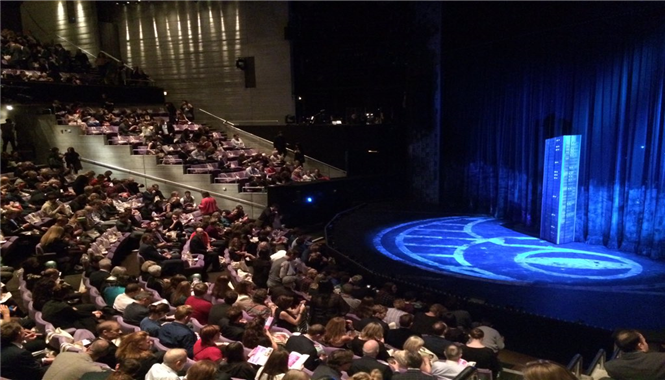
This free digital exhibition at the National Theatre in London, running from 2 December 2015 to 30 April 2016, provides attendees with specially created digital experiences through an array of virtual reality technologies including Oculus Rift, Kinect, Google Cardboard.
It is based on the upcoming musical by Damon Albarn, Moira Buffini and Rufus Norris, which is the National's first virtual reality based production and focuses on blurring boundaries between our online and normal lives.
A virtual reality music video called fabulous wonder.land based on the musical is also set to premiere at the 2016 Sundance Film Festival in the US.
See the full story here: http://www.cbronline.com/news/internet-of-things/smart-technology/5-world-altering-virtual-reality-art-installations-4745456
This Augmented Reality App Reveals the ‘Truth’ Behind Political Campaigns
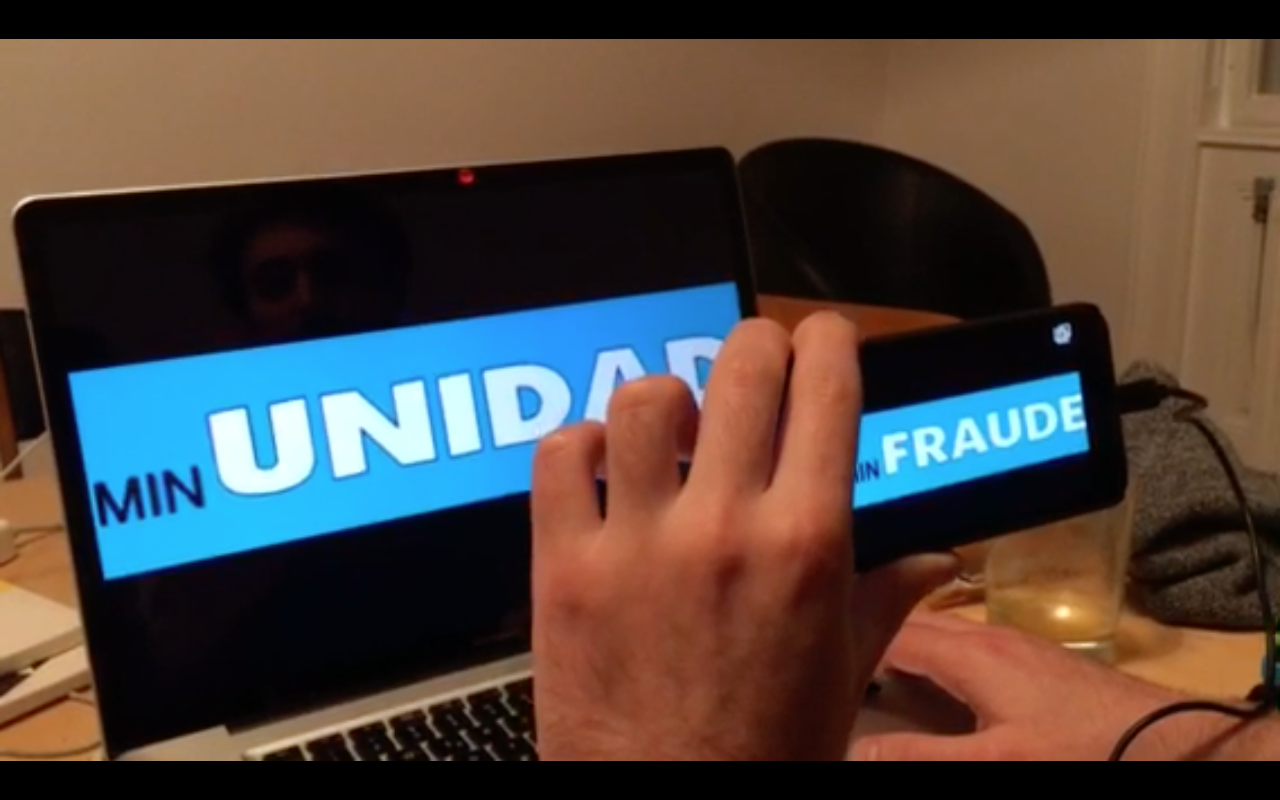 Hack De Patria (HDP), a project developed by a Venezuelan experimental activist group and Berlin-based media artists Refrakt, attempts to reveal the "truth" in the campaign ads for Maduro’s Chavismo government and its allies. Point the phone's camera at a particular campaign logo, and the app reveals more sinister meanings: one logo suddenly reads "Obey" and another "Fraud."
Not surprisingly, in creating HDP the groups were also influenced by the subliminal message-destroying glasses worn in John Carpenter's 1988 science-fiction satire They Live. The glasses allowed John Nada, the main character, to see the truth behind seemingly innocuous advertising, revealing an alien conspiracy to control the masses through capitalism.
As HDP proves, the use of augmented reality for political and electoral ends is still in its infancy, but has some interesting potential to convey messages and influence voters. Apart from HDP, augmented reality has been used in Lee Leffingwell’s campaign for mayor of Austin and in Pilnu Bildi, or “The Whole Picture,” an app developed by Latvian magazine ir and startup Overly, which allows anyone to hack political ads with more information on politicians. The iOS app, ir said, reached the third spot on Latvian App Store charts.
The simplicity of HDP, Acosta hoped, will eventually extend far outside the borders of Venezuela, to allow artists to respond to political advertising globally. For this to happen, activists and political operators will have to make the augmented reality experience easy to use, even for non-tech savvy folks—and not dorky. Let the political augmented reality games begin.
See the full story here: http://motherboard.vice.com/read/augmented-reality-hack-de-patria-app-venezuela
Exploring Virtual Reality Data Visualization with Gear VR
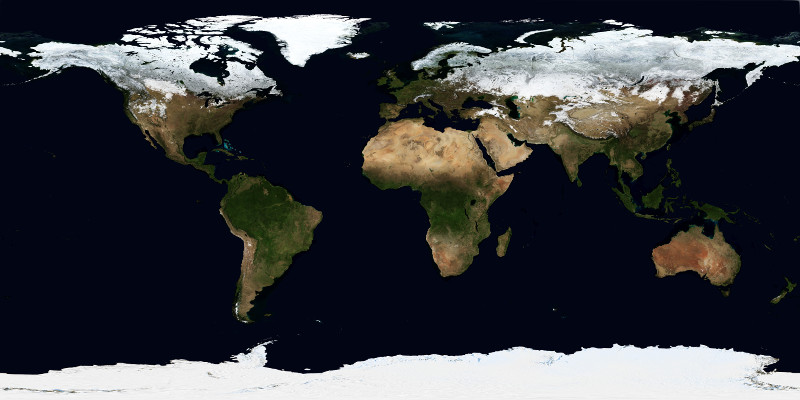 Oculus has done some amazing work setting up tools for developers. For example, to build full-fledged interactive VR apps, one can use two of the most popular game engines (Unity and Unreal). That’s probably the way to go in the long run for VR visualizations since they allow for much more interactivity, but Oculus also has included a very nice little app in the form of Oculus 360 Photos that allows you to view static 360-degree images. “Static” or “non-interactive” are perhaps not great terms here since a static image in VR wraps completely around you.
See the full story here: https://civisanalytics.com/blog/data-science/2015/12/04/exploring-virtual-reality-data-visualization-with-the-gear-vr/