Storytelling in Virtual Reality: A Starter’s Guide
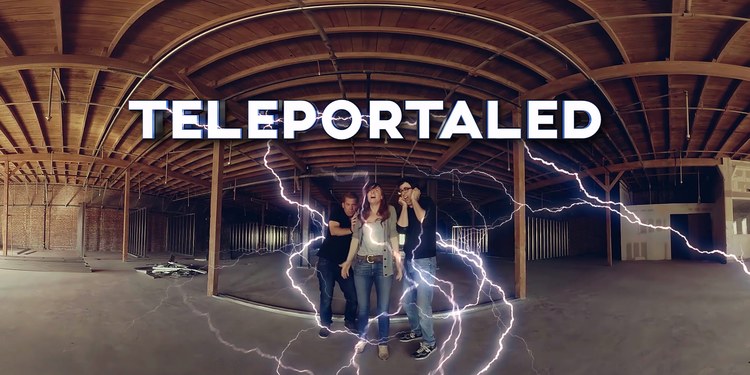 For the first time since the creation of motion pictures, a new medium of storytelling is being built: virtual reality. As with any new medium of art, the rules are being established, language being developed and devices being explored. As it stands currently within the realm of virtual reality, anything goes. Well, almost anything.
Consider your Viewer
Choosing Plot
Presence
Using Theater as a Tool
Guiding Viewer Attention
Experimentation
See the full story here: http://www.vrdribble.com/allthingsvr/2015/11/4/storytelling-in-virtual-reality-a-starters-guide
Researchers Are Turning Individual Drones Into A Hologram That You Can Touch
 See the full story and watch the short video here: http://www.techtimes.com/articles/104080/20151106/researchers-turning-individual-drones-hologram-touch.htm
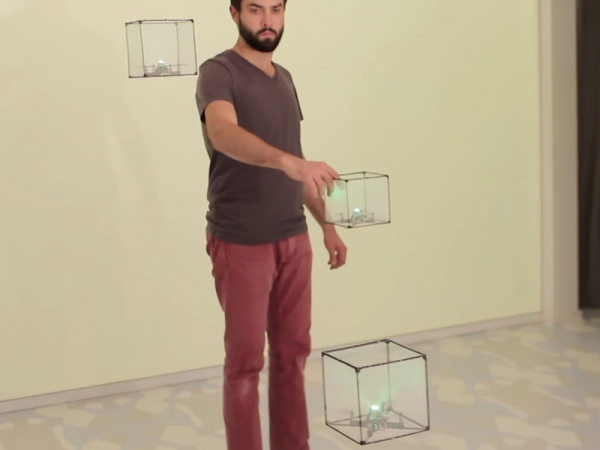
According to the university, the problem with augmented reality is that the picture that a user is viewing is airborne, however, physical objects are bound by gravity. To try and surpass that issue, the team has developed what it calls BitDrones, which are a set of small flying drones that serve a number of purposes.
The first type of BitDrone is called the PixelDrone, which essentially has a basic LED display and is there to show certain information. ShapeDrones are cubic objects that work together to form a 3D display, and DisplayDrones offer the user a touchscreen interface. All of the drones can be tracked using 3D motion-capture sensors.
The system currently supports as many as a dozen large drones, however, researchers are aiming to end up building a system that works with thousands of drones, essentially acting like individual pixels to form objects in real life. Of course, while it would be cool to see a swarm of drones making augmented reality in real life, it might simply be easier to put on an AR headset.
New York Times Virtual-Reality Documentary Is Moving But Occasionally Nauseating
 There were many other striking moments. But some were marred by the limitations of the technology. When the camera put me inside Chuol’s canoe as he pushed it out of a bank of reeds into a swamp the scene was beautiful, but I felt motion-sick. The sensation returned when the camera rode along with 11-year-old Oleg in Ukraine and his friends on their bikes.
Those scenes might have been less biologically troubling had I been using higher quality virtual reality hardware. The Oculus Rift headset launching next year is better at minimizing the lag between the motion of a virtual world and that of your head, which is one cause of motion sickness. But badly chosen or design content can make you sick, too. Filmmakers have much to learn about what kind of footage they can get away with. I’d say that at 11 minutes the New York Times documentary is slightly too long for the current state of mobile virtual reality technology and the art of immersive 3-D filmmaking.
The new VR video footage I tried on YouTube didn’t make me feel so woozy, even when, for example in this clip, you are placed on a ferry moving away from a city. In that case, Google employees working on virtual reality told me that they carefully chose a clip in which the ferry moved with a constant velocity. Most people are okay with smooth motion, they said; it is changes in speed that cause problems.
See the full story here: http://www.technologyreview.com/view/543216/new-york-times-virtual-reality-documentary-is-moving-but-occasionally-nauseating/
A Rube Goldberg Machine Reveals the Secret to Virtual Reality
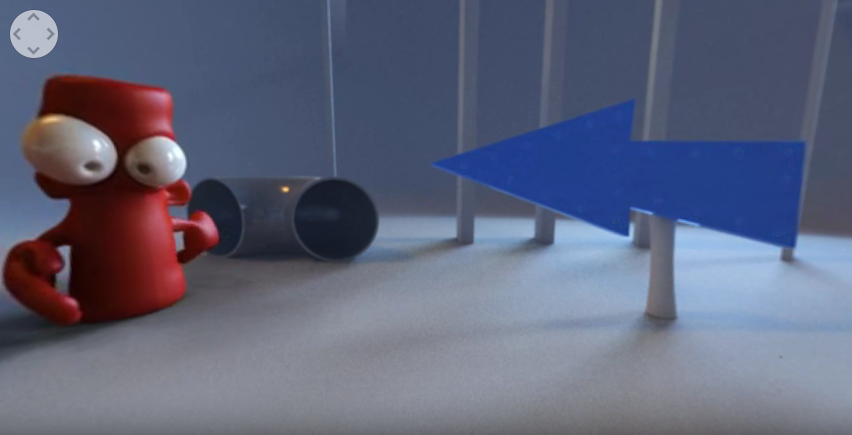 One of the most difficult things to do when we lose the flat rectangles of film is to tell people where to put their eyes. In film it's easy—just point the camera in that direction. Yet, when the camera is pointing in every direction, the content has to dictate where the eye moves. Masters of cinema already accomplish this within their frame, but within the VR orb the challenge is greater and more necessary.
Spence uses the Rube Goldberg Machine trope to guide the audience through a complete 360 degrees. It doesn't matter if they're spinning around in an office chair or bumping into stuff with their VR headsets, that's the magic of virtual reality.
See the full post here: http://thecreatorsproject.vice.com/blog/a-rube-goldberg-machine-reveals-the-secret-to-virtual-reality
Virtual Reality Video Just Went Mainstream
 Two different news stories slipped under the radar yesterday. Both of them point towards virtual reality video making its mainstream debut.
First up is the New York Times, which unveiled its first foray into the world of virtual reality journalism in the form of the NYT VR app. Available on both iOS and Android ...
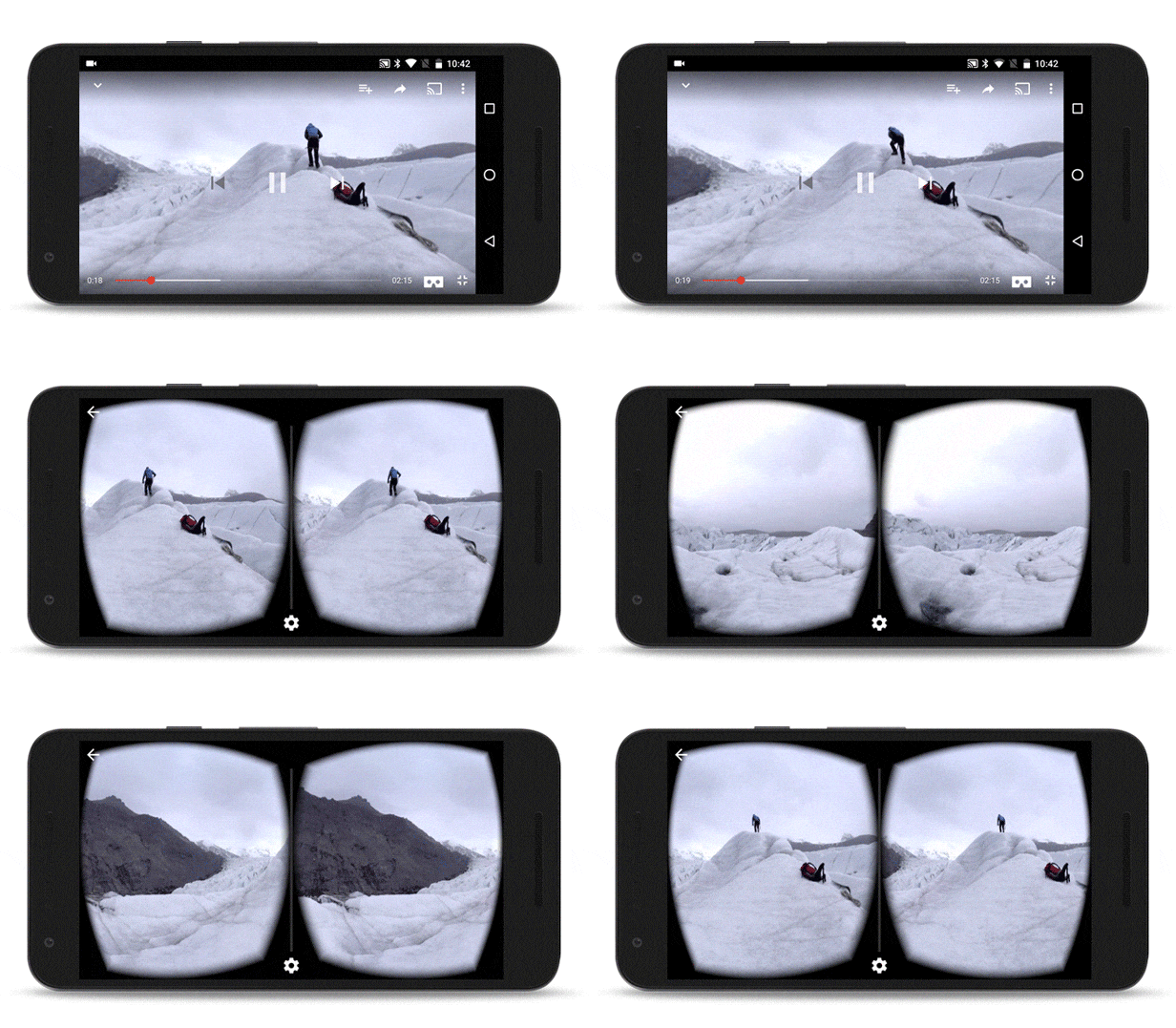
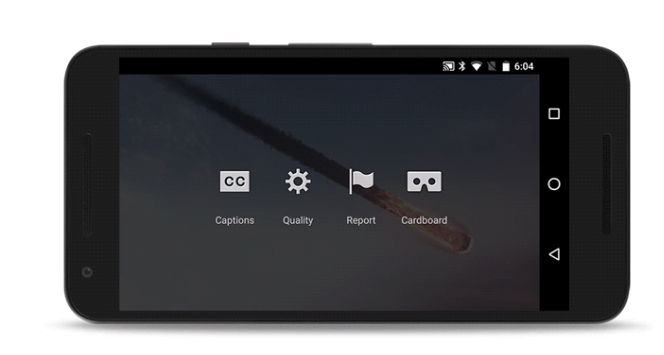
The other announcement yesterday was that YouTube now supports VR uploading and viewing. Not to be confused with the 360-degree video support, which has been enabled since March of this year, the new announcement applies to YouTube's Android smartphone app, which now offers support for Google Cardboard. These open source cardboard viewers offer an inexpensive alternative to the bigger, significantly more expensive rigs like those from Oculus and Samsung, and they're built to work with just about any smartphone on the market.
The coolest thing about this announcement is that you can actually use the Google Cardboard option on any video on YouTube, not just the VR ones. Though it's technically not VR, it could be a way to make the experience of watching videos on your phone a bit more immersive and enjoyable. I, for one, have never liked watching videos (and certainly not movies) on my phone.
YouTube also released a slew of new content to accompany the announcement.
See the full story here: http://nofilmschool.com/2015/11/virtual-reality-just-went-mainstream
Lytro dives into virtual reality filmmaking with debut of its Immerge video camera
[Philip Lelyveld comment - this could be huge!!]
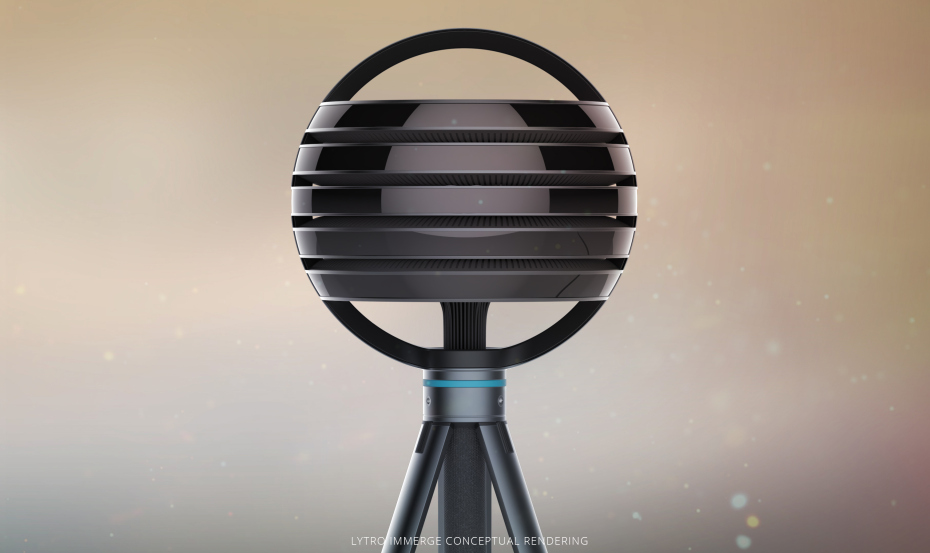
 Available for rent starting in the first quarter of 2016, this 360-degree sphere can be considered the Canon 5D MKIII for virtual reality. The camera has five layers, each containing a densely packed ring of cinematic video cameras that captures a high frame rate and resolution. It’s being called the first of its kind for the way it’s leveraging the light-field mathematical model Lytro is known for within the relatively new realm of virtual reality.
Company chief executive Jason Rosenthal told VentureBeat that the Immerge can provide what studios are looking for when they turn to virtual reality. “None of the existing 2D technology works with a 3D medium,” he said. “What we found post launch of the Illum, was filmmakers coming up to us and saying they couldn’t accomplish their craft without capturing the light-field. It’s an entirely different conversation than traditional photography.” ...
Although Immerge is billed as a camera, what videographers get is much more. In fact, it’s not a simple handheld device, but rather a pretty sizable sphere that can be mounted on a standard tripod. Components that come with it include Lytro-architected servers to store and process footage in real-time, and a light-field editor that’s like Adobe Lightroom for virtual reality — it’s a plugin for Premiere, Final Cut Pro, and Nuke and enables you to take all the camera views from Immerge and import them into your preferred editing tool. ...
Plus, Immerge provides a playback engine that create files that will work on Google Cardboard, Samsung Gear VR, Oculus Rift, Sony Playstation VR, Microsoft HoloLens, HTC Vive, and others.
Control of the Immerge device can be managed through a tablet connected through Wi-Fi.
See the full story here: http://venturebeat.com/2015/11/05/lytro-dives-into-virtual-reality-filmmaking-with-debut-of-its-immerge-video-camera/
Facebook is developing a virtual reality TELEPORTER to transport users anywhere in the world
 However the plans face some serious challenges that need to be overcome before it can become a reality.
First is making the virtual reality worlds appear real.
Another key step would be coming up with a way to make users see their own hands and feet as they moved around.
Seeing other people in the virtual world would also be another important step.
Last May, Oculus also acquired Surreal Vision, a computer vision start-up that focuses on creating ultra-realistic virtual worlds - a skill that could be useful when it comes to creating the teleporter.
Whereas Oculus was born almost solely as a gaming company, Facebook's long-run plan is bringing virtual reality to as many fields as possible.
In 2014, the Information revealed Facebook had approached Hollywood film companies to discuss the possibility of creating 'Oculus experiences.' The teleporter could be the next step on the road to mainstream VR.
See the full story here: http://www.dailymail.co.uk/sciencetech/article-3303511/Facebook-working-Virtual-Reality-teleporter-tricks-believing-else.html