Lionsgate Teams Up With Wevr for ‘John Wick’ Virtual Reality Experience
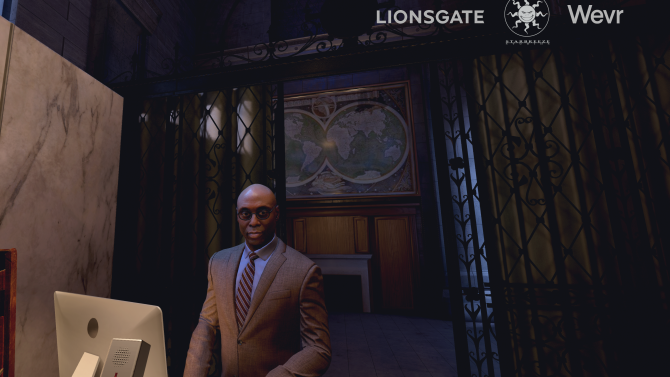 Lionsgate teamed up with Venice, Calif.-based VR startup Wevr to produce the “John Wick” VR experience, which lets users become Wick, and explore the Continental Hotel on his behalf. In the movie, the hotel is a safe haven for assassins, a kind of base camp that they can use to rest their bones and prepare for their next missions without the fear of work-related injuries. In the VR experience, it’s also a place of mystery, in which users have to figure out how to bribe the concierge, pick up dubious clues, and finally dodge bullets as someone breaks the Continental’s code of conduct and attacks their hotel room.
The fully animated VR experience makes use of the Vive’s motion tracking technology, allowing users to freely move around within a 10-by-10 feet space — which is enough to actually walk into that mysterious elevator or check out the hotel suite. Oh, and you’ll also have to get on your knees to escape the bullets once the attack starts. The experience also incorporates the Vive’s two handheld controllers, adding the ability to touch things, and for example move the lever in the hotel’s virtual elevator to get it to go up and down.
Lionsgate is getting ready to launch a full-blown VR video game based on the “John Wick” franchise next year, and it also recently started to film a sequel to the movie.
See the full story here: http://variety.com/2015/digital/news/john-wick-vr-virtual-reality-lionsgate-wevr-1201631538/
Digital Hollywood Panel Discusses Interfaces and Future of VR
 by Don Levy
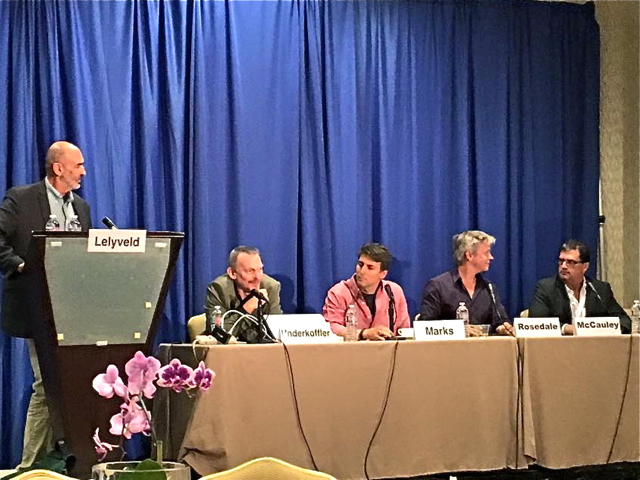
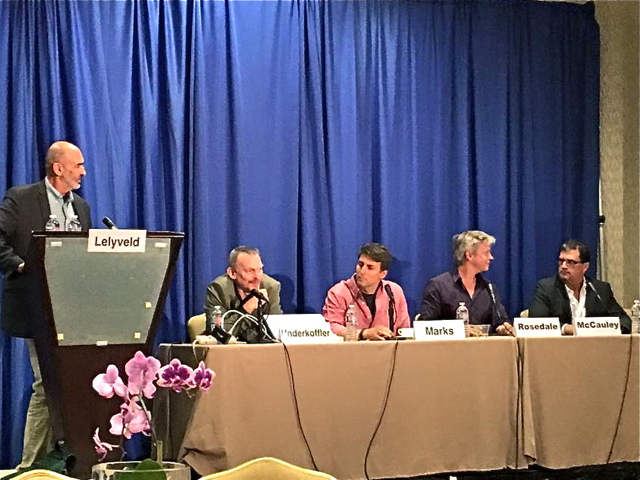
An all-star panel of futurists and inventors featuring John Underkoffler, CEO & chief scientist, Oblong Industries; Philip Rosedale, CEO of High Fidelity and founder of virtual world “Second Life;” Berkeley academic Jack McCauley, founder & president of McCauley Labs and a co-founder and chief engineer of Oculus; and Richard Marks, director of PlayStation Magic Lab looked above and beyond the introduction of VR to articulate an array of visions and technical challenges yet to be mastered. The panel took place at Digital Hollywood and was moderated by ETC project manager Philip Lelyveld.
If there was a common theme to emerge among the participants, it was articulated by Richard Marks who summed it up in one word, “value.” If you are going to have the friction of wearing a headset, then the experience must be worth it, he elaborated.
The ease of something simple, such as Google Cardboard, permits lower level fidelity because the threshold is low. But the high value opportunity in VR he said, is with the highest possible fidelity, provided the cost and comfort are reasonable.
“I want to be able to do things in VR that I cannot do in any other way,” noted Marks. “I want to be able to reach into the world… and do things that I could never do in the real world.”
Rosedale, whose “Second Life” is widely regarded as a prototype for virtual worlds and social interaction, believes “the idea here is that we are going beyond the mouse.” He suggested that the revolution in VR will be “the absolute requirement of both the head and the hands.”
Where the mouse has just two dimensions of movement, the VR interface has the potential for 18 dimensions of free movement — six each for your head and hands.
“The real experiences that are genuinely going to be disruptive are going to be the ones where we have agency — where we can reach into the virtual world and do things,” said Rosedale.
McCauley wants to “take VR and put it into the hands of everyone by making it less expensive.” He envisions doing so by shifting the computational load off the host PC and potentially onto the headmount. He also cited eye-tracking as vital because eyes only resolve a small area of the field of view. By tracking the eyes, the system could render in high resolution only the pixels where the viewer is looking.
“Whether wearing the ‘bucket’ on your head or in a room surrounded by pixels, VR without an input, a UI, is just 360 Cinema,” Underkoffler observed.
Furthermore, the language of VR has yet to be defined. Unlike the pioneers of moviemaking, who transposed theater onto film, there is no single framework for VR. He suggested the evolution of a conformed UI — a lingua franca that would be relevant across VR, AR, cinema, the regular screens that we are used to, and mobile devices… we just need a little to get started.”
Nearly all of the panelists noted the importance of hands, both the tracking of their movement as well as their representation on screen. The projection of our hands on our brains is astonishingly strong, which makes the accuracy of their representation critical.
The panel concluded with a five-year projection on VR and AR.
McCauley recognized advances in mobile devices as a catalyst to the present state of VR. Resolution will improve to the point where you can no longer see pixels, likely with OLED technologies, Magic Leap’s development and the promise of untethered VR and AR.
Rosedale suggested that AR will not be viable in five years because registration — the accurate alignment of virtual objects in the real world — will still be a challenge. Overall, he compared this era to the early days of the Internet. Even people who completely embraced the Internet could not imagine its full potential.
Marks built on the theme of the not quite known. “In engineering we know the trajectory,” he said,” but not so much on the interaction.”
Underkoffler noted that, today, computation ends at the physical end of your device. Five years from now, there is no reason for that to be so. “Instead, the continuity of our world is a real possibility five years from now.”
Video of the panel discussion is now available online.
See the original post here: http://www.etcentric.org/digital-hollywood-panel-discusses-interfaces-and-future-of-vr/
Envelop raises $4 million for multi-tasking VR software
 Envelop VR easily enables a smart headset user to create a personal virtual environment or workspace in VR. Their software works across smart headsets like Valve/HTC Vive and Oculus Rift to extend the way you live, work and play in VR. It allows users to create a workspace that transforms your current work environment and adds layers of depth to it only available in VR. And, they are building a community of partners to help accelerate adoption of smart headsets and the virtual/augmented reality experiences they support.
See the full story here: http://uploadvr.com/envelop-raises-4-million-multi-tasking-vr-software/
Controlling Augmented Reality in the Operating Room: A Surgeon’s Perspective
 Aseptic surgical technique is a concept that came about in the 19th century ... The idea, which is now intuitive, is that during surgery the surgeon, patient, instruments, and drapes must all be sterilized and completely free of microorganisms to minimize the risk of infection. ...once a surgeon is gowned and gloved, he/she cannot touch anything that is not also sterile. If a surgeon does touch something unsterile, he/she is instantly “contaminated” and may need to change his/her gloves and potentially also the gown.
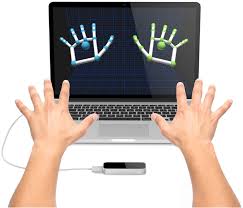
There are various options available for controlling electronics in the OR including voice control, optical hand tracking, EMG-based gesture tracking, remotes/controllers, and foot pedals. I will briefly go over each technology and evaluate their relative advantages and disadvantages from a surgeon’s perspective.
See the full story here: http://www.medgadget.com/2015/10/controlling-augmented-reality-operating-room-surgeons-perspective.html
UTA Signs Digital Content Studio Secret Location
 Last month, the Los Angeles- and Toronto-based company became the first to win an Emmy for a virtual reality project, when the Sleepy Hollow Virtual Reality Experience, an installation experienced by several thousand attendees at Comic-Con this summer, earned an interactive media Emmy for user experience and visual design.
In addition to its unique virtual and augmented reality work, Secret Location also has built websites, apps and created linear digital content (i.e. webseries) for film and TV clients including Insidious 3, NBC’s The Blacklist, IFC’s The Spoils of Babylon and BET’s The Book of Negroes, as well as for brands including Samsung, Toyota and Red Bull. It currently is working with Syfy on a virtual reality series called Halcyon and with GE on a story about China’s largest wind farm.
UTA will work with Secret Location, which has twice won best of show at the Banff World Media Festival, to expand its business in both non-traditional and traditional media. In addition, the agency – which has one of Hollywood’s longest-running and strongest digital departments – will advise on its social and digital media strategy.
See the full story here: http://www.hollywoodreporter.com/news/uta-signs-digital-content-studio-833181
Digital Hollywood: Reality Lab Demonstrates Live VR Broadcast – Quantum Leap
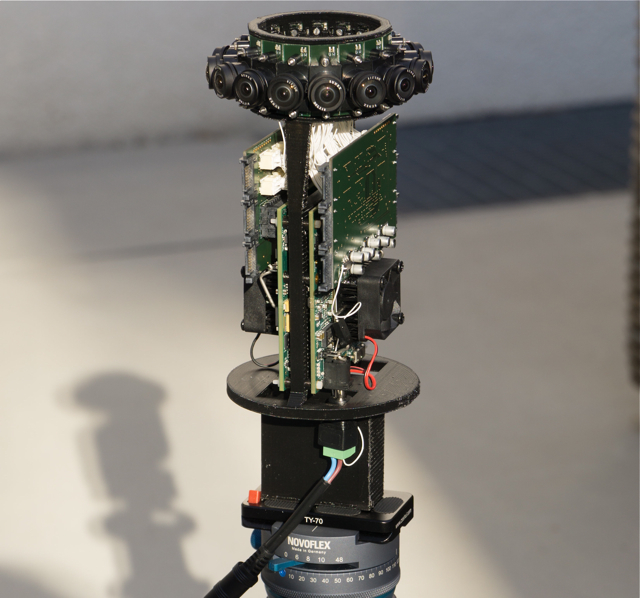 Reality Lab gave a technology demonstration of Quantum Leap, the code name for a VR recording device with 16 cameras and proprietary technology that enables it to render real-time video instantly, without post production, on a Samsung Gear VR running Oculus Connect software. Company founder Halsey Minor calls Quantum Leap, which was featured at a Digital Hollywood luncheon, capable of “the first live VR broadcast.”
“The goal is not to sell or rent the camera,” said Minor, “But to build all the pieces to capture an event.” Minor also recently launched Voxelus, a company that enables the creation of graphical worlds. Although the two companies are separate, the goal is to enable the graphical worlds created in Voxelus to “co-exist with the live video capabilities of Quantum Leap.”
The experience was startling, albeit marred by pixilation, which Minor says is the result of the display’s resolution, and a 6 fps lag, due to the connection between Reality Lab hardware and the Oculus rig. Still, it was hard not to be impressed. “I can definitely see the potential,” said Zazoom Media Group executive Steve Bradbury who stopped by to test out the experience.
Prior to starting Reality Lab, Minor founded and built CNET Networks, founded Uphold, Google Voice, OpenDNS and NBCi and co-founded Salesforce.com and CNET spinout Vignette.
See the full story here: http://www.etcentric.org/digital-hollywood-reality-lab-demonstrates-live-vr-broadcast/#more-97568
The Virtual World’s Fair is where VR hype meets theme parks
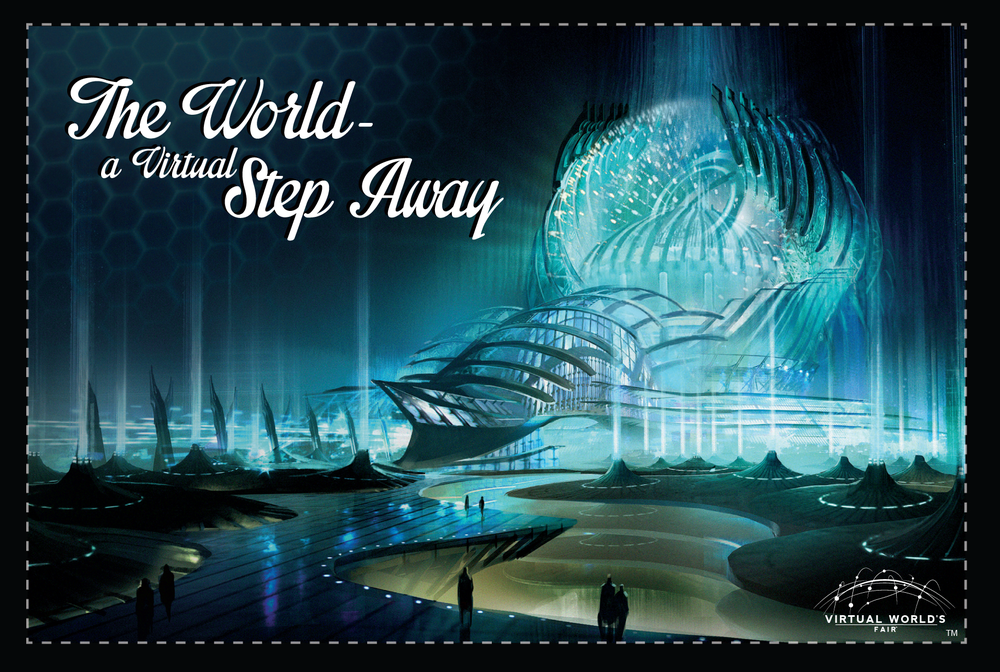 Earlier this year, Landmark announced that it would begin building VR-based attractions called Live Centers, starting with one in China in the summer of 2017. The centers would include a “virtual zoo,” digital art gallery, and various cinematic offerings, all contained in a 200,000-square-foot complex. As the company announced earlier this month, though, it’s also planning to launch at least two home virtual reality services in the next two years. If everything goes right, its VR apps — the self-contained “Pavilion of Me” and much larger “Virtual World’s Fair” — will put Landmark in the company of gaming companies, VR film studios, and software designers. But that’s a huge qualifier — and a sign of how little we really know about the future of VR.
Based on which analyst prediction you happen to click in a Google search, the virtual reality industry will be worth $7 billion, $21.8 billion, or possibly $30 billion by 2020. Landmark predicts there will be 170 million active VR users by 2018. The ultra-simple Google Cardboard notwithstanding, most consumers today have yet to use the technology in any meaningful sense, but Christopher believes that the amount of high-profile support it’s gotten is a sure omen. "There’s too many very, very powerful organizations trying to launch this business for it not to happen," he says.
Both the Virtual World’s Fair and the Pavilion of Me (POM for short) are described as portals; the former is a digital theme park, the latter a personal entertainment complex. POM is slated to arrive first in the fall of 2016, after the launch dates of Oculus, Sony, and Valve’s high-end headsets — Landmark hasn’t officially announced launch platforms, but Christopher says there’s interest from Sony and Oculus. Right now, Landmark is showing off only a video of an early build, a series of separate "rooms" for activities like watching movies, holding Skype calls, lounging with friends, and looking through virtual versions of your old-fashioned photographs.
In other words, Landmark is building a VR user interface — a notoriously hard thing to get right.
See the full story here: http://www.theverge.com/2015/10/26/9615024/landmark-virtual-reality-worlds-fair-pavilion-of-me?curator=MediaREDEF
How Microsoft’s HoloLens actually works
 Philip Lelyveld comment: This is a good basic overview.
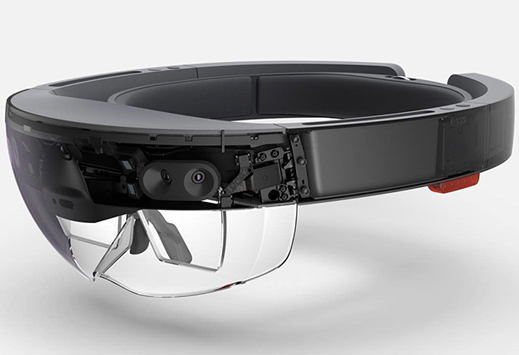
Microsoft describes HoloLens as the "first fully untethered, holographic computer, enabling high-definition holograms to integrate with your world". The development version is set to ship out the first quarter of 2016.
See the full story here: http://gogglenaut.com/Gear/How_Microsoft's_HoloLens_actually_works