Norse Theme Parks is blending traditional attractions with virtual reality and augmented reality experiences at its new Copenhagen park.
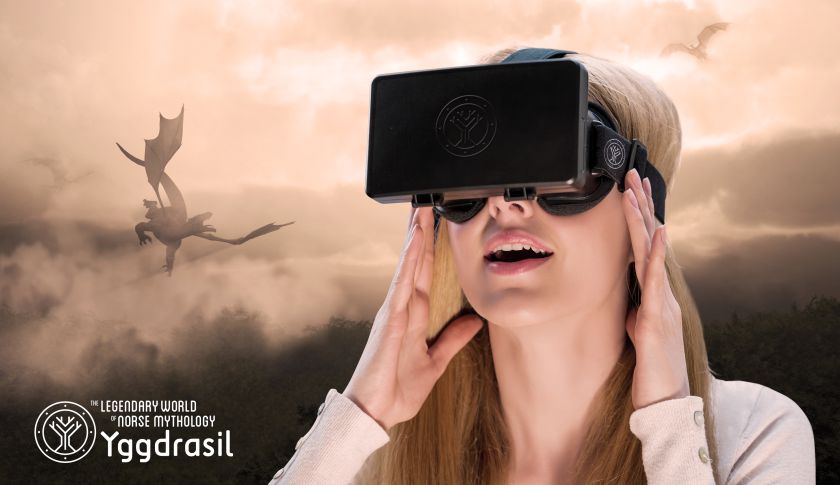 According to Peter Franklin Wurtz, co-founder of startup Norse Theme Parks, The Legendary World of Norse Mythology: Yggdrasil will blend traditional rides and attractions with virtual reality and augmented reality experiences when it opens in 2019.
Wurtz and his team are designing five to six virtual reality Conquest Rooms, which will employ VR head-mounted displays like Oculus Rift and HTC Vive coupled with Virtuix Omni multi-directional treadmills and interactive props like swords and shields to immerse guests in Norse mythology. And 4D domed screens blended with special effects will allow guests to battle giants with laser swords and voyage aboard a Viking ship on the storm-swept seas battling against the Midgard sea worm.
There will also be augmented reality Mental Quest rooms, which give groups of guests 20 minutes to solve a puzzle within a themed room filled with props. Sample missions could be finding the key to the location where Loki hid Thor’s hammer, or searching for the elf king’s magical bow and arrow. Guests will uncover hidden clues using a tablet featuring AR.
Wurtz expects the theme park to attract half a million visitors per year over the first few years and over a million guests afterward.
See the full story here: http://fortune.com/2015/09/16/norse-theme-parks-vr-park/
THE VIRTUAL ROAD TO THE PROTO AWARDS PART IV: JOHN ROOT
 Root’s own vision of tomorrow is tempered by his decades of experience. While most of The Virtual Reality Foundation are millennials, Root is a Gen Xer—he’s watched VR’s steady march in the film production industry long before it retuned to consumer interest.
“As a motion capture guy for the last 25 years now I’ve been using virtual reality. Like real time computer graphics. We used the virtual cameras on the big productions for [Robert] Zemeckis. So I guess i’ve seen this coming for a while now. It’s cool to see it blow up like this.
“I think that this has been a great way to reinvent this economy in a way. So were seeing a lot of people get away from visual FX and get into VR.”
According to Root users an education campaign is going to need to go hand in hand with the marketing efforts in the coming years, because the computers people use for VR are, given the costs involved, not going to be dedicated.
“What does a virus do to your computer running in the background when you’re trying to run around in VR?
See the full story here: https://turnstylenews.com/2015/09/17/the-virtual-road-to-the-proto-awards-part-iv-john-root/#more-44999
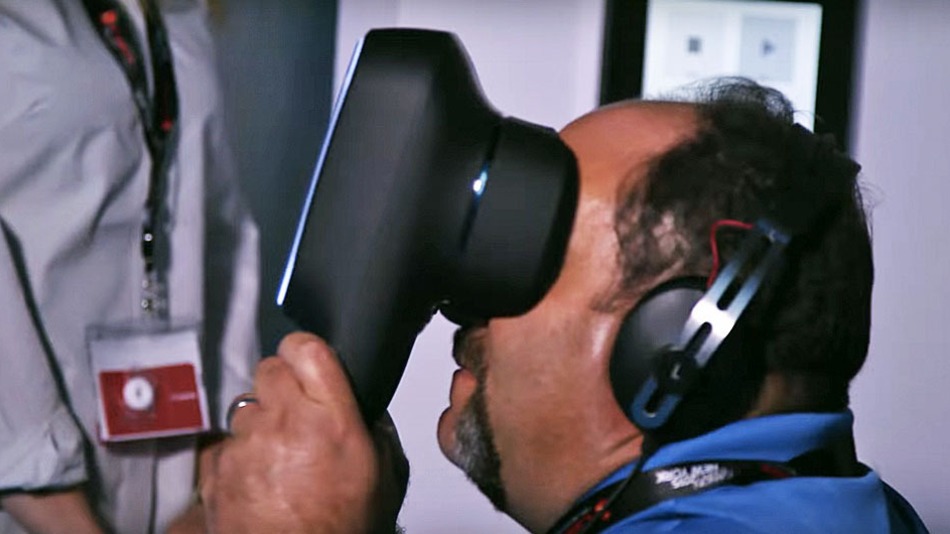
Canon reveals virtual reality prototype that you hold instead of wear
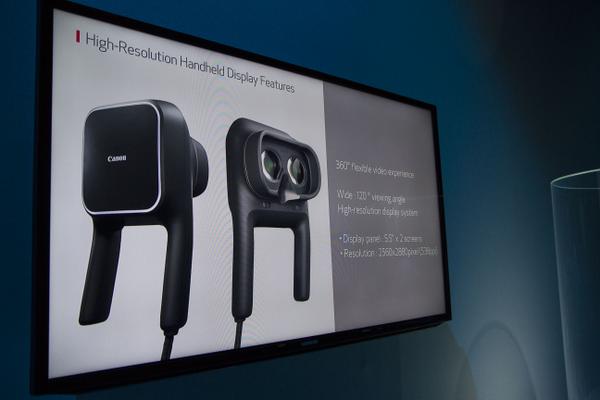 the device offers dual 2560x1440 displays (for a total of 5k resolution) and 120 degrees field of view.
In addition to the visual features, the device also delivers content with multi-directional sound that Canon claims (via its on-site promotional materials) will offer "a sense of orientation aligned with viewing direction."
The VR viewer doesn't appear to have a commercial name just yet, and by all accounts the device is just a prototype.
See the complete story here:http://mashable.com/2015/09/12/canon-virtual-reality/#AFn5uiMoyaku
Marriott uses virtual reality for tours of Chile, China and Rwanda
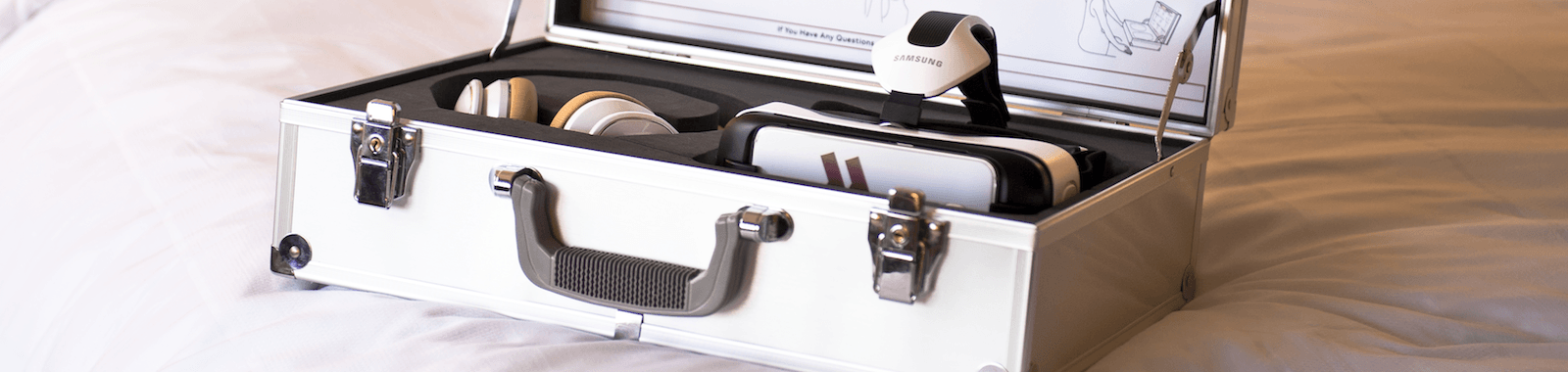 Called "VRoom Service," the new offering allows guests to call a dedicated VRoom Service extension or use Marriott's Mobile Request app to request a VR headset and headphones, which they can borrow from the hotel for 24 hours. Using the available gear, guests can then access "VR Postcards," which Marriott describes as "intimate and immersive travel stories that users experience in 360 3D" via their VR headset. Each story followers a real traveler on a journey to a unique destination, such as the Andes Mountains in Chile, an ice cream shop in Rwanda, or the bustling streets of Beijing.
The program is currently being tested for two weeks at the New York Marriott Marquis and London Marriott Park Lane properties, after which the brand hopes to scale it. The locations have 300 and 100 sets each, which are available for guests to use for up to 24 hours. The VR Postcards will not only be available to guests at these select properties, but also to the general public. Those technology aficionados who own a Samsung Gear VR headset can access the postcards through the Samsung Milk VR app.
See the full story here: http://www.successfulmeetings.com/News/Hotel-Updates/Marriott-Introduces-In-Room-Virtual-Reality/
and here: http://digiday.com/brands/virtual-reality-marriott/
MIT Created a Camera That Will Never Overexpose a Photograph
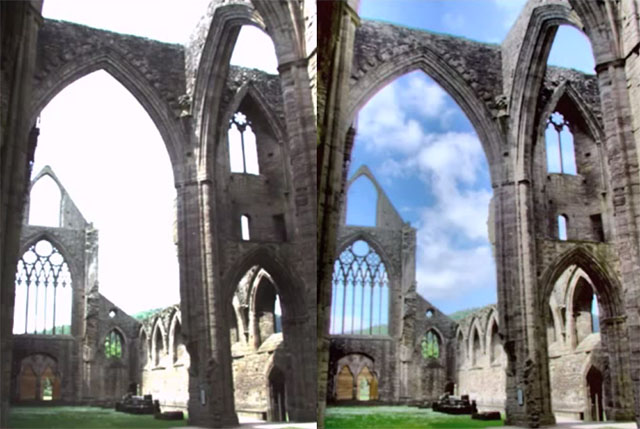 In conventional camera sensors collect photons like buckets collecting raindrops. When a “bucket” gets filled up, any additional “water drops” (i.e. photons) will be discarded, and that information is lost. In the resulting photo, that pixel will show up as pure white.
With the modulo camera, each bucket is emptied whenever it fills up during an exposure. This means that when the exposure ends, all the buckets have some kind of useful information in them. By taking into account the number of resets for each bucket, the camera can figure out the relative brightness for each pixel.
See the full story here: http://petapixel.com/2015/08/18/mit-created-a-camera-that-will-never-overexpose-a-photograph/
Google’s New Project Is So Insanely Advanced It Will Blow You Away
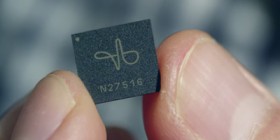 Google’s Project Soli has invented a new interaction sensor using radar technology that can capture motions of your fingers at up to 10,000 frames per second.
This chip is actually a miniature gesture radar that captures even the most complex hand movements at close range, at unbelievably hyper speeds and replicates hand gestures. Given the micro size of the chip, it can almost be fitted into literally anything. This technology, if the project is successful, can make the need to touch a device to operate it redundant.
See the full story here: https://www.facebook.com/richard.saul.wurman?fref=ts