Cloudhead Games’ ‘Blink’ to Bring Nausea-free VR to HTC Vive this Holiday
 [Philip Lelyveld comment: they avoid simsickness by teleporting you. Essentially, they use jump cuts to avoid simsickness. The truly valuable solutions involve addressing latency, persistence, focus/vergence conflict, and other visual system issues.]
VR hardware is improving and the display techniques such as low persistence of vision, pioneered by Oculus and Valve over just the last couple of years mean perceiving VR imagery inside VR headsets is a whole lot more comfortable these days.
The Oculus Rift DK2 brought us optical positional tracking, freeing our heads and bodies from a purely rotationally tracked virtual world. The system allowed free movement within the confines of the tracking camera’s FOV, which when positioned correctly was relatively generous. The HTC Vive and its Lighthouse laser tracking system expanded upon that freedom, introducing what they termed ‘room scale’ tracking – pitching their VR system as one you could explore both physical and virtual spaces with.
Essentially, your inner ear disagrees with your brain – you’re moving in virtual space but not in physical.
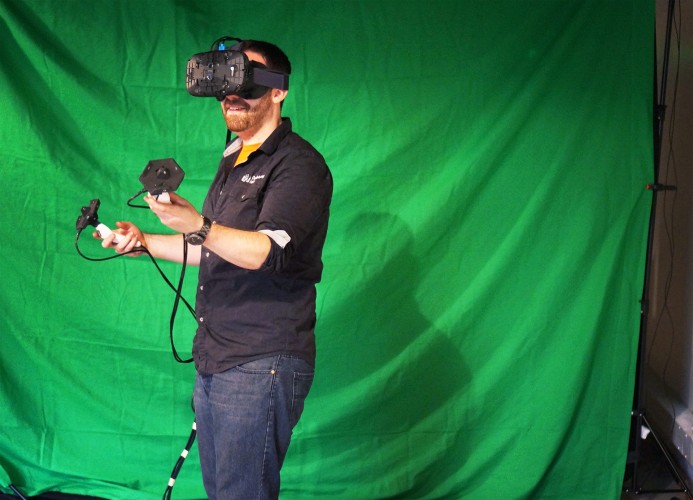
Subtitled ‘Elastic VR Playspace’ the solution comprises a number of techniques (as outlined in the video above, presented by Cloudhead Games’ Denny Unger) which, when combined tackles all of the above issues: Cinematic Blink, Precision Blink and Volume Blink – a “locomotion mechanic which ensures player safety, deep traversal and complete spacial awareness in both the virtual and real world.”
Essentially, Blink employs a point, click and teleport system which removes the uncomfortable elements of virtual travel by snapping you to a position and orientation defined by you instantly thereby essentially sidestepping the issue.
See the full story here: http://www.roadtovr.com/cloudhead-games-blink-to-debut-nausea-free-vr-on-htc-vive-this-holiday/
Inside Industrial Light & Magic’s secret Star Wars VR lab
 The group is a collaboration between all arms of the Lucasfilm empire, taking the visual effects expertise of ILM, the latest in real-time computer graphics from the Advanced Development Group, and the audio prowess of Skywalker Sound, and mixing it all together under the incomparable appeal of the Star Wars franchise. It’s a unique effort; while other movie studios are teaming with tech companies to dabble in VR, and VR companies are spinning up their own mini production houses to dip their toes into film, ILM already has the necessary departments integrated under one roof — not to mention a highly-anticipated slate of films in production to play off of. It allows Bredow’s team to experiment with multiple types of experiences simultaneously, in a kind of next-generation entertainment sandbox.
See the full story here: http://www.theverge.com/2015/8/13/9131805/ilm-ilmxlab-interview-virtual-reality-star-wars-movies
Drone Racing League, a New York startup, is planning its first public race later this year
 [Philip Lelyveld comment: There is a great opportunity now for micro drone performance pieces in movie theaters and other venues. Think touring laserium-style shows!]
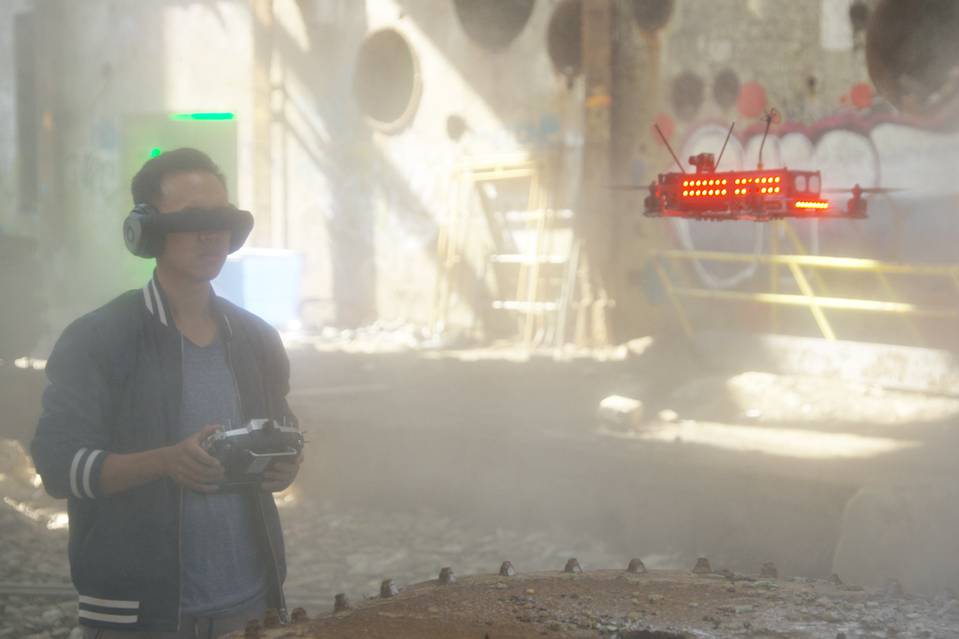
RSE Ventures, a venture-capital firm co-founded by Mr. Ross, is providing $1 million to the first round of funding for the Drone Racing League, a New York startup that is planning its first public race later this year. The League intends to make money through sponsorships, media and ticket sales.
The Drone Racing League is targeting a growing audience: videogame players and other technology-oriented types. The venture hopes to re-create the success of live videogame competitions, which lately have been packing arenas like Madison Square Garden.
Hobbyists typically race the so-called “250 Class” of drones, which cost $300 to $500 and can hit speeds of 70 miles an hour, and racers through the Drone Racing League will pilot similar drones. The machines are nimble enough to navigate the old factories and other interior spaces in which the Drone Racing League is planning its races.
See the full story here: http://www.wsj.com/articles/developer-stephen-rosss-rse-ventures-invests-in-drone-racing-1439327632
‘Old age suit’ reveals what it’s like to be a PENSIONER: Futuristic exoskeleton mimics arthritis, hearing loss and blindness
 There cannot be many people who would wish to hasten the onset of the frailty and difficulty moving that comes with old age.
But robotics experts have developed an 'ageing suit' to replicate the wasted muscles, weak bones, poor eyesight and hearing loss that often accompanies getting older.
Using sensors, augmented reality and adjustable controls, the R70i Ageing device allows the wearer to experience the effects of arthritis, glaucoma, muscle loss and more.
See the full story here: http://www.dailymail.co.uk/sciencetech/article-3194823/Old-age-suit-reveals-s-like-PENSIONER-Futuristic-exoskeleton-mimics-arthritis-hearing-loss-blindness.html
Eyeglasses with Face Un-Recognition Function to Debut in Japan
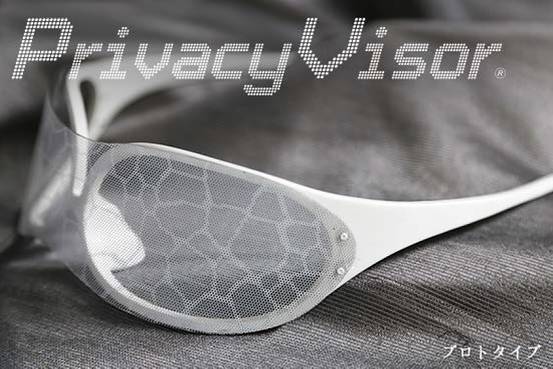 Dr. Isao Echizen at Japan's National Institute of Informatics has spent the better part of two years cooking up a pair of specs that render people's faces undetectable to autofocusing cameras and (with any luck) the facial recognition tech that power the web's social services.
The Privacy Visor, created by the government-affiliated institute and an eyeglass maker in Japan’s Fukui prefecture, uses unique angles and patterns on its lens that reflect or absorb light. This prevents the recognition systems in digital cameras and smartphones from spotting a human face in a shot and focusing on it.
Tests with cameras on smartphones showed that the eyeglasses were able to trick the facial-recognition system 90% of the time.
See the full story here: http://blogs.wsj.com/digits/2015/08/08/eyeglasses-with-face-un-recognition-function-to-debut-in-japan/?mod=ST1