When drones and virtual reality come together in an out-of-body experience
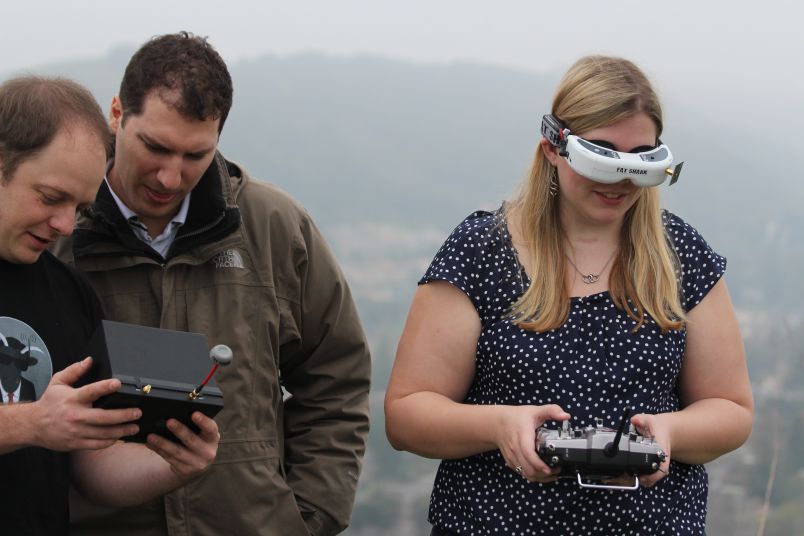 Raphael Pirker, the entrepreneur behind Team BlackSheep, asked me if I saw the birds. Tilting my head up at the foggy skies above the hills of Moraga, California, I couldn’t see them — my view didn’t change, no matter which way I turned my head.
I had forgotten that my eyes were not my own — they belonged to a drone named Gemini.
But that day in Moraga, I was with my Gigaom colleague Signe Brewster and drone advocate Raphael Pirker, who was in town from Hong Kong where he runs Team BlackSheep to go drone racing. It’s a natural progression for drone hobbyists, Pirker explained. Once they get good at flying around, people turn competitive and start racing in a kind of Star Wars–style pod-racing thing of the future.
But it’s not virtual reality in a typical sense. Most VR products tout a 360-degree experience — you can stand in a room and look all around it. FPV drones have a fixed view, so you can’t see what’s around the drone, only what the camera on the drone is seeing.
My body came into view: white goggles strapped to my face, controller in my hands, shoes soaked in the wet grass. It was the first time in my life I had stared at myself — from outside of myself.
I took off the goggles, my vision once again, disappointingly, my own. Grounded.
See the full story here: https://gigaom.com/2015/03/01/when-drones-and-virtual-reality-come-together-in-an-out-of-body-experience/
Phonemaker HTC teams with Valve on Virtual Reality
 HTC has indeed just unveiled what on the surface appears to be an improved and handsome new version of the HTC One smartphone, dubbed the HTC One M9 at Mobile World Congress in Barcelona.
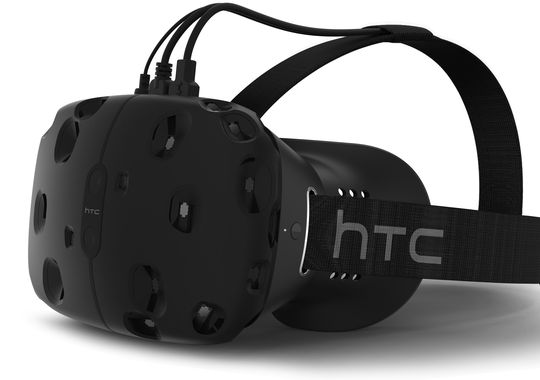
HTC is teaming up with the gaming company Valve on the HTC Vive headset, the goal of which is to bring mass-market virtual reality one step closer to reality.
Mootee claims the technology inside Vive is "at least nine months to a year ahead of Oculus," the virtual reality company that Facebook paid $2 billion to acquire last year, and the outfit powering the Gear VR goggles that HTC's rival Samsung sells.
That's an especially bold claim when you consider that Gear VR is already on the market while Vive won't be available until later in 2015. Sony and Google also have designs on virtual reality while other companies including Microsoft are aggressively pushing into holograms and the related field of augmented reality.
HTC says Vive is different from Samsung's Gear VR in that you'll be able to wear the headgear while walking around, letting you explore your virtual space and inspect objects from any angle. You're meant to be seated or at least remain stationary while wearing Gear VR.
Moreover, HTC says you'll be able to virtually "touch" objects while wearing Vive headgear, to puncture a flying balloon or to feel the sensation of opening a door. The company is promising high-quality graphics, 90 frames-per-second video, and top-notch audio fidelity.
In addition to Vive and the new HTC One M9, HTC is teaming with Under Armour to produce a new GPS-capable contoured waterproof fitness tracker called HTC Grip. Worn on the wrist, it comes in three sizes, has a 1.8-inch display to show off real-time stats, and a battery life, HTC says, of up to 2½ days.
To help get the big picture message across, HTC will soon start running lifestyle TV commercials narrated by Robert Downey Jr.
Read the full story here: http://www.usatoday.com/story/tech/2015/03/01/htcone-phonemaker-plunges-into-virtual-reality-with-vive/24217607/
Google’s augmented reality game ‘Ingress’ comes to Android Wear
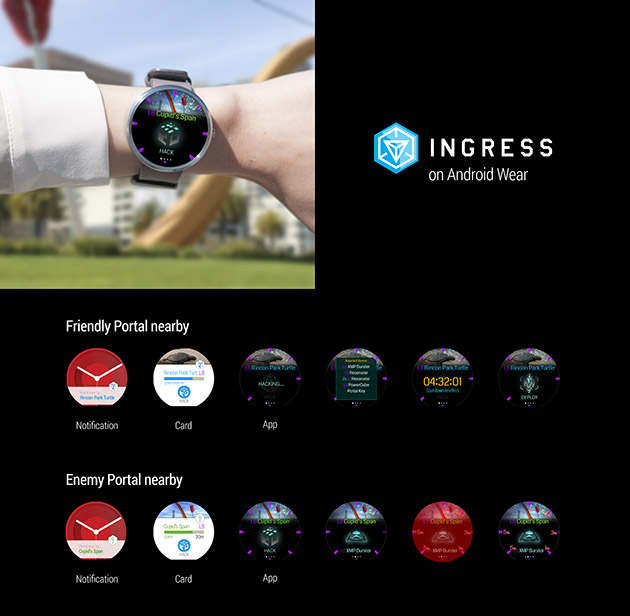 Remember Ingress, the Google-developed project that entices you to get outside with the promise of some light gaming? On top of iOS and Android, it'll soon work on Android Wear, meaning you can join in the fun with your smartwatch rather than just your smartphone (though you'll still need that too, of course).
See the full story here: http://www.engadget.com/2015/02/27/google-ingress-android-wear/
Harvard’s New ‘Flat Lens’ Could Give VR Headsets Better Image Quality, Making Them Lighter and More Compact
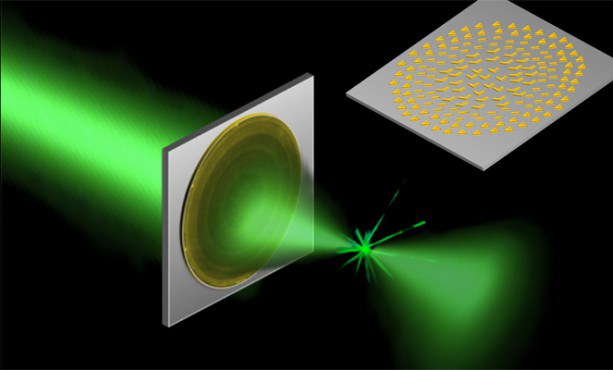 The news came out of Harvard’s School of Engineering and Applied Sciences (SEAS) on Thursday, detailing a technical improvement on a prototype ‘flat lens’, which now uses what they call a “glass substrate and tiny, light-concentrating silicon antennas” to redirect light.
Now, instead of treating all wavelengths equally, the researchers have devised a flat lens with antennas that compensate for the wavelength differences and produce a consistent effect—for example, deflecting three beams of different colors by the same angle, or focusing those colors on a single spot.
What this now means is that complicated effects like color correction, which in a conventional optical system would require light to pass through several thick lenses in sequence, can be achieved in one extremely thin, miniaturized device,” said principal investigator Professor Federico Capasso of SEAS.
Harvard's Office of Technology Development has filed for a provisional patent on the new optical technology and is actively pursuing commercial opportunities.
See the full story here: http://www.roadtovr.com/new-flat-lens-give-vr-headsets-better-image-quality-making-lighter-compact/
and here: http://www.seas.harvard.edu/news/2015/02/perfect-colors-captured-with-one-ultra-thin-lens
Magic Leap A startup is betting more than half a billion dollars that it will dazzle you with its approach to creating 3-D imagery. Availability: 1-3 years
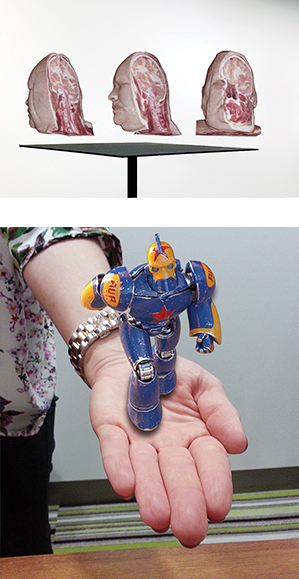 Essentially, it has developed an itty-bitty projector that shines light into your eyes—light that blends in extremely well with the light you’re receiving from the real world.
By day, Abovitz is a technology entrepreneur with a background in biomedical engineering. He previously founded Mako Surgical, a company in Fort Lauderdale that makes a robotic arm equipped with haptic technology, which imparts a sense of touch so that orthopedic surgeons have the sensation of actually working on bones as they trigger the robot’s actions. Mako was sold to a medical technology company, Stryker, for nearly $1.7 billion in 2013. By night, Abovitz likes to rock out. He sings and plays guitar and bass in a pop-rock band called Sparkydog & Friends. And as he tells it, Magic Leap has its origins in both the robotic-surgery company and his life as a musician.
Combining virtual reality with the physical world appealed to Abovitz even at Mako. Although the robotic-arm technology could give surgeons the sensation of touching their instruments to bones, Abovitz also wanted to let them see virtual bones as they went about this work. Over and over, he says, he tried out head-mounted displays made by different companies, but he was disappointed with them all. “They were all just complete crap,” he says. “You’d put it on and it would give you a headache and it was awful, and I was wondering, ‘Why is this so bad?’”
The next morning, though, he awoke with an idea: why bother with the painstaking steps needed to send a hologram out into a room for multiple people to see at once? Why not, instead, essentially make a hologram that only you see, doing it in a way that is natural for the eyes and brain to perceive, unlike stereoscopic 3-D? “We’re spending half a billion dollars–plus to effectively make nothing happen to you, physiologically,” Abovitz says.
The solution he and Macnamara and the rest of Magic Leap’s team have come up with is still largely under wraps, and on the record they avoid discussing how the technology works except in vague terms, citing concerns about competition. But it’s safe to say Magic Leap has a tiny projector that shines light onto a transparent lens, which deflects the light onto the retina. That pattern of light blends in so well with the light you’re receiving from the real world that to your visual cortex, artificial objects are nearly indistinguishable from actual objects.
It’s clear that getting the technology into that small form will be very hard. The smallest demo hardware I’ve seen at Magic Leap can’t yet match the experience of the bigger demo units. It includes a projector, built into a black wire, that’s smaller than a grain of rice and channels light toward a single see-through lens. Peering through the lens, I spy a crude green version of the same four-armed monster that earlier seemed to stomp around on my palm. In addition to improving the resolution of smaller units, Magic Leap will have to cram in sensors and software that will track your eyes and fingers, so you can control and interact with its virtual creatures—which themselves will have to incorporate real-life objects into whatever they appear to be doing.
See the full story here: http://www.technologyreview.com/featuredstory/534971/magic-leap/
Valve to Reveal “SteamVR Dev Kit” Next Week at GDC 2015

Gaming giant Valve has announced that they’ll be revealing a “previously-unannounced SteamVR hardware system” at GDC 2015.
Now Valve seems ready to reveal their own VR headset. Writing on their website that Valve is “actively seeking VR content creators” for a “previously-unannounced SteamVR hardware system” which they’ll demonstrate at GDC 2015 next week. The company is soliciting folks who want to try the “SteamVR Dev Kit,” language which closely resembles that of Oculus and other VR hardware companies with publicly available developer hardware that to be iterated upon until a consumer release.
Apple Granted Patent for Gear VR-like Mobile Headset, Could Have “Broad Ramifications” for Such Devices
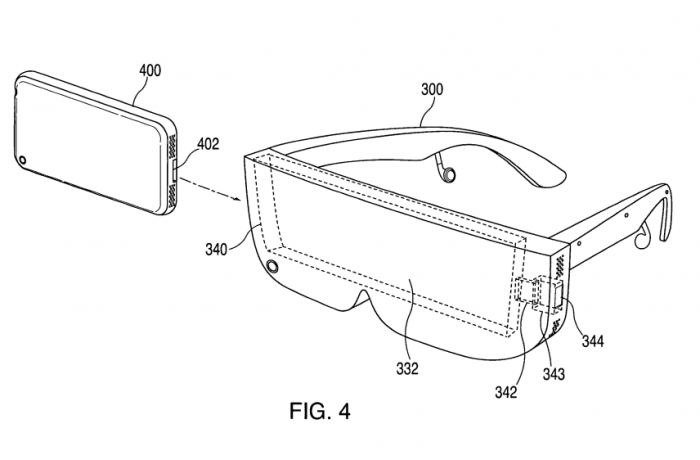 Yesterday, Apple was granted a patent for a Gear VR-like mobile headset which would use a portable device (like a smartphone) as the primary display.
Back in 2008 though, when Apple filed a patent for a “Head-mounted display apparatus for retaining a portable electronic device with display,”—among the many patents the company has filed that sat on the shelf—who could have confidently said whether or not it would even come into play?
See the full story here: http://www.roadtovr.com/apple-granted-patent-gear-vr-like-mobile-vr-headset-broad-ramifications-possible-mobile-headsets/
Disney Imagineer to Share VR Learnings from past 20 Years at GDC 2015
 Bei Yang, the ‘Creative Technologies’ leader at Walt Disney Imagineering, will be holding a talk on March 5th at this year’s Game Developers Conference (GDC) and revealing VR strategies learned by the R&D arm of Disney over the past 20 years of its existence.
The talk is called ‘Practical Virtual Reality for Disney Themeparks‘ and will discuss game design principles and practical applications of VR headsets, but will also present valuable technical insight into some well-trodden ground for Disney’s Imagineering group: the CAVE (Cave Automatic Virtual Environment), a platform that displays a projected 3D image on an enclosed space that can offer virtual experiences to one or more people at a time.
Since 2007, Bei Yang has been helping to develop VR experiences and robotic animations for Disney themeparks worldwide at the Imagineering skunkworks, Disney’s own blending of ‘imagination’ and ‘engineering’.
Walt Disney Imagineering, being one of the original pioneers in VR in the late 1980s, has in truth never stopped playing with VR and using it.
Attendees will learn about some of the practical problems when creating VR experiences for the real world. This will include what causes nausea, what gives a sense of immersion, and the problems that arise when technically implementing VR from both a software and hardware perspective.
See the original post here: http://www.roadtovr.com/disney-imagineer-to-share-vr-learnings-from-past-20-years-at-gdc-2015/