
We believe further automation can play a major role in addressing the following industry-wide challenges. More complex operations. Increasing volume and complexity in hostile, remote locations (for example, arctic, offshore, and deepwater) require reliable remote and automated or semiautomated operations, and logistics optimized for efficiency. Mature assets with declining production need very efficient maintenance schedules to keep production profitable. Zero tolerance for health, safety, and environmental incidents. This is a nonnegotiable imperative. Recent industry experience has shown that in the current highly regulated environment, such incidents can threaten not only profitability but also the very existence of an operator. Automated production control, monitoring the condition of the equipment, and predictive shutdown systems are now basic requirements to prevent or mitigate catastrophic events in geographically dispersed remote operations. The talent and experience gap. The industry is in the most dramatic demographic shift in its history, commonly referred to as “the big crew change.” Thousands of petrotechnical professionals will be retiring soon, resulting in a knowledge and experience crisis for the industry. Retention and recruitment are unlikely to fill the gap completely. This development drives efforts to codify many routine analysis and decision-support processes and, where possible, to automate them. See the full story here: http://www.mckinsey.com/Insights/Energy_Resources_Materials/Digitizing_oil_and_gas_production?cid=DigitalEdge-eml-alt-mip-mck-oth-140
Disney may use drones in theme park entertainment
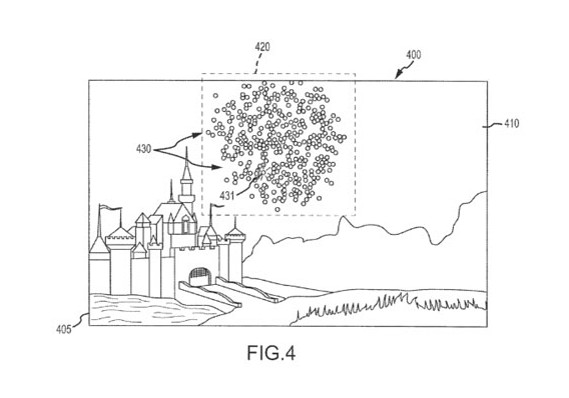 Disney’s R&D department is working to create a multi-drone aerial display system and a ground control station that could choreograph repeatable movements.
The patents were published Thursday and applied for by Clifford Wong, James Alexander Stark and Robert Scott Trowbridge, all a part of Walt Disney Imagineering, Disney’s design and development arm.
See the full story, with links to the patents, here: http://blogs.marketwatch.com/themargin/2014/08/22/disney-may-use-drones-in-theme-park-entertainment/
A Headset Meant to Make Augmented Reality Less of a Gimmick
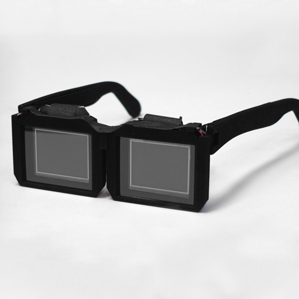 Maimone’s device, called a Pinlight Display, does not use conventional optical components. It replaces these with an array of bright dots dubbed pinlights. “A transparent display panel is placed between the pinlights and the eye to modulate the light and form the perceived image,” says Maimone. “Since the light rays that hit each display pixel come from the same direction, they appear in focus without the use of lenses.”
The benefits of the approach over previous devices are significant. While state-of-the-art commercial augmented reality glasses have a field of view of 40° or less, early Pinlight prototypes have demonstrated fields of view of 100° or more. It’s an impressive breakthrough, as evidenced by this explanatory video, which shows the difference that a wide field of view makes when viewing, say, a holographic-style spaceship from Star Wars.
Problems remain for the team, which recently showed off the technology at theSiggraph 2014 conference in Vancouver. The prototype suffers from low resolution and image quality, far below the level of existing commercial augmented reality glasses. Additionally they must successfully implement tracking, networking, low latency rendering, various and other features.
See the video here: http://media.siggraph.org/et2014/general_0203_pinlight_displays.mp4
Report: In-Home IoT Device Ownership Could Reach 69% by 2019
 [Philip Lelyveld comment; they report consumer attitudes about know personal and home Internet of Things devices. Having personally swallowed a camera capsule to map my gastrointestinal system, I can definitely see the potential for unknown ingestible and implantable IoT devices.]
While consumers are keen to find out how wearable tech can improve health and safety, they’re focused most “on how IoT products can provide integration to help them live more conveniently long term,” according to Acquity. That said, Acquity expects the following connected devices to be the most popular over the next few years:
- Wearable fitness devices (Expected to have 22 percent adoption by 2015; Expected to have 43 percent adoption in the next five years).
- Smart thermostats (13 percent projected adoption in the next year; 43 percent in the next five years).
- Connected security systems (11 percent adoption in the next year; 35 percent in the next five years).
See the full story here: http://www.telecompetitor.com/report-in-home-iot-device-ownership-could-reach-69-by-2019/
Jaunt Aims to Kick-Start Hollywood Virtual Reality With $27.8 Million in New Funding
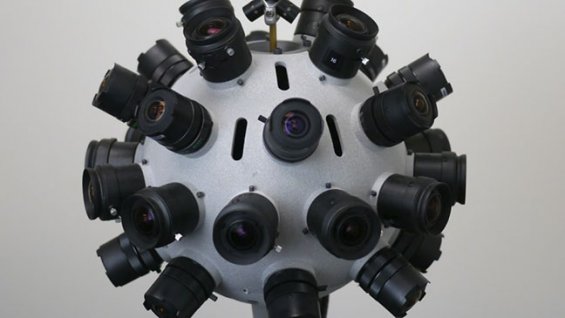 The company's board includes Highland partner Alex Taussig, Redpoint partner Tim Haley, Gotcher and board observer Stuart Murphy, director of entertainment at Sky. In addition, Jaunt has assembled a team of advisors including Academy Award-winnerJared Leto, director Mark Romanek, Fox futurist Ted Schilowitz and IMAX chairBrad Wechsler.
Bendable Displays Are Finally Headed to Market
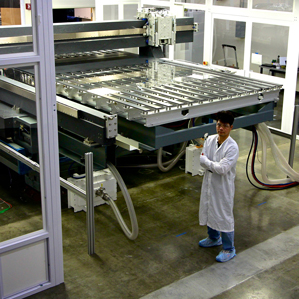 Kateeva has developed an inkjet printing process that can apply a protective coating to OLEDs far faster than previous methods. This promises to cut manufacturing costs in half, and make it possible to integrate the process into existing production lines more easily.
Canatu, based in Helsinki, Finland, makes thin films covered with a network of carbon nanobuds (a nanotube with a sphere of carbon atoms attached to it) for flexible touch displays. The nanobuds have better conductivity than conventional nanotubes, and can be both stretched and curved around a radius as thin as a millimeter.
Raupp says Samsung and other phone makers are taking a conservative approach, starting with curved displays that can’t be bent to make sure the flexible screens inside them work well. He says the first truly flexible displays will probably be in designs that control how much they can be folded, to prevent damage to the display.