Chinese Theaters Test System of Onscreen Text Messages During Movies
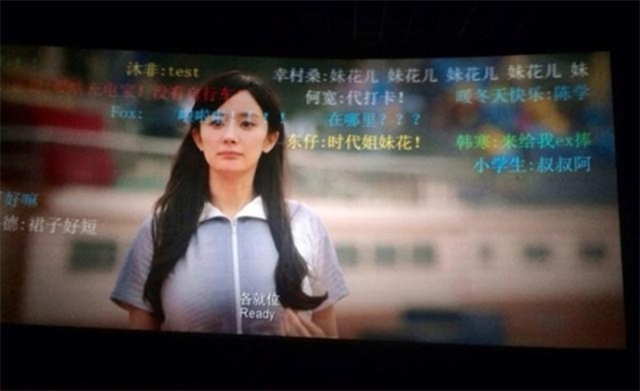 Theaters across major cities in China have begun experimenting with "bullet screens," allowing audience members to interact with films by sending text messages that are displayed directly on the big screen, according to a recent report in China Youth Daily. Great.
If listening to people close business deals on their cell phones mid-movie isn't enough, patrons to some cinemas across China will soon have the privilege of hearing (seeing, really) other audience members' every thought on the film in front of them thanks to the bullet screens. The system is set to be institutionalized during various movies for young people who can't seem to fathom the thought of staying off their phones for two hours,...
See the full story here:http://shanghaiist.com/2014/08/20/bullet-screens-chinese-theaters.php
and here: http://www.hollywoodreporter.com/news/chinese-theaters-test-system-onscreen-726204
New Form Digital Studio to Launch Program at USC This Fall
Director Ron Howard and producer Brian Grazer’s newly launched digital studio, New Form, will team up with students from the University of Southern California’s School of Cinematic Arts to develop digital content. Two-person teams of students will participate in the year-long program to develop scripted series for the Web and pitch their projects. At the end of the first semester, three of the pitches will be selected for production to take place during the second semester.
 New Form Digital, the multiplatform studio from Discovery, will contribute to the students’ exercises and guest lectures at USC. Jack Epps Jr., the chair of the cinema school’s screenwriting program, and Michael Fink, the chair of the school’s TV and film production program, will direct the new program.
See the full story here: http://www.etcentric.org/new-form-digital-studio-to-launch-program-at-usc-this-fall/#more-83192
USC Viterbi Startup Garage: version 2.0
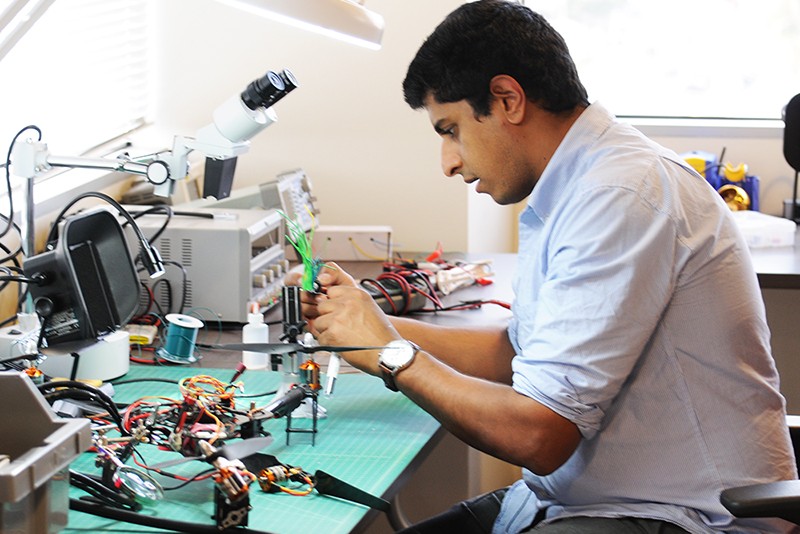 The Startup Garage, Southern California’s only venture accelerator for engineering student-led companies, offers financial support, mentoring, legal advice, office space and other strategic resources to a select group of budding business builders over a six-month period.
More than 115 teams competed for the eight spots in the accelerator, which launched June 30 and runs to the end of the year. Each team, co-founded or led by a current USC Viterbi student or alumni, received $50,000 in exchange for a 10 percent equity. That compares to $20,000 and 4 percent last year.
This year’s crop includes a company creating a music platform that helps you discover music based on your mood; another building a system to make drones easy to fly; one producing dynamic pricing software to maximize profitability; and a mobile platform that allows a small group of intimate friends to connect and collaborate on fashion decisions.
“I think we have an excellent group of young entrepreneurs who are working on some amazing ventures,” said Ashish Soni, founding director of the Viterbi Student Institute for Innovation (VSI2), which launched the Startup Garage. “We want to make Viterbi a leading source of innovation across the region, country and world.”
See the full story here:
Can digital storytelling be accelerated? Only if you accelerate your Oregon Story Board application
- Digital storytelling creatives don’t often identify their projects as a business. While folks in the tech startup scene self-identify as “building a business,” many of the people pursuing awesome storytelling concepts are motivated by pure creative energy. And while they realize that they have to find ways to fund their projects, seeing that project as a “startup” or a “business” is often an non-obvious intuitive leap.
- Acceleration is not a common concept. Again, in the tech startup world, folks have been conditioned to understand the concept of an accelerator. In fact, some would argue that startups have been inundated with accelerator opportunities. But if you don’t see your digital storytelling as a business and you don’t have any peers who are going through accelerators, then seeing an accelerator as an opportunity for your company is yet another non-intuitive leap.
- “Digital Storytelling” is an even more broad and amorphous term than “startup.” From an Oregon Story Board perspective, we see digital storytelling as covering a very broad range of pursuits. It could be anything from content creation—filmmaking, transmedia, journalism, video games—to creating technology and platforms that support storytellers—blogging platforms, special effects software, editing suites—to the services industries that support storytelling—production, post production, digital agencies. But that isn’t inherently obvious by muttering the words “digital storytelling”.

Read the full story here: http://siliconflorist.com/2014/07/28/digital-storytelling-accelerate-oregon-story-board-application/