Microsoft Shifts Emphasis on Xbox One to Games
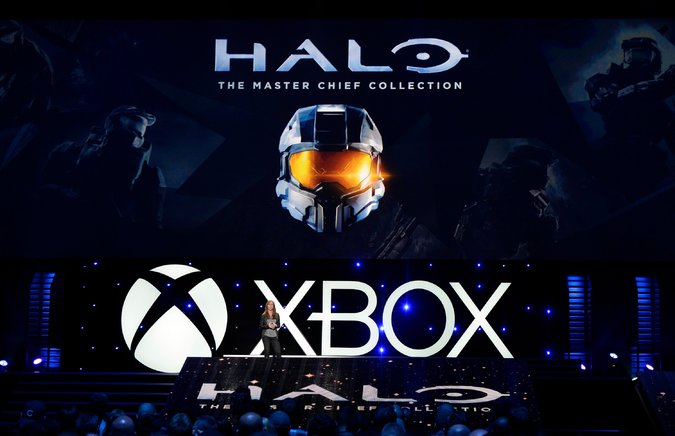 Microsoft wants to clear up any confusion that may exist about the Xbox One: It is all about the games.
A year ago, the company was promoting the Xbox One as an all-in-one entertainment system for the living room, one that could play games and then seamlessly shift to let users watch television and change channels with voice commands. On Monday, though, Microsoft sought to decisively shift the conversation about the Xbox One back to games, announcing a lineup of almost two dozen games, many of them hard-core shooting games, that are planned for release on the Xbox this year.
Part of the Microsoft’s disadvantage is that the company was more ambitious about the technology in the Xbox One. Microsoft included Kinect, a camera and microphone device that lets users play games and operate other functions with body movements and voice commands. The extra technology translated into a $499 price tag for the Xbox One, $100 more than the price of the PlayStation 4.
Sony deftly exploited that and other earlier missteps by Microsoft to portray itself as the more gamer-friendly console maker. In response, Microsoft recently announced it planned to introduce a $399 console without Kinect, which went on sale Monday.
See the full story here: http://www.nytimes.com/2014/06/10/technology/microsoft-shifts-emphasis-on-xbox-one-to-games.html
Free Music, at Least While It Lasts
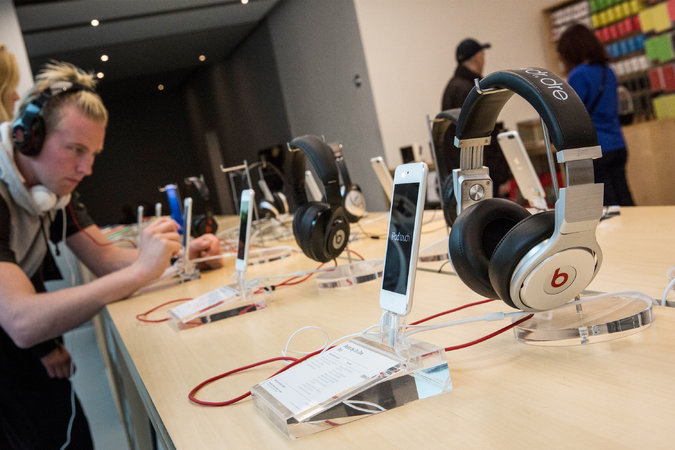 The outbreak of free is being felt all over the economy, but music is an industry that has produced the soundtrack of contemporary American life. Artists are singing the blues about the crippling effects of streaming, and no one wants to be part of the day the music died.
Spotify has doubled its number of subscribers, paid and unpaid, in the last 18 months and reached a milestone of 10 million paid subscribers worldwide last month. In May, Pandora served up 1.73 billion hours of music, up 28 percent over the previous year. The two services have important differences, but they both have premium pay options as well as ad-supported free models. And Amazon, Apple and YouTube are all moving swiftly into the streaming space.
Books have retained some value in an evolving personal media ecosystem, partly because the physical artifact is more attractive than the plastic CD case (which can be opened only with a crowbar). CD collections no longer signify cultural identity. (LPs, which are making a niche comeback, are a different matter.)
I wrote a profile of Neil Young a while ago in which he railed about the loss of sound quality, but as Clay Shirky, a professor at New York University’s Interactive Telecommunications Program, has said, “good enough is good enough.” The convenience of pushing a button on a handheld device that streams wirelessly to a speaker is always going to trump hunting down a CD with marginally better sound and plopping it into a player.
Writing in The Daily Beast last week, the musician Van Dyke Parks said that in the good old days, a song he recently wrote with Ringo Starr would have provided him “with a house and a pool.” But at current royalty rates, he estimated that he and the former Beatle would make less than $80, which means he will have to choose between a dollhouse and a kiddie pool and then share it with Mr. Starr.
Read the full story here: http://www.nytimes.com/2014/06/09/business/media/free-music-at-least-while-it-lasts.html?curator=MediaREDEF&_r=0
Expiring patents were supposed to boost the 3D printing market. They haven’t.
At the end of January, a series of patents filed by Carl Deckard in the 1990s for selective laser sintering (SLS) — a high-quality 3D-printing technology — expired. With this technology back in play, people started to see big things for 3D printing coming up fast on the horizon.
And so in the latter part of 2013, a chorus of onlookers began predicting a coming explosion in 3D printing technologies. There was a near consensus about how great this was going to be. The Economist mused about the boom. Quartz intimated in July that it was good as a done deal. Techcrunch called the day the SLS patents expired “a great day for makers.”
The more accurate truth is, that while it is nice to have another piece of 3D-printing intellectual property available again to manufacturers, this is just one piece of the patent bank that the 3D-printing giants like Stratasys and 3D Systems have locked down, many of which were only filed recently. There’re so many 3D-printing patents keeping technology siloed inside the bigger companies that the Electronic Frontier Foundation has started its own effort to free the market.
Rutter uses the example of Stratasys’ Objet printers, which have several different heads and can print in up to 18 different materials. They can be used for industrial quality rapid prototyping. The individual printheads are mass produced and available, but the machine’s design is patented and strictly enforced.
But sadly for open source 3D printing enthusiasts — or happily for the big companies that control the technology — 2009 was the exception, not the rule. Not every expiring patent is going to explode the market open.
Read the full story here: http://pando.com/2014/06/06/expiring-patents-were-supposed-to-boost-the-3d-printing-market-they-havent/?curator=MediaREDEF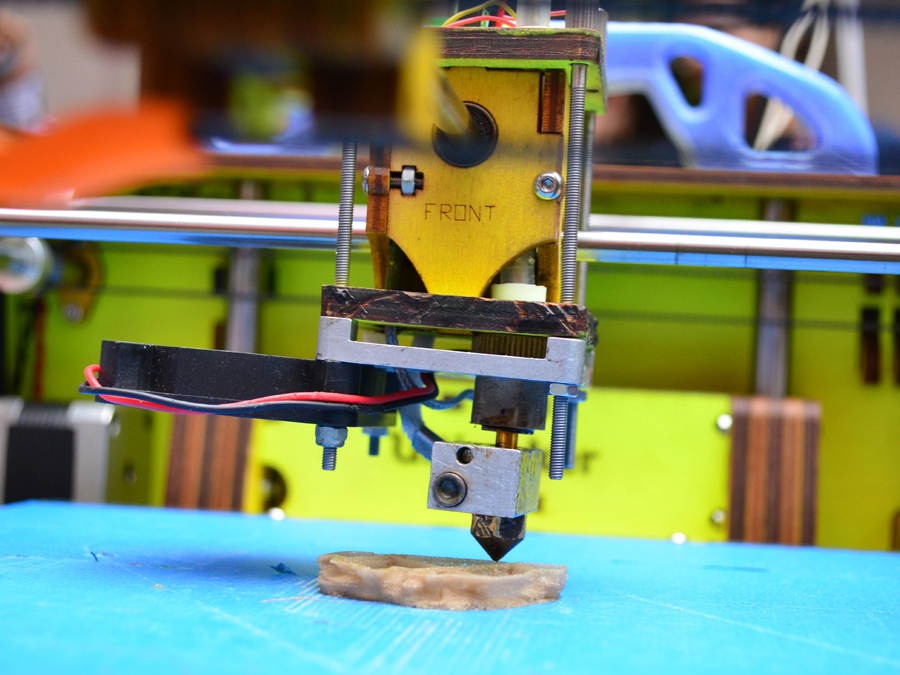
New Panopticam Camera to Make VR Movies for Oculus Rift
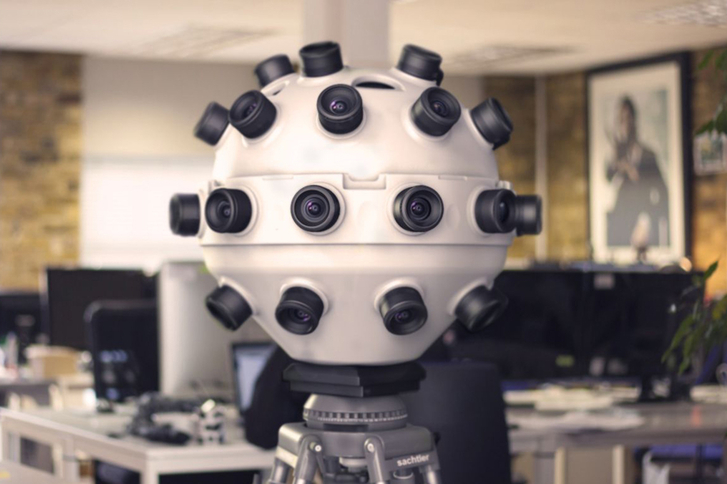 “David Attenborough is currently shooting a documentary, ‘Conquest of the Skies,’ using a rig of eight cameras that will film in 360-degrees. That show will be released for the Oculus Rift.”
See the full post here: http://www.etcentric.org/new-panopticam-camera-to-make-vr-movies-for-oculus-rift/
Microsoft’s “3-D Audio” Gives Virtual Objects a Voice
 [Philip Lelyveld comment: this combines two old (40 years?) technologies to create a new experience.]
Tashev says he is now working to improve the capture system and make it smooth and speedy enough to be something a person with a Kinect camera might be able to do at home.
Mark Billinghurst, a professor and leader of the Human Interface Lab at the University of Canterbury, New Zealand, says that the approach developed by Microsoft could have a broad impact if the scanning process can be made practical enough. And being able to deploy 3-D audio tricks on voices, notifications, and sounds in games on smartphone headsets or devices like Google Glass could make them easier to interact with, he says.
Surviving Technology Extinction
There are a couple of indicators of true openness:
- Interoperability: Can the solution be run with any standards-based technology (e.g., browser, app server, etc.)? If you want to move hosting from, say, AWS to Rackspace, what does this entail?
- Active contributors: Look for companies that have committed some significant portion of their technology to the open-source community. This means more than just lobbing code into SourceForge. The real sign is a community of active contributors. For example, how many people have made contributions (features, bug fixes, etc.) to the company’s technology on collaborative development sites like GitHub?
Vendors for whom openness is a part of the DNA offer customers more than just lowered risk of lock-in. There is also the ubiquity of skilled resources, as well as the likelihood of a broader ecosystem. Openness and ecosystems go hand in hand.
See the full story here: http://recode.net/2014/06/04/surviving-technology-extinction/