[Philip Lelyveld comment: I've heard this many times over the years. If you can't communicate it clearly to regulators, why should you be trusted to self-regulate? "Sharing the view of the industry at large, Kleinberg says he thinks the responsibility should come from within because regulators don't have a deep understanding."]
"In 2012, the data broker industry generated $150 billion in revenue. That's twice the size of the entire intelligence budget of the United States government -- all generated by the effort to detail and sell information about our private lives," Rockefeller adds.
The largest of these companies -- Acxiom, Datalogix, Epsilon and Experian -- are bridging together data from the online and offline worlds and selling it to the likes of Facebook, Twitter and others to enhance their respective ad products. The general approach is to group and categorize consumers for marketers' online ad targeting efforts. Programmatic ads are then sold and targeted based on these profiles, which the industry insists are anonymous and not personally identifiable.
Regulators and legislators across the political spectrum are making it a top priority to investigate these data brokers and enact laws that could curtail their way of business. But as more troubling details about the operation and seemingly unrestricted reach of these data brokers come to the surface, it's unclear what can or will be done to rein in their most damning practices.
While he freely admits "the ability to look at that individual data is a little scary," he adds that "anyone who's buying digital media today is buying data."
From that the debate usually pivots around the promise of self-regulation versus the need for legal protections and regulations.
Sharing the view of the industry at large, Kleinberg says he thinks the responsibility should come from within because regulators don't have a deep understanding. "I think that the industry organizations are actually taking it very seriously and putting together standards that accommodate reasonable privacy restrictions like allowing people to opt out," he says.
"I think consumers care less than we think in the moment. They care in the abstract sense," Kleinberg says. "I can't tell you of an example where data has been abused."
To embolden the case for self-regulation, the industry needs to do more to explain what data means, Kleinberg adds. "The terms data and big data get lumped together as this big sinister beast and a lot of it is not innocuous ... it's anonymized by obscurity," he says. "We should not rush to judge all of it without understanding that nuance."
[Philip Lelyveld comment: this could become the new privacy screen technology.]
But now, for the first time, MIT researchers have produced a system that allows light of any color to pass through only if it is coming from one specific angle; the technique reflects all light coming from other directions. This new approach could ultimately lead to advances in solar photovoltaics, detectors for telescopes and microscopes, and privacy filters for display screens.
The new structure consists of a stack of ultrathin layers of two alternating materials where the thickness of each layer is precisely controlled. “When you have two materials, then generally at the interface between them you will have some reflections,” Soljačić explains. But at these interfaces, “there is this magical angle called the Brewster angle, and when you come in at exactly that angle and the appropriate polarization, there is no reflection at all.”
While these experiments were done using layers of glass and tantalum oxide, Shen says that in principle any two materials with different refractive indices could be used.
Luckey’s device wasn’t like other headsets. In 2012, what interest there was in VR was mostly in creating a kind of virtual cinema: you’d look in the headset and see a simulated version of a giant screen hanging in the air in front of you, and you’d watch a movie on it. Not many people did. Not only was it Skymall stuff, it was pricey—Sony’s head-mounted set costs $1,000. Luckey’s device was different. It was designed to run games and to immerse you in them. It ran fast, and its field of view was very wide: the display wrapped around to eat up your peripheral vision, putting you well and truly in another world. “That’s the only way to get any kind of immersion,” Luckey says. “I didn’t want to just have a TV you could wear.”
The first time I tried the Rift (which seems to be winning out over Oculus as the shorthand of choice) it showed a simulation of a craggy, rocky mountainside. I turned my head experimentally, and the view changed, with no discernible lag, just as it would have in reality. Instinctively my brain started looking for the edge of the image—but it didn’t come. I kept turning until I was looking all the way behind me. There was nothing but mountain back there.
The Oculus Rift has limitations. The resolution isn’t high enough yet, so you have a slight sense that you’re viewing the world from inside a screened-in porch. Look down and you’ll notice that something’s missing: your entire body. Oculus can bring your eyes and, with headphones, your ears into the virtual world, but nothing else. You haunt the virtual world as a floating, disembodied spirit.
Individuals’ tolerance for latency varies, but at Oculus they peg the maximum allowable lag at 20 milliseconds. On a technical level, that’s a challenging specification to hit. By comparison, an eyeblink takes about 300 milliseconds.
Getting this kind of precision requires tight integration of hardware and software—it’s one of the mantras you hear around the Oculus offices. And beyond that, it takes a solid grasp of the fundamentals of gaming technology. That’s where a guy like Carmack, who invented some of the technology in question, comes in handy. “The science around this is so close to the metal,” Iribe says. “It’s so close to what bits are happening when. Carmack knows he can go in and get that fully optimized.”
The proposed standard — Media Entertainment Core Metadata — calls for all the basic information expected with digital content (titles, actors, etc.), along with individual encodes for audio, video and subtitle streams.
Besides EMA and DEG, the standard has been endorsed by the Digital Entertainment Content Ecosystem (DECE), the cross-industry consortium behind UltraViolet, and the Entertainment Identifier Registry (EIDR), the unique identifier system that puts a digital tag on movies and TV programs.
The groups tapped Craig Seidel, VP of distribution technology for studio-funded tech research company MovieLabs, as the technical architect behind the standard.
“Alternative content requires targeting a new audience of senior citizens, singles and empty-nesters, who typically shun theaters on Friday and Saturday nights but are receptive to visiting the rest of the week if the right content is offered,” notes the article. The concept also requires exhibitors to understand marketing.
One problem with new approaches to alternative content in theaters is the distribution process. While feature films are usually shipped to theaters on hard drives, this does not work with live content.
The Digital Cinema Distribution Coalition — a partnership of Cinemark, AMC, Regal, Warner Bros. and Universal Pictures — is working to deliver content electronically using satellite bandwidth and high-performance “catch servers.” DCDC has signed content partners Disney, Fox, Lionsgate, Open Road, Paramount and Sony, while National Amusements and Southern Theatres are now exhibitor customers.
The new equipment, which is being provided at no cost to exhibitors, launched at 1,200 venues representing 17,000 screens last fall. The coalition is “doing substantially better” with the rollout in 2014, says DCDC CEO Randy Blotky, who will appear on a CinemaCon panel to discuss such progress.
In related news, DCDC has pacted to acquire the Deluxe/Echostar satellite network. “It’s a huge leap forward for DCDC and for the industry, really,” said Blotky about the acquisition.
[Philip Lelyveld comment: could this deal change the social compact between KickStarter donors and the groups they donate to? Will they demand more of the downstream success?]
“I supported this because it’s something that I’ve wanted to see become a reality since I read my first William Gibson novel,” one Oculus donor wrote on Kickstarter. “Now I find out that I might as well have handed my money right to Facebook and I feel a little sick.”
The extraordinary reaction of early Oculus VR backers and fans to news of the Facebook deal illustrates the tricky relationship between companies raising money on Kickstarter and the people who donate to them.
The hope, among donors, is that they can help the interesting ideas of these companies get off the ground. Their donations amount to seed funding — enough money to build a prototype, perhaps. And assuming they understand what they’re doing, the donors have no expectations of gaining equity in the young company.
With that largess comes a sense of community and expectations that it will deliver — or at least try really hard — on what it has promised. But when the little company hits a big payday, as Oculus VR announced on Tuesday, it is strikingly clear that community has very little say in its decision-making.
Dolby debuted its mobile audio technology during the Mobile World Congress in Barcelona last month. The company explained that by using algorithms running on either a dedicated audio processor chip or an ARM processor core, it's able to simulate Atmos-like surround-sound by tricking listeners' brains into thinking the audio is 3D.
Security researchers have created prototype Google Glass spyware that is capable of snooping on everything the user is looking at without tipping off victims that anything is amiss.
"The scary thing for us is that while it’s a policy that you can’t turn off the display when you use the camera, there’s nothing that actually prevents you from doing it,” PatersontoldForbes.
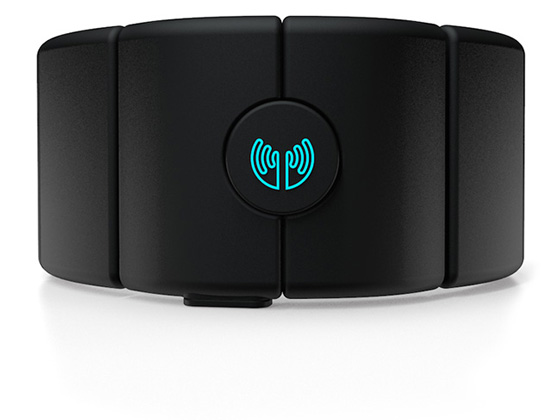 Myo lets you use the electrical activity in your muscles to wirelessly control your computer, phone, and other favorite digital technologies.
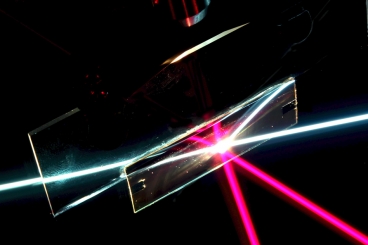 But now, for the first time, MIT researchers have produced a system that allows light of any color to pass through only if it is coming from one specific angle; the technique reflects all light coming from other directions. This new approach could ultimately lead to advances in solar photovoltaics, detectors for telescopes and microscopes, and privacy filters for display screens.
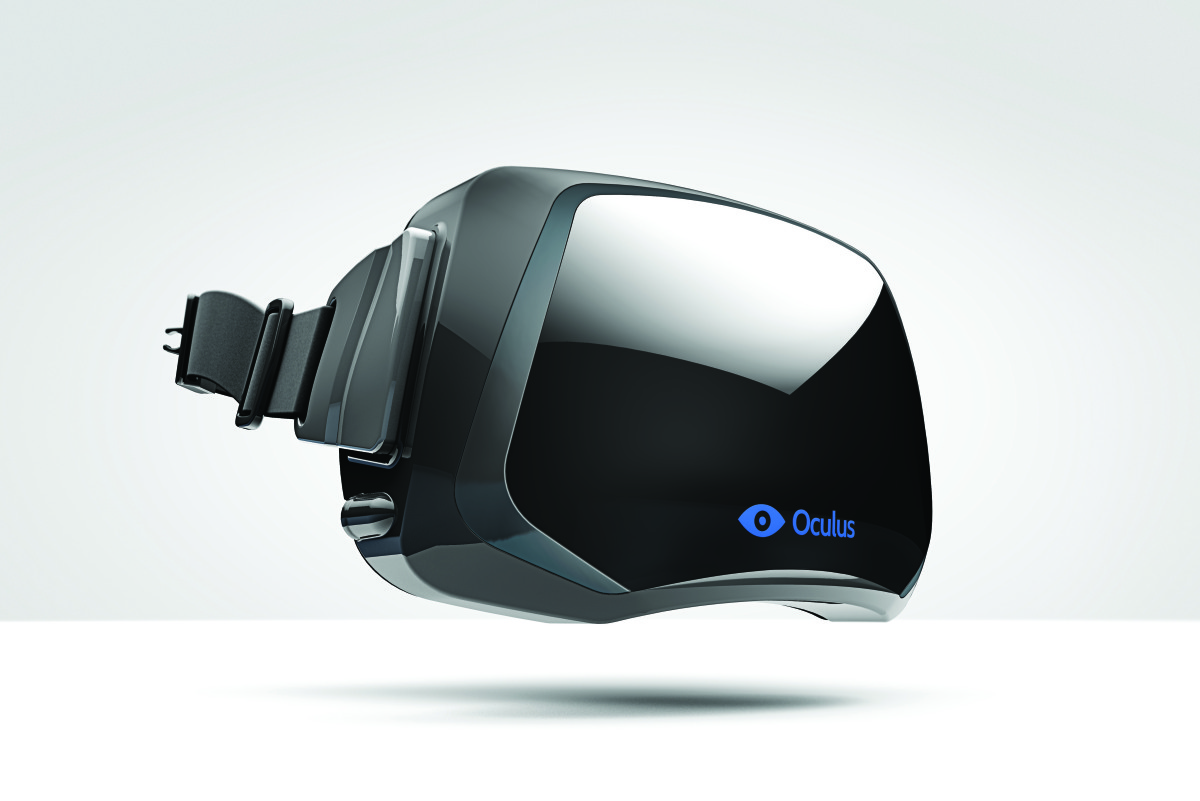 Luckey’s device wasn’t like other headsets. In 2012, what interest there was in VR was mostly in creating a kind of virtual cinema: you’d look in the headset and see a simulated version of a giant screen hanging in the air in front of you, and you’d watch a movie on it. Not many people did. Not only was it Skymall stuff, it was pricey—Sony’s head-mounted set costs $1,000. Luckey’s device was different. It was designed to run games and to immerse you in them. It ran fast, and its field of view was very wide: the display wrapped around to eat up your peripheral vision, putting you well and truly in another world. “That’s the only way to get any kind of immersion,” Luckey says. “I didn’t want to just have a TV you could wear.”