Surgeons don 3D glasses, get ‘remarkable’ depth perception for keyhole surgery
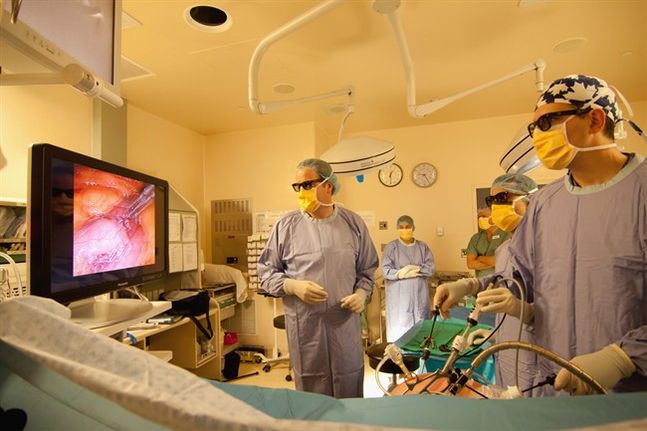 Dr. Teodor Grantcharov and a surgical team at St. Michael's Hospital in Toronto perform a gastric bypass using a prototype 3D laparoscopy system in Toronto in this recent photo.
Read the full story here
3D Printers In A Prius Prove This Technology is Road Ready
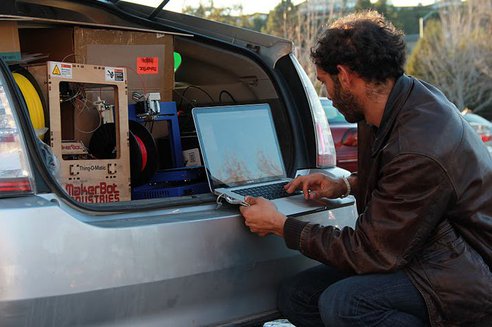
What happens when you put a couple of cheap 3D printers in the back of your Prius, and drive around making products for people. Can you create a business? What are the best products to try and make? Two guys are trying to answer these questions with a new project called PocketFactory.
Using 3D Printing To Grow A Small Business
Bilal Ghalib and Alex Hornstein have put four consumer level (sub-$2,000) 3D printers in the back of their car and are making their way across the US. Their goal is to start a business of designing, producing and selling products made on these printers. They're also open sourcing everything about their adventure so anyone interested in duplicating the business can do so. ...
As Hornstein notes during a conversation we had last week, the new consumer-level 3D printers are of a high enough quality that they can become essentially a production machine, yet they're at a low enough price that the barrier to entry is quite low. ...
Read the full story here:
The future of 3D printing (discussion of Cubey and MakerBot)
[Philip Lelyveld comment: the video is a discussion of MakerBot and Cubey with company reps.]
CNET's Rafe Needleman interviews the makers of two 3D printer makers and how they are charting the future of manufacturing.
See the original post here:
See the original post here:
Structured Light Scanning Technology Gives 3D Engineering Solutions Full Range of Tools for Increased Accuracy in 3D Scanning Service
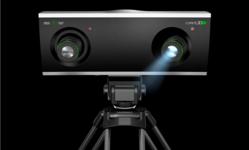 3D Engineering Solutions has added another dimension to their 3D laser scanning services with the acquisition of astructured light scanning tool, the Steinbichler Comet L3D, which uses LED blue light technology and can capture up to two million points in 1.5 seconds. 3D Engineering has already used the new technology for turbine blade and impeller inspection, and mold and tool making. The structured light scanner is useful in applications such as 3D scanning, quality control, tool making, reverse engineering, rapid manufacturing and design.
... “We can capture entire vehicles,” said Glassburn. “We can get accuracies as small as .0003 inches.” In addition to the photogrammetry accessory, 3D Engineering has a 2-axis integrated turn table, which allows for automated inspection. ...
Read the full story here:
ATTACK OF THE MOVIES 3D
 Sometimes it’s not good being the first. ...
So yes it’s time to revisit Attack, because it’s a really fun game with some cool 3D effects. It doesn’t hurt either that the 3D effect is “low-tech,” which in this case means those two toned color glasses. But as a way to bring a family together, it’s a hard one to beat. What you’re doing in this first-person shooter is to work through action scenes that emulate those of the big films. Arcade-style multiplayer gameplay, levels with multiple choice weapons and all that third-dimensional. Best part is that branching keeps the game from repeating itself when playing the levels again. And if you have one of those compatible light guns and it’s the Wii being played, bring it on!
Telecast of London Olympics to feature 200 hours of 3D coverage
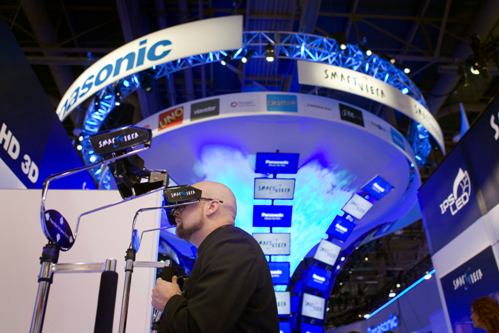 Olympic Broadcasting Services will produce more than 200 hours of 3D coverage, which will be shown on next-day delay. The 3D focus will be on at least a dozen sports, including gymnastics, track-and-field, diving and swimming, as well as the opening and closing ceremonies.
“NBC has a history of utilizing technological innovations to distribute the Olympics in new ways for viewers,” said Gary Zenkel, President, NBC Olympics.
The OBS will provide about 10 hours of 3D footage a day, utilizing Panasonic cameras, recording machines and monitors. In addition to the United States, it will be shown in Great Britain, Korea, China, Australia, France, Hungary, Italy and New Zealand. ...
Read the full story here:
The Pirate Bay declares 3D printed “physibles” as the next frontier of piracy
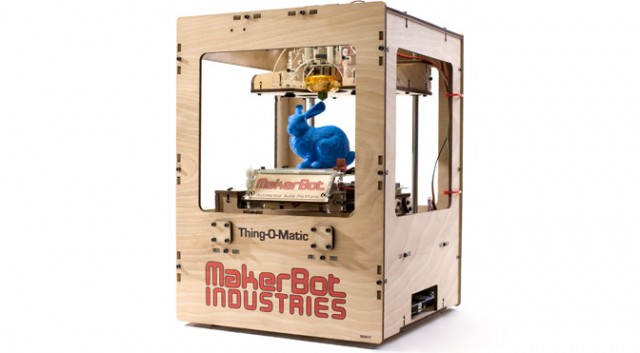 While the subject of online piracy is certainly nothing new, the recent protests against SOPAand the federal raid on Megaupload have thrust the issue into mainstream media. More than ever, people are discussing the controversial topic while content creators scramble to find a way to try to either shut down or punish sites and individuals that take part in the practice. Despite these efforts, online piracy continues to be a thorn in Big Media’s side. With the digital media arena all but conquered by piracy, the infamous site The Pirate Bay (TPB) has begun looking to the next frontier to be explored and exploited. According to a post on its blog, TPB has declared that physical objects named “physibles” are the next area to be traded and shared across global digital smuggling routes.
TPB defines a physible as “data objects that are able (and feasible) to become physical.” Namely, items that can be created using 3D scanning and printing technologies, both of which have become much cheaper for you to actually own in your home.
...
Read the full story here:
Tech and the movies: 3D printing brings new angle to animation
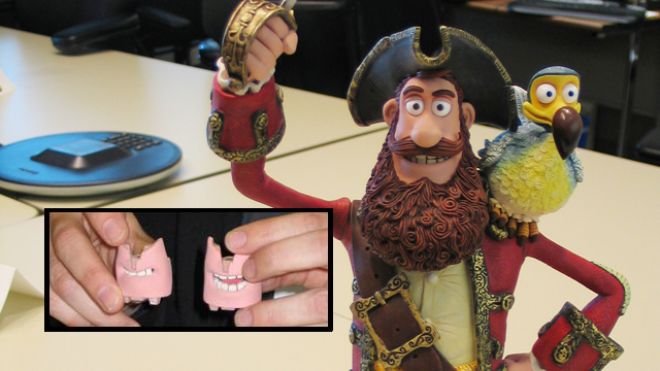 Sony Pictures' upcoming "The Pirates! Band of Misfits" still uses molding clay and traditional stop-motion animation to bring its wide-eyed characters to life, but creator Aardman Animations happily embraced a strange new technology to make those figures speak: 3D printers. ...
“We built about 8,000 mouths,” key animator Ian Whitlock said, explaining how he brought the various characters to life in an unusually short time. ...
Whitlock said “The Pirates!” is the first animated film to widely embrace 3D printing, although the 2009 film “Coraline” used a similar technique on a smaller scale. ...
Read the full story here:
Printing a Home: The Case for Contour Crafting
Khoshnevis calls his technique “Contour Crafting” and it operates on roughly the same principle as consumer 3D printers like MakerBot’s Thing-O-Matic. His robot pours out a trail of viscous concrete while tracing along the footprint of a wall. As the nozzle sweeps back and forth, the layers rapidly build, with the lower ones hardening enough to support the increasing weight. Its speed puts construction workers to shame.
Read the full story here.
THREE UPCOMING 3D TECHNOLOGIES TO KEEP AN EYE OUT FOR
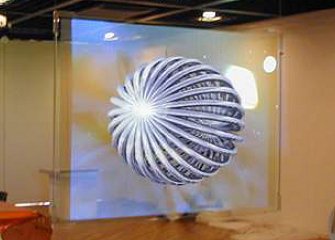 This year at CES in Las Vegas tech enthusiasts got a good look at some interesting 3D technologies, and some of them seem so far-fetched and futuristic, that they would probably baffle anyone not taking part in their development.
According to the Chicago Tribune, these upcoming 3D technologies include “Multiview Video” or “Free Viewpoint Television;” “Volumetric Multidomain;” and “Holographics.”
... Multiview Video would allow viewers to see 3D images in multiple parts and multiple cameras would be taken into account. ... use all those views to create a single image, with more lifelike depth than stereoscopic.”
...MPEG-4 standard, which is used for 3D Blue-Ray, includes an annex for Multiview ...
Volumetric Multidomain is an emerging 3D technology based on a 360 degree vision around 3D objects. It creates a physical volume allowing viewers to peer all the way around “everything on the image,” ...The technology is currently in the R&D stage and setups currently require much more room than what typical living rooms can accommodate for. ...
Chicago Tribune calls Holographics as the most futuristic of all three 3D technologies. Such technology may allow images to float in space, e.g. Star Wars, ...
Read the full story here: