How Victorian-Era Tech Can Make Virtual Reality Clearer
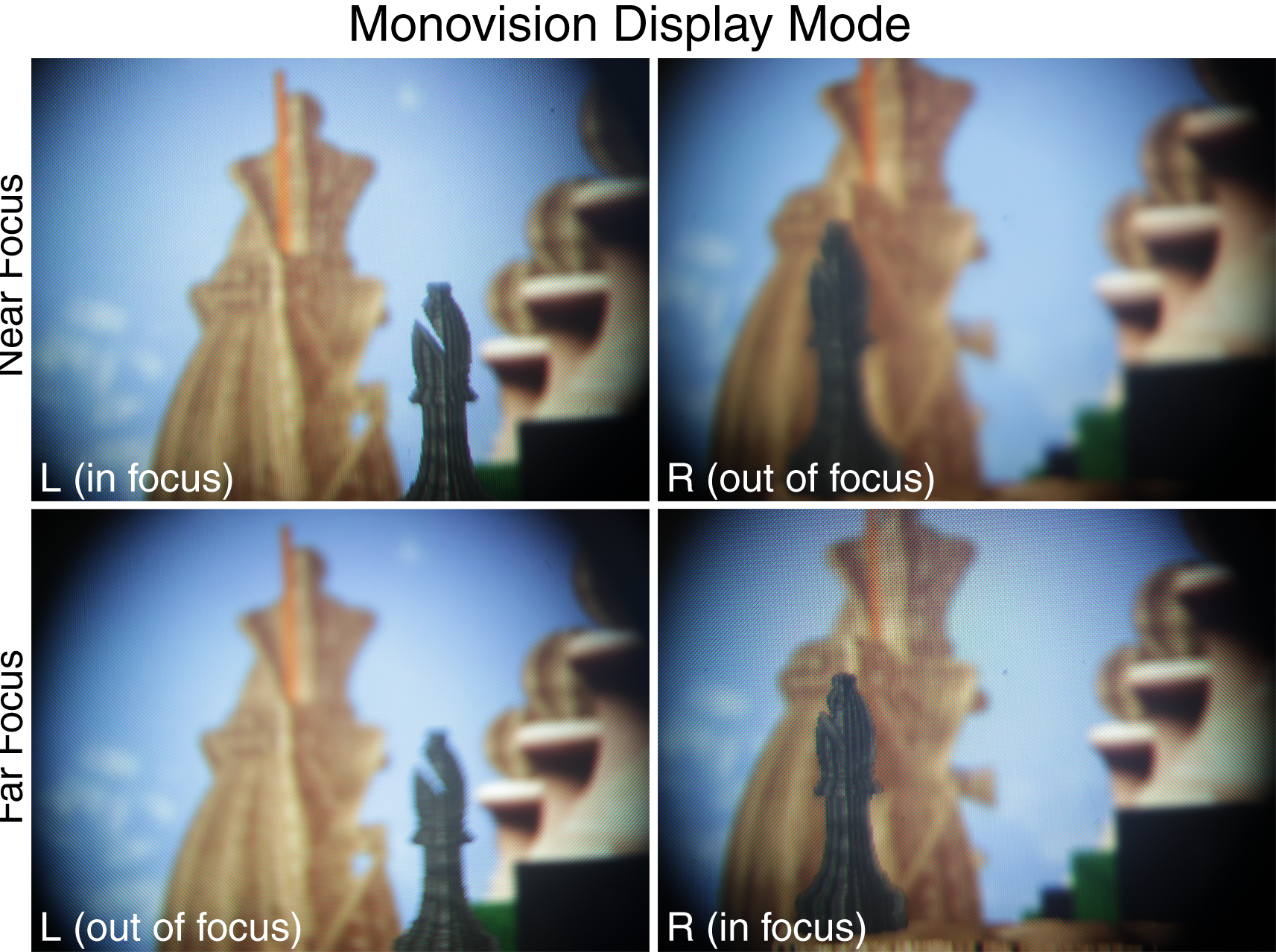 The Dartmouth and Stanford researchers applied this insight to an Oculus and Google Cardboard VR headset by adding a pair of focus tunable liquid lenses to the set up. The resulting contraption is elegant in its simplicity: it’s just a 3D-printed custom mount that houses the adjustable liquid lenses and can be attached directly to the viewing area of the headset. These lenses can then be set to two different fixed optical lengths (one far, one near) for the duration of a VR experience, or manually adjusted in real time by the user as needed.
The end result is the user is able to mitigate the vergence accommodation conflict by using the team’s lenses to manually accomplish the adjustments our eyes do naturally when they’re not a few inches away from a VR screen.
While the manually adjusted lenses are a start, this innovation could really blossom in conjunction with eye tracking software, which would allow the lenses to automatically adapt their focal lengths in real time without the user needing to manually adjust them. By tracking the user’s eye motions, the software would be able to tell which object the eye is trying to focus on and its distance from the eye as rendered in the virtual environment. The eye tracking software could then make adjustments to the focal length of each eye’s tunable lenses in real time as the user looks around the environment.
Based on the feedback the team received from users who tried their modified Oculus headsets, monovision corrected VR is a definite improvement.
See the full story here: http://motherboard.vice.com/read/how-victorian-era-tech-can-make-virtual-reality-clearer