Virtual Reality May Help You Control Your Dreams
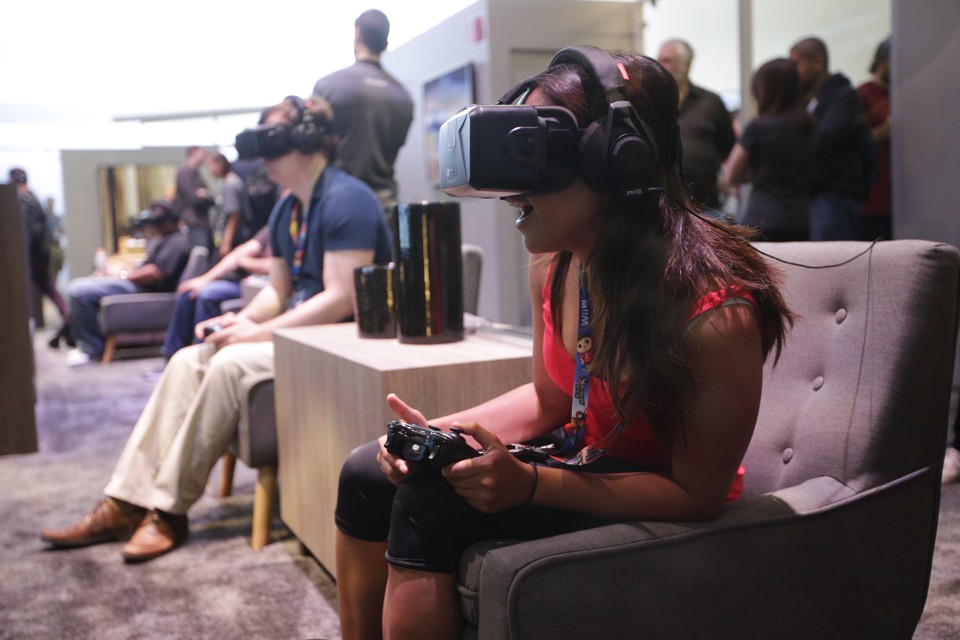
People try out the Oculus Rift virtual reality headsets at the Oculus booth at the Electronic Entertainment Expo on Wednesday, June 11, 2014, in Los Angeles. (AP Photo/Jae C. Hong)
Put down your phone after an intense Pokémon Go session, and you might find yourself thinking about “catching” the dog across the street as if it were a character in the game. That momentary mix-up between the world on the screen and the physical reality of the street is called game transfer phenomenon, and it’s a common effect among gamers. As Gackenbach puts it: “Your brain’s kind of stupid, at least when it comes to reality.”
The effect isn’t confined to waking life. It also shows up in dreams, as well as during the blurry, hypnagogic period between sleep and waking. “Gamers have seen images from the game in front of their eyes, or felt involuntary movements as if their fingers were pushing the gamepad,” says Angelica B. Ortiz de Gortari, a postdoctoral fellow at the University of Liège who co-authored the first report on the phenomenon. Other researchers have documented similar effects in players of World of Warcraft and Tetris.
Gackenbach’s research found that gamers report a greater sense of control in their dreams than non-gamers, as well as more awareness that they are dreaming—what researchers term “lucidity.” This suggested that spending time in a fictional, controllable world might teach gamers to view dream worlds through the same lens.
In a study she presented at a conference in June, participants played a 15-minute car-racing game on a computer, then described a dream from the previous night. Half the group donned the Rift to play the game; they remembered those dreams as higher in lucidity than the control group, which did not use the device. This difference disappeared when both groups reported on their dreams again the following week.
“All this points to one thing,” Gackenbach said. “When you alter people’s waking realities, their memory changes. The more you think you’re in one reality, it alters your memory of other realities.”
See the full story here: http://www.theatlantic.com/science/archive/2016/09/virtual-reality-may-help-you-control-your-dreams/500156/